Universe Today
Here's a question that sounds simple but has kept cosmologists arguing for decades - how old is the universe? You'd think we'd have nailed this down by now. We've sent spacecraft to the edges of the Solar System, photographed galaxies billions of light years away, and detected ripples in the very fabric of spacetime itself. And yet, depending on which method you use to measure the universe's age, you get a different answer and those answers seem to contradict each other.
This disagreement is known as the Hubble tension, named after the Hubble constant, the number that describes how fast the universe is expanding. Measure it one way, using exploding stars and pulsating giants called Cepheid variables as distance markers, and you get an expansion rate that implies a universe roughly 13 billion years old. Measure it using the cosmic microwave background, the faint afterglow of the Big Bang itself, and the universe comes out closer to 13.8 billion years. The gap is small in everyday terms, but in cosmology it's a chasm, and no one has been able to bridge it.
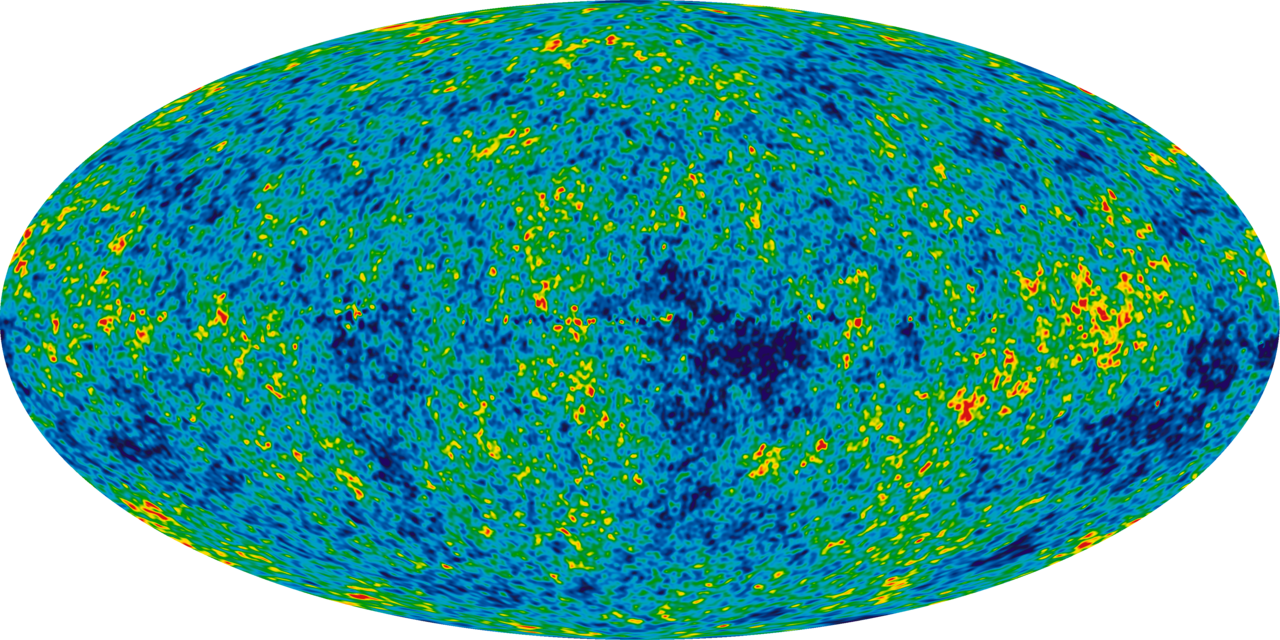 The microwave background radiation created from nine years of WMAP data (Credit : NASA/WMAP Science Team)
Now, a team from the University of Bologna and the Leibniz Institute for Astrophysics Potsdam has taken a completely different approach. Rather than measuring how fast the universe is expanding, they asked a more fundamental question - how old are the oldest stars we can see?
The logic is elegant. The universe cannot possibly be younger than the stars it contains. It's like finding a 500 year old oak tree in your garden and concluding that the garden must be at least 500 years old. If you can accurately measure the age of the most ancient stars in the Milky Way, you have a rock solid minimum age for the universe itself.
Using data from the European Space Agency's Gaia mission and spectra of over a billion stars with extraordinary precision, the team combed through a catalogue of more than 200,000 stars and carefully selected around a hundred of the oldest, most reliably dated examples. They combined information about each star's brightness, distance, and chemical composition to pin down its age with the kind of statistical rigour that hasn't been possible before.
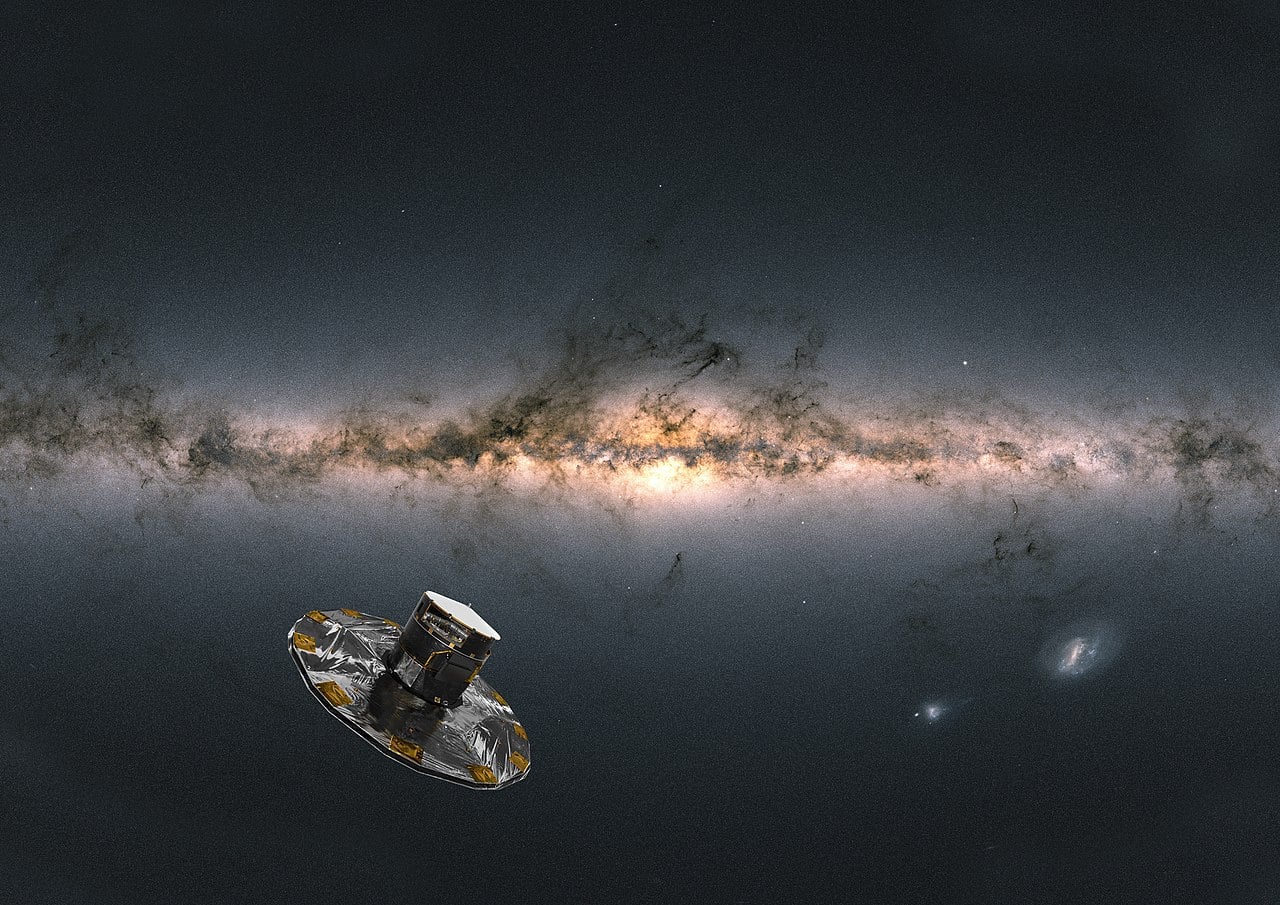 Artist impression of ESA's Gaia satellite observing the Milky Way (Credit : ESA/ATG medialab)
The result? A most likely age of around 13.6 billion years. That figure sits uncomfortably with the younger universe suggested by supernovae and Cepheid measurements, but slots in rather neatly with the older estimate from the cosmic microwave background. In other words, the stars are quietly taking sides in this argument and they're backing the bigger number.
The study, published in Astronomy & Astrophysics, doesn't resolve the Hubble tension completely but it adds an entirely independent line of evidence to the debate. This evidence is squarely and unbiasedly rooted, not in the physics of expansion but in the life stories of individual stars. With future Gaia data releases on the horizon promising even greater precision, the universe's oldest residents may yet have the last word.
Source : How old is the Universe? The oldest stars give us a clue