Universe Today
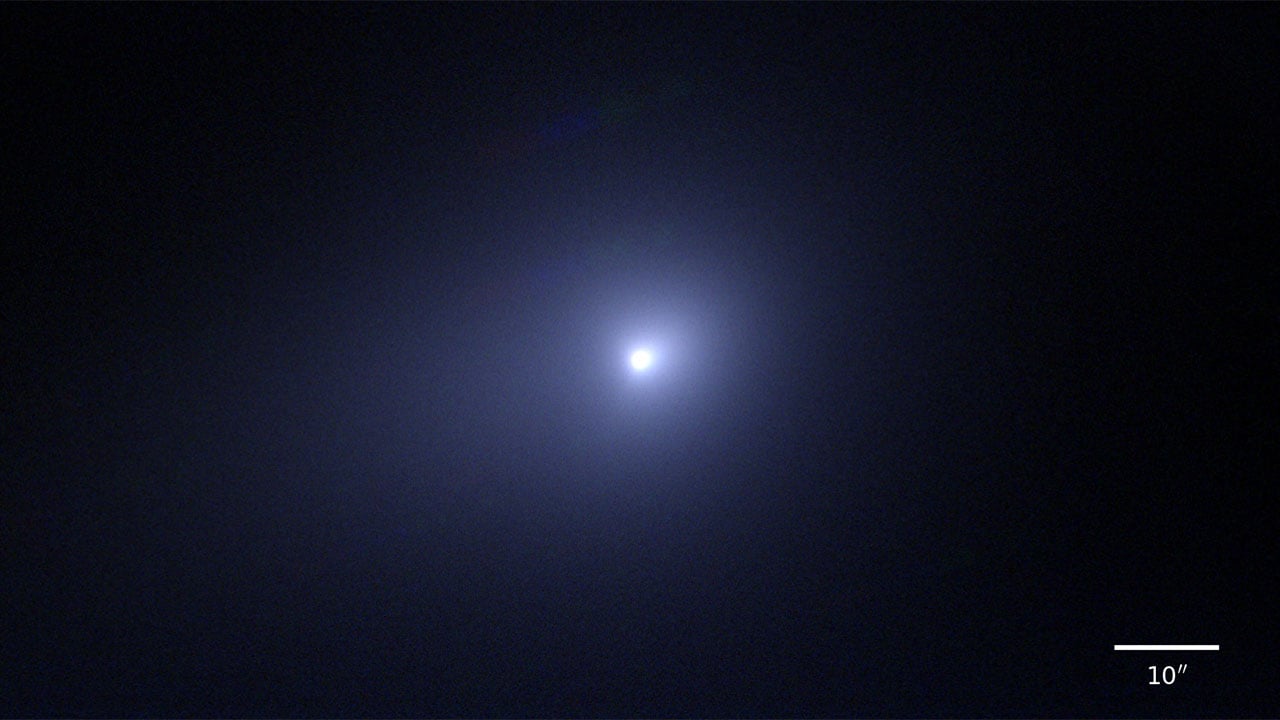
On Jan. 7th, 2026, the Subaru Telescope joined many of the world's observatories and space telescopes in observing the 3I/ATLAS, the third interstellar object (ISO) detected in our Solar System. This interstellar comet had just completed its closest approach to the Sun, which produced more intense outgassing. By observing the light from 3I/ATLAS' coma, astronomers were able to examine the chemical composition of the comet's interior and produce estimates of the ratio of carbon dioxide to water.
Prior observations largely provided insight into the composition of its outer layers, which have been subject to billions of years of cosmic irradiation. As the Subaru team reported in a recent study published in The Astrophysical Journal, their results showed that the ratio of carbon dioxide to water was much lower than that inferred from previous observations by space telescopes, providing clues about the ISO's structure and suggesting that the chemistry of the coma is evolving.
The research was led by Yoshiharu Shinnaka and a team from the Koyama Space Science Institute at Kyoto Sangyo University. They were joined by researchers from the Division of Science at Kyoto Sangyo University, the University of Occupational and Environmental Health, the National Astronomical Observatory of Japan (NAOJ), and Kyoto-based optical instrument manufacturer Photocross Co.
Comet 3I/ATLAS (C/2025 N1) has garnered much attention since it was first detected on June 1st, 2025, by the Asteroid Terrestrial-impact Last Alert System (ATLAS). As the third ISO detected it as it passed through the Solar System, scientists eagerly monitored this comet as it approached our Sun and made its closest approach. Unlike 1I/'Oumuamua, scientists had confirmed the detection of 3I/ATLAS four months prior to it reaching perihelion.
And unlike 2I/Borisov, 3I/ATLAS was much larger and brighter, allowing for greater scientific returns. For their analysis, the team applied analytical methods and expertise accumulated from decades of observing comets in the Solar System. Based on this, the team estimated the CO2-to-water ratio in the coma, which provided hints about the nucleus's structure and composition. The ratio they detected was lower than that observed by the many space telescopes during the same period.
Since asteroids and comets are essentially material left over from the formation of planetary systems, their interior compositions provide information about the conditions in these systems at the time. By studying these objects, scientists can learn what conditions are like elsewhere in the galaxy without having to send missions there. As Shinnaka commented in a NOAJ press release, the methods he and his colleagues employed will enable even greater scientific returns when future telescopes observe future ISOs:
With the full-scale operation of survey telescopes in the coming years, many more interstellar objects are expected to be discovered. By applying the observational and analytical techniques we have developed through studies of Solar System comets to interstellar objects, we can now directly compare comets hailing from both inside and outside the Solar System and explore differences in their composition and evolution.
Through studies of such objects, we hope to gain a deeper understanding of how planetesimals and planets formed in a wide variety of stellar systems, including our own Solar System.
Further Reading: Subaru Telescope