Universe Today
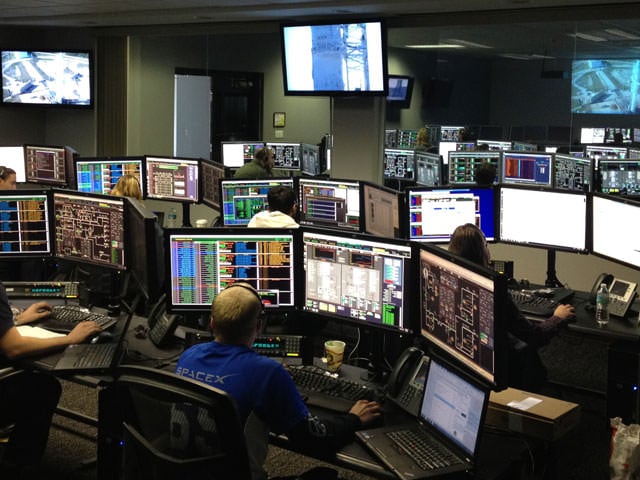
It was short but sweet. SpaceX conducted a 2-second static fire test of their Falcon 9 rocket that will send the first COTS flight to the International Space Station. "Woohoo, rocket hold down firing completed and all looks good!!" Tweeted SpaceX CEO and founder Elon Musk. SpaceX's Twitter feed said with the successful firing, engineers will now review data as they continue to prepare for the upcoming mission, slated to launch on May 7.
A first attempt was aborted with 30 seconds left in the countdown, due to "overly restrictive redline on second stage engine position." Engineers recycled all the rocket's systems and began another countdown.
Fire and smoke erupted just briefly from the base of the rocket, and there seemed to be a bit of confusion on the webcast, as the word "abort" was used, but then there was word of success and the webcast ended abruptly.
For the static fire test, the nine Merlin engines on the first stage of the Falcon 9 rocket were ignited at 20:15 UTC (4:15 p.m. EDT). The test was part of a full dress rehearsal for the SpaceX team. Last week was a final full simulation between NASA and SpaceX for the series of demonstration maneuvers and tests the Dragon capsule will make as it approaches the ISS; then the astronauts on board will capture and berth the cargo capsule to the Harmony module’s Earth-facing docking port.
If the abort problem had occured on the launch day, there would be no second attempt; there is no recycling of the systems for an actual launch. Additionally, the Falcon 9 can only attempt launch every 3 days because of limited propellant on Dragon capsule. SpaceX needs to ensure there is enough propellant on board Dragon for the pre-berthing maneuvers and tests.
If the Falcon 9 launch is delayed by weather or technical problems, another attempt could be made on May 10, but after that they would have to until after the launch of a Russian Soyuz spacecraft that will bring three new crew members to the space station. That mission is scheduled for launch from the Baikonur Cosmodrome in Kazakhstan on May 14, and would dock two days later.
The launch of the Falcon 9 and Dragon has been delayed from its initial planned flight in February, but with today's apparently successful test, SpaceX and NASA are hopeful for going forward with next week's launch.
SpaceX is one of two companies, along with Orbital Sciences, competing for contracts to deliver cargo to low Earth orbit for NASA under the Commercial Orbital Transportation System program.
The launch is currently set for 13:38 UTC (9:38 a.m. EDT) on Monday.