Universe Today
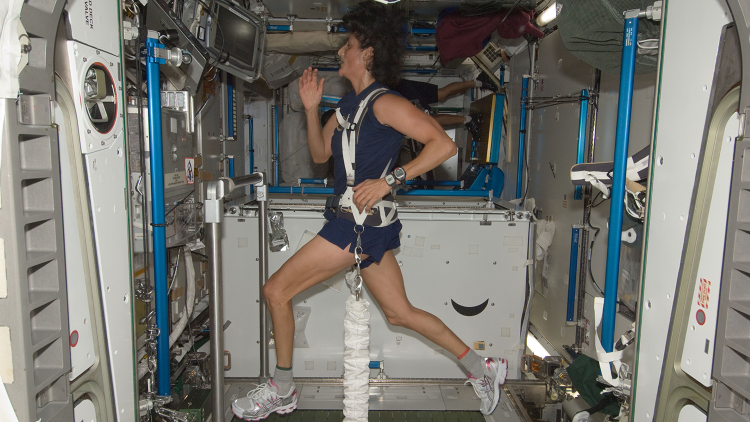
Since the dawn of human space exploration, astronauts, scientists, and engineers have examined the short- and long-term effects of microgravity (often mistakenly called zero-gravity) on the human body. This includes the distribution of fluids to the upper body (called “puffy face”), an increase in height from the spine slightly extending, how solar and cosmic radiation impacts humans at the genetic level, and skeletal and muscle loss. However, arguably all these aspects pale in comparison to how the microgravity from spaceflight impacts the heart, and specifically heart muscle cells.
Now, a team of researchers led by the University of Chicago (UChicago) has conducted an in-depth study regarding how microgravity impacts the human heart, whose findings were recently published in the journal npj Microgravity. For the study, the researchers sent five mice to the International Space Station (ISS) and kept five in the ground as part of a control group, with three mice being kept inside an enclosed environment. The primary motivation behind the study was to fill a knowledge gap regarding how the heart muscle was impacted at the cellular level from long-term spaceflight.
While the total study period lasted about 38.5 days, the reason mice were chosen was because their heart rates are anywhere from six to ten times the human heart rate per minute. While the average human heart beats 60 to 100 times per minute, a mouse’s heart beats up to 600 times per minute. Thus, if a mouse’s heart can withstand microgravity, the case could be made a human heart could withstand it, too.
At the end of the approximate 38.5-day period, the researchers found that the heart muscle cells were largely unaffected by microgravity, along with indicating they could withstand longer periods under microgravity, too.
“There are a lot of things in common between cardiac and skeletal muscle, so we thought that we would see some decrease in heart function from space travel,” said Dr. Jonathan Kirk, who is an Associate Professor of Medicine at UChicago and a co-author on the study. “But in the end, we’re pretty happy that this is the result we found. It doesn’t give us something else to dig into scientifically, but it’s obviously wonderful news for astronauts in the space program that the heart is going to be okay in space.”
While this is promising, the researchers also found the heart muscle cells exhibited evidence of inflammation, which the team aspires to study more going forward, along with studying tissue samples directly collected on the ISS, as opposed to waiting for them to return to Earth. This could result in more pristine samples, since the tissues endure heavy gravity loads during the re-entry into Earth’s atmosphere.
As noted, the effects of microgravity on the human body have been studied in detail since the dawn of human spaceflight. However, while the current record for the longest consecutive time in space is just shy of 438 days, it is estimated that a round-trip human mission to Mars could last between two to three years. Therefore, it is imperative that scientists and astronauts learn as much as possible regarding how microgravity affects the heart so steps can be taken to mitigate long-term health consequences.
For now, astronauts on the ISS are required to exercise for about 2.5 hours per day, six days a week, but the total amount of physical activity being only 1.5 hours per day as the additional hour is used for hygiene and equipment setup and teardown.
What new insights into spaceflight and heart muscle cells will researchers make in the coming years and decades? Only time will tell, and this is why wd science!
As always, keep doing science & keep looking up!