 Universe Today
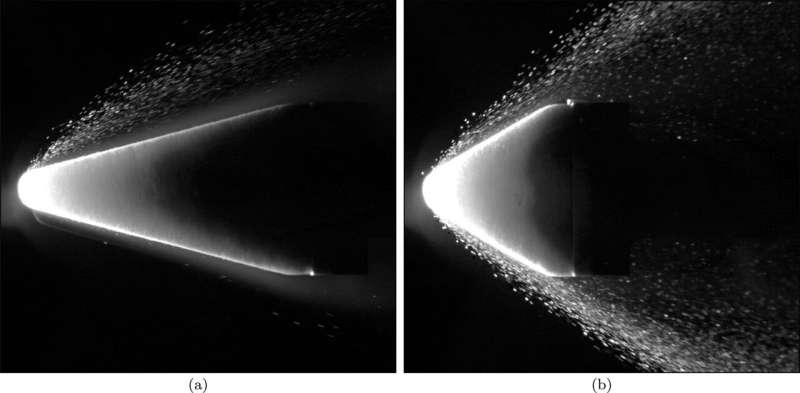
Heat shield design is one of the most critical aspects of missions that plan to either land on a planet’s (or moon’s) surface or return to our own. Spacecraft that have to survive the fiery, hypersonic plunge through an atmosphere require these systems. For decades, heat shields have been designed to slowly burn away in a process called ablation, which is intended to dissipate the incredible thermal energy or reentry. But, there’s another, less understood phenomenon that affects them too - spallation, where a heat shield sheds material in violent, unpredictable “bursts”. This second mode of destruction seems to be particularly prevalent in oxygen-deprived atmospheres, like that of Titan, where the Dragonfly helicopter plans to land in the not too distant future. A new paper published in Carbon from researchers at the University of Illinois Urbana-Champaign (UIUC) performed some tests showing just how different those heat shields might need to be.
Phenolic Impregnated Carbon Ablator, or PICA, is the most successful heat shield material ever invented. After first being used on the Stardust sample return capsule, it’s since been used on Curiosity and Perseverance’s landing capsules, as well as the OSIRIS-REx asteroid sample return mission. A modified form, PICA-X, is currently being used on the Crew Dragon capsules that SpaceX uses to launch astronauts to the ISS.
PICA starts its life as “FiberForm”, a low-density matrix of carbon fibers. Engineers then infuse this raw form with phenolic resin, creating the wonder material. During reentry, this combination allows the carbon matrix to char while the impregnated resin undergoes “pyrolysis”, collecting the heat from the extreme reentry speeds and then outgassing to cool the spacecraft down.
Fraser discusses some milestones for the Dragonfly mission.Those methods are relatively well understood, but there is another degradation mechanism at play - spallation. It is the mechanical erosion or physical displacement of chunks of the heat shield due to extreme aerodynamic shear forces, pyrolysis outgassing, and thermally induced stresses. In other words, it’s what happens when the heat shield is literally ripped apart rather than burnt up. However, historically it’s been extremely difficult to model spallation, and aerospace engineers have used a simple rough mathematical multiplier to approximate it in their calculations.
According to the UIUC researchers, that is a dramatic oversimplification. They tested samples of both PICA and its precursor (FiberForm) in the Plasmatron X, which is an inductively coupled plasma wind tunnel rather than the name of a new Decepticon leader. In that chamber, the material is subjected to hypersonic plasmas, but critically, it can be modified to model any type of atmosphere.
In air, the heat shield performed largely as expected. But pure nitrogen, its behavior shifted dramatically. The particle release from the outgassing resin became unsteady, and the high-speed camera the team had set up to watch the process captured long periods of no action at all followed by massive, high amplitude “bursts” where hundreds of particles were violently ejected into the plasma flow in a fraction of a second.
Fraser discusses different materials for heat shields.According to the paper, this dramatic change is due to the lack of oxygen. In an atmosphere that has significant amounts of oxygen, the carbon fibers are rapidly oxidized, keeping the surface of the material highly permeable and allowing the gas created by the heated resin to escape. But without oxygen, there is no oxidation. The heat shield heats up to 3000K and the carbon in the fibers sublimates and reacts with the nitrogen atmosphere. These carbonaceous species then flow to cooler regions of the heat shield and condense into a solid deposit. This traps the pores of the heat shield where gas can escape, essentially “choking” it, which causes internal pressure to build up behind those deposits. Eventually, the pressure becomes too great for the deposit to hold on, and entire chunks of the heat shield simply break away as a result.
Watching this process with a hyper-fast camera, the researchers estimated that up to 45% of the material lost during the reentry process in an oxygen-deficient atmosphere will be from spallation. That deserves more than just a rough estimate in an equation, but so far most of the atmospheres heat shields have dealt with have contained a decent amount of oxygen.
Titan is the exception, and as Dragonfly continues its engineering and design phase, the researchers point out the very real concerns that there could be spallation events that could throw off the entire aerodynamics of the reentry capsule - enough that, if not correct, it could endanger the entire mission. That’s certainly something to consider, given the risk to the mission. Just because something is hard to model, doesn’t mean that we shouldn’t at least try - and the data collected in this wind tunnel in Illinois is a first step towards successfully doing so.
Learn More:
UIUC - Planning Titan entry? New lab tests flag nitrogen-driven heat shield debris risks
B. M. Ringel et al. - Unsteady spallation of low-density carbon fiber ablators

