Universe Today
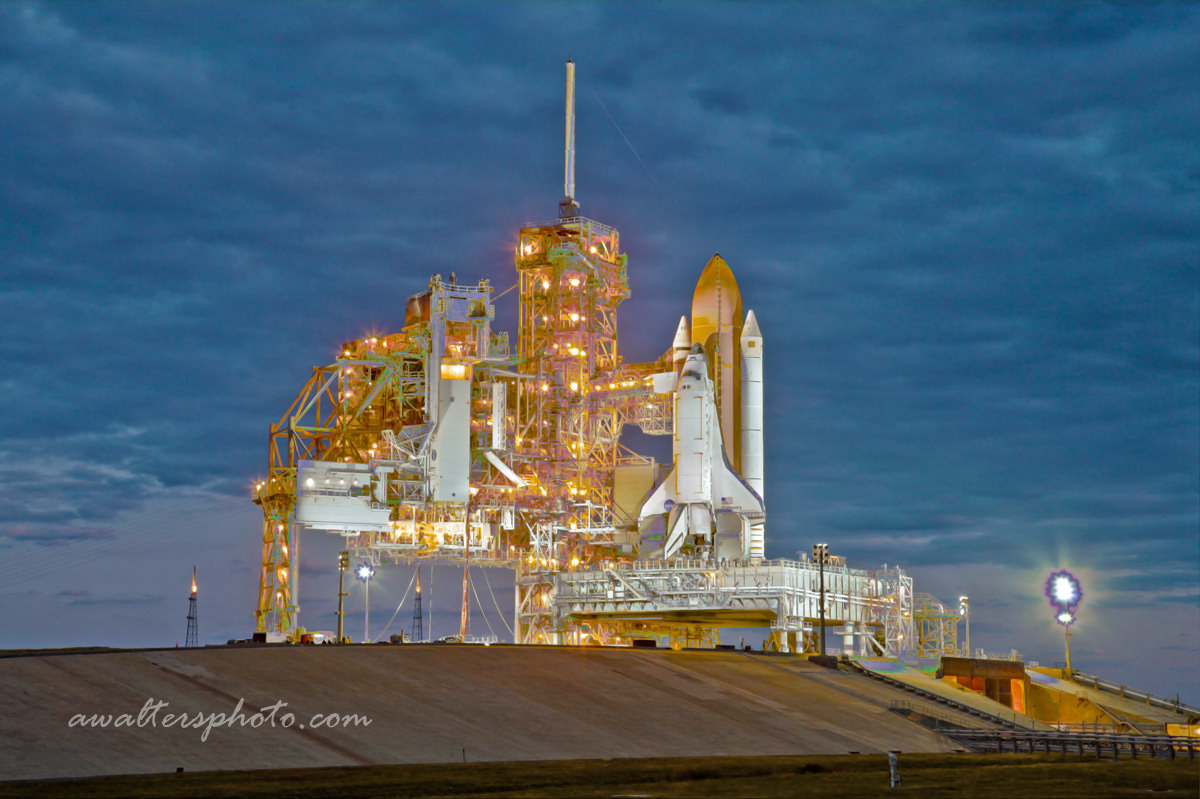
NASA announced today that the launch of space shuttle Discovery for the STS-133 mission has been pushed back to no earlier than Feb. 3, 2011, to allow for more testing on the external tank stringers. Cracks on the stringers were found after the tank was loaded with cryogenic fuel for a subsequently scrubbed launch attempt in November.
“We’ve hit a point where there is no obvious answer for what has occurred,” said shuttle program manger John Shannon at a press briefing today, “so we have to take the next step and understand to very fine level the stress on the stringers and to find if that is a root cause of what happened to the STS-133 tank. I need to better understand the conditions to fly that fly tank confidently. It’s unfortunate we are not making the December launch window. But we want to make sure that we do this exactly right.”
The cracks appeared on two 21-foot-long, U-shaped aluminum brackets, called stringers, on the shuttle's external tank. NASA repaired the cracks and reapplied foam to the exterior of the stringers. But they don't understand the reasons the cracks appeared, and NASA managers feel this is likely a unique event.
"We don’t have any data that we have been flying with cracks all along," said Shannon.
The launch window is open from Feb. 3 -10. This delay also moves the STS-134 launch from February to April. This delay, however, doesn’t mean there won’t be any activity at the International Space Station. The crew for Expedition 26 launches on the Soyuz on Dec. 15, Japan’s HTV supply ship launches on January 20, a Progress resupply ship docks on Jan. 31, and ESA’s ATV resupply vehicle is scheduled for a February 15th launch.
NASA’s Bill Gerstenmaier said the teams will try to replicate what engineers think is the most leading cause is of the failure. “They will build up a stringer panel and put some defects in, the manufactured tolerances, and try to replicate the crack we saw during cryo loadings,” he said. “We’ll also do a test at cape where we load tank with cryogenic propellant and put some devices on the tank to monitor how it loads up and that will serve to validate the math models and the environment we see during loading.”
Gerstenmaier added that between those two tests, they should be able to understand what caused the cracks, but there is now way they can do those tests before December 17, the data NASA had been shooting for to launch STS-133.
“The teams have done tremendous job, but it’s time to pursue a different path,” he said. He also provided a quote from former NASA pioneer Hugh Dryden, who said the purpose of tests is to separate real from imaged problems and to reveal overlooked and unintended problems.