Universe Today
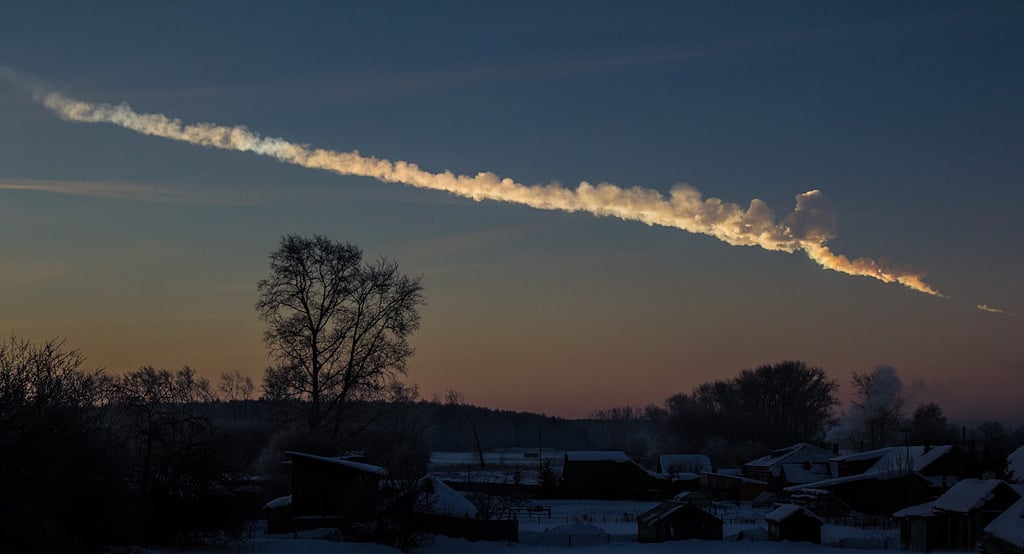
What do you do when a fireball lights up the sky and every camera meant to capture it comes up empty? Last spring, a bright meteor streaked across Alaska in broad daylight, and the usual tools scientists rely on, satellites and all sky cameras, failed to give a clear picture of what had happened. So a team led by Sandia National Laboratories turned to something the meteoroid could not hide from, the sound it left behind.
As an object like this tears through the atmosphere at tremendous speed, it generates a shock wave similar to a sonic boom, only produced high in the sky and stretched out along a long path. That shock wave can travel for hundreds of miles as infrasound, a rumble pitched far too low for human ears to hear, and some of its energy can also pass into the ground itself, registering as a faint vibration on the same sensors built to monitor earthquakes and volcanoes.
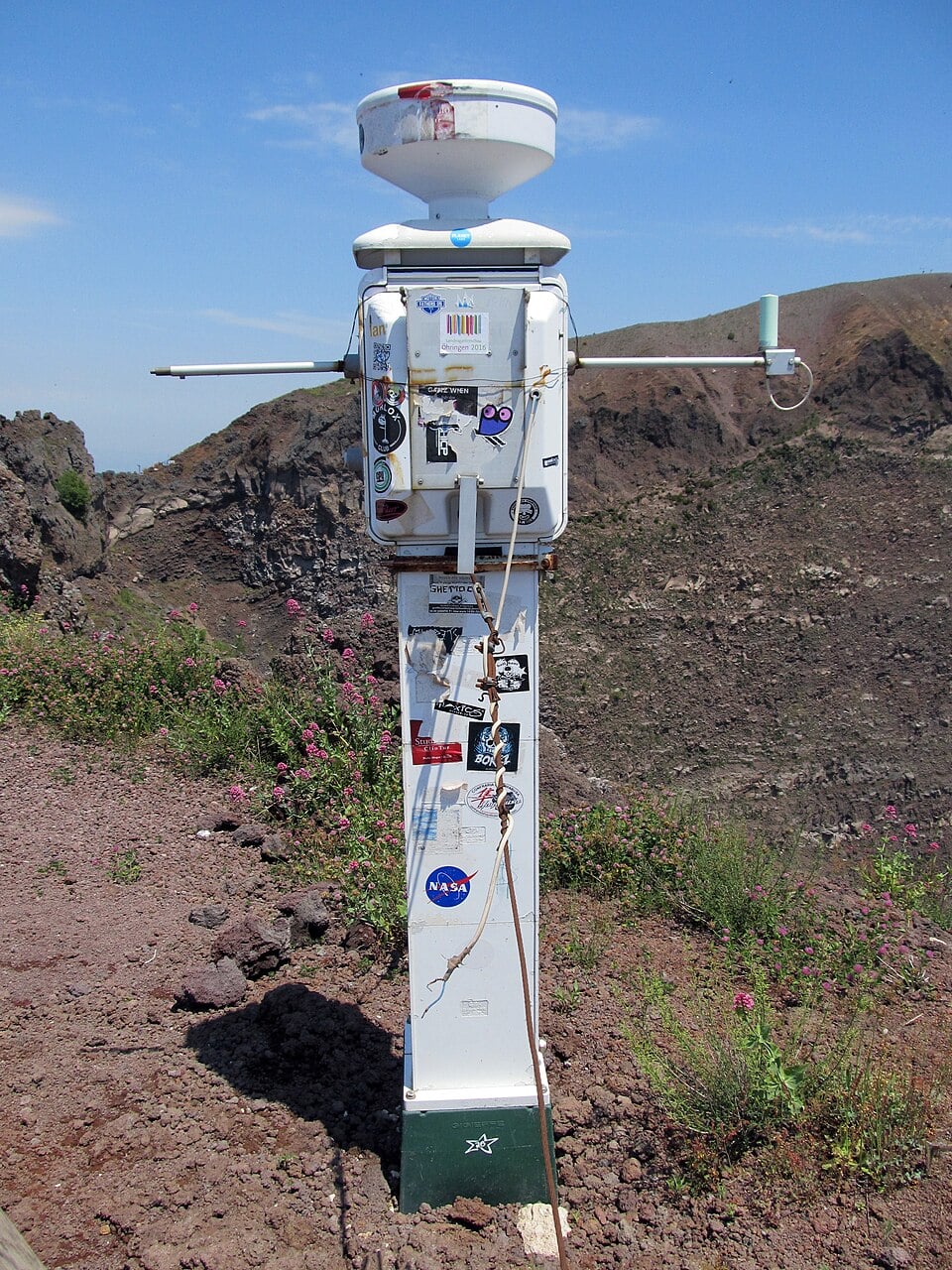 Networks of seismic monitoring stations like this one, more commonly used to track volcanic activity such as magma movement beneath Vesuvius, can also pick up the faint ground vibrations left behind by a fireball breaking apart high in the atmosphere (Credit : Daryl Mitchell)
Alaska happens to be exceptionally well equipped for exactly this kind of accidental listening, and it was a sharp eyed research assistant named Logan Scamfer who first noticed something odd in the data. Rather than the usual earthquake pattern, he spotted a distinctive N shaped wave, the signature of a decaying shock front, showing up again and again across different stations. By the time news reports confirmed a fireball had been seen that day, his hunch was already proving right.
When Logan later joined Sandia physicist Elizabeth Silber for a summer internship, the pair decided to see just how much of the fireball's story they could reconstruct without a single clear photograph to guide them. In the end, 57 separate instruments across the region, a mix of seismic stations and infrasound sensors, had picked up the event, some from as far away as 360 miles. That gave the team enough to work with. They rebuilt the object's flight path, worked out where it likely broke apart, and passed their best estimate of the debris zone to a colleague at NASA, who used weather radar to hunt for the tell tale signature of falling fragments, something radar can occasionally catch even though it never sees the fireball's flash itself.
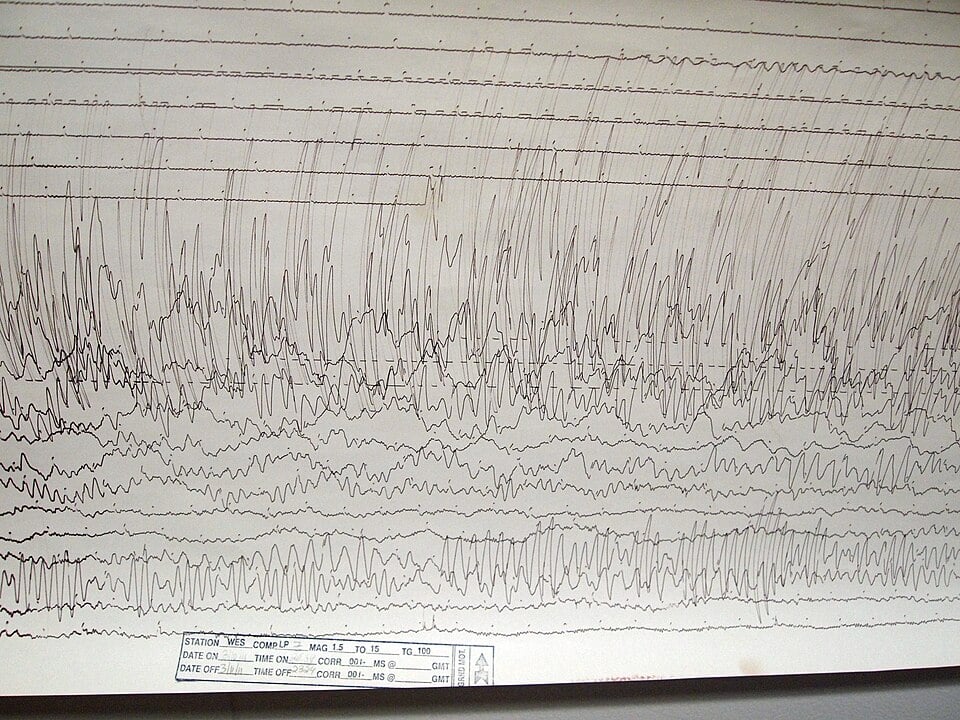 A real seismogram, showing the kind of trace scientists study every day. Buried in charts just like this one, researchers spotted an unusual N-shaped spike, the signature of a decaying shock wave from the Alaska fireball, hiding among the ordinary earthquake data.
The reconstruction held up well against an entirely independent source, dashcam and security camera footage shared by members of the public, calibrated against the night sky to work out exactly what each video had captured. Together, the evidence pointed to an object entering the atmosphere at a shallow angle of about 19 degrees, travelling at somewhere between 50,000 and 56,000 miles an hour, fast enough to cross the entire United States in around three minutes, and releasing energy equivalent to roughly 38 tons of TNT. Tracing its path further back suggested it most likely began its journey in the main asteroid belt.
It was the first time researchers had used sound and ground vibration alone to guide radar successfully to a debris fall, and it points to something genuinely useful for the future. When the sky refuses to cooperate, the ground, it turns out, has been listening all along.
Source : How scientists support planetary defense by reconstructing a fireball's path using sound waves