Universe Today
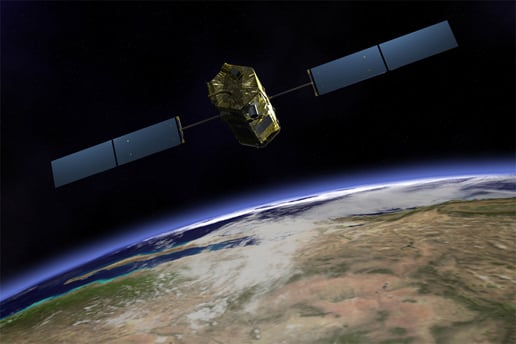
NASA’s first spacecraft dedicated to studying atmospheric carbon dioxide is ready for launch. The Orbiting Carbon Observatory, or OCO, is scheduled for liftoff aboard a Taurus XL rocket on February 24 from the Vandenberg Air Force Base, California at 1:51:30 a.m. PST. The spacecraft’s final polar orbit will be 438 miles. Carbon dioxide is the leading greenhouse gas driving changes in Earth’s climate. OCO will provide the first complete picture of human and natural carbon dioxide sources as well as their “sinks,” the places where carbon dioxide is pulled out of the atmosphere and stored.
OCO will map the global geographic distribution of the CO2 sources and sinks in the atmosphere and study their changes over time. The new observatory will dramatically improve global carbon dioxide data, collecting about eight million precise measurements every 16 days for at least two years.
CO2 is a critical component of the Earth's atmosphere. Since the beginning of the industrial age, the concentration of CO2 has increased by about 38%, from about 280 parts per million to over 380 parts per million. Scientific studies indicate that CO2 is one of several gases that trap heat near the surface of the Earth. These gases are known as greenhouse gases. Many scientists have concluded that substantial increases in the abundance of CO2 will generate an increase in the Earth's surface temperature. Historical records provide evidence of this trend, which is often called global warming. Current research indicates that continuing increases in atmospheric CO2 may modify the environment in a variety of ways. These changes may impact ocean currents, the jet stream and rain patterns. Some parts of the Earth might actually cool while the average temperature increases, and so this phenomenon is also called climate change.
OCO should help determine how much human-produced CO2 is contributing to climate change.
Source: NASA