Universe Today
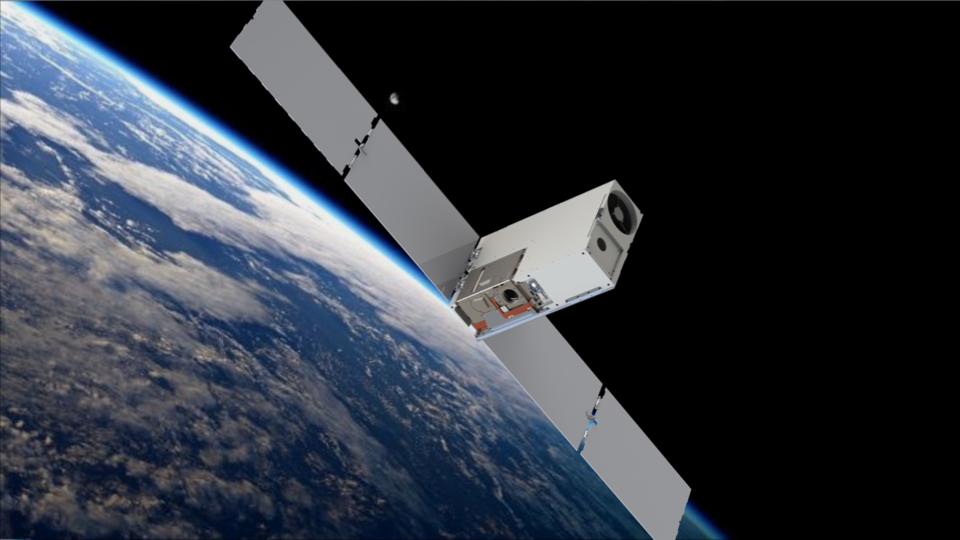
NASA’s Star-Planet Activity Research CubeSat (SPARCS) is a small space telescope that launched to space on January 11th, 2026. Created by NASA and researchers from the School of Earth and Space Exploration (SESE) at the University of Arizona, the mission is tasked with monitoring the flares and sunspot activity of low-mass stars (M-type red dwarfs and K-type orange dwarfs). The telescope is equipped with far- and near-ultraviolet instruments to assess the habitability of the space environment around planets orbiting these stars.
The telescope is a 6U CubeSat, meaning it consists of six cubical units measuring 10 cm (4 inches) on a side, joined to form a spacecraft 2 units wide and 3 units long. As NASA recently announced, the spacecraft obtained its "first light" images of a distant solar system observed by the SPARCS space telescope on Feb. 6th, 2026. With these images now in hand, the SPARCS team is ready to learn more about the galaxy’s most common stars in the hopes of addressing which worlds beyond the Solar System could be habitable.
Specifically, SPARCS will monitor lower-mass stars that are the most common in the Universe. Whereas K-type stars account for 11% to 12% of all main-sequence stars in our galaxy, M-type red dwarfs account for roughly 75%. Being so common, scientists are eager to know if these types of stars can support some of the estimated 50 billion planets orbiting within their parent stars' habitable zones. This is especially true of M-type stars, which are prone to flare activity and emit large amounts of UV radiation.
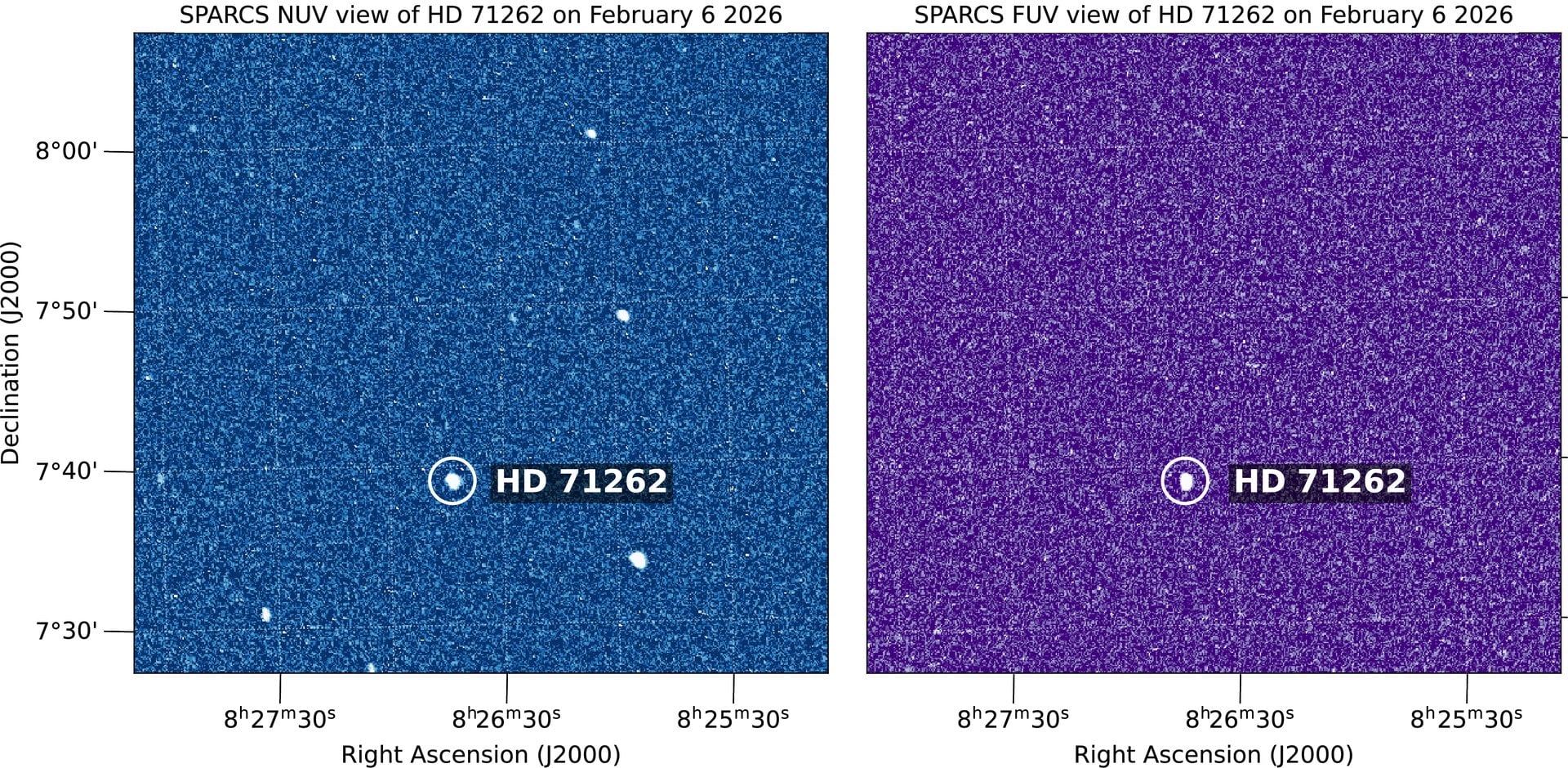 This pair of images shows stars observed Feb. 6, 2026, by the SPARCS space telescope simultaneously in the near-ultraviolet, left, and far-ultraviolet, right. Credit:NASA/JPL-Caltech/ASU
This activity and other characteristics can have a dramatic effect on planetary atmospheres, so knowing more about the host stars is vital to determining exoplanet habitability. The first images were of HD 71262, a K-type star located about 650 light-years from Earth in the Constellation Sculptor (see above). SPARCS observed this system simultaneously in the near-ultraviolet and far-ultraviolet spectra. The star appears alone in the far-UV image (left) while the near-UV image (right) managed to capture several more stars visible in the background.
"Seeing SPARCS’ first ultraviolet images from orbit is incredibly exciting," Said SPARCS Principal Investigator Evgenya Shkolnik, professor of Astrophysics at the SESE (which leads the mission, in a NASA press release. "They tell us the spacecraft, the telescope, and the detectors are performing as tested on the ground, and we are ready to begin the science we built this mission to do."
Like all "first light" images, these captures have validated the SPARCS instruments' ability to operate in space and indicate that it is ready to transition to full science operations. This is especially important since SPARCS observations depend on highly precise ultraviolet (UV) measurements. This is accomplished using its detector-integrated filters, which were made using a technique that allows them to be directly deposited on the UV-sensitive "delta-doped" detectors. This eliminates the need for a separate filter element, making SPARCS one of the most sensitive space telescopes of its kind.
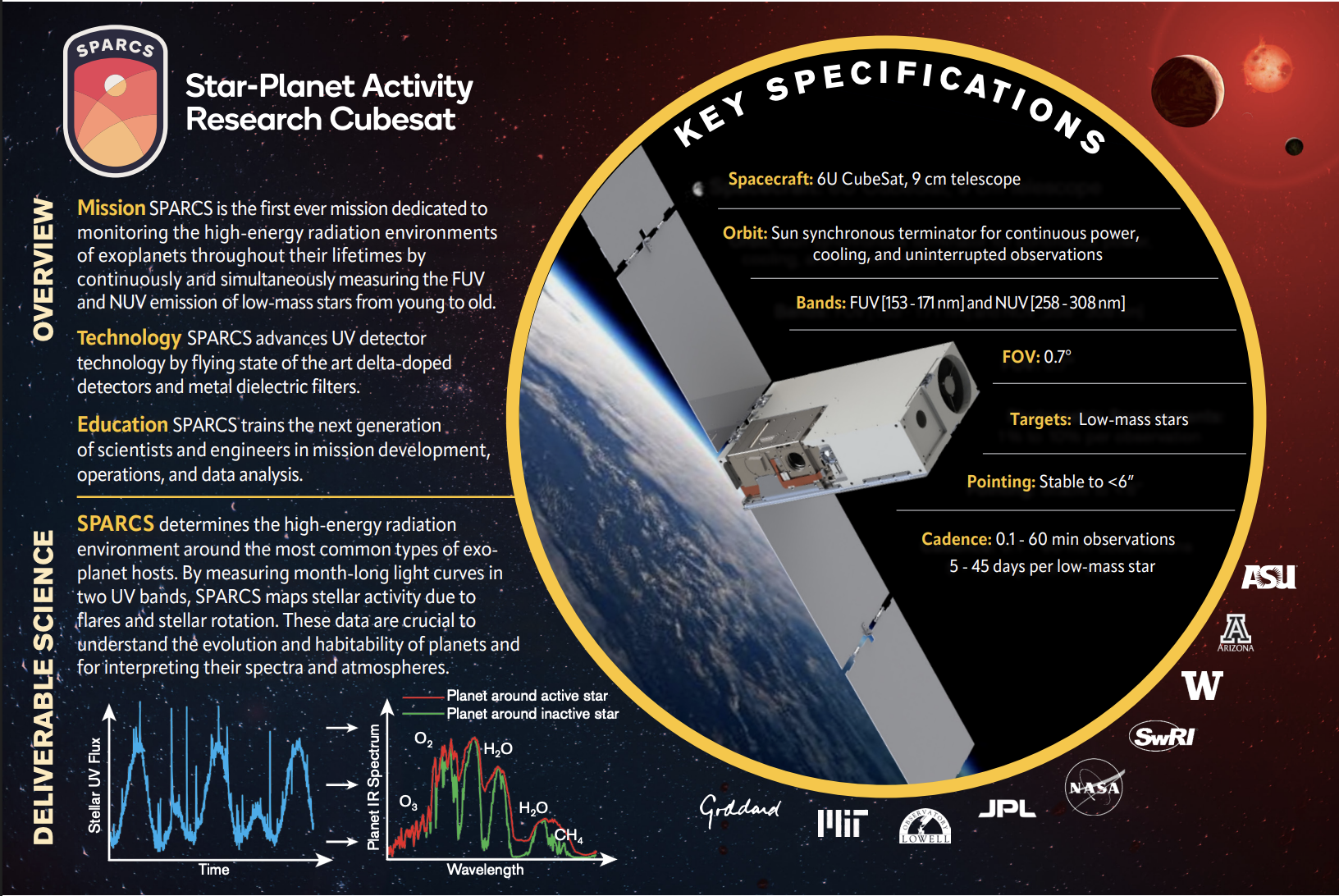 A breakdown of what the SPARCS mission aims to accomplish once science operations begin. Credit: NASA/ASU-SESE
Said Shouleh Nikzad, the lead developer of the SPARCS camera (dubbed SPARCam) and the chief technologist at NASA’s Jet Propulsion Laboratory in Southern California:
I am so excited that we are on the brink of learning about exoplanets’ host stars and the effect of their activities on the planets’ potential habitability. I’m doubly excited that we are contributing to this mission with detector and filter technologies we developed at JPL’s Microdevices Laboratory. We took silicon-based detectors — the same technology as in your smartphone camera — and we created a high-sensitivity UV imager. Then we integrated filters into the detector to reject the unwanted light. That is a huge leap forward to doing big science in small packages, and SPARCS serves to demonstrate their long-term performance in space.
The mission also relies on an onboard computer with machine learning algorithms that can process data and autonomously adjust observation parameters. This allows SPARCS to better monitor flare development of stars in real time. This technology also offers a preview of what next-generation NASA missions will accomplish, like the Habitable Worlds Observatory (HWO) and the UltraViolet EXplorer (UVEX) mission. David Ardila, SPARCS instrument scientist at JPL, added:
The SPARCS mission brings all of these pieces together — focused science, cutting-edge detectors, and intelligent onboard processing — to deepen our understanding of the stars that most planets in the galaxy call home. By watching these stars in ultraviolet light in a way we’ve never done before, we’re not just studying flares. These observations will sharpen our picture of stellar environments and help future missions interpret the habitability of distant worlds.
Further Reading: NASA