Universe Today
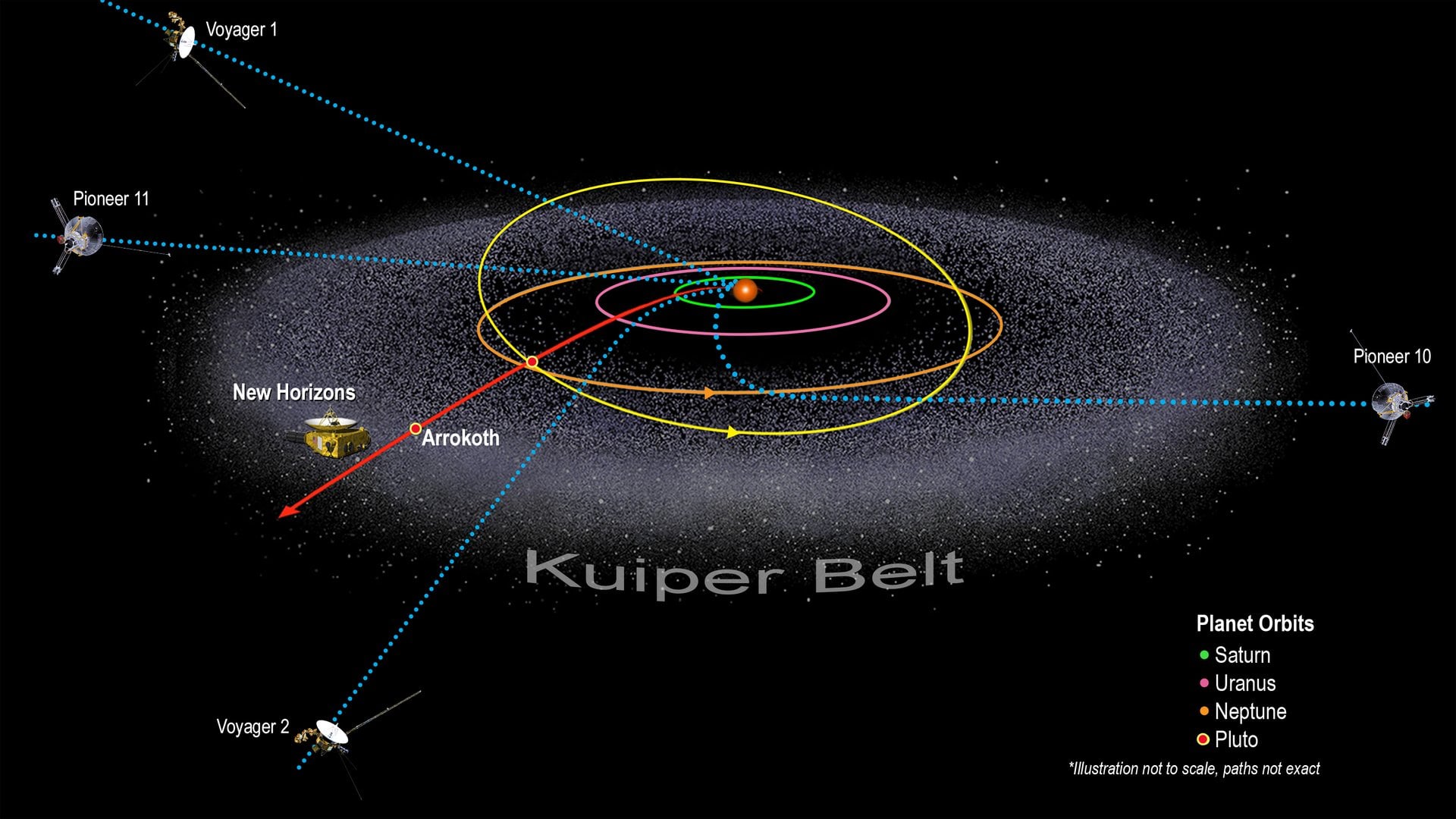
If you visit the New Horizons mission website frequently, you'll notice that the spacecraft continues to generate excellent science as it plows its way through the Kuiper Belt. It recently woke up from its latest hibernation period in good health and is transmitting data it gathered back to Earth. The spacecraft, in addition to studying the Jupiter system in 2007, the Pluto system in 2015, and the Kuiper Belt Object Arrokoth in early 2019, has been doing some other fascinating solar system science since then thanks to two mission extensions in 2016 and 2023. Now, as a result of budget cuts at NASA, an important part of the NH science mission could end as early as October of this year.
Part of the mission's science program is a continuous study of the heliosphere, conducted since launch to measure the characteristics of the Sun's influence all the way out of the Solar System. Two instruments conduct this science: the PEPSSI (Pluto Energetic Particle Spectrometer Science Investigation) and SWAP (Solar Wind at Pluto), two more modern instruments than the Voyagers carried "out there" performing heliophysics science that can't be gotten any other way. According to New Horizons Principal Investigator Alan Stern, these instruments are crucial to heliophysics studies. "There is an almost continuous trace of data across the solar system from Earth outward from these instruments since launch," he said. "Next, New Horizons will go through the heliosphere's termination shock in the next couple of years and pass the heliopause in the next ten years or so; and this data from SWAP and PEPSSI are the only chance we or anyone else will have to measure those events and then to study interstellar space after Voyager."
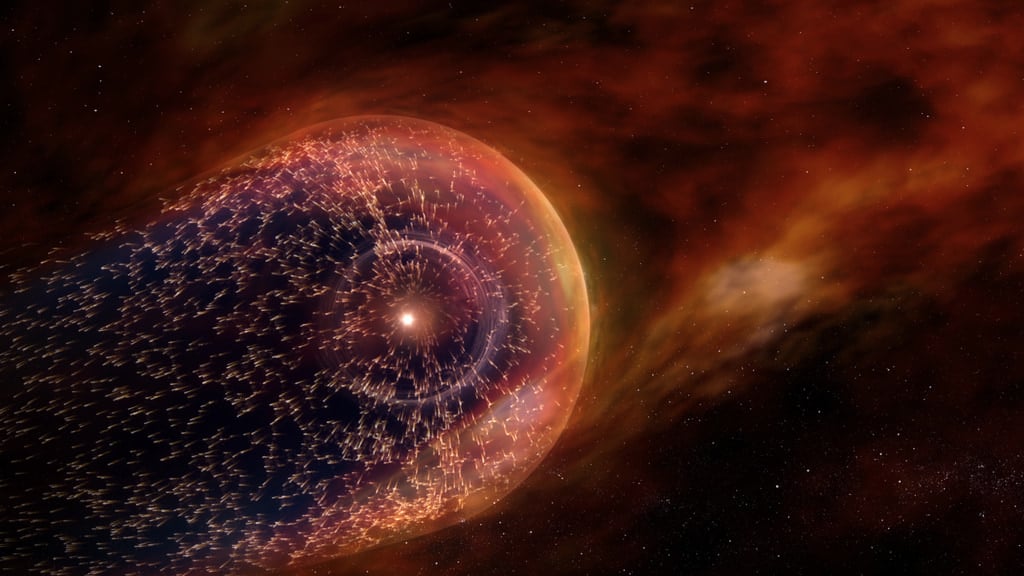 An artist's concept of the heliosphere generated by the Sun's magnetic field and solar wind. Credit: NASA's Goddard Space Flight Center Conceptual Image Lab
Lack of Funding May Stop Helio Data-taking
Now on its second extended mission, New Horizons heliospheric science has equal priority with planetary science. That means the spacecraft looks at Kuiper Belt objects and also gathers data about the influence of the solar wind and high-energy charged particles throughout the solar system. That data-gathering takes place constantly, even when the spacecraft is in hibernation. The information gets stored onboard and sent back to Earth during New Horizons' waking periods. The data are piling up, and as the spacecraft gets farther from Earth, it takes longer for the data to make the trip. Planetary science has been getting its data, as has heliophysics, but heliophysics has been unable to pay its yearly $2 million for instrument operations and spacecraft data recovery since fiscal year 2024.
New Horizons mission overall funding will continue in the 2027 budget, but according to Stern, there hasn't been enough money the past couple of years to cover all of its mission control costs. These include taking more of the PEPPSI and SWAP data back and then sending it to Earth. "We couldn't staff mission control 12 months a year," he said, noting that they started hibernating the spacecraft to save money. "NASA's Planetary Science budget was funding us $10 million a year, and the Heliophysics budget had been funding us at $2 million per year, until the heliophysics money stopped coming," Stern explained. "As a result, every year more and more data is now backlogged on the spacecraft recorders. To get that backlogged data to Earth, every year we've asked for a restart of the heliophysics funding, but it's never come."
In stark terms, the budget can't cover heliophysics science from the spacecraft anymore. "Now we've reached the point where we can no longer afford to take heliospheric data," Stern said. "Beginning in October, we have to suspend using those instruments. They won't be collecting any data until helio or someone can again support the two million per year to allow SWAP and PEPSSI data collection and transmission to Earth."
It's not Political, It's Just a Lack of Money to Pay the Bills
To be clear, it's not a matter of any fight between NASA divisions; it's more that budget cuts mean the mission simply won't have the money to staff mission control and run the heliospheric instruments to gather data. According to Fran Bagenal, New Horizons team member and planetary scientist, the team really needs to keep the helio science going. "It's worth it," she said. "I understand the concern that Helio has at NASA. They've got other instruments that are making measurements around the Earth and the L1 point measuring the solar wind and space weather, and they're short of money."
As Stern points out, there is no other source of data on the outer heliosphere right now but New Horizons, which is now having to pause because of that lack of funding. Unless the budget issue is solved, the only choice facing the mission team is to shut down the two heliospheric instruments. And that threatens a program that has measured the solar wind and particles ever since launch. Bagenal explained that tracking changes in the solar wind throughout the Solar System is a unique advantage that New Horizons has with its newer instruments. "I'm a magnetospheres person," she said, "but obviously, it's extremely important to know and understand the environment around the planets and out through the Kuiper Belt into the interstellar medium."
New Horizons in the Future
The New Horizons spacecraft itself is in great shape, according to the mission team. It has enough fuel and power to go through to the beginning of the 2050s, gathering information about the environment of the heliosphere and then interstellar space, as the Voyagers did.
Scientists think that the termination shock and heliosheath (the boundary between the solar wind and interstellar space) will be revealed in new detail from measurements that SWAP and PEPSSI on New Horizons will make. In particular, heliospheric scientists want to improve on the Voyager 1 and 2 measurements.
"It seems absurd that we're focusing on trying to keep the money flowing to keep these instruments working when it's so obvious that we can keep getting heliophysics data at relatively small cost," Bagenal said. "This really ought to be dealt with by people at NASA, like Administrator Isaacman, to step in and say, "Look, we're NASA and only the United States can do this heliospheric science at the frontier of our solar system, so let's do it."
Gathering Support for Funding Heliospheric Science Data
James Green, himself a heliophysicist who spent 12 years as head of planetary science at NASA and then two years as NASA chief scientist, is a strong supporter of the overall mission and also emphasized the importance of this heliophysics science and the need to continue funding it on New Horizons. He explained that NASA does respond to opinions outside the agency when challenges like this come up. "The current discussion is, 'Should they do that or should they not do that?'" he explained. "Well, the ability for that decision to be made, which sometimes happens in this way, is for the community to say, yes, we think this is a really good idea. It's well worth the $2 million to get unique data."
Green also said that the New Horizons heliophysics data has importance beyond just our own Solar System. "Every star has magnetic fields. Most stars have planets. Some of these planets are habitable, and these stars that are moving into and through interstellar clouds are experiencing the same thing we are. And these stars, instead of calling them heliospheres, these stars have what we call astrospheres," he said. "By understanding the physics going on with ours, we can help see how astrospheres of other stars are affecting the habitability of those planets. So these kinds of measurements just cut through several really important areas. It's heliophysics, but it's also astrophysics."
Green is circulating a public petition to send to NASA, explaining the importance of New Horizons heliophysics data and why the funding to continue getting that information is necessary. He's circulated it to the planetary science as well as the heliospheric community and has gotten several hundred signatures already. Members of the public who are interested in supporting the effort are welcome to sign as well at Change.org under the title "Heliophysics Community Support for Continued Measurements by NASA's New Horizons mission."