Universe Today
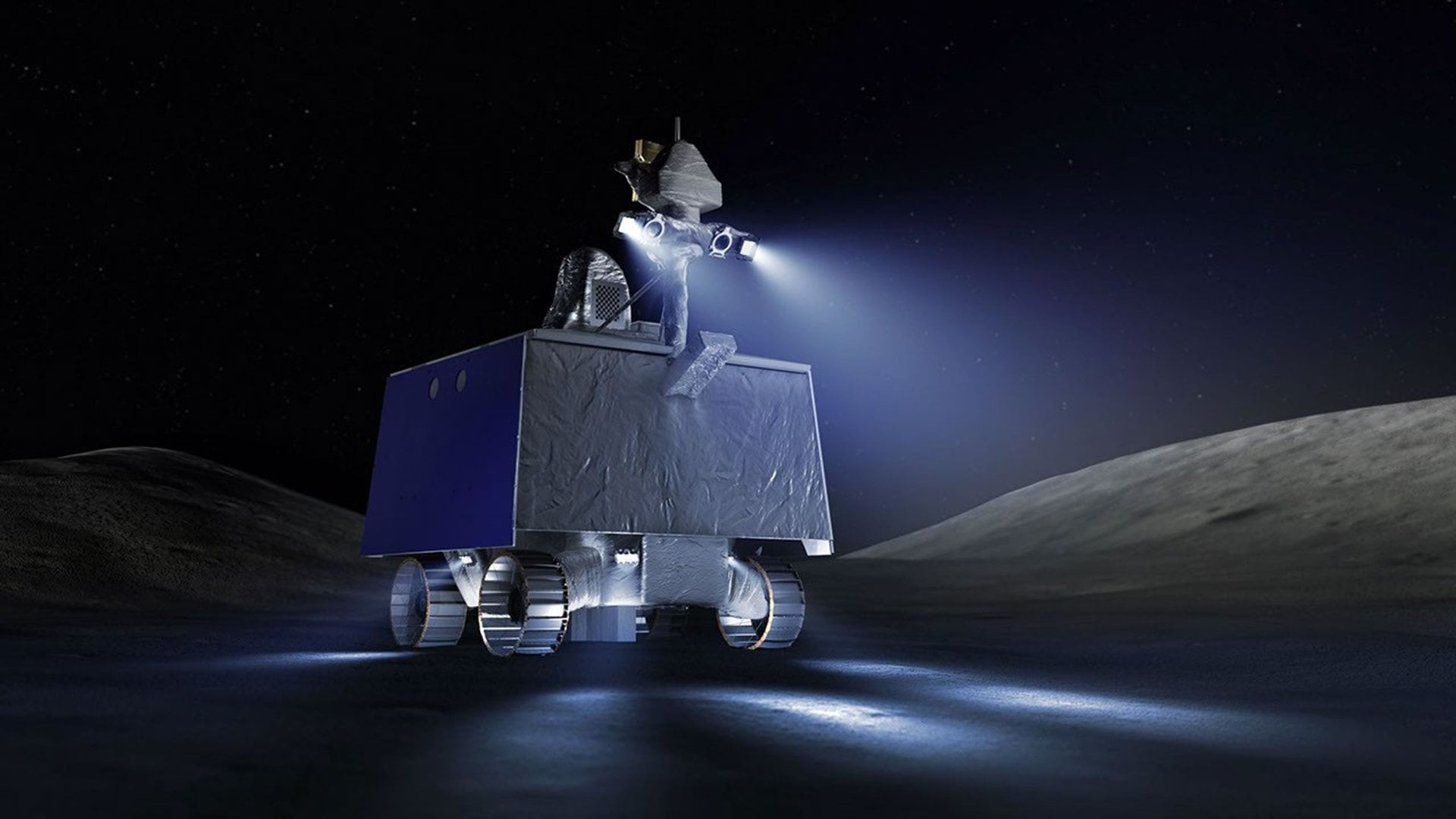
Between the Artemis Program, the ESA's Moon Village, and the Sino-Russian International Lunar Research Station (ILRS), the next step in space exploration is clear: We're going back to the Moon, and this time, to stay! This plan requires significant investment, research, development, and strategies adapted to lunar conditions. In particular, mission planners are concerned about the hazard posed by lunar regolith (aka. "Moon dust"). In addition to being electrostatically charged, causing it to stick to literally any surface, it is incredibly fine and easily kicked up by rovers and spacecraft as they land and take off.
To complicate matters further, lunar regolith is hazardous to astronaut health, leading to respiratory problems and potential long-term damage. Given its hazardous nature, it is therefore vital to understand the properties and mechanical behavior of lunar regolith. In a recent study, a team of geoscientists demonstrated that "immature" regolith, characterized by coarser grains and less space weathering, can be used by rovers without generating significant dust clouds.
The study was conducted by Vanesa Muñiz Lloréns and Michael Lucas, a doctoral student of lunar petrology at the University of Notre Dame and assistant scientist at the Florida Space Institute's Exolith Lab at the University of Central Florida. The paper describing their findings was presented at the 2026 Lunar Planetary Science Conference (2026 LPSC).
 An artist's rendering of a NASA Artemis astronaut working on the Moon's surface. Credit: NASA
Unlike soil here on Earth, lunar regolith is the product of billions of years of meteorite impacts and exposure to the vacuum of space. This has left much of the lunar surface covered in extremely fine, pulverized silica and trace metals. Regolith maturity reflects the Moon's geological evolution and cumulative exposure to space weathering over billions of years. In particular, the lunar surface was once characterized by volcanic activity, resulting in silica grains fusing into glass and metals (like iron) being pushed up from the interior.
Over time, this material was exposed to space weathering, which includes micrometeorite impacts and solar wind irradiation, producing finer grains and iron nanoparticles, or nanophase iron (npFe). This dust is especially hazardous to future missions targeting the Moon's South Pole-Aitken Basin because of its very fine, electrostatically charged nature. In short, it gets into machinery, causing mechanical problems, and clings to every surface it touches!
Since rovers will play a vital role in the Artemis Program, exploring both the lunar highlands and south polar regions, the team conducted a trafficability study using actual rover wheels in LHS-1E. This engineering-grade simulant is analogues to the immature regolith found in the lunar highlands and the feldspathic regolith expected at the lunar south pole. As they wrote:
While rover mobility and wheel-regolith interactions have been extensively studied using lunar simulants, the influence of wheel design on particle-scale morphology remains poorly constrained, despite its role in controlling shear strength, traction, and dust generation. Here, we investigate how repeated wheel passes affect particle size and shape using three rover wheel designs. This has implications for rover mobility, dust mitigation, and long-term lunar surface operations.
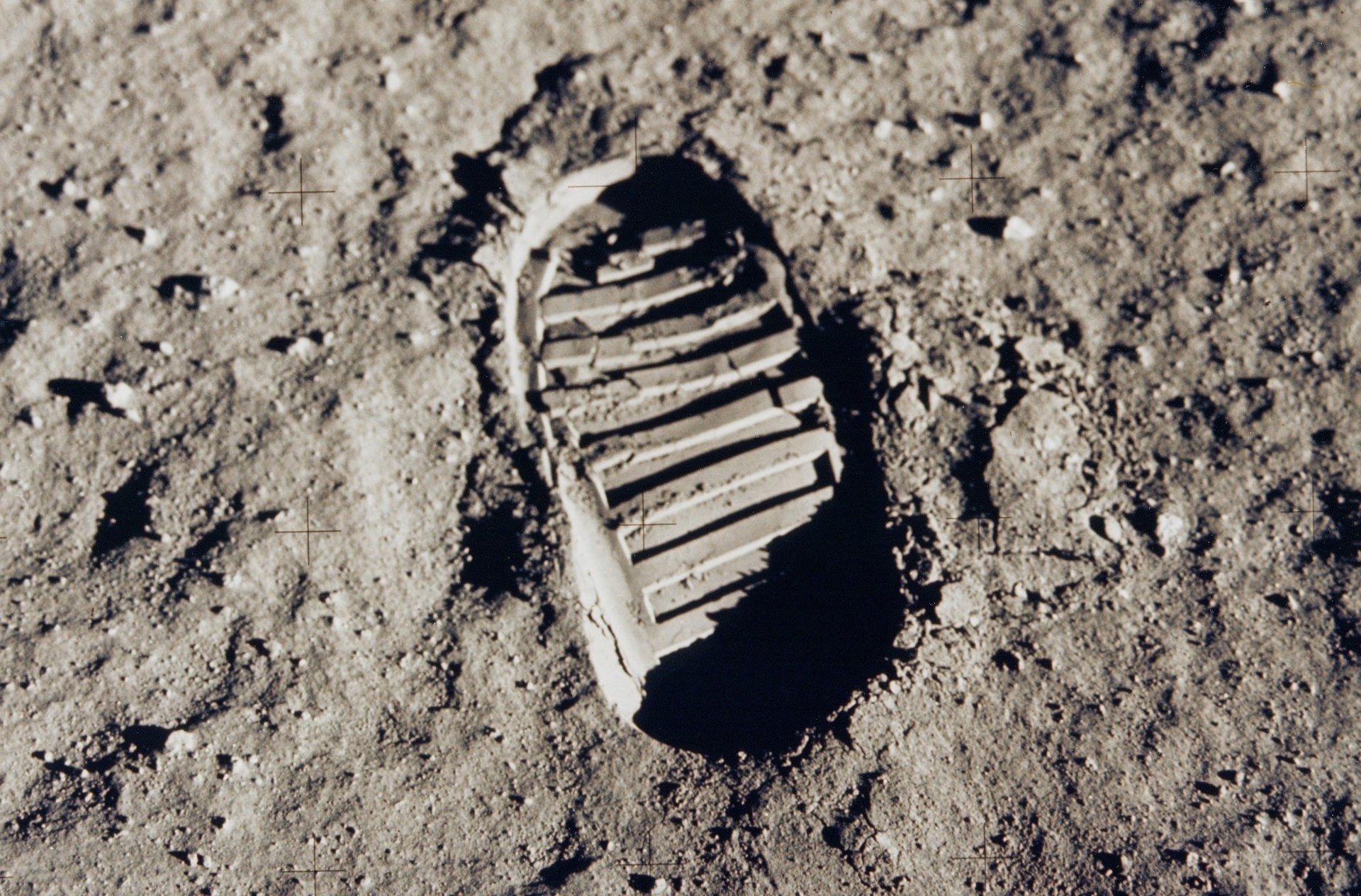 Buzz Aldrin's footprint on the Moon's surface during the Apollo 11 mission. Credit: NASA
Their experiments were conducted in the RIDER terramechanics testbed at the UCF Exolith Lab using three rover wheel designs: the Astrobotic Polaris Prototype (APP), the Resource Prospector prototype (VRP), similar to what the proposed VIPER rover would use, and a replica of the wheels used on the Apollo Lunar Roving Vehicle (LRV). Each wheel made up to 900 passes on a two-layer LHS-1E column measuring about 35 cm (~14 inches) under simulated lunar gravity.
Surface samples were collected before the traverses began and after every 100 passes from within the wheel tracks. The size and shape of the particles were measured, which revealed that the simulant remained largely unchanged even after 900 passes. Minor variations occurred, attributable to the wheels' designs and materials (metal or carbon fiber). These results demonstrate that immature regolith is not significantly altered by repeated passes, thereby illustrating its suitability for lunar roadways.
Further Reading: 2026 LPSC