Universe Today
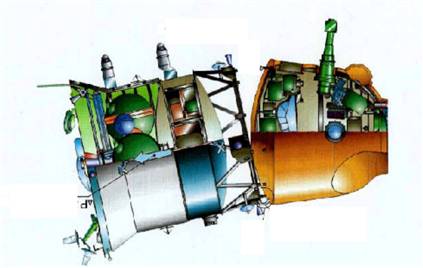
Explosive bolts that help detach the Russian Soyuz capsule from the International Space Station may be the source of the
problems the spacecraft has encountered
during the last two landings. Investigative space journalist and
Jim Oberg
at
MSNBC
, who is one of the best experts on the inner workings of the Russian space program recently wrote a
very interesting article
detailing Russian engineers' plans to fix the problem: have two Russian cosmonauts conduct a spacewalk on July 10 to remove one of the explosive bolts and bring it inside the space station. The bolts, Oberg says, packs twice the explosive force of an M-80 firecracker when ignited, and the cosmonauts will be handling the bolts directly during what will be a very delicate, if not dramatic, operation.
Oberg reports that Russian space engineers say the bolts at one particular location failed to work properly during each of the two previous Soyuz landings, in October 2007 and then in April 2008. As a result, in each case the landing capsule was twisted out of proper orientation and underwent excess heating on unshielded surfaces before tearing loose from the propulsion module and falling to Earth.
NASA has scheduled a press briefing on July 8 to discuss the spacewalk, but Oberg uncovered details about the spacewalk from status reports and discussions with NASA engineers. The engineers in Houston said that, to their knowledge, no such pyrotechnic device has ever been brought into the space station in its 10-year history.
There are five pairs of explosive bolts that break the connections between the spacecraft's crew capsule and its propulsion module during descent. Russian experts told NASA at one particular location, position 5, apparently failed to fire during both previous Soyuz descents, preventing a clean separation.
The two cosmonauts, station commander Sergey Volkov and flight engineer Oleg Konenenko will remove the position 5 bolt and place it in a shielded safety canister that was brought to the ISS on the last shuttle mission in May for this spacewalk. So obviously, the plan for this spacewalk has been in the works for quite some time.
Russians engineers assured NASA that the remaining four latches will be adequate to hold the two modules together during any other maneuvers in space.
Check out
Jim's article
for more details.