Universe Today

Watch for two new Earth-observing missions to launch in the coming years: Hibidis and SOVA-S.
When it comes to understanding Earth and our changing environment, space is the place. Not only does it give us an overall holistic view of the planet below, but satellite-based imagery can transcend national boundaries and give us an understanding of key changes that often go unseen at ground level.
Now, the European Space Agency (ESA) has chosen two new missions to address key questions in Earth environmental science: Hibidis and SOVA-S.
The missions were formally selected by the ESA’s Earth Observation Programme Board, after an extensive 10-month selection process.
Hibidis is also known as the Hyper-spectral Biodiversity Scout. The mission will study ecosystem and biodiversity health in the forest and jungles of Earth by looking at the understory spectrum from multiple angles.
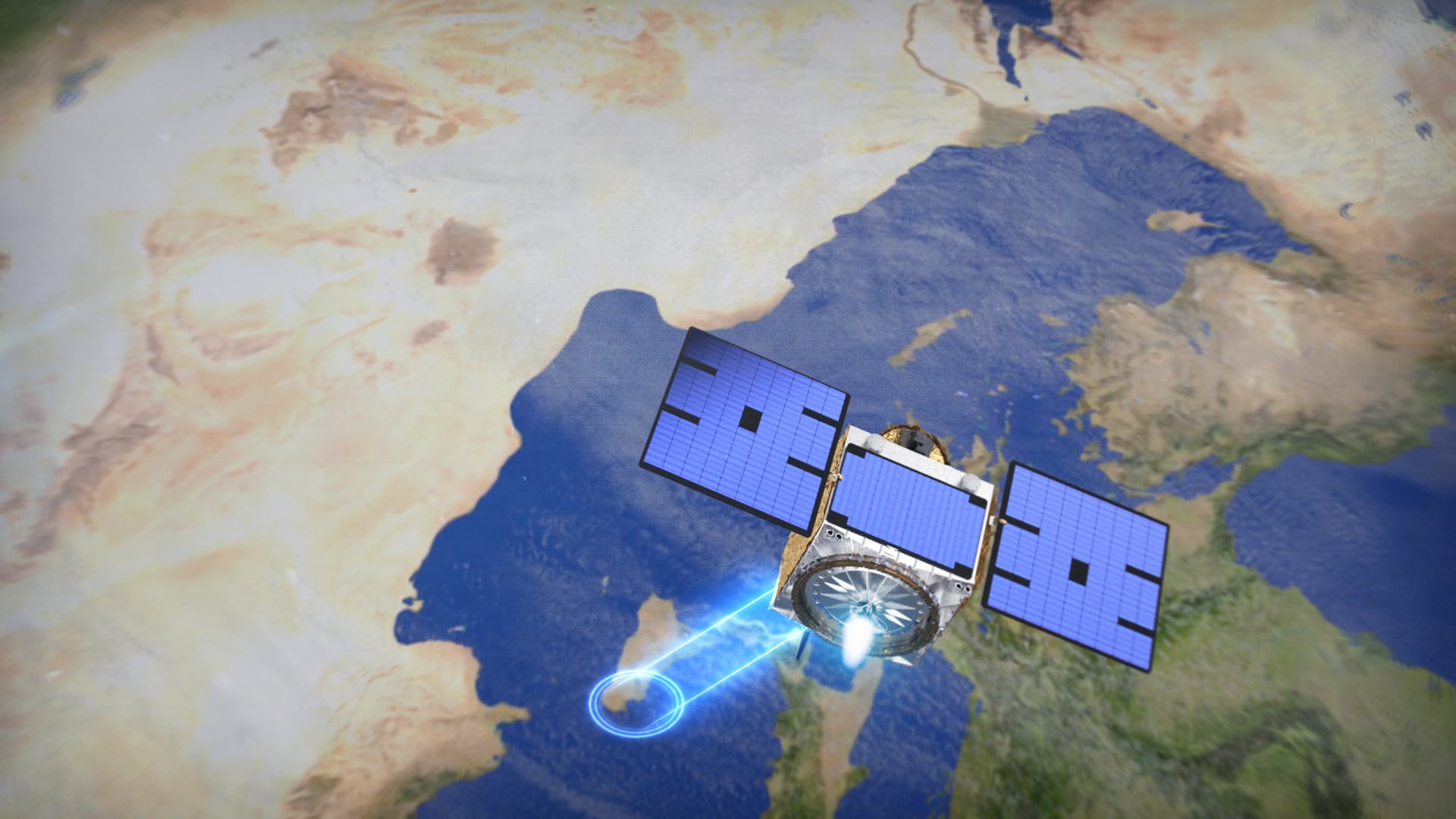 An artist conception of the Hibidis mission in orbit. Credit: ESA/MediaLab.
Italy’s SITAEL is the primary contractor for Hibidis, along with sub-partners Amos and Vito based in Belgium and the University of Zurich. Hibidis will be built on SITAEL’s new Empyreum small satellite platform and is powered by SPARK, a low cost electric propulsion unit.
Next up is the Satellite Observation of Waves in the Atmosphere, SOVA-S. This mission will use a shortwave infrared imager to routinely monitor gravity-waves in the atmosphere.
Gravity wave clouds appear as moving rows or ripples in the Earth’s atmosphere. These are often confused with, but distinct from the astrophysical phenomena resulting from merging pulsars and black holes known as gravitational waves.
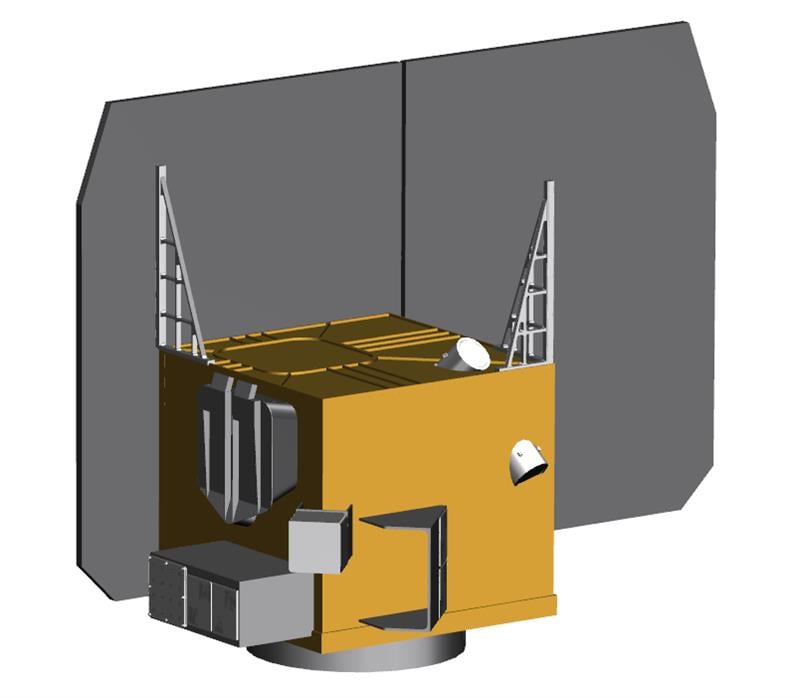 A schematic of the SOVA-S satellite. Credit: ESA.
Atmospheric gravity waves are known to carry huge amounts of energy from lower to higher altitudes. SOVA-S will work to help model and refine weather forecasts with its observations.
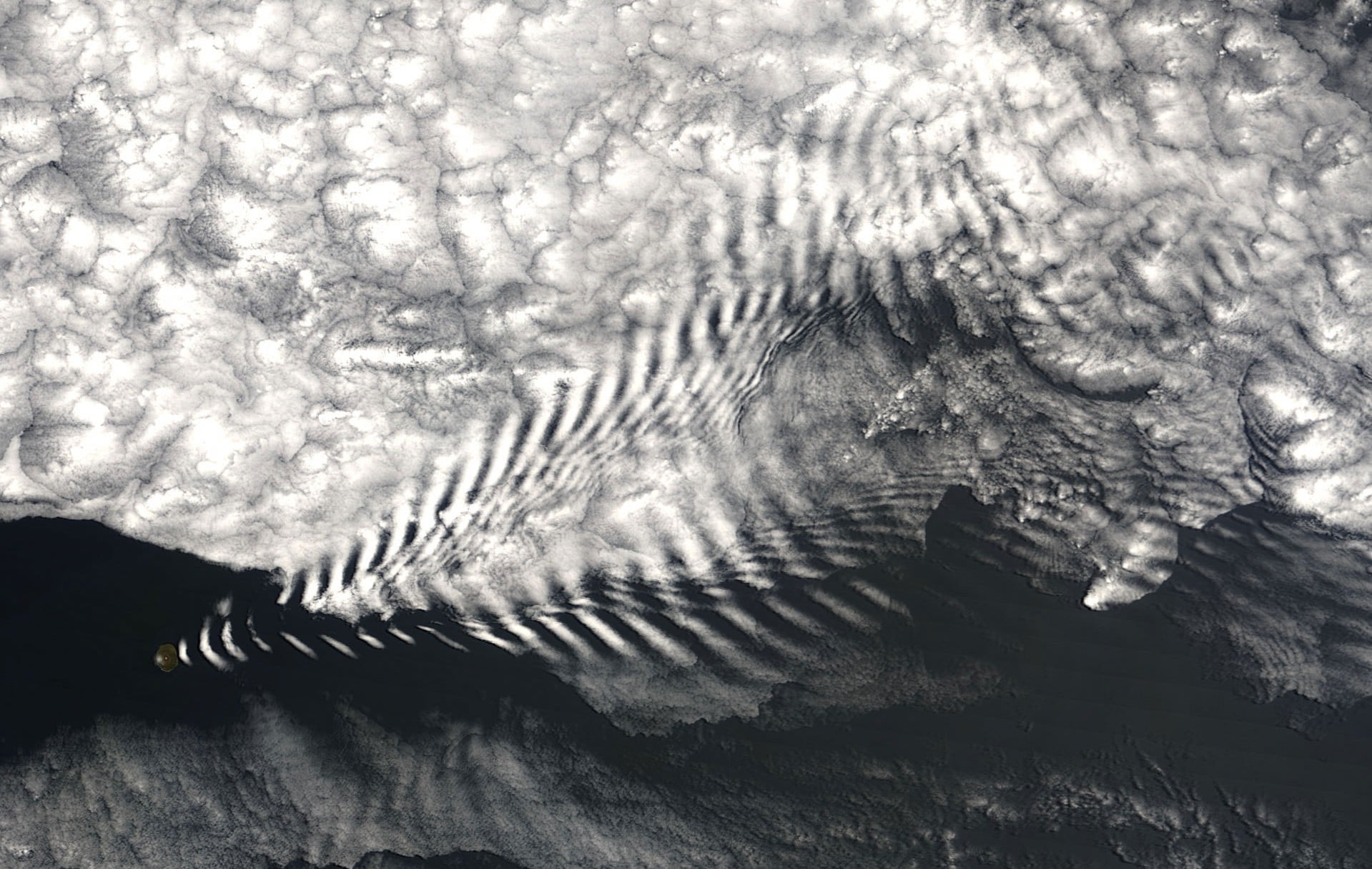 Ripples of gravity wave clouds. Credit: NASA/MODIS.
Scout Class missions are part of ESA’s Earth Observation FutureEO program, and an offshoot of the Earth Explorer program. These look to develop fast, low-cost missions, designed to address specific scientific questions. Scout missions must be ready for launch three years after selection, and have a budget cap of 35 million Euro.
“The ESA Scout missions show that achieving groundbreaking Earth science doesn’t always require large budgets and long development times,” says Simonetta Cheli (ESA Earth Observation Program director) in a recent press release. “By moving fast, embracing innovation and empowering emerging ideas, these missions demonstrate how agility and creativity can accelerate progress, delivering impactful science and technology in a remarkably short time frame.”
The two other contenders were the Space-Based Infra-red Imager for Urban Sustainability (SIRIUS) and the Near-coastal And Inland Aquatic Impact Data (NAIAD) missions.
Hibidis and SOVA-S join a growing legion of ESA Scout class missions. HydroGNSS was the first ESA Scout Class mission. HydroGNSS Launched last year on November 28th, as part of the Falcon 9 rideshare Transporter-15. Scouts are small satellites, and Hibidis and SOVA-S will probably launch on a future rideshare from Vandenberg and head into a similar sun-synchronous orbit.
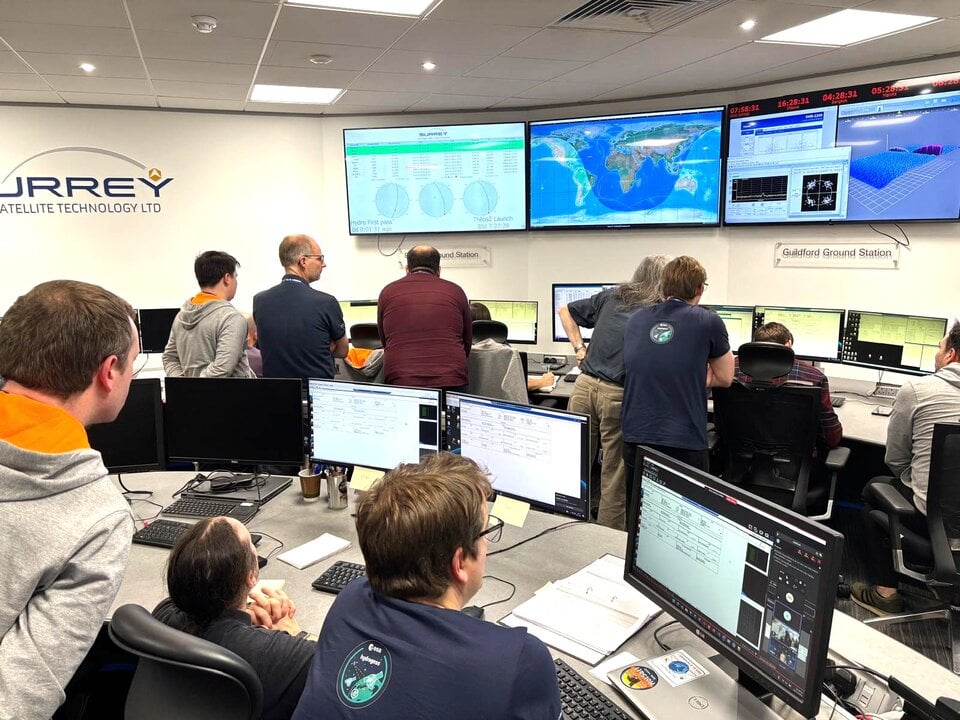 ESA Scout mission controllers. Credit: ESA.
Also in development are NanoMagSat which will study space weather interactions with the Earth’s local environment, and Tango, which will monitor industrial emissions.
Sun-synchronous orbit is a high inclination polar orbit. SSO has long been favored by clandestine (spy) satellites, as it covers the planet from pole-to-pole and makes passes over target sites offering consistent lighting conditions. Increasingly, Earth-observing missions are finding this regime convenient for observations as well. SSO missions must launch westward against the rotation of the Earth, making Vandenberg Space Force Base in California an increasingly popular launch site for such missions.
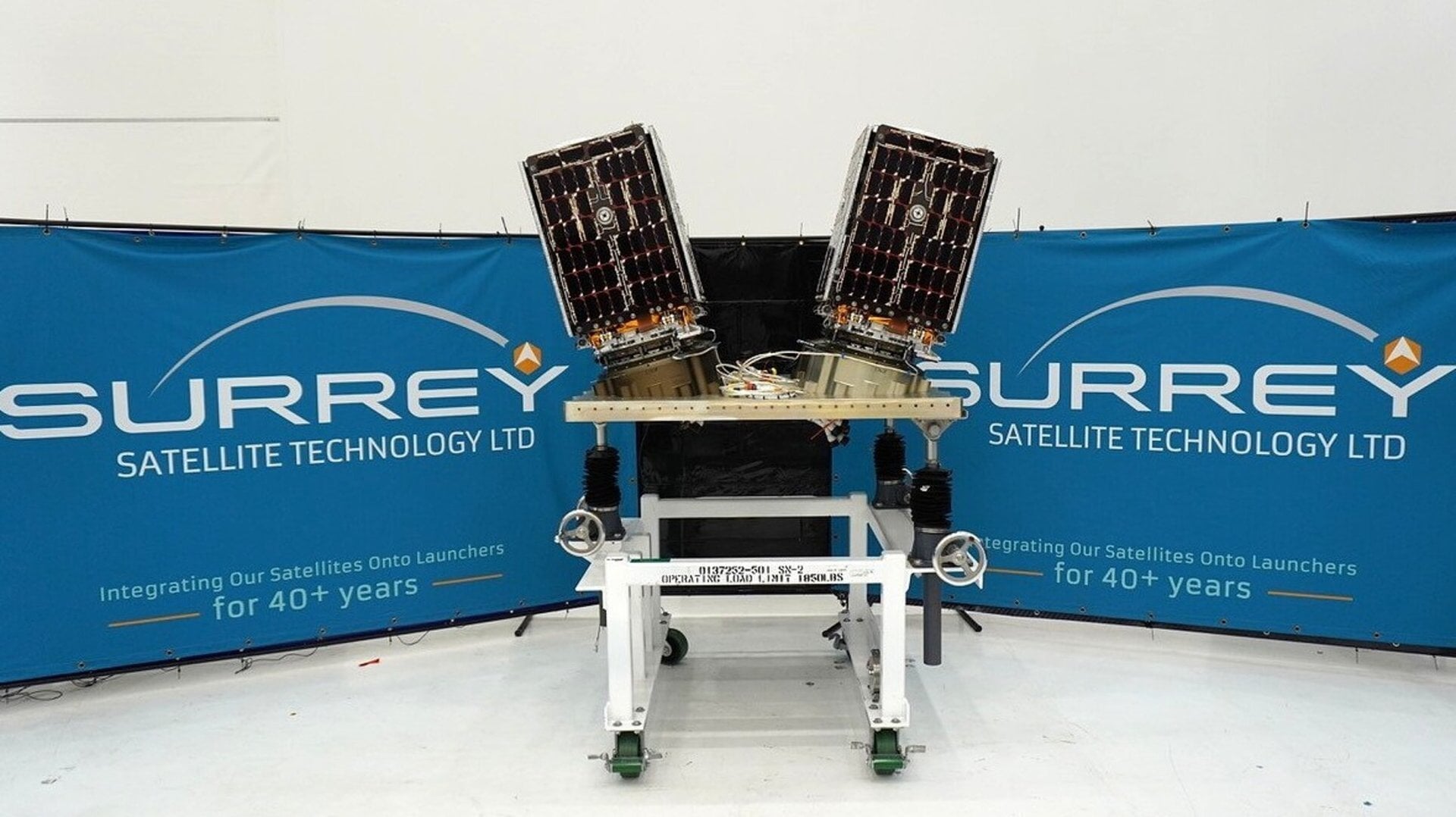 HydroGNSS on display ahead of launch. Surrey Satellite Technology LTD.
Watch for Hibidis and SOVA-S to take to space in the coming years, as we look back and work to understand the complexity of the Earth.