Universe Today
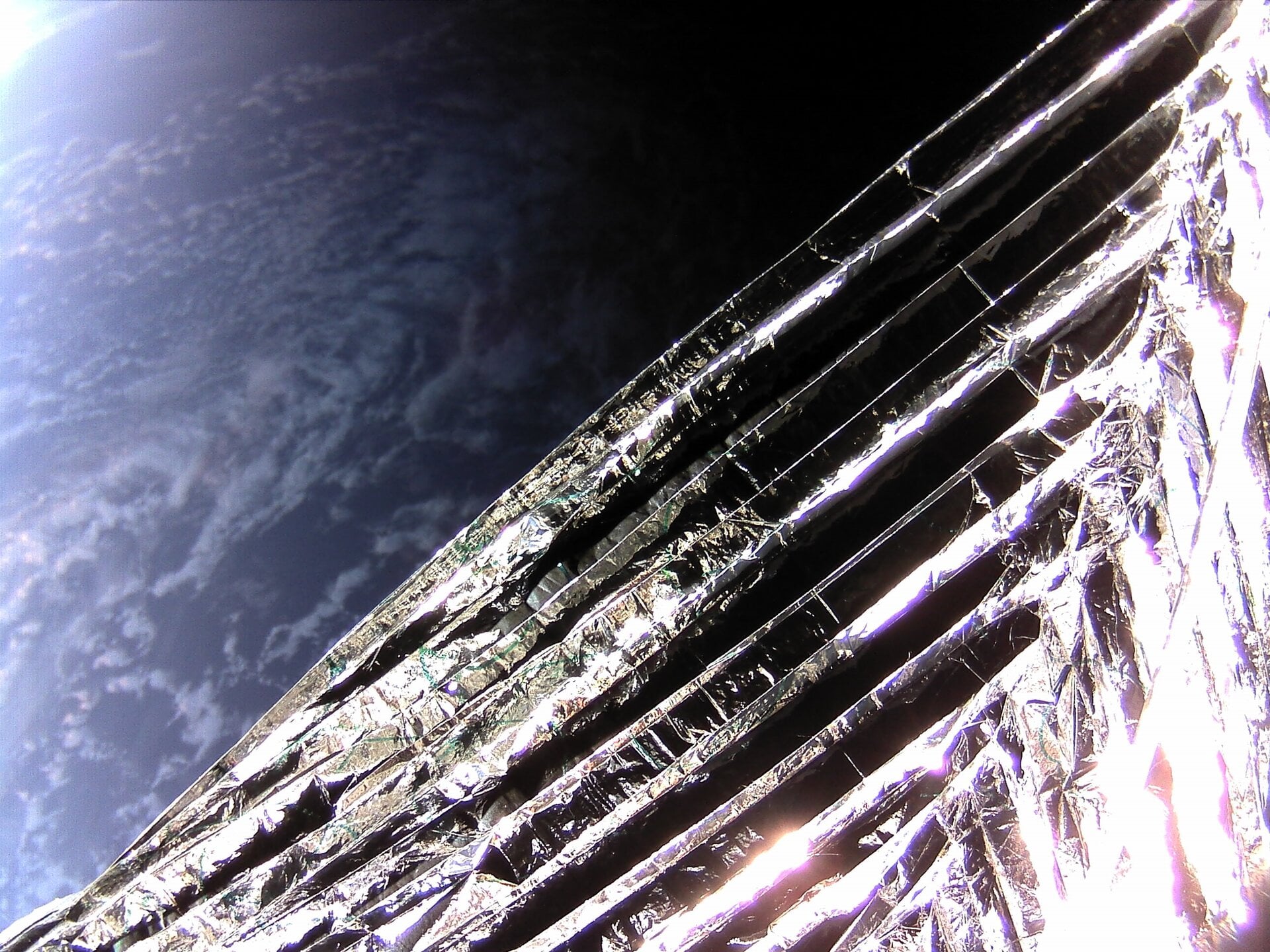
The European Space Agency successfully tested a solar-sail-type device to speed up the deorbit time for a used cubesat carrier in Earth orbit. The so-called breaking sail, the Drag A ugmentation Deo rbiting System (ADEO) was deployed from an ION satellite carrier in late December 2022. Engineers estimate the sail will reduce the time it takes for the carrier to reenter Earth's atmosphere from 4-5 years to approximately 15 months.
The sail is one of many ideas and efforts to reduce space junk in Earth orbit.
"We want to establish a zero debris policy, which means if you bring a spacecraft into orbit you have to remove it," said Josef Aschbacher, ESA Director General.
Last year, China successfully deployed a similar sail from a Long March 2 rocket.
ESA says the sail provides a passive method of deorbiting by increasing the atmospheric surface drag effect and causing an accelerated decay in the satellite's orbital altitude. "The satellite will eventually burn-up in the atmosphere, providing a quicker, residue-free method of disposal."
Loading tweet...
— View on Twitter
This test was the final in-flight qualification flight needed to provide the technological proof-of-concept. A smaller 2.5 square meter sail was fitted onto the upper stage of the Electron launch vehicle in 2018. Previously, the ADEO sail was tested on several parabolic flights from 2019 to 2022. This larger orbital version was deployed from the Italian space company D-ORBIT's ION Satellite Carrier, which carries and deploys cubesats and weighs 160 kg (350 lb).
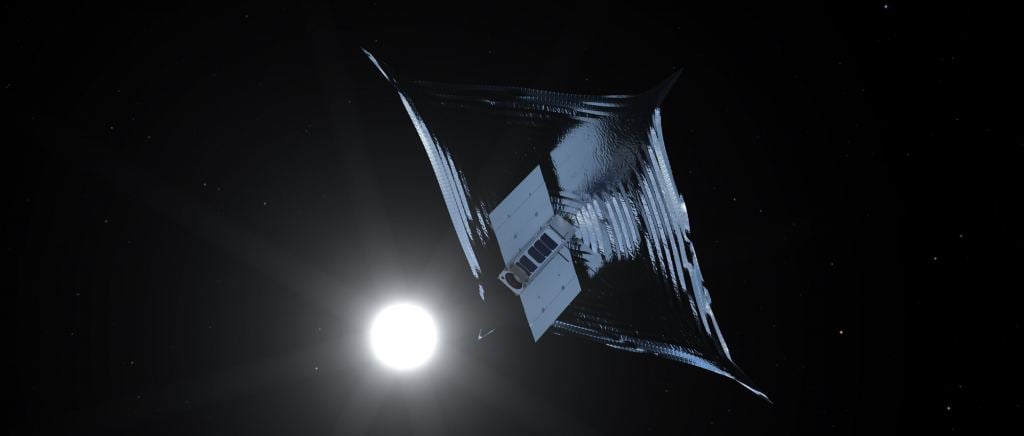
The sail membrane has a surface area of 3.6 square meters and is made of an aluminum-coated polyamide. It was packed inside an impressively small container, 10 x 10 x 10 cm. ESA says the sail's size can be scaled up for medium and large size satellites, or multiple sails can be used on larger pieces such as an upper rocket stage. Various sizes could be tailor-made, depending on the initial orbit, satellite mass and required de-orbiting time. The largest variation could be as large as 100 square meters, which could take up to 45 mins to deploy. The smallest sail available is just 3.5 square meters and deploy in just 0.8 seconds.
For the orbital test, cameras on ION captured the deployment of ADEO. ESA determined the satellite carrier immediately slowed to begin its deorbit process.