Universe Today
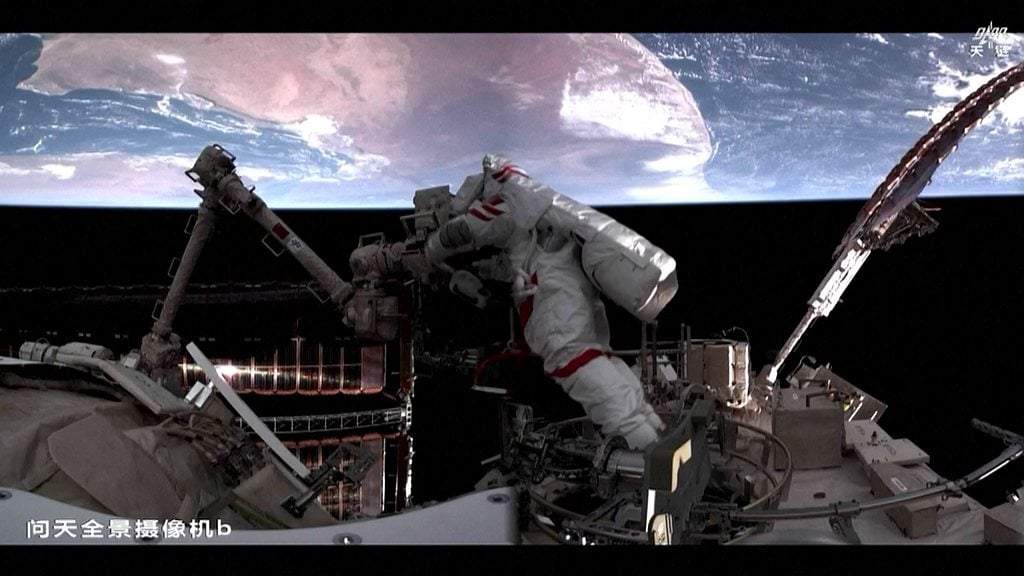
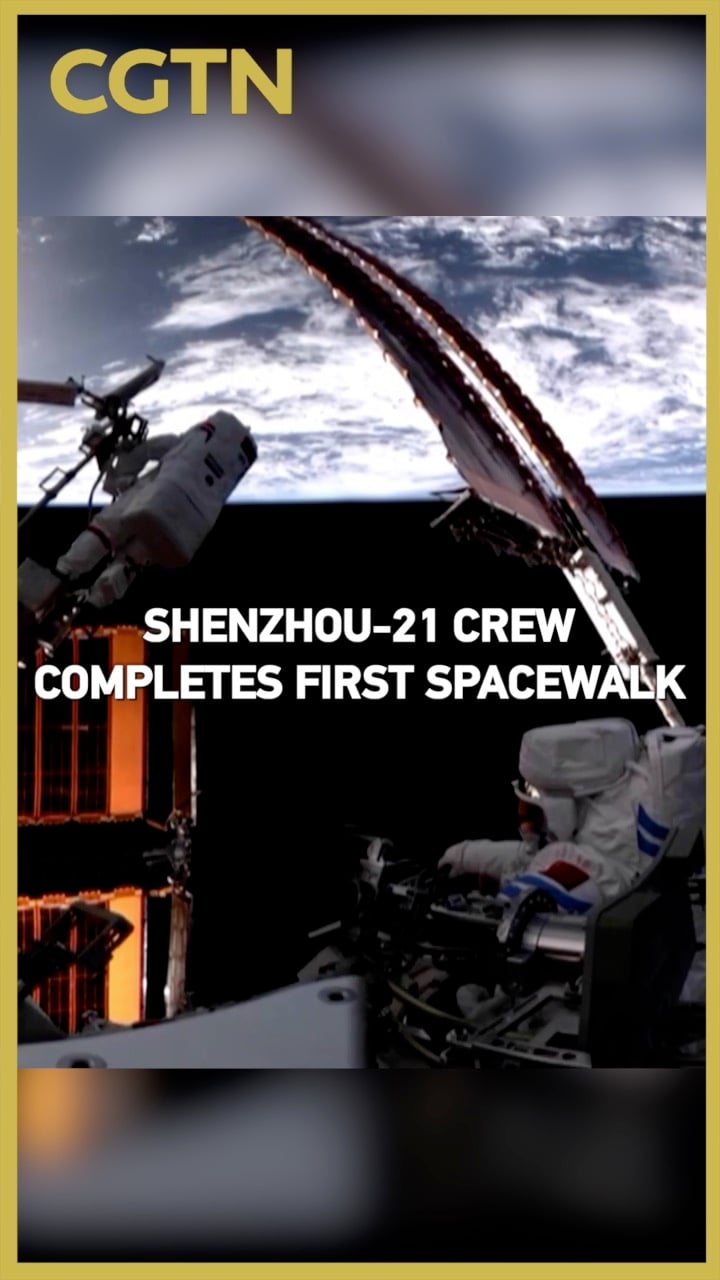
Chinese taikonauts have a new set of spacesuits that will enable future missions in orbit and beyond. The suits were recently tested (Tuesday, Dec. 9th) during a series of extravehicular activities (EVAs) aboard China's Tiangong space station. The Shenzhou-21 crew (Zhang Lu and Wu Fei) donned the newly delivered D and E spacesuits to conduct their inaugural spacewalks. The suits are essentially a second-generation version of the Feitian spacesuits ("flying into space" in Chinese) used for intravehicular activity (IVA), but specifically designed for station EVAs.
In addition to all the functions of the IVA spacesuit, the latest version in the series features radiation protection, heat insulation, micrometeorite shielding, and ultraviolet protection. The suit also features a liquid-cooling system to maintain optimal temperature and humidity inside the suit, as well as a backpack-style life-support system similar to NASA's EVA suits. The suits were previously delivered on July 15th by the Tianzhou-9 cargo spacecraft. During their EVA, Lu and Fei installed debris protection devices on the station, inspected the porthole on the previously docked Shenzhou-20 spacecraft, and replaced the insulation cover on a thermal control adapter.
The operational lifespan of the suits, according to the China Astronaut Research and Training Center (CARTC), is 20 EVAs within four years of service, an upgrade over the previous standard of 15 EVAs over three years. According to Liu Dongyue, a technician at the CARTC, one of the spacesuits has already been used 17 times. "The EVAs fully demonstrated the critical role of human capabilities in extravehicular operations, with the suits providing robust safety assurance for astronauts," Zhai Zhihong from the CARTC said in an interview with the state-owned media China Global Television Network (CGTN).
The EVA was Lu's second spacewalk, the previous one having occurred two and a half years earlier. It also made Wu the youngest taikonaut to perform an EVA to date. Future spacewalks are planned, during which the crew will perform scientific experiments and technological tests. If deemed necessary, they will also implement protective measures on the Shenzhou-20 porthole, which was previously damaged in a collision with a small piece of space debris.
 Credit: CMSA/CGTN
Further Reading: CGTN