Universe Today
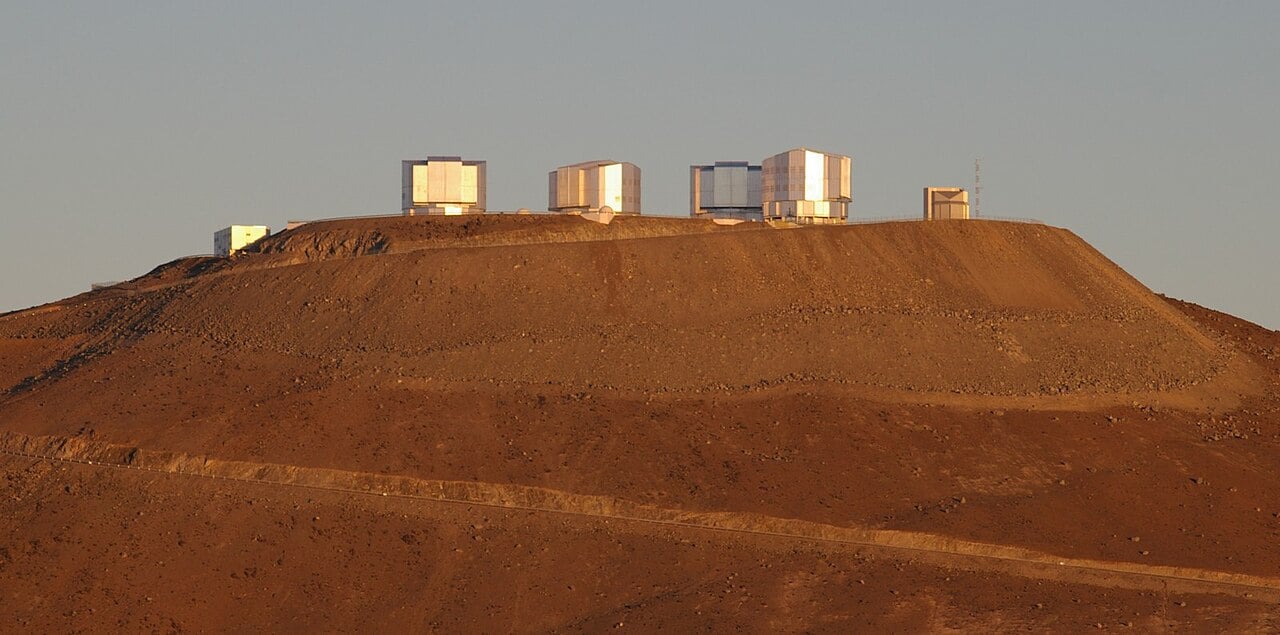
The Atacama Desert in northern Chile offers some of the clearest, darkest skies on Earth. High altitude, minimal cloud cover, and distance from major cities combine to create conditions astronomers dream about. It's why the European Southern Observatory chose Paranal for its Very Large Telescope array and the four 8.2 meter instruments that can work individually or combine their light to achieve staggering resolution.
But earlier this year, those pristine conditions faced an unexpected threat. AES Andes announced plans for the INNA project, an industrial scale renewable energy facility featuring both solar panels and wind turbines, to be constructed just a few kilometres from the observatory. On paper, the project embodied sustainability but in practice, it would have been catastrophic for astronomy.
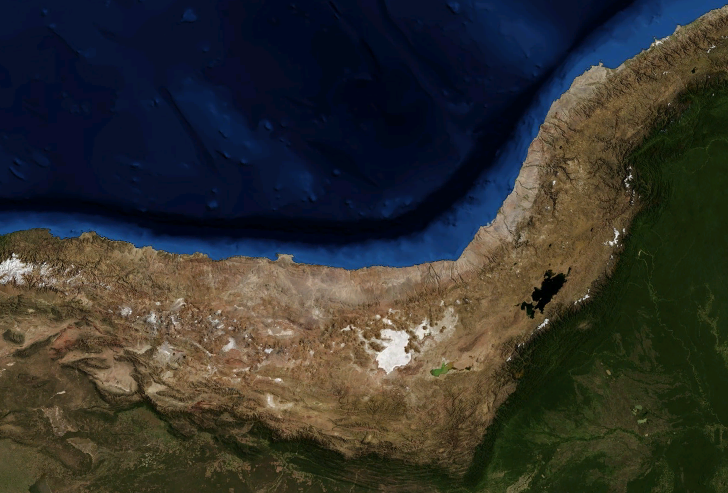 The Atacama Desert (Credit : NASA)
A study by the European Southern Observatory quantified the damage. Light pollution from the facility would increase by up to 35 percent and deal a devastating blow for instruments designed to detect the faintest glimmers from distant galaxies. Even worse, micro vibrations from the wind turbines would ripple through the ground, making the precision observations these telescopes perform extraordinarily difficult if not impossible.
Modern astronomical instruments don't just collect light, they correct for atmospheric distortion, track objects as they move across the sky, and maintain alignment to millionths of a degree. Vibrations that seem trivial by everyday standards can ruin this delicate work. Imagine trying to photograph a star while someone bangs on the table your camera rests on.
Reinhard Genzel, Director of the Infrared Group at the Max Planck Institute for Extraterrestrial Physics and winner of the 2020 Nobel Prize in Physics for his work on black holes, led the scientific community's response. Together with thirty international astronomers, he drafted an open letter to the Chilean government seeking intervention.
It’s important to note that astronomers aren't opposed to wind and solar power, they’re among the most climate conscious scientific communities. Many observatories already incorporate renewable energy into their own operations. The problem wasn't what AES Andes wanted to build, but where.
"The conflict was never about science versus sustainability. The sole issue with the planned facility was always merely its physical proximity to the telescopes.” Reinhard Genzel, Director of the Infrared Group at the Max Planck Institute for Extraterrestrial Physics
The Chilean government faced a delicate balancing act in reaching their conclusion. The country has invested heavily in astronomy, hosting roughly 40 percent of the world's ground based astronomical infrastructure. This brings international prestige, drives technological development, and attracts researchers and funding. But Chile also has ambitious renewable energy goals and needs sustainable development.
Ultimately, the newly elected President José Antonio Kast's administration recognised what was at stake. The decision to preserve Paranal's skies represents an acknowledgment that some locations have unique value that can't be easily replicated elsewhere.
AES Andes's announcement that they'll no longer pursue the Paranal site has brought relief sweeping through the global astronomy community. Genzel expressed his gratitude to the Chilean government, President Kast, and particularly to Eduardo Unda Sanzana and countless other researchers who advocated tirelessly for relocating the facility.
Paranal is now able to continue its work exploring the universe; hunting exoplanets, studying distant galaxies, probing the nature of black holes, and pushing the boundaries of what we can see and understand about the cosmos. And somewhere else in Chile, turbines will turn and solar panels will generate clean power, both projects thriving because they found the right places to call home.
Source : Paranal Night Sky Secured – A Triumph for the Astronomers’ Protest