Universe Today
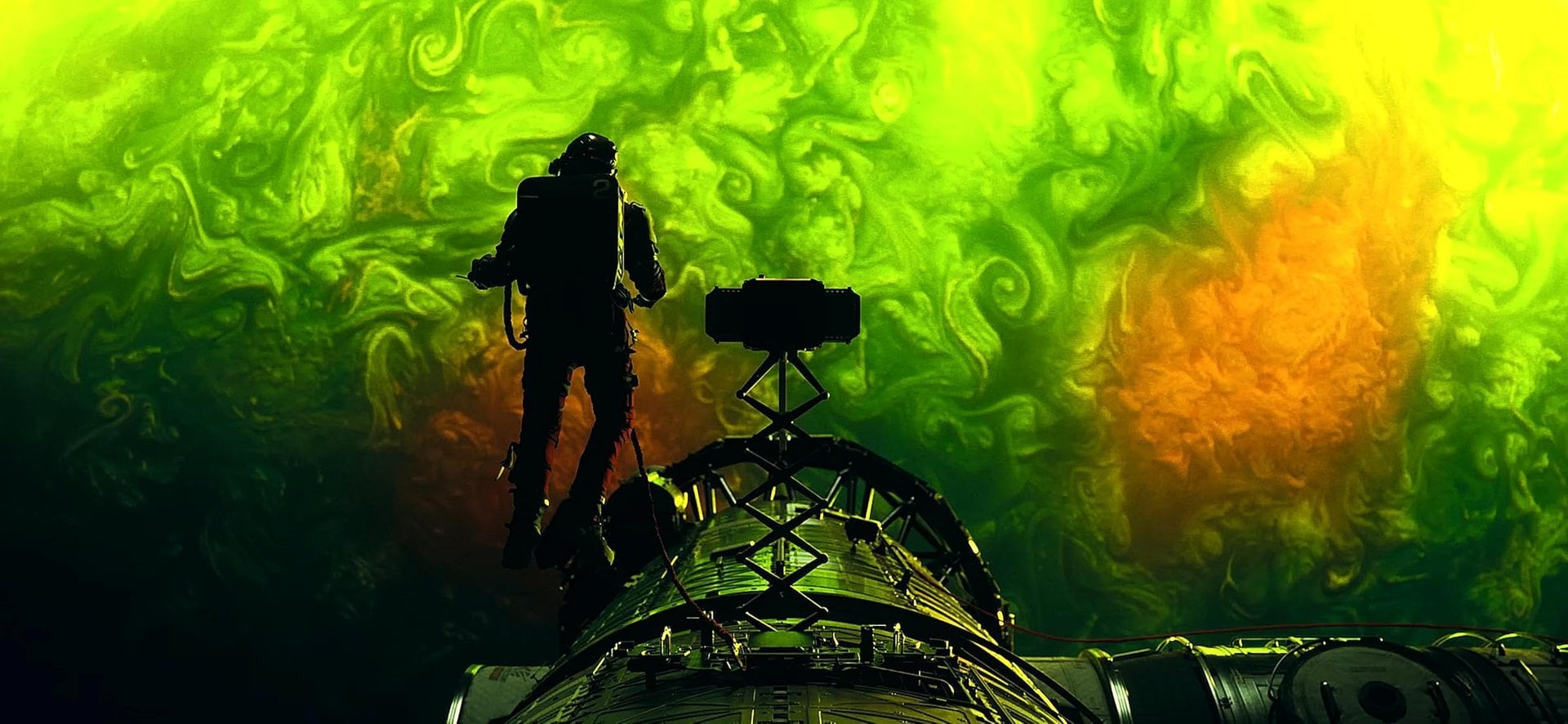
“Project Hail Mary,” a science-fiction novel that’s just been turned into a big-budget, big-screen movie, tells the story of an unlikely astronaut who unexpectedly encounters an alien during a desperate mission to save their respective civilizations.
The astronaut (played by Ryan Gosling in the movie) and the alien have to figure out on the spot whether they’re friends or foes. They also have to come up with a translation system that can accommodate two completely different ways of communicating.
That all makes for a do-or-die space drama reminiscent of “Apollo 13” — but the day is fast approaching when advances in astronomy and artificial intelligence could take a lot of the drama out of alien contact.
Seth Shostak, senior astronomer for the SETI Institute, says he wouldn’t be at all surprised if our first encounter with aliens came in the form of AI-to-AI contact.
“My guess is that the aliens are going to be machines, because that’s what we’re doing, right?” he says in the latest episode of the Fiction Science podcast. “We’re just in the early days of building machines that can do things that humans have had to do in the past. I’m sure that 100 years from now, the most capable intelligence on this planet will not be some sort of soft and squishy biological thing. That’s going to be a machine. And so, if we hear the aliens, I suspect that it’s more than likely that they, too, will be machines.”
Click to launch the Fiction Science podcast on Spotify
If you’re worried that talking about AI and the search for aliens will require delving deeply into spoilers, never fear: Artificial intelligence doesn’t really play a role in the “Project Hail Mary” movie. It’s mentioned only once in the Andy Weir novel on which the movie is based — merely to explain why the planners of the do-or-die mission opted not to use AI. (We do get into spoilers toward the end of this post, however, so consider yourselves warned.)
For more than 65 years, astronomers have been searching the skies for radio signals that might have been sent out by extraterrestrial civilizations. “The usual approach is to build a receiver that can monitor thousands — well, today, millions of different channels simultaneously,” Shostak says. “And you can just look at how that capability has improved over time. It turns out it follows what’s called Moore’s Law … which says that the speed of electronics more or less doubles every two years.”
It takes a lot of computing power to monitor millions of channels, and Shostak says he’s certain that AI will accelerate the search for extraterrestrial intelligence, better known as SETI.
There’s already evidence of that: Last November, the Breakthrough Listen Initiative reported that an AI system developed in partnership with NVIDIA could process real-time data from telescopes searching for fast radio bursts at a rate more than 600 times faster than the current data pipeline. The system improved detection accuracy by 7% and reduced false positives by nearly an order of magnitude.
“This technology doesn’t just make us faster at finding known types of signals — it enables us to discover completely unexpected signal morphologies,” Andrew Siemion, principal investigator for the Breakthrough Listen Initiative, said in a news release. “An advanced civilization might use burst-like communications, modulated signals or transmission schemes we haven’t even imagined. This AI system can learn to recognize patterns that a human might miss entirely.”
Several years ago, another team of astronomers used a machine language algorithm to identify potential alien signals that were overlooked by other data-processing systems. (But don’t get too excited: Follow-up observations didn’t confirm that the signals came from extraterrestrial civilizations. You would have heard if they did.)
AI tools could help astronomers overcome some of the obstacles facing the SETI quest. For example, one group of researchers recently reported that signals from alien civilizations could be scrambled by stormy space weather. Improved pattern-recognition software just might be able to pick out the signal hidden in the cosmic noise.
AI models could also come into play for interpreting alien messages once they’re found. But Shostak isn’t focusing so much on that challenge. “Even if we never understand what the aliens are saying, just the fact that we pick up the signal and can tell that it’s an artificial signal — in other words, made by some technology — that’s very interesting, because we’ve proved that they’re there,” Shostak says.
Understanding what the aliens are saying “would be interesting to know, but I would consider that a secondary benefit of finding their presence,” he says.
 Seth Shostak is senior astronomer at the SETI Institute. (SETI Institute Photo)
Shostak compares the challenge of deciphering alien messages to the challenge that archaeologists faced when they unearthed Egyptian hieroglyphs. “The best way to decipher the hieroglyphics is to have lots of people working on the problem, so just make them known,” he says. “I think the same sort of logic applies here.”
Douglas Vakoch, the president of METI International, has spent a lot of time working on the message translation problem. You can tell that from his organization’s acronym, which stands for “Messaging Extraterrestrial Intelligence.” He says AI can play a supporting role in detecting and decoding alien messages, but not the starring role.
“We need to realize that when we humans try to find patterns hidden in radio static, we may start out with some cut-and-dried guidelines that are very similar to the clear rules used by AI. But often we fail to realize exactly how our rules fall short, because we don’t lay them out clearly,” Vakoch told me via email. “AI forces us to get clear about how we are attempting to solve problems, and simply learning from AI how it is attempting to solve a problem can make us say, ‘You’ve missed something critical. You need to do this instead.’ ”
In his view, discovering an alien message is only half the battle.
“An even greater challenge will be understanding what it means. And that’s where humans will continue to play a role, even as AI becomes more computationally sophisticated in the years to come,” Vakoch said. “Deciphering a message from extraterrestrials will be much more ambiguous. AI might help us detect patterns in alien messages that humans would miss, but we’ll still need people to figure out what the message means.”
How long will it take to make alien contact? Will we need to wait for a do-or-die mission to a faraway star system? More than 20 years ago, Shostak predicted that we’d find evidence of aliens by 2025 or so. And for more than 15 years, he’s been betting a cup of coffee on it.
Now Shostak is acknowledging that he might have to pay up. “Next time I see you, I’ll buy you a cup of coffee,” he says. “We haven’t found them yet. … Maybe it was just wishful thinking, but honestly, I think that it was more based on the known rate of improvement in the experiments to find the aliens.”
Maybe SETI astronomers just need more time to take advantage of Moore’s Law and AI. Maybe it’ll take another 20 years, or 200 years, to follow through on the promise of “Project Hail Mary” and connect with alien travelers. But in the meantime, I’ll take that cup of coffee.
Here come the spoilers
If you haven’t already read “Project Hail Mary,” it can be tricky to keep track of the movie’s scientific twists and turns. Some of those plot twists have interesting parallels to real-world science, and I can’t resist pointing them out.
- In the movie, the stars in our neighborhood are in trouble because of a type of infection that spreads between them. Andy Weir had to break the laws of physics to allow for the existence of organisms capable of soaking up high levels of solar energy. The good news is that real-world physics would rule out the threat that sets the plot of “Project Hail Mary” in motion. For more about the science behind the story, check out this interview with Weir, hosted by Leo Laporte. (Spoilers start at the 32-minute mark.)
- Two stars that figure prominently in the plot, Tau Ceti and 40 Eridani A (also known as Keid A or Erid) are on NASA’s list of target stars in the search for habitable planets. Tau Ceti may harbor potentially habitable planets, while 40 Eridani A is famous as the home star for Mr. Spock and his fellow Vulcans in “Star Trek.”
- One of the plot twists in “Project Hail Mary” allows Gosling’s character to travel to Tau Ceti at close to the speed of light. Thanks to Einstein’s theory of relativity, the interstellar traveler experiences the trip as lasting less than four years, even though Tau Ceti is nearly 12 light-years from Earth.
- In the book and in the movie, Gosling’s character is put into a medically induced coma to preserve his sanity during the trip. In the real world, researchers are thinking about putting astronauts into a state of suspended animation for long-duration space travel.
“Project Hail Mary” is scheduled for theatrical release on March 20, and it’s already getting rave reviews. For more from Seth Shostak, check out Big Picture Science, the podcast he co-hosts; and look for his columns in Astronomy magazine.
My co-host for the Fiction Science podcast is Dominica Phetteplace, an award-winning writer who is a graduate of the Clarion West Writers Workshop and lives in San Francisco. To learn more about Phetteplace, visit DominicaPhetteplace.com.
This report was originally posted on Cosmic Log, the home base for the Fiction Science podcast. Stay tuned for future episodes of Fiction Science via Apple, Spotify, Player.fm, Pocket Casts and Podchaser. Fiction Science is included in FeedSpot's 100 Best Sci-Fi Podcasts. If you like Fiction Science, please rate the podcast and subscribe to get alerts for future episodes.