Universe Today
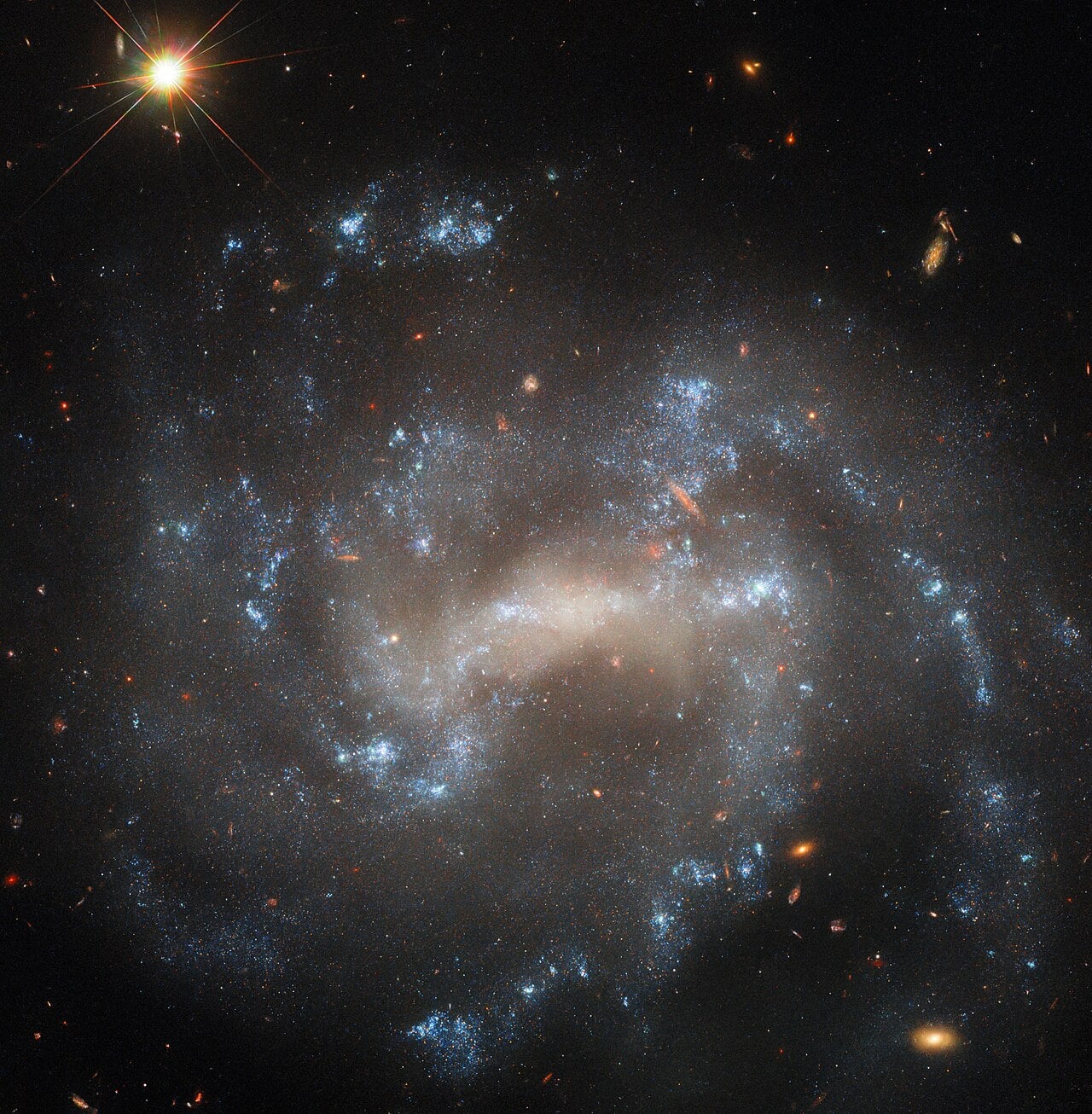
When stars at least thirty times the mass of our Sun reach the end of their lives, astronomers had assumed they simply winked out, collapsing silently into black holes under the force of gravity from which not even light can escape. No bright supernova explosion, no spectacular death throes, just a quiet gravitational implosion.
Except that's not what happened with SN 2022esa.
A team of researchers at Kyoto University observed this peculiar supernova and discovered that the massive star exploded brilliantly on its way to becoming a black hole. The finding fundamentally challenges our understanding of how the universe's most extreme objects come into being.
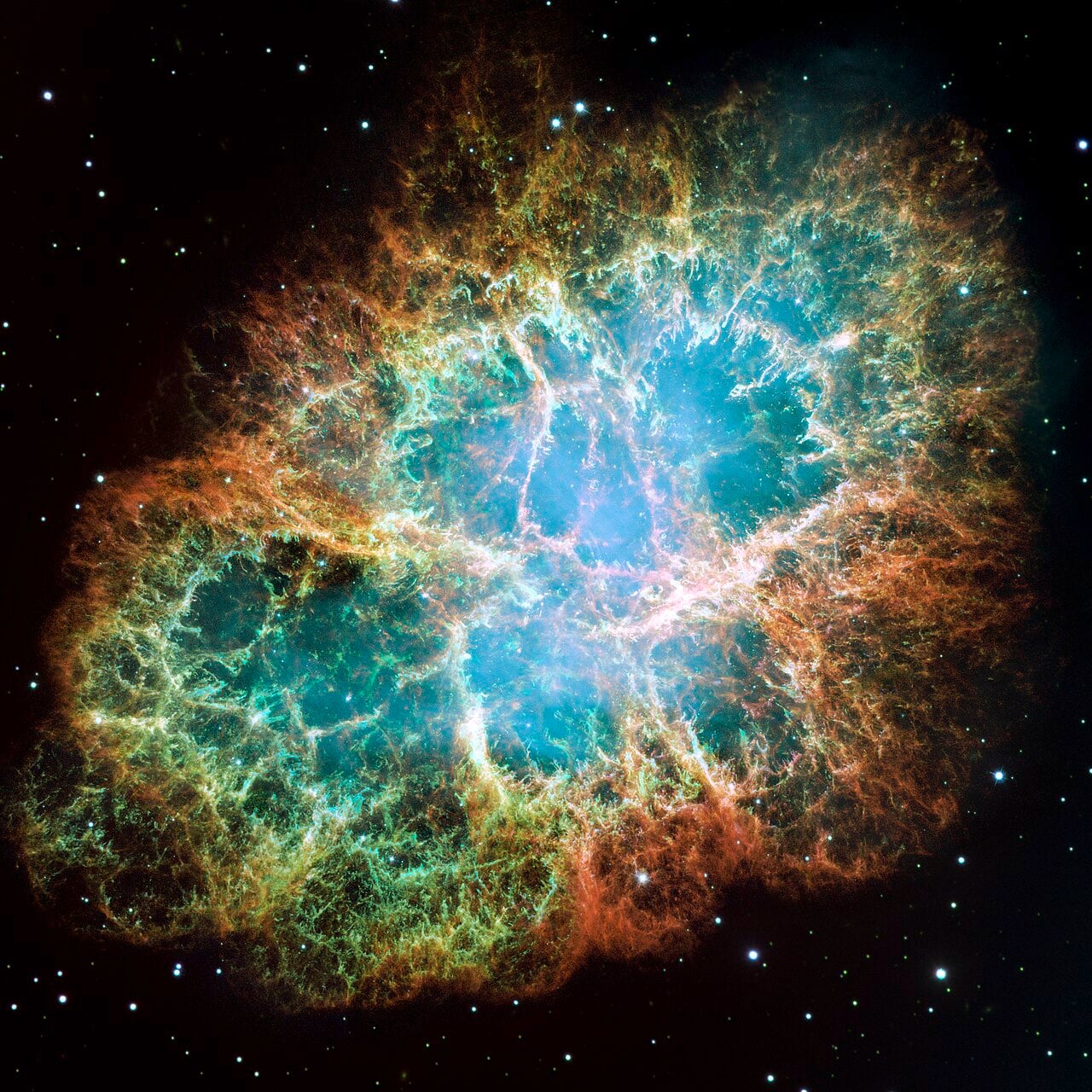 The Crab Nebula was a Type II supernova that exploded in 1054 but the observation of SN 2022esa revealed it to be a more rare type known as Ic-CSM (Credit : NASA/ESA)
The supernova belongs to a rare class called type Ic-CSM, and the observations suggest it erupted from an extremely massive and luminous star. Using both the Seimei telescope in Okayama and the Subaru telescope in Hawaii, the researchers observed and classified SN 2022esa in detail. What they found challenges the assumption that black hole formation is necessarily quiet. This particular stellar death could be observed through electromagnetic signals, proving that at least some massive stars announce their transformation into black holes with a blaze of glory.
But the team discovered a clear, stable periodicity of about one month in the supernova's light curve. This regular pulsing pattern suggests the star experienced stable periodic eruptions once each year before its final explosion. Such clockwork regularity is only possible if the star wasn't alone.
The progenitor must have been part of a binary system, orbiting either another massive star or possibly even a black hole. These companion objects would have influenced each other gravitationally, triggering those regular pre-explosion eruptions. The fate of such a system, the researchers concluded, can only be one thing, a binary pair of black holes.
"The fates of massive stars, the birth of a black hole, or even a black hole binary, are very important questions in astronomy. Our study provides a new direction to understand the whole evolutional history of massive stars toward the formation of black hole binaries." - Lead author Keiichi Maeda
Black hole binaries are particularly important because they're the sources of gravitational waves detected by observatories like LIGO. When two black holes eventually spiral together and merge, they create ripples in spacetime itself that propagate across the universe. Understanding how such binary systems form helps us interpret these gravitational wave signals and trace the evolutionary history of the cosmos's most massive objects.
The research also demonstrates the value of combining different telescopes with complementary strengths. Seimei's flexibility and rapid response allowed quick classification, while Subaru's high sensitivity enabled detailed analysis even a year after discovery, when the supernova had faded to less than one percent of its original brightness. SN 2022esa has opened a window into something previously hidden: the spectacular, luminous birth of black holes from the universe's most massive stars.