Universe Today
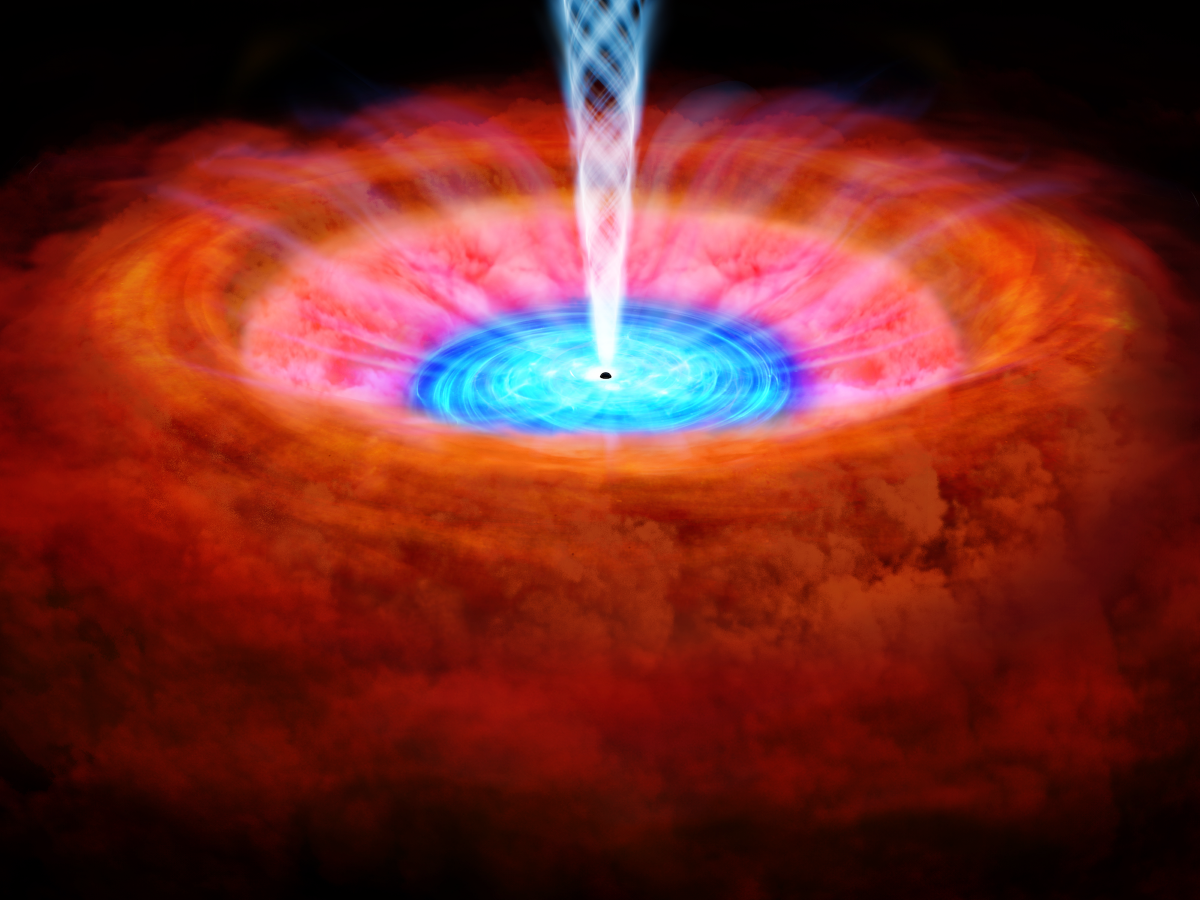
Some of the most massive galaxies in the Universe appear to be missing a lot of stars. That seems unusual, since birthing stars is one of a galaxy's main tasks as it grows. According to Xin "Cindy" Xiang of the University of Michigan, something is suppressing or quenching the births of stars in these galaxies, and she thinks that black holes might be the culprit.
Xiang led a team of researchers who used the X-Ray Imaging and Spectroscopy Mission (XRISM) to study outflows from the accretion disks of black holes. Such regions are bright in X-rays, due to the fantastically high energies expended by material in the disks. Depending on the strength of winds coming from the region, they may play a very important role in affecting star formation. However, the team needed extremely high-resolution spectral studies of the emissions from the black hole to understand what was happening. “Previously, without XRISM, we could only see broad features of the outflows,” Xiang said. “But you need to be able to resolve fine features to answer important questions. What is their structure and geometry? How are the winds launched and when are they launched?”
Creating an Environment that Suppresses Stars
Supermassive black holes, like their smaller counterparts (the stellar-mass black holes), feed on material that gets caught in their strong gravitational pull. That includes light, as well as gas, dust, and anything bigger (such as stars) that tends to stray too close. The material swirls in through an accretion disk that forms around the black hole. The disk, particularly around a supermassive one, is an incredibly energetic environment. The activity there mixes gas and dust particles, and the whole thing is threaded through with magnetic fields. All that motion creates friction, and gravity works as well to atomize the material.
If things are energetic enough, they can even peel electrons off of those atoms, creating a very hot, very bright plasma. Like a bubbling cauldron, this disk can also fling out material, creating powerful winds. If the winds are strong enough, they can blow away gas in nearby regions. Unfortunately, that gas is what galaxies need to form new stars. So, black holes can have a pretty deleterious effect on the starbirth activity nearby.
Catching the Black Hole's Outflow
Xiang and her team used XRISM to study activity near the supermassive black hole at the heart of galaxy NGC 4151. It supplied a high-resolution look at the winds flowing from the accretion disk at the heart of this active galactic nucleus (AGN) and measured their characteristics. AGN typically occur during a supermassive black hole's growth phase, and their energetic activities shape the evolution of the host galaxy. They grow by gobbling up gas, as well as influencing surrounding gas clouds. They emit those powerful energetic winds during the growth phase.
This is what's happening in the core of NGC 4151 as it gorges on nearby material and creates the accretion disk. “With XRISM, we have the greatest resolution observing the brightest AGN, and we’re getting the richest information on outflows that we have observed so far for an accretion disk,” Xiang said.
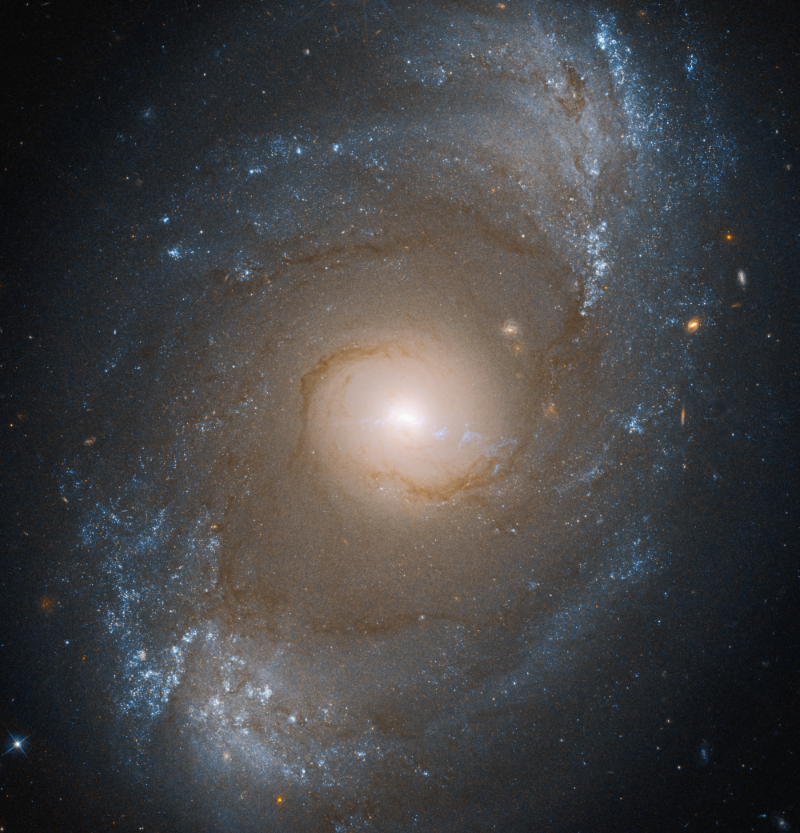 A Hubble Space Telescope view of the galaxy NGC 4151. Note the bright blue regions of starbirth out in the spiral arms, while there are relatively few regions near the core. Credit: NASA, ESA, Joseph DePasquale (STScI)
What XRISM Tells Us
It turns out that the strongest winds that shape the galaxy and eat up the gas that stars need to form don't flow all the time. Xiang had to come up with a way to understand when those winds are the strongest. So, she analyzed hundreds of days of NGC 4151 observations, looking for peaks in X-ray brightness that would indicate strong winds.
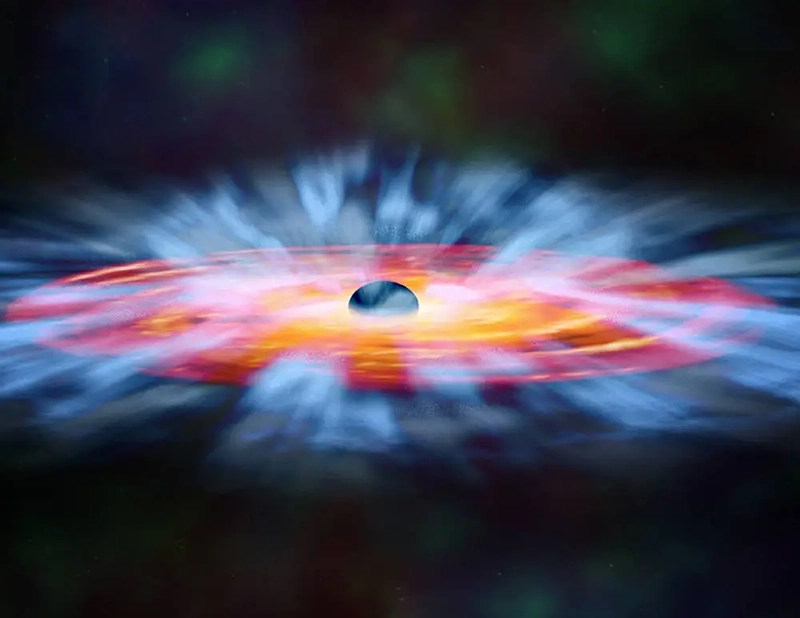 An illustration of the winds and accretion disk around a supermassive black hole that makes up an AGN. Credit: NASA/M.Weiss (Chandra X-ray Center)
In addition, she looked at how hard or soft the X-rays were detected by XRISM so she could correlate them with wind strength. She put all these variables into a metric that she called the "color intensity index", or "cindicity". “Partly because my name is Cindy,” Xiang said. “But the idea is that, in the future, you could tell me the cindicity of your source at this moment and I can tell you the probability that you’re seeing a fast outflow.”
For NGC 4151, Xiang found the fast winds were strongest when the X-rays were hard but faint. The fastest winds were not seen during flares, but typically about 10,000 seconds—or just under 3 hours later—providing the first direct timing link to the outflows.
How Winds Affect Star Formation
As mentioned, the principal effect of an AGN on surrounding gas clouds in a galaxy is pretty catastrophic for starbirth regions. The winds can simply blow the gas away, dispersing it throughout the galaxy or into intergalactic space. If it's spread out widely enough, there won't be enough in any given region to begin the process of star formation. The winds can also shred the gas molecules, which also affects star formation.
The black hole's main activity, gobbling down material, also removes the available star formation material completely. The result is the same: no gases to coalesce into stars. In turn, the galaxy loses its chance to grow through star formation.
Xiang's team found multiple types of disk winds in the outflows from NGC 4151. All of these outflows had outflow rates that were equal to or greater than the mass accretion rate, meaning they were blowing essential material away. The team's measurements and conclusions about the winds flowing from this galaxy's supermassive black hole will help astronomers predict when such outflows are happening in other galaxies. That, in turn, could enhance scientists' understanding of AGNs across the Universe.
For More Information
Revealing How and When a Black Hole's Mighty Winds Can Squash Star Formation
XRISM Spectroscopy of Accretion-driven Wind Feedback in NGC 4151