Ian O'Neill

UFOs, a Green Venus and Sun Gobbling? Isn’t That Going a Little Far, Mrs Hatoyama?

September 3, 2009

“While my body was asleep, I think my soul rode on a triangular-shaped UFO and went to Venus.” This might sound like a quote taken from the ramblings of a conspiracy theorist or the chant from someone who spent an hour too many at an Amsterdam coffee shop, but it wasn’t. Actually, these are the [...]

Read the full article →

NASA is Running Out of Plutonium

May 8, 2009

Decommissioning nuclear weapons is a good thing. But when our boldest space missions depend on surplus nuclear isotopes derived from weapons built at the height of the Cold War, there is an obvious problem. If we’re not manufacturing any more nuclear bombs, and we are slowly decommissioning the ones we do have, where will NASA’s [...]

Read the full article →

Did a Russian Home Get Hit by Progress Space Debris?

May 8, 2009

The Russian supply ship for the International Space Station successfully launched from Baikonur Cosmodrome in Kazakhstan at 2:37 pm EDT (10:37 pm Moscow time) on Thursday to carry 2.5 tonnes of supplies to the orbiting crew. Progress 33 will take over from Progress 32 that was filled with rubbish and unwanted instrumentation and de-orbited on [...]

Read the full article →

Panspermia Flower Power

May 6, 2009

Panspermia is a hypothesis that suggests life isn’t an Earth-only affair. The seeds of life may have spread throughout the Solar System and beyond via chunks of rock or comets, encountering planetary bodies, transporting spores or bacteria to other worlds. In short, we could be living in a cosmic ecosystem linked through simple interplanetary vagabond [...]

Read the full article →

2009 HC82: A Burnt-Out, Eccentric and Backward Near-Earth Asteroid

May 3, 2009

The Solar System often throws up surprises for astronomers, but the recent discovery of a 2- to 3-km wide asteroid called 2009 HC82 has sent observers in a spin. A retrograde spin to be precise. This particular near-Earth asteroid (NEO) should have already been spotted as it has such a strange orbit. It is highly [...]

Read the full article →

Were the Dinosaurs Really Wiped Out by an Asteroid? Possibly Not (Update)

April 27, 2009

In 1979, the huge Chicxulub crater, measuring about 180 km (112 miles) in diameter, was discovered on the northern Yucatan Peninsula, Mexico. Scientists made the obvious conclusion that something rather large had hit the Earth in this location, probably causing all kinds of global devastation 65 million years ago. At around the same time, 65% [...]

Read the full article →

Did Dark Matter Annihilate Our Early Universe?

April 26, 2009

380,000 years after the Big Bang, the Universe cooled from being a hot soup of plasma, to a temperature where protons and electrons could combine to form atoms. This calm period of neutral hydrogen in universal history didn’t last for long however. The neutral hydrogen atoms were ripped apart once more, by a mechanism that [...]

Read the full article →

Mars Rover Spirit is Rolling Again After Memory Problems

April 24, 2009

It’s been a worrying month for the health of Mars Expedition Rover Spirit. Two weeks ago, the embattled robot failed to wake up after three successive communication sessions, and then over the Easter weekend (April 12th and 13th), mission HQ noticed the rover had rebooted its systems at least twice during use of the high-gain [...]

Read the full article →

Hubble Discovers a Strange Collection of White Dwarf… Dwarfs

April 24, 2009

A collection of very odd white dwarfs have been discovered in a local globular cluster. Twenty-four white dwarfs (18 of them are new discoveries) have been spotted. Although these degenerate stars aren’t exactly an uncommon (they are the small sparkling remnants left over after star death), this particular set are unique; they are made from [...]

Read the full article →

The Blurry Summit of Mars’ Pavonis Mons

April 24, 2009

…and yes, the picture is in focus. This strange image was captured by the High Resolution Imaging Science Experiment (HiRISE) camera on board NASA’s Mars Reconnaissance Orbiter (MRO) on April 11th. At first it looked like a classic example of my early camera days without a tripod; most of the photos I took were blurry [...]

Read the full article →

Could Orion be Downgraded from a Six to Four Astronaut Vehicle?

April 23, 2009

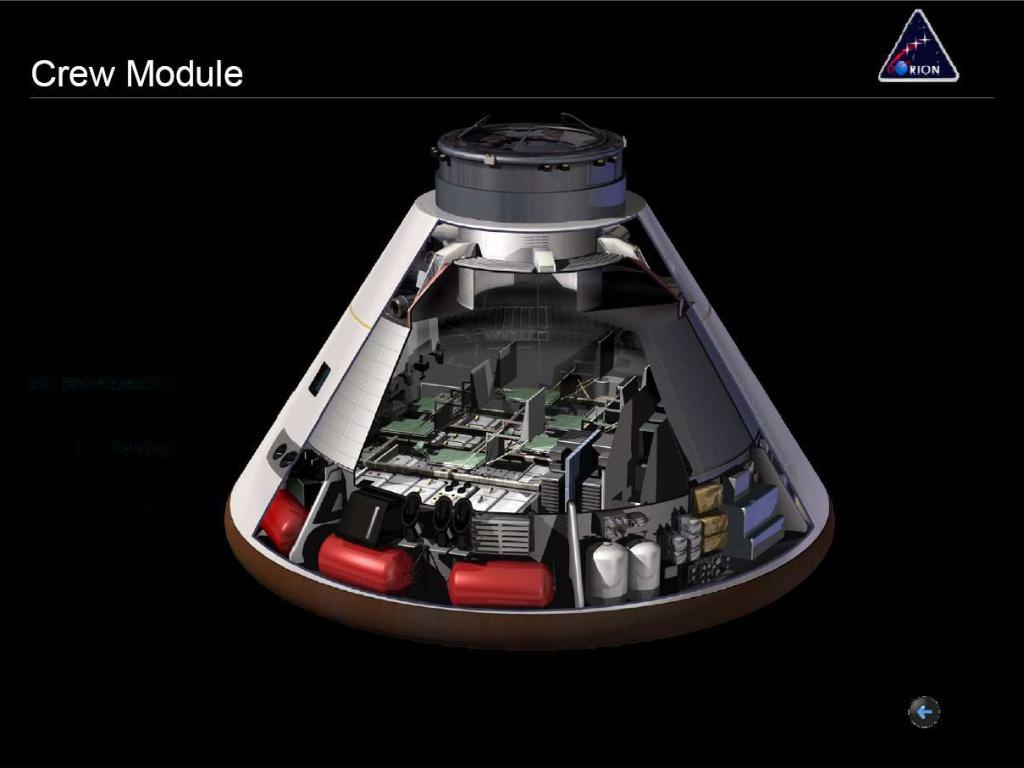
To save on weight, NASA engineers are considering the option to remove two seats from the Orion crew exploration vehicle. According to the manager of the Constellation Program, a possible redesign option has been discussed with the International Space Station (ISS) partners despite the fact that the initial operational capability (IOC) to deliver crew to [...]

Read the full article →

Young Asteroids Age Fast with a Solar Wind Tan

April 22, 2009

If you stay out in the Sun too long, you’ll eventually get a suntan (or sunburn); your skin will also get damaged and it will show signs of ageing faster. This might sound like a sunblock ad, but the same principal holds true for the small chunks of rock floating around in the Solar System. [...]

Read the full article →

Brown Dwarfs Could Be More Common Than We Thought

April 22, 2009

In 2007, something strange happened to a distant star near the centre of our galaxy; it underwent what is known as a ‘microlensing’ event. This transient brightening didn’t have anything to do with the star itself, it had something to do with what passed in front of it. 1,700 light years away between us and [...]

Read the full article →

Despite Global Warming, Wildfire Frequency Does Not Increase

April 21, 2009

As global average temperatures rise, it is widely believed the frequency of wildfires will increase. However, this may not be the case. According to analysis of sediment from lake beds in Northern Alaska, the frequency of wildfires didn’t relate to changes in temperature variation over the last few thousand years. This is strange, surely a [...]

Read the full article →

Should We Really Tell ET Our Problems?

April 21, 2009

So, you have a radio transmitter and you’ve been tasked to send a message into space to try to communicate with a hypothetical alien civilization. Where do you begin? Probably high on your list is to seek out the best candidate stars to send a signal to. As we only have experience of life on [...]

Read the full article →

Where is the Most Remote Location on Earth?

April 20, 2009

According to a new study, less than 10% of the world’s land is more than 48 hours of travel from the nearest city. This doesn’t include air travel, it is ground-travel only (i.e. on foot, train, car, boat, bike, horse, donkey). So no matter where you are in the world, there’s a good chance you [...]

Read the full article →

Constraining the Orbits of Planet X and Nemesis

April 15, 2009

If Planet X was out there, where would it be? This question posed by an Italian researcher turns out to be a lot more involved than you’d think. As opposed to all the 2012 idiocy hype flying around on the internet, this research is actually based on a little thing called science. By analysing the [...]

Read the full article →

Kepler Will Be Used to Measure the Size of the Universe

April 14, 2009

On April 7th, commands were sent to NASA’s exoplanet-hunting Kepler telescope to eject the 1.3×1.7 metre lens cap so the unprecedented mission could begin its hunt for Earth-like alien worlds orbiting distant stars. However, one UK astronomer won’t be using the Kepler data to detect the faint transits of rocky exoplanets in front of their [...]

Read the full article →

NASA Worried: Spirit Reboots Rover Computer, Twice

April 14, 2009

Mars Exploration Rover Spirit is acting a little strange. Over the Easter weekend, it would appear that the tenacious little Mars explorer rebooted its computer not once, but at least two times. Mission scientists were alerted to the problem as some of the communication sessions from Spirit-to-Earth were irregular, prompting mission control to investigate the [...]

Read the full article →

Fires Rage Through Central America

April 10, 2009

Having just read about the deadly wildfires in Texas and Oklahoma, I was interested to see whether one of NASA’s Earth-monitoring satellites have been tracking the situation from orbit. Whether it is too early for observations to come in, or whether one of the satellites have yet to make a pass directly above the states [...]

Read the full article →