Universe Today
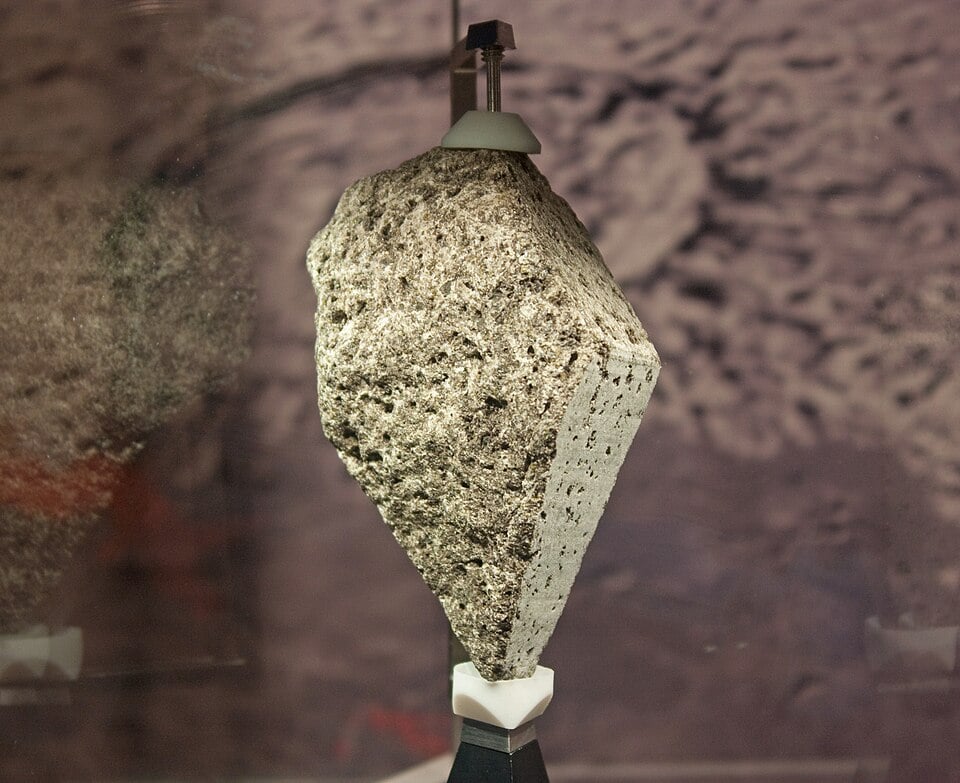
When the Apollo astronauts returned from the Moon, they brought back something more valuable than any treasure, 382 kilograms of Moon rock that would keep scientists busy for generations. For decades those samples have been scrutinised, measured, and debated and, for decades one question has refused to be satisfactorily answered… Did the Moon once have a powerful magnetic field or was it always magnetically feeble?
On one side, scientists pointed to the Apollo samples themselves, many of which are strongly magnetised, suggesting the early Moon had a magnetic field comparable to or even exceeding Earth's. On the other side, theorists argued this was impossible. The Moon's core is tiny, barely a seventh of the Moon's total radius and too small to have generated a powerful dynamo. Both sides seem to have had evidence.
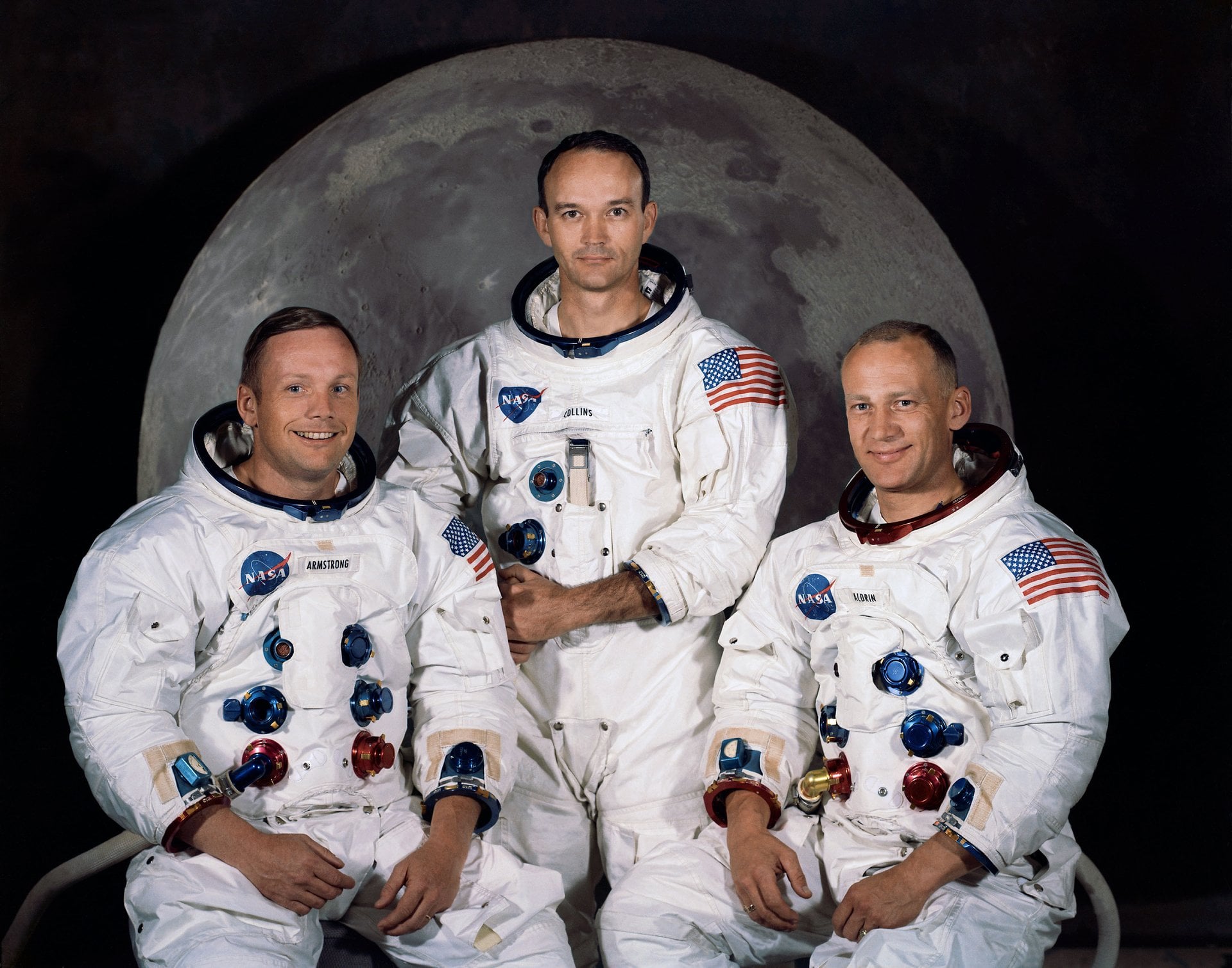 The Apollo astronauts bought back 382 kg of Moon rock. The crew of Apollo 11 are pictured here from left to right, Neil A. Armstrong, commander; Michael Collins, command module pilot; and Edwin E. Aldrin Jr., lunar module pilot (Credit : NASA)
Now researchers at the University of Oxford have cracked it and the resolution is one of those satisfying moments where a complicated mystery turns out to have a somewhat more simple explanation.
Analysing the chemical makeup of a type of volcanic rock known as Mare basalts, the dark flat plains that give the Moon its familiar patchy appearance, the Oxford team found a striking pattern. Every lunar sample that had recorded a strong magnetic field also contained large amounts of titanium. And every sample with less than six percent titanium by weight was associated with a weak magnetic field. The correlation was clean and consistent across the entire dataset.
What this tells us is that the Moon's magnetic history was not the steady, sustained configuration that decades of Apollo analysis had implied. Instead, for the vast majority of its history, the Moon had a weak magnetic field, exactly as the theorists suspected. But very occasionally, something unusual happened deep inside. Titanium rich material melted at the boundary between the Moon's core and its mantle, temporarily supercharging the lunar dynamo and generating a magnetic field that briefly surpassed even Earth's.
These episodes were extraordinarily brief as lead author Associate Professor Claire Nichols explained: 'We now believe that for the vast majority of the Moon's history, its magnetic field has been weak. But that for very short periods of time, probably no more than 5,000 years, but possibly as short as a few decades, melting of titanium rich rocks at the Moon's core-mantle boundary resulted in the generation of a very strong field.'
This resolves the paradox in that the Apollo samples were not representative. The Mare basalts that were flat, dark, geologically stable were the natural choice for landing sites, which meant astronauts repeatedly set down in exactly the regions richest in high-titanium rock. They brought home a biased sample without ever knowing it.
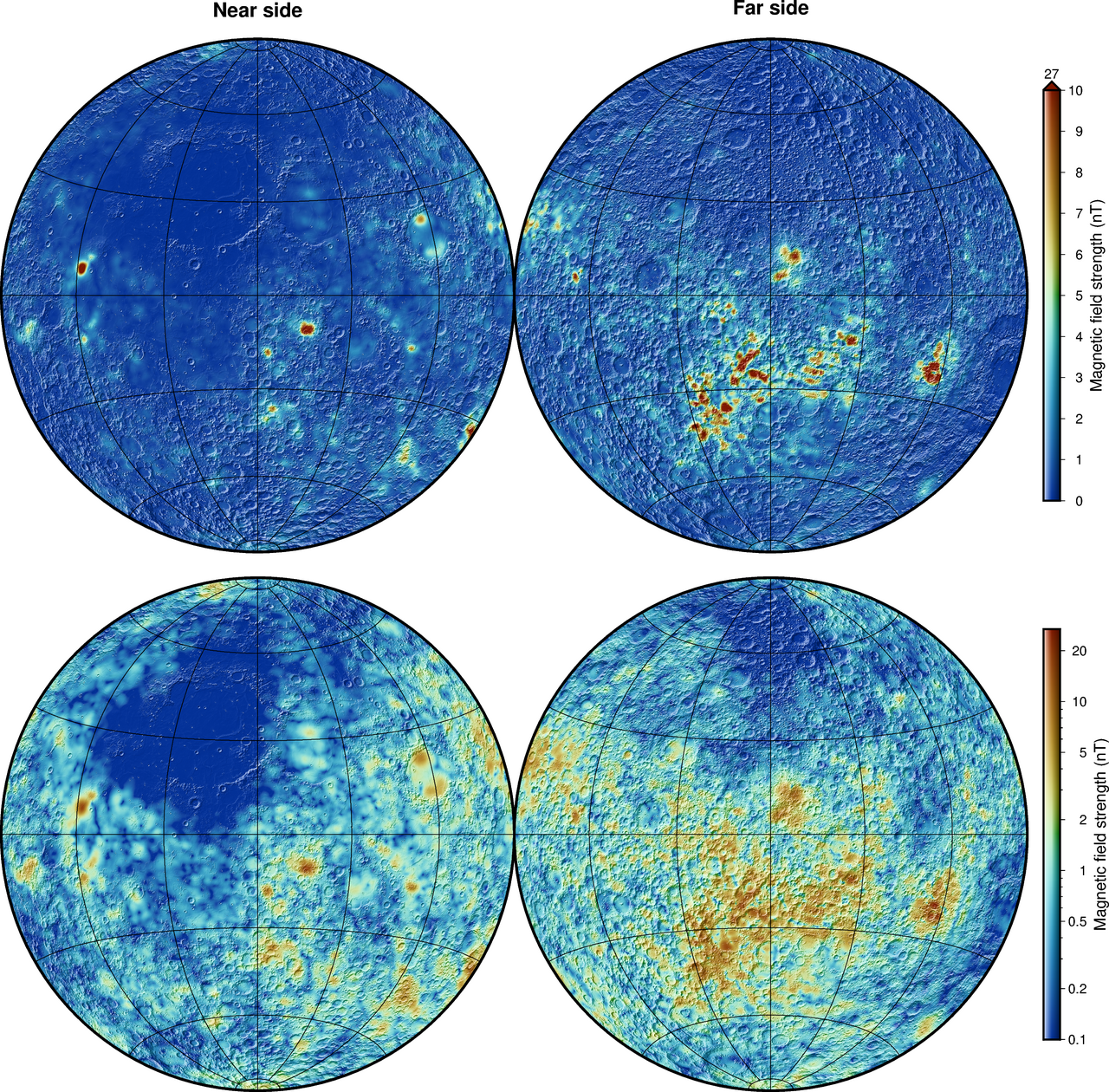 Total magnetic field strength 30 km above the surface of the Moon using a linear (upper) and logarithmic (lower) colour scale. The nearside and far-side hemispheres are on the left and right, and grid lines are plotted every 30 degrees of latitude and longitude (Credit : Mark A. Wieczorek)
Co-author Associate Professor Jon Wade put the problem in vivid terms. He suggested that if aliens were exploring Earth and had landed just six times, they would probably encounter a similar sampling bias especially if they were selecting flat terrain as a landing site. The Apollo missions happened to focus heavily on the Mare region of the Moon, and had they landed elsewhere, scientists would likely have concluded that the Moon only ever had a weak magnetic field, missing this important chapter of early lunar history entirely.
It is a reminder of the limits of what we know and how much depends on the accident of where you happen to land. The good news is that we will soon have another chance. The Artemis programme is preparing to return humans to the Moon, this time to different regions and different geology. Co-author Dr Simon Stephenson noted that the team can now predict which types of rock will preserve which magnetic field strengths which means the next generation of samples could test the Oxford model directly.
Source : Solved - New analysis of Apollo Moon samples finally settles debate about the Moon's magnetic field