Universe Today
Video footage has finally surfaced of the daytime fireball that illuminated the sky over the Sierra Nevada Mountains in California back in April. NASA and the SETI Institute had asked the public to submit any amateur photos or video footage of the event, and previously a just few photos were taken of the event, even though it happened in broad daylight and created sonic booms that were heard over a wide area, back on Sunday, April 22, 2012 at 7:51 a.m. PDT. A few weeks later, Shon Bollock, who was making a time-lapse kayaking video just outside Kernville, California realized he had captured the bolide streaking through the air. This video shows the event several times, successively zooming in for a closer look. According to NASA it is the only footage of the meteor thus far.
Meteorite hunters have been successful in locating fragments of the meteor, now called the Sutter’s Mill meteor since the event occurred near the area famous for where gold was discovered back in 1848, creating the California gold rush.
NASA estimated fragments could be dispersed over a 16-km (10-mile) area.
Phil Plait says the video is being studied by astronomers and meteoriticists to try to calculate the trajectory, speed, and possible orbit of the object, which is difficult with just one video, so if anyone finds they have ‘accidently’ taken footage of the event, contact the NASA Lunar Science Institute at the NASA Ames Research Center.
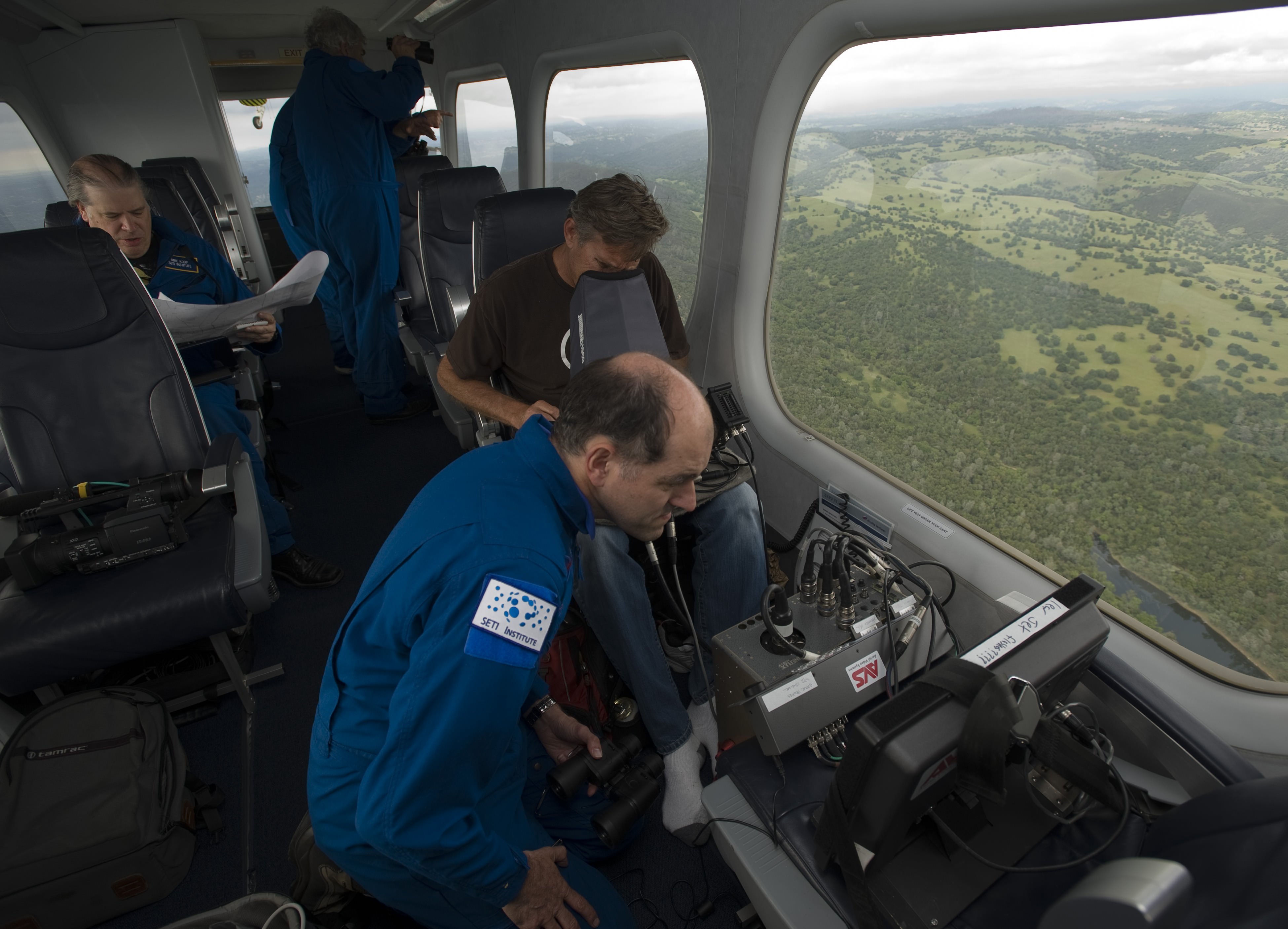
NASA used an airship to search for meteorites from this event. Noted meteorite expert Peter Jenniskens said the meteorites found so far from the fall are Carbonaceous Chondrites from the CM group of meteorites, “a rare type of primitive meteorite rich in organic compounds,”and scientists have precious few samples of this kind of material. The meteorites are very interesting to scientists from an astrobiology perspective, as they contain molecules related to how the building blocks for life on Earth may have been delivered from outer space. Scientist believe that this meteor could hold the answers to the origin of life on Earth and the universe. By studying the meteor, scientists also will learn more about the early solar system and the formation of our planets.
“This is among the most chemically primitive meteorites,” said NLSI Deputy Director Greg Schmidt. "It’s like asking ‘how did life on Earth begin?’ and then having a fossil fall right in your back yard. This is exciting stuff — who knows what’s inside? The Sutter’s Mill Meteorite could be the most profound sample collected in over 40 years.”