Universe Today
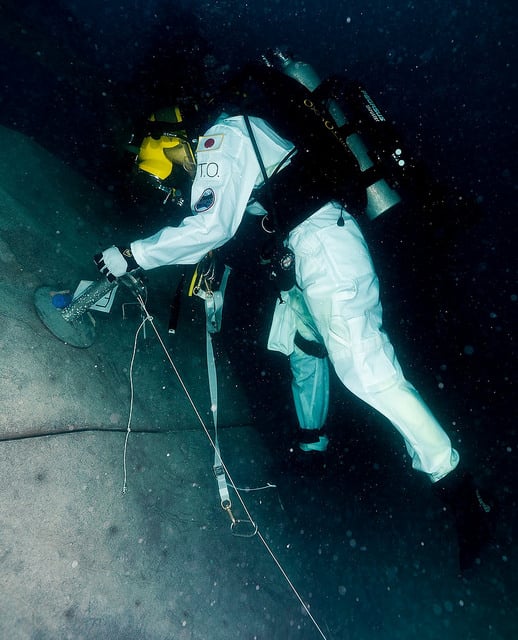
NASA evacuated its crew of NEEMO underwater “aquanauts” from a deep sea laboratory off the coast of Key Largo, Florida where they were simulating a mission to an asteroid. With Hurricane Rina bearing down on the Gulf of Mexico, NASA decided to play it safe.
"Crew decompressed overnight and will return to surface shortly. Hurricane Rina just a little too close for comfort," said the NASA_NEEMO Twitter feed early this morning.
The NASA Extreme Environment Mission Operations (NEEMO) team came to the surface and climbed aboard support boats, returning to land by about 9:00 am EDT, (1300 GMT).
The underwater mission began on Oct. 20, after an initial delay caused by another storm in the area.
The NEEMO crew -- the 15th such underwater mission -- conducted six underwater spacewalks and one day of scientific research inside the underwater Aquarius habitat, focusing on operational concepts that might be used in human exploration of an asteroid. The crew completed four days of scientific asteroid exploration analog operations using the deep worker submersibles that stood in for the Space Exploration Vehicle.
“This is a good way to learn techniques that we’ll need to use on other bodies in the solar system, without actually going into space,” said Commander and NASA astronaut Shannon Walker during a videoconference conversation with reporters on Monday from the underwater habitat.
The crew also included Mars scientist Steve Squyres, Principal Investigator with the Mars Exploration Rover mission.
“Asteroids are leftovers from formation of solar system, so by studying them we can learn about the building blocks of the solar system and understand how planets form,” Squyres said during the videoconference. “Going to asteroids will be a wonderful stepping stone to other destinations in the solar system, and we can flex our deep space muscles and learn how to do the things we want and need to do as we venture off of Earth.”
The six-member NEEMO crew also included Japan Aerospace Exploration Agency astronaut Takuya Onishi, Canadian Space Agency astronaut David Saint-Jacques, and James Talacek and Nate Bender of the University of North Carolina Wilmington.
Even though the mission was cut short, the remainder of NEEMO 15 will not be rescheduled. "Despite the length, we accomplished a significant amount of research," said NEEMO Project Manager Bill Todd. "We're already learning lessons from working in this environment."