We all have cameras, and the sky's an easy target, so why not have a little fun? Ever since I got my first camera at age 12 I wanted to shoot time exposures of the night sky. That and a tripod are all you need. Presented here for your enjoyment are a few oddball and yet oddly informative images of stars and planets. Take the word "art" loosely!
[caption id="attachment_119559" align="aligncenter" width="580"]
Colorless mess. This is the companion to the Sirius image and shows Jupiter through the telescope. Notice how blandly white it appears. That's because Jupiter's disk is large enough to not show twinkling (and color changes) caused by atmospheric turbulence as in the case of point-like Sirius. Credit: Bob King[/caption]
[caption id="attachment_119560" align="aligncenter" width="580"]
Pleasing parallels. Orion's Belt and Sword trail in this time exposure made with a 200mm lens. The fuzzy pink streak is the Orion Nebula. They're trails are nearly parallel because the stars all lie close to the celestial equator and were crossing the meridian at the time. Credit: Bob King[/caption]
[caption id="attachment_119561" align="aligncenter" width="580"]
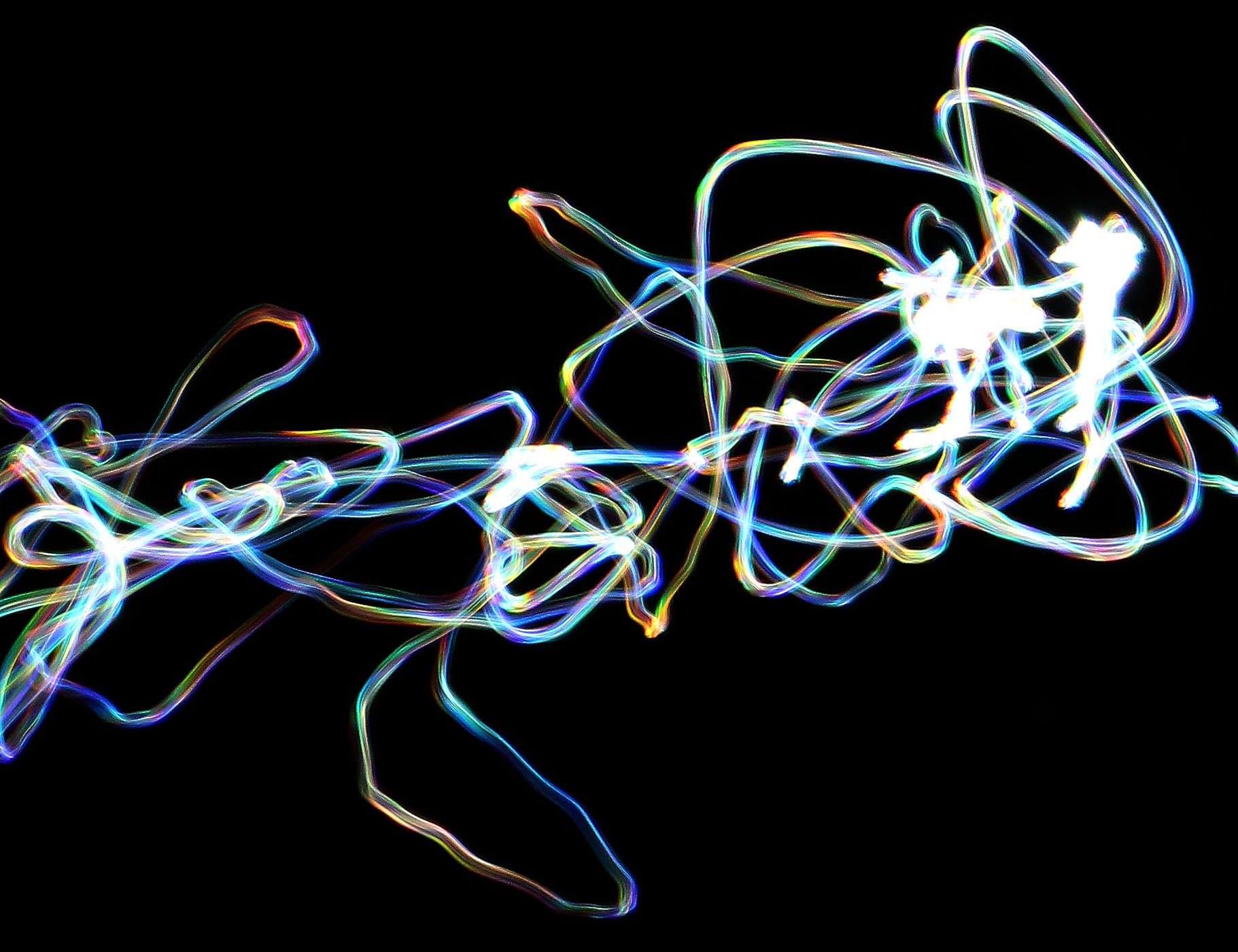
Star Trek Effect. I centered Jupiter in the viewfinder, pressed the shutter button for a 20-second time exposure and slowly hand-zoomed the lens from 70mm to 200mm. It took a few tries because I was shooting blind, but even the rejects weren't too bad. Credit: Bob King[/caption]
[caption id="attachment_119562" align="aligncenter" width="580"]
Color by Fog. The colors of stars are accentuated when spread into a glowing disk by fog or light cloud. Orion is at right with the crescent moon at lower left. Credit: Bob King[/caption]
[caption id="attachment_119564" align="aligncenter" width="580"]
Snow flies. During a time exposure taken on a snowy but partly cloudy night, snowflakes, illuminated by a yard light, streak about beneath a Full Moon earlier this winter. Credit: Bob King[/caption]
[caption id="attachment_119565" align="aligncenter" width="580"]
Stuttering Stars. For this image of the Big Dipper the camera was on a tracking mount. I left the shutter open for about 25 minutes with the tracking turned off so the stars would trail. Then the lens was covered with a black cloth for a few minutes to create a gap between this exposure and the next. After the cloth was removed, I started the tracking motor and kept the exposure running for a few minutes. A diffusion filter was used in front of the lens to soften and enlarge the brightest stars. Credit: Bob King[/caption]
Universe Today