Universe Today
As
we've noted before
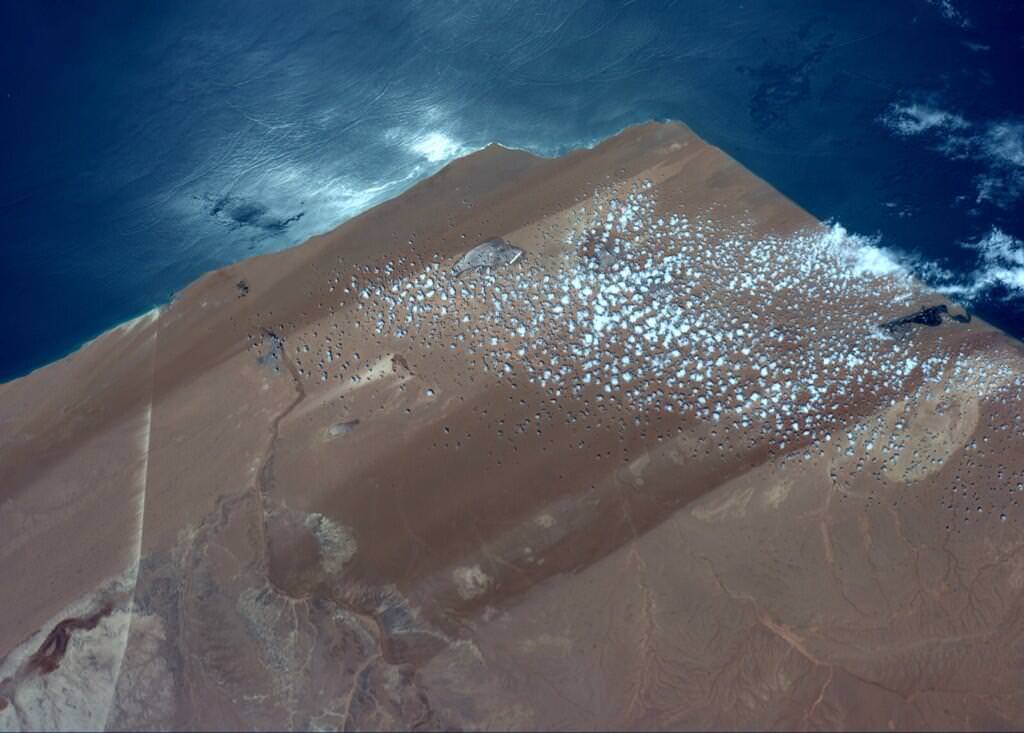
, astronaut Reid Wiseman is sending out a bevy of tweets and pictures from his perch on board the International Space Station, but this recent image got our attention.
"Can't explain it, just looked oddly unnatural to me and I liked it,"
Wiseman said on Twitter
, leaving no info on what Earthly feature might be.
Floating cardboard? That's what many people thought. Comments from Twitter:
Breaking news: Earth is made of Cardboard
" @astro_reid: Can't explain it, looks oddly unnatural to me & I like it. pic.twitter.com/OEzZpH85FZ "
— Connor P (@connorpj1)
@astro_reid it's a piece of cardboard with some sugar icing spilt on it...no???!!!! ;-) — Anna Richards (@mrsannarichards)
@astro_reid@NASA Looks like a piece of floating cardboard. Do you know where it was Reid? Thanks — Stephane Gentile (@FrenchScotPilot)
So what is this image and where on Earth is it?
I checked with
Peter Caltner
, who regularly tweets information on astronaut photos and he said the image shows Western Sahara, near
El Aaiun
(coordinates 26.824071,-13.222504) and the straight white line is a conveyor belt facility from a phosphate mine at Bou Craa that goes to a loading port at the coast. The conveyer belt is about 60 miles/100 km long, Peter noted.
You can see more images of this feature in
this Google search
, but none of them have quite the angle Wiseman had, which gave it the straight-edge box-like appearance from space.
See more comments about the image here.
Thanks again to Peter Caltner for his assistance!