Universe Today
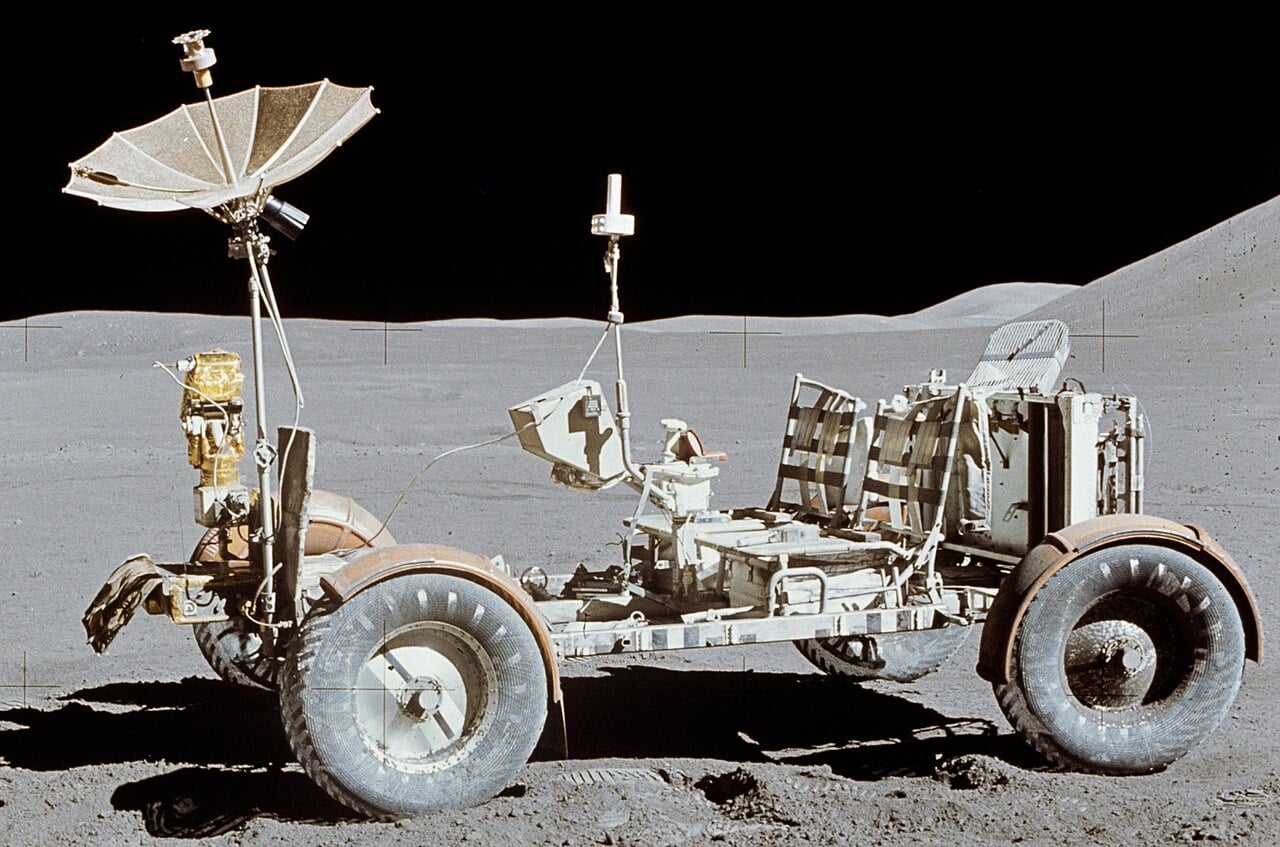
Beneath the Moon’s cratered surface lie networks of lava tubes and deep pits, natural caves that could shelter future lunar bases from cosmic radiation and wild temperature swings. These underground structures represent some of the most scientifically valuable areas in the Solar System, but they come with the very real challenge of simply getting there!
The entrances to these caves feature steep, rugged terrain with rocks and loose regolith. Small rovers, preferred for lunar exploration because you can deploy many of them to reduce mission risk, face an inherent limitation. Their compact wheels simply can’t climb over obstacles much larger than the wheel diameter itself. Send a swarm of small rovers and even if some fail, others continue the mission. Send one large rover and a single failure ends everything.
Variable diameter wheels are a new thing in lunar exploration and could solve this, expanding when needed to overcome obstacles, then contracting for efficient transport. But building such a wheel for the Moon has proven nearly impossible. The lunar environment is uniquely hostile to mechanical systems. Fine, abrasive dust infiltrates everything, and in the airless vacuum, exposed metal surfaces stick together through a process called cold welding. Traditional hinges and joints don’t last long under these conditions.
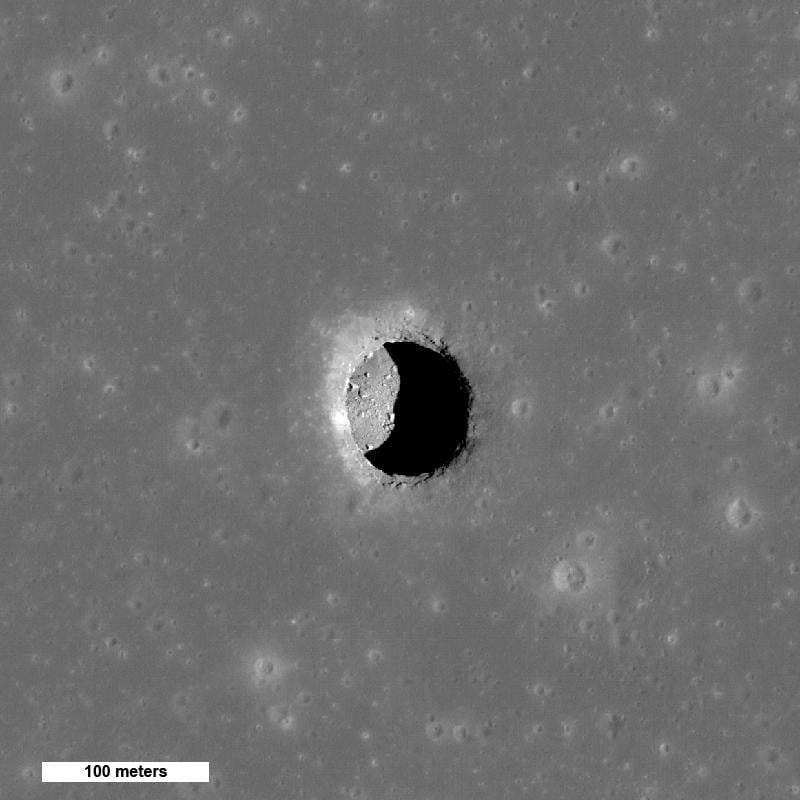 A lava tube on the lunar surface (Credit : NASA/GSFC/Arizona State University)
A research team led by Professor Dae-Young Lee from the Korea Advanced Institute of Science and Technology found an elegant solution by looking backward in time. They combined principles from Leonardo da Vinci’s self supporting bridge designs with origami folding patterns to create a wheel that transforms without any traditional mechanical joints.
The wheel uses an elastic metal frame and fabric tensioners that flex rather than pivot. This design can expand from a compact 230 millimetres to 500 millimetres in diameter, more than doubling its size. A small rover equipped with these wheels maintains a low profile during transport but gains the climbing ability of a much larger vehicle once deployed on the lunar surface.
The team put the wheel through rigorous testing using artificial lunar soil. It demonstrated superior traction on loose slopes and survived a drop impact equivalent to falling 100 metres in lunar gravity. The metal frame proved flexible enough to transform reliably while rigid enough to support the rover’s weight across loose regolith.
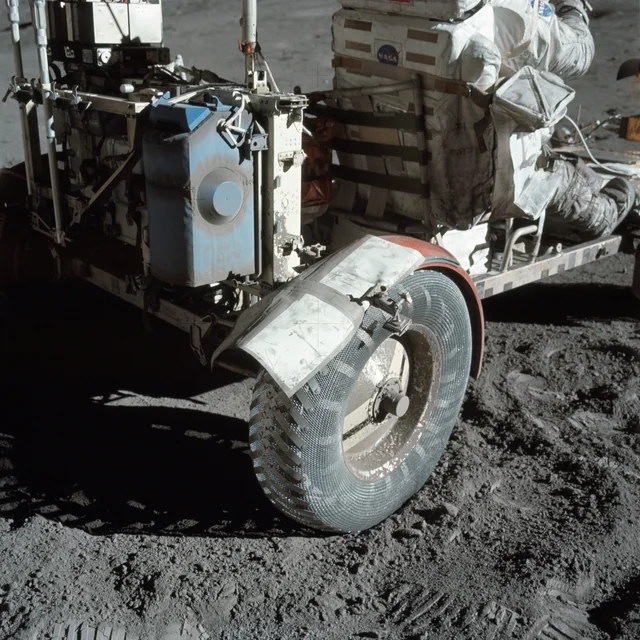 The wheels on lunar rovers need to be the right size for the different lunar terrain. A new extendable wheel could make lunar rovers far more efficient (Credit :NASA)
Dr. Chae Kyung Sim from the Korea Astronomy and Space Science Institute emphasised the scientific importance, calling lunar pits “natural geological heritages” that this technology brings within reach. Dr. Jongtae Jang from the Korea Aerospace Research Institute noted the wheel was optimised using thermal models to withstand temperature fluctuations of 300 degrees Celsius between lunar day and night.
Professor Lee expressed optimism that despite remaining challenges with communication and power systems, this unique technology positions the team as potential leaders in future lunar exploration missions targeting the Moon’s mysterious underground frontier.
Source : KAIST-UEL team develops “origami” airless wheel to explore lunar caves