Universe Today
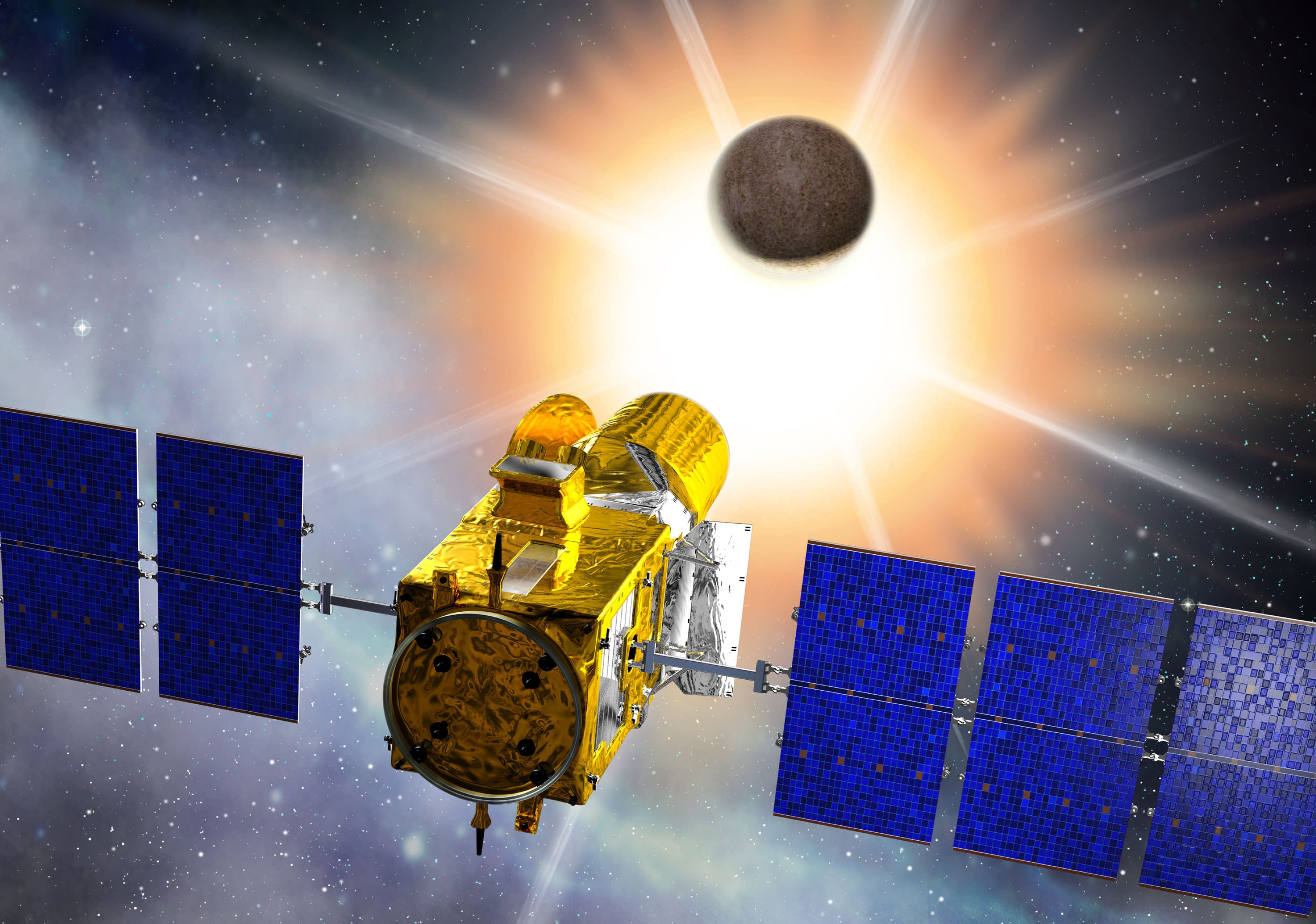
Astronomers have been able to monitor a the sound waves of a star 100 light years away and found a magnetic cycle analogous to our Sun's solar cycle. "Essentially, the star is ringing like a bell," says scientist Travis Metcalfe from the National Center for Atmospheric Research, a co-author of the new study. "As it moves through its starspot cycle, the tone and volume of the ringing changes in a very specific pattern, moving to higher tones with lower volume at the peak of its magnetic cycle."
The team examined the star’s acoustic fluctuations, using a technique called stellar seismology. The team hopes to assess the potential for other stars in our galaxy to host planets, including some perhaps capable of sustaining life.
"Understanding the activity of stars harboring planets is necessary because magnetic conditions on the star's surface could influence the habitable zone, where life could develop," says CEA-Saclay scientist Rafael Garcia, the study's lead author.
The scientists studied a star known as HD49933, which is located 100 light years from Earth in the constellation Monoceros, just east of Orion. By stellar seismology, they detected the signature of "starspots," areas of intense magnetic activity on the surface that are similar to sunspots. While scientists have previously observed these magnetic cycles in other stars, this was the first time they have discovered such a cycle using this method.
"We've discovered a magnetic activity cycle in this star, similar to what we see with the Sun," says co-author and NCAR scientist Savita Mathur. "This technique of listening to the stars will allow us to examine potentially hundreds of stars."
HD49933 is much bigger and hotter than the Sun, and its magnetic cycle is much shorter. Whereas past surveys of stars have found cycles similar to the 11-year cycle of the Sun, this star has a cycle of less than a year.
Studying many stars with stellar seismology could help scientists better understand how magnetic activity cycles can differ from star to star, as well as the processes behind such cycles. The work could especially shed light on the magnetic processes that go on within the Sun, furthering our understanding of its influence on Earth's climate. It may also lead to better predictions of the solar cycle and resulting geomagnetic storms that can cause major disruption to power grids and communication networks.
The scientists examined 187 days of data captured by the international Convection Rotation and Planetary Transits (CoRoT) space mission.
This short cycle is important to scientists because it may enable them to observe an entire cycle more quickly, thereby gleaning more information about magnetic patterns than if they could only observe part of a longer cycle.
Source: NCAR