Universe Today
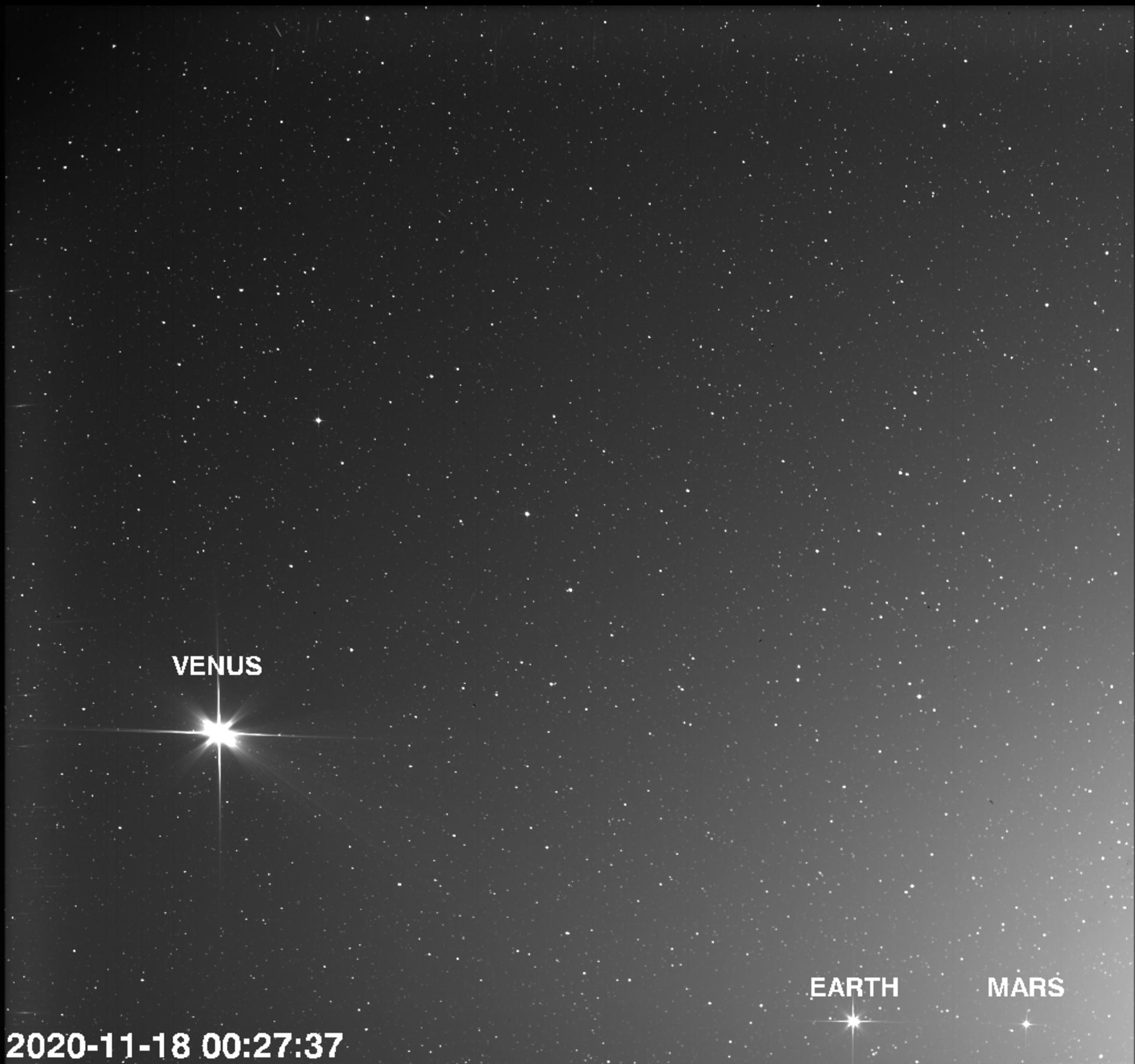
The Solar Orbiter spacecraft is heading towards the center of the Solar System, with the goal of capturing the closest images ever taken of our Sun. But during its flight, the spacecraft turned back to look towards home. It captured Venus, Earth, and Mars together, as seen from about 155.7 million miles (250.6 million kilometers) away.
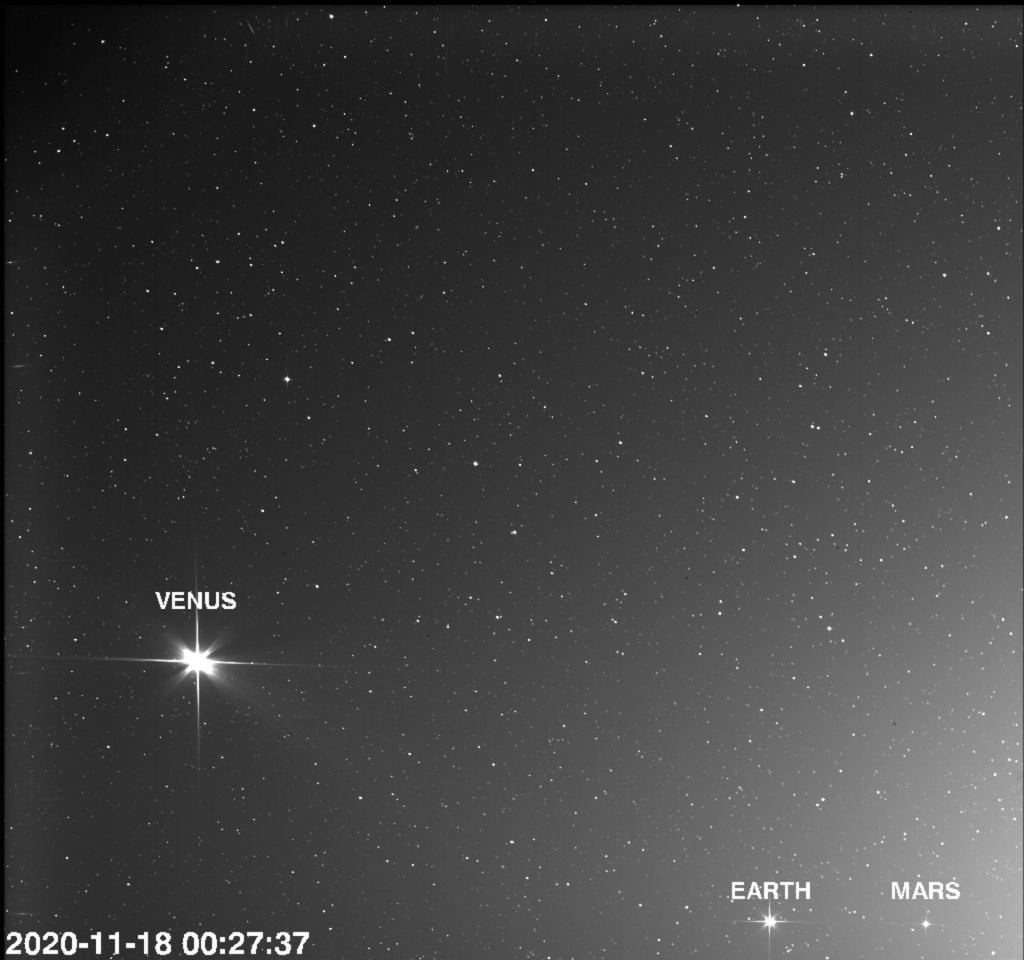
Venus is on the left, Earth in the middle and Mars on the right. Stars are visible in the background.
This image joins a great group of photos taken of our home planet from missions like Voyager, Cassini, Mars Express, and Mars Reconnaissance Orbiter. You can see a gallery of Earth-Moon images as seen from other worlds here.
Solar Orbiter launched in February 2020 and returned its first images last July 2020, including the closest-ever view of the Sun. The Heliospheric Imager (SoloHI) is one of ten instruments on the spacecraft. It took the image and short video, below. It was looking off to the side of the Sun to capture details about the solar wind and interplanetary dust, when it saw the three planets.
Venus is the brightest object in the video, roughly 48 million kilometers away from Solar Orbiter. The distance to Earth was 251 million kilometers, and Mars was 332 million kilometers away.
It will take the spacecraft about two years to reach its targeted vantage point for the best view of the Sun. One of the goals of the mission is to take the first ever images of the Sun's polar regions, which will help scientists to better understand the dynamics of the Sun.
Solar Orbiter will take advantage of gravitational boosts resulting from flybys of Earth and Venus to make the journey. At the time of the recording, the spacecraft was approaching Venus for its first gravity assist flyby, which happened on December 27. Venus and Earth flybys will bring the spacecraft closer to the Sun and tilt its orbit in order to observe our star from different perspectives.
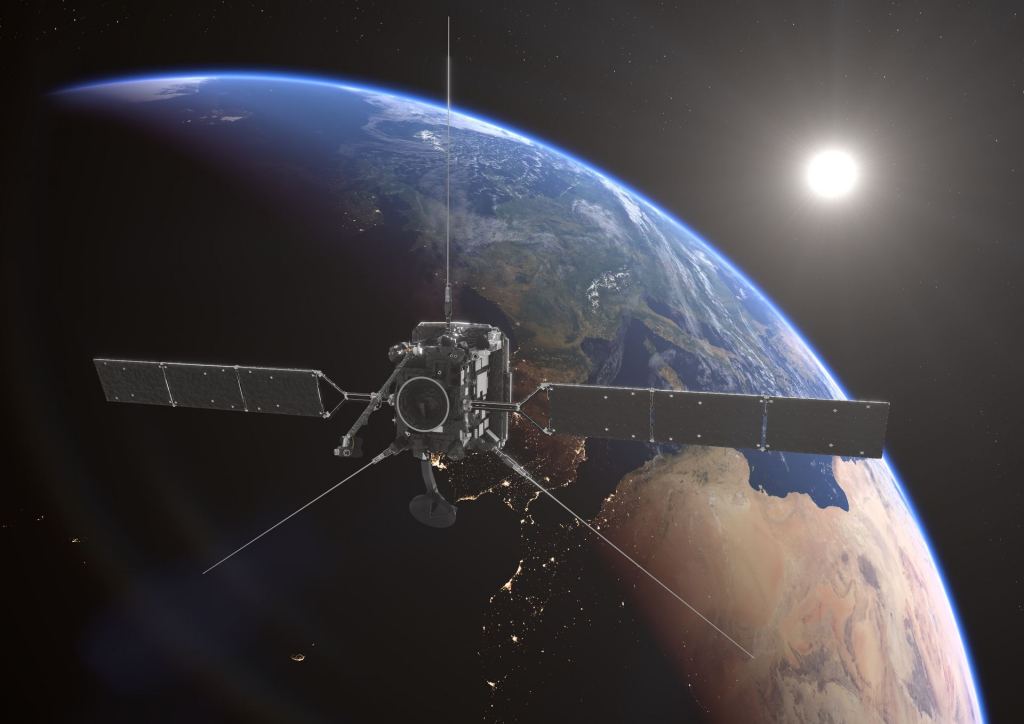
You can track the location of Solar Orbiter with this interactive chart. The spacecraft will make its second flyby of Venus in August 2021, and the Earth flyby in November 2021.
Loading tweet...
— View on Twitter
You can see more images from Solar Orbiter here, and more details on the mission here.