Universe Today
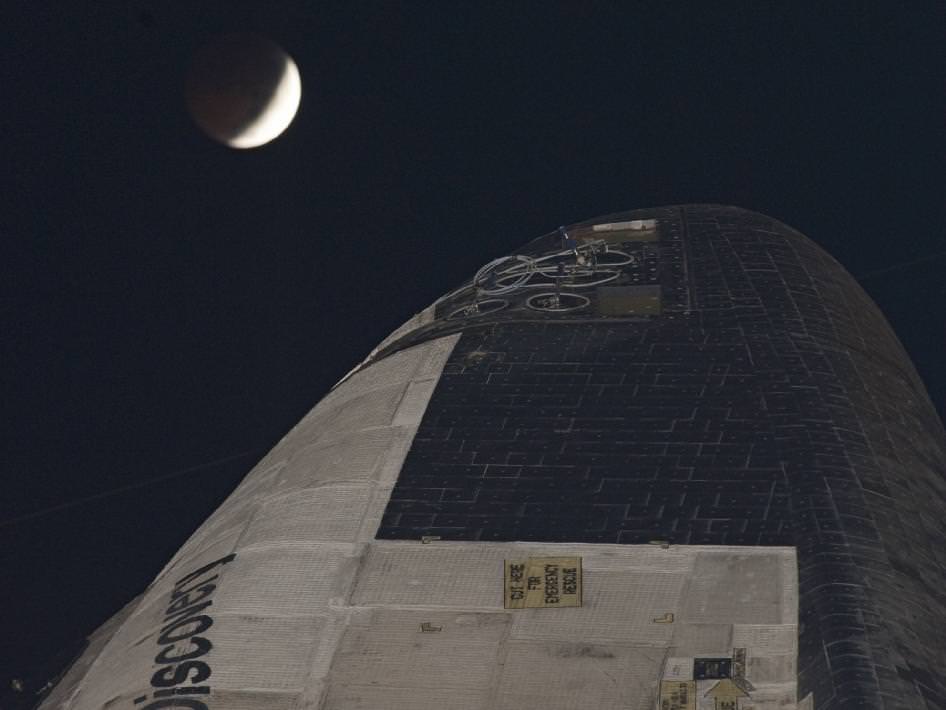
Overnight, space shuttle discovery left launch pad 39A and was rolled back to the Vehicle Assembly Building. There, engineers can use digital X-ray equipment to look at the external fuel tank and attempt to determine what caused the tops of two, 21-foot-long support beams, called stringers, on the outside of the intertank to crack during fueling on Nov. 5. Additionally, foam will be reapplied where 89 sensors were installed on the tank's aluminum skin for an instrumented tanking test on Dec. 17. The sensors were used to measure changes in the tank last week as super-cold propellants were pumped in and drained out.
This rollback of Discovery was her sixth, and the 20th rollback in the space shuttle program. If everything checks out in the VAB, Discovery is slated to return to the launchpad around January 14, 2011. Discovery's next launch opportunity is no earlier than Feb. 3.
Engineers also hope to verify their hypothesis that the stinger cracks occurred during cryogenic fueling because of unusual “stresses” on the support beams that took place during the tank's construction.
And we’ve said it before: never say “last” when it comes to the space shuttle! Discovery's "last" rollout to the pad was three months ago. And as Peter King from CBS news said on Twitter, not only do we get another rollout, we also get another "last" night launch if the date of February 3 holds. The original “last night shuttle launch” was the February 2010 launch of Endeavour, which I attended, but then the subsequent launch of Discovery in April ended up being a night launch because of delays. Looks likely we’ll have at least one more night launch that turns night into day at KSC.