Universe Today
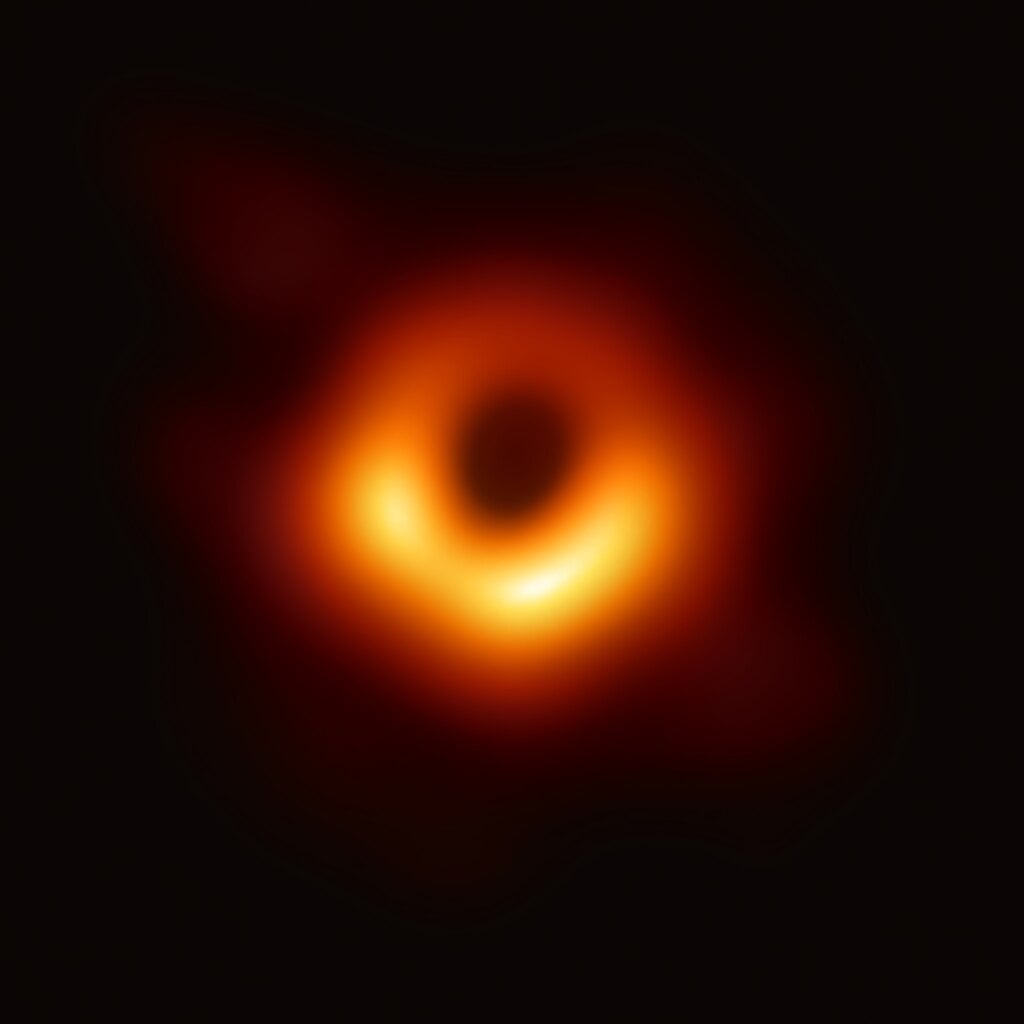
The first photograph of a black hole arrived in 2019 like a revelation. That blurred orange ring surrounding the supermassive black hole M87*, 55 million light years away represented one of astronomy’s greatest achievements, the first direct visual confirmation of objects so extreme that not even light escapes their gravitational grip. Three years later, a second image captured Sagittarius A*, the black hole lurking at our own Galaxy’s centre. Both photographs captivated billions of people and opened an entirely new scientific frontier.
Those groundbreaking images revealed only fragments of what black holes are actually doing. They were 2D snapshots, flat glimpses of far richer physics playing out around the universe’s most extreme gravitational wells. The doughnut shaped glow showed superheated plasma circling the black hole, but couldn’t reveal how that material moves, how magnetic fields channel energy into enormous jets, or how spacetime itself bends under such extraordinary gravity.
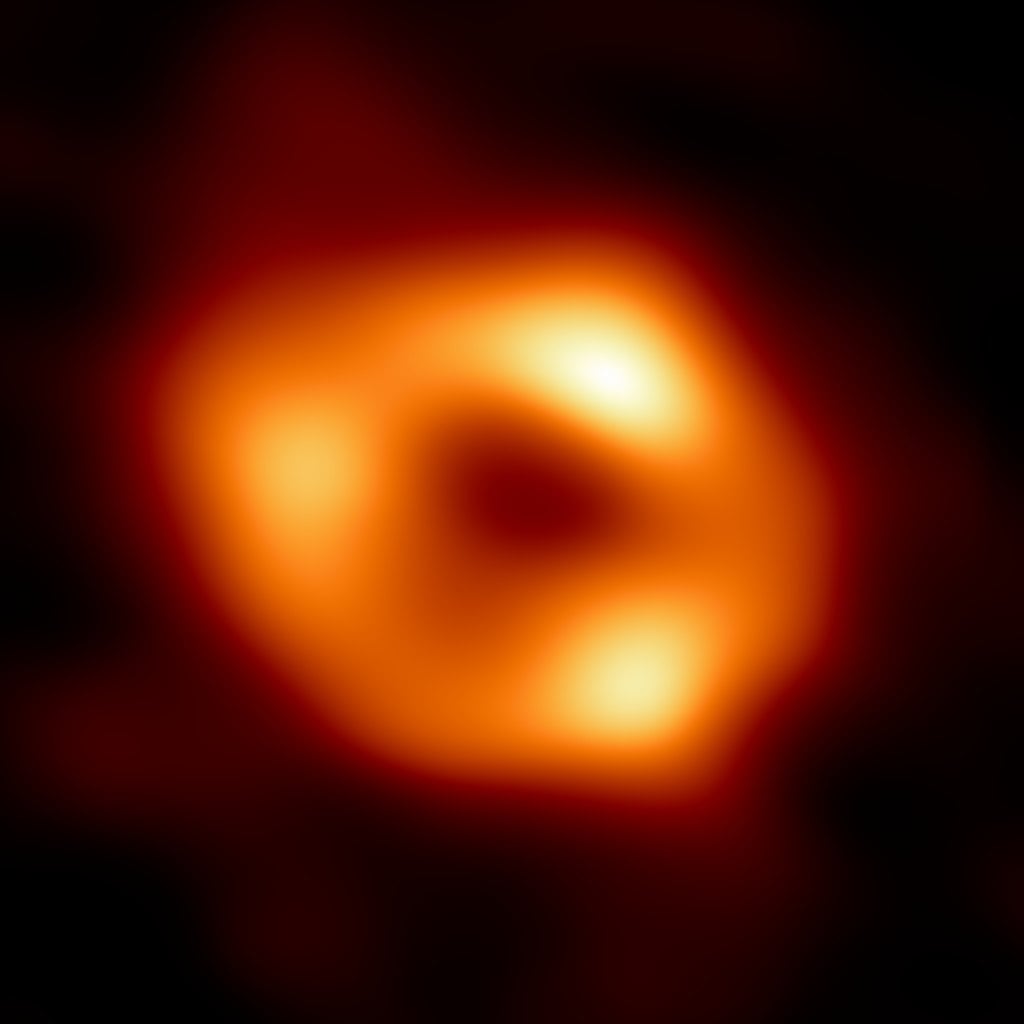 The first image of Sgr A, the supermassive black hole at the centre of the Milky Way (Credit : EHT Collaboration)*
A new £4 million research project aims to fundamentally change that. Dr. Kazunori Akiyama, who co-led the imaging team that produced those first black hole photographs, is joining forces with Professor Yves Wiaux at Heriot-Watt University to create what they call “dynamic gravitational tomography.” Instead of still images, they will produce 3D movies showing how plasma flows and evolves around black holes across time.
The Event Horizon Telescope that captured the first images works by combining radio telescopes scattered across the globe, effectively creating a virtual Earth sized telescope with incredibly sharp resolution. But turning the incomplete data from this telescope network into coherent images requires sophisticated computational algorithms. Dr. Akiyama developed one of those imaging algorithms for the original black hole pictures. Professor Wiaux has pioneered artificial intelligence techniques that reconstruct images from fragmentary data, methods now transforming multiple scientific fields.
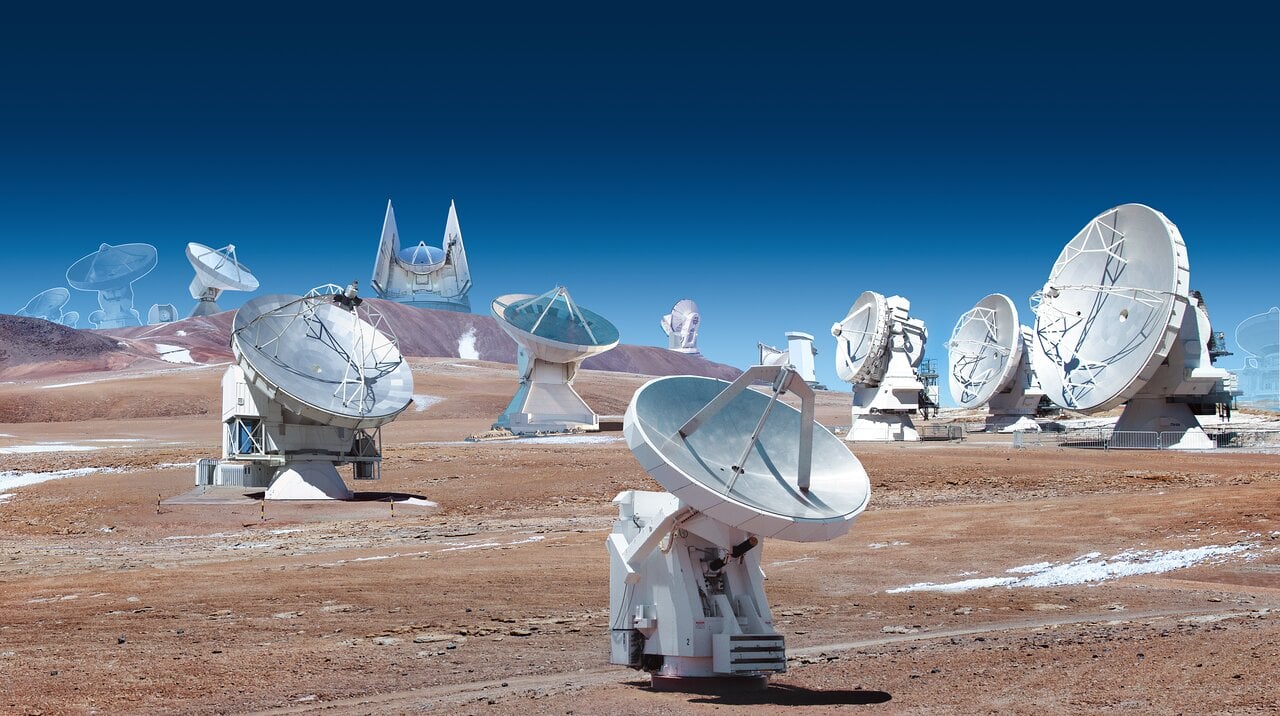 A montage of the radio observatories that form the Event Horizon Telescope (EHT) network used to image the Milky Way’s central black hole, Sagittarius A. These include the Atacama Large Millimeter/submillimeter Array (ALMA), the Atacama Pathfinder EXperiment (APEX), IRAM 30-meter telescope, James Clark Maxwell Telescope (JCMT), Large Millimeter Telescope (LMT), Submillimeter Array (SMA), Submillimeter Telescope (SMT) and South Pole Telescope (SPT) (Credit : EHT Collaboration)*
The new TomoGrav project will reveal dynamics that have remained hidden until now. Black holes spin, and that rotation determines how much energy can be extracted from infalling matter, powering the colossal jets that stretch across thousands of light years and influence how galaxies form and evolve. Scientists can observe these jets but cannot see how they form. Time resolved 3D maps of magnetic fields and plasma around black holes will reveal this process in action for the first time, showing how matter spiralling inward generates the magnetic fields that channel energy outward.
The research also promises to deliver the most stringent tests yet of Einstein’s general relativity in extreme conditions. The team will work with the proposed Black Hole Explorer space mission, which aims to precisely map photon rings, light that has orbited a black hole multiple times before escaping. These measurements would probe gravity where it bends spacetime most severely.
Source : World-leading scientists to join forces to create the first ever 3D black hole movies