Universe Today
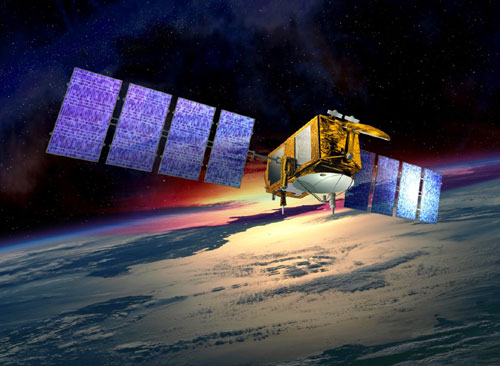
A Delta 2 rocket blasted off early this morning at 3:46 a.m. EDT bringing the Ocean Surface Topography Mission-Jason 2 into Earth orbit. The satellite will use a radar altimeter to precisely measure the height of ocean surfaces, which have been rising in recent years because of increasing temperatures. The data will be used to monitor effects of climate change on sea level and to improve global weather, climate and ocean forecasts. NASA said the new satellite, which is a cooperative effort between the US and France, will also improve hurricane forecasting.
"Global warming is causing the oceans to rise at a rate of about 3 millimeters per year, and this is a direct result of increasing the temperature of the atmosphere," said Josh Willis an oceanographer from JPL. "That causes glaciers and ice sheets to melt, raising the levels of the ocean. But also, the ocean itself absorbs heat. And when that happens, again the water expands, stands a little taller, and this causes sea level rise as well, so the altimeter on OSTM, or Jason 2, will see both of these effects at it circles the Earth."
Similar observations began in 1992 with a spacecraft dubbed TOPEX/Poseidon and have continued with the current Jason 1 satellite. The two Jasons will fly in tandem.
Together with Jason 1, the two spacecraft will double global data coverage. This tandem mission will improve our knowledge of tides in coastal and shallow seas and internal tides in the open ocean, while improving our understanding of ocean currents and eddies.
Jason 2 will map the sea surface highs and lows every 10 days, tracking changes and helping scientists keep tabs on climate, and even weather.
Measurements of sea-surface height, or ocean surface topography, reveal the speed and direction of ocean currents and tell scientists how much of the sun's energy is stored by the ocean. Combining ocean current and heat storage data is key to understanding global climate variations.
OSTM/Jason 2's five primary instruments are improved versions of those flying on Jason 1. These technological advances will allow scientists to monitor conditions in ocean coastal regions -- home to about half of Earth's population. Compared with Jason 1 measurements, OSTM/Jason 2 will have substantially increased accuracy and provide data to within 25 kilometers (15 miles) of coastlines, nearly 50 percent closer to shore than in the past. Such improvements will be welcome news for all those making their living on the sea, from sailors and fishermen to workers in offshore industries. NOAA will use the improved data to better predict hurricane intensity, which is directly affected by the amount of heat stored in the upper ocean.
Sources:
NASA
, JPL