Universe Today
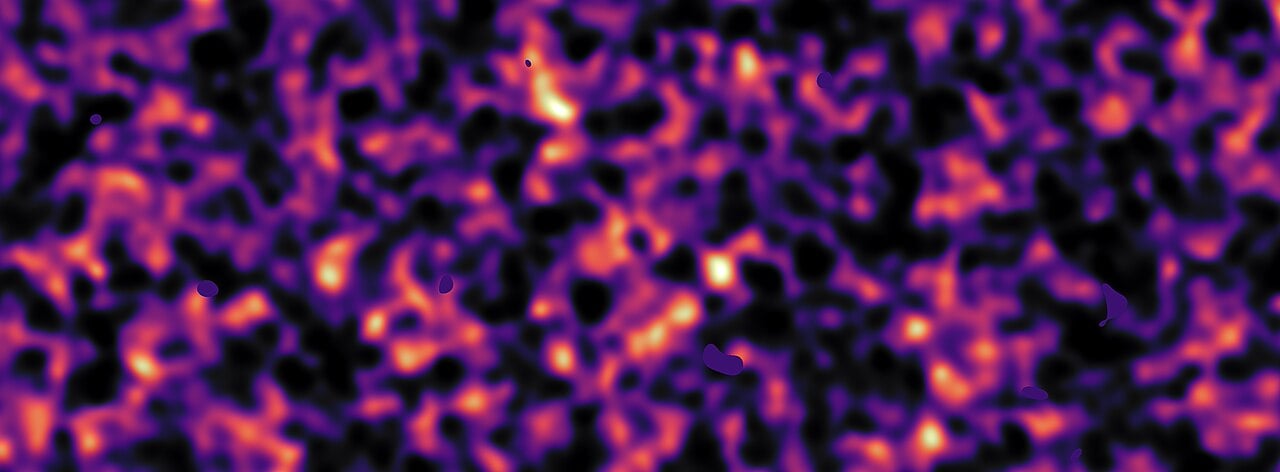
Dark matter doesn't emit light, it doesn't absorb light and it doesn't even block it, passing through ordinary matter like a ghost through walls (I’m very proud of that sentence.) Yet this invisible substance makes up roughly 85% of all matter in the universe, and its gravitational influence has shaped everything from galaxy clusters millions of light years across down to the rocky planet beneath our feet.
Diana Scognamiglio and her colleagues at NASA's Jet Propulsion Laboratory have used the James Webb Space Telescope to create the sharpest dark matter map ever produced, it’s twice as detailed as previous efforts and covering a region of sky about 2.5 times larger than the full Moon. The map reveals not just where dark matter exists, but how intimately it intertwines with the ordinary matter that makes up stars, galaxies, and even us.
"Previously, we were looking at a blurry picture of dark matter, now we're seeing the invisible scaffolding of the universe in stunning detail.” Diana Scognamiglio from NASA's Jet Propulsion Laboratory
The researchers identified nearly 800,000 galaxies in the constellation Sextans, many detected for the first time. They then searched for dark matter by observing how its mass curves space itself, which bends light traveling to Earth from distant galaxies. When that warped light reaches Webb's detectors, it reveals where massive concentrations of invisible matter must exist to produce such distortions.
The map's most striking feature is the overlap. Wherever thousands of galaxies cluster together, equally massive amounts of dark matter occupy the same location. When thin strings of ordinary matter connect two galaxy clusters, corresponding filaments of dark matter run alongside them. This close alignment can't be coincidence, it demonstrates that dark matter and regular matter have occupied the same space throughout the history of the universe, growing together from the earliest moments.
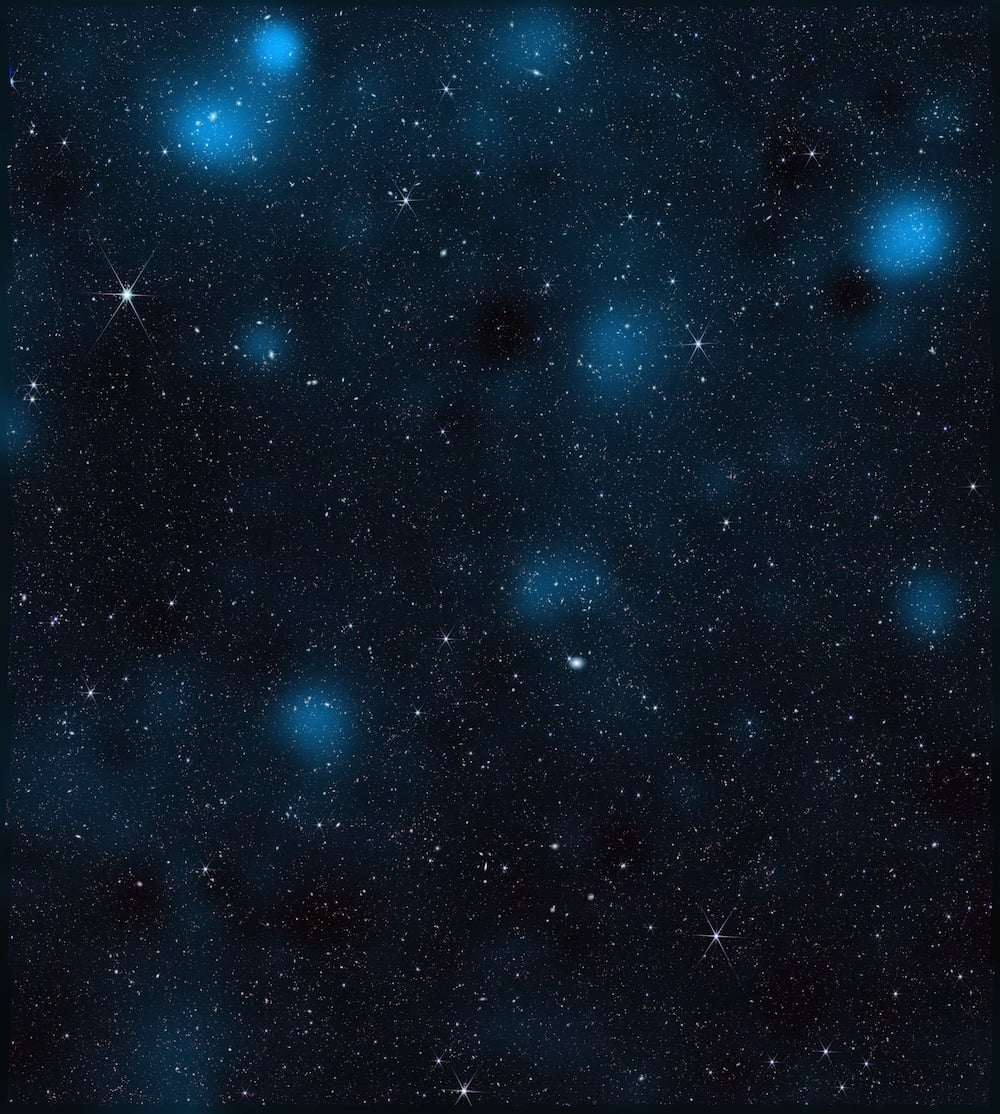 Containing nearly 800,000 galaxies, this image from NASA’s James Webb Space Telescope is overlaid with a map of dark matter, represented in blue. Researchers used Webb data to find the invisible substance via its gravitational influence on regular matter (Credit : NASA/STScI/J. DePasquale/A. Pagan)
When the universe began, both types of matter were sparsely distributed. Scientists think dark matter clumped together first, and those concentrations then gravitationally pulled regular matter toward them, creating regions dense enough for stars and galaxies to form.
By accelerating galaxy and star formation, dark matter provided more time for the first stellar generations to forge heavy elements. Those early stars took the hydrogen and helium that dominated the infant universe and transformed them through nuclear fusion into carbon, oxygen, silicon and iron, the collection of elements that eventually composed rocky planets like Earth.
The new map utilised Webb's Mid Infrared Instrument, which proves particularly adept at detecting galaxies obscured by cosmic dust. The telescope spent approximately 255 hours observing this region, capturing about ten times more galaxies than ground based observatories and twice as many as Hubble managed.
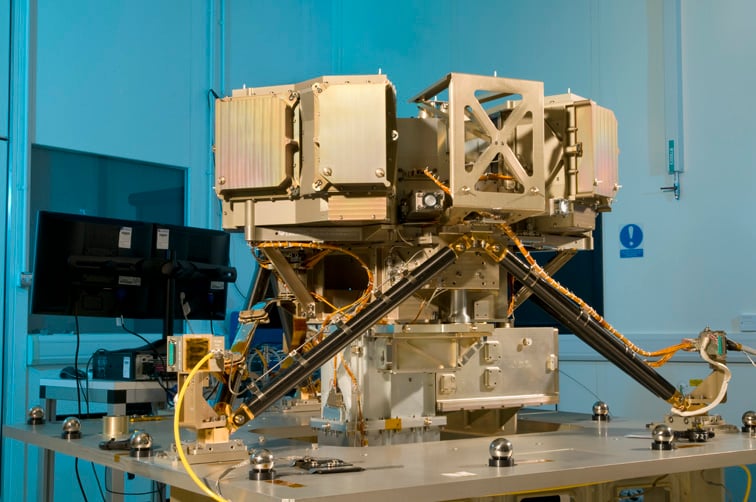 James Webb's Mid Infrared Instrument (Credit : NASA)
Future observations with NASA's Nancy Grace Roman Space Telescope will map dark matter over an area 4,400 times larger, though without matching Webb's spatial resolution. Even sharper views will require next generation observatories like the proposed Habitable Worlds Observatory, offering the prospect of understanding dark matter's fundamental properties and how they may have evolved since the beginning of time.
Source : NASA Reveals New Details About Dark Matter’s Influence on Universe