Universe Today
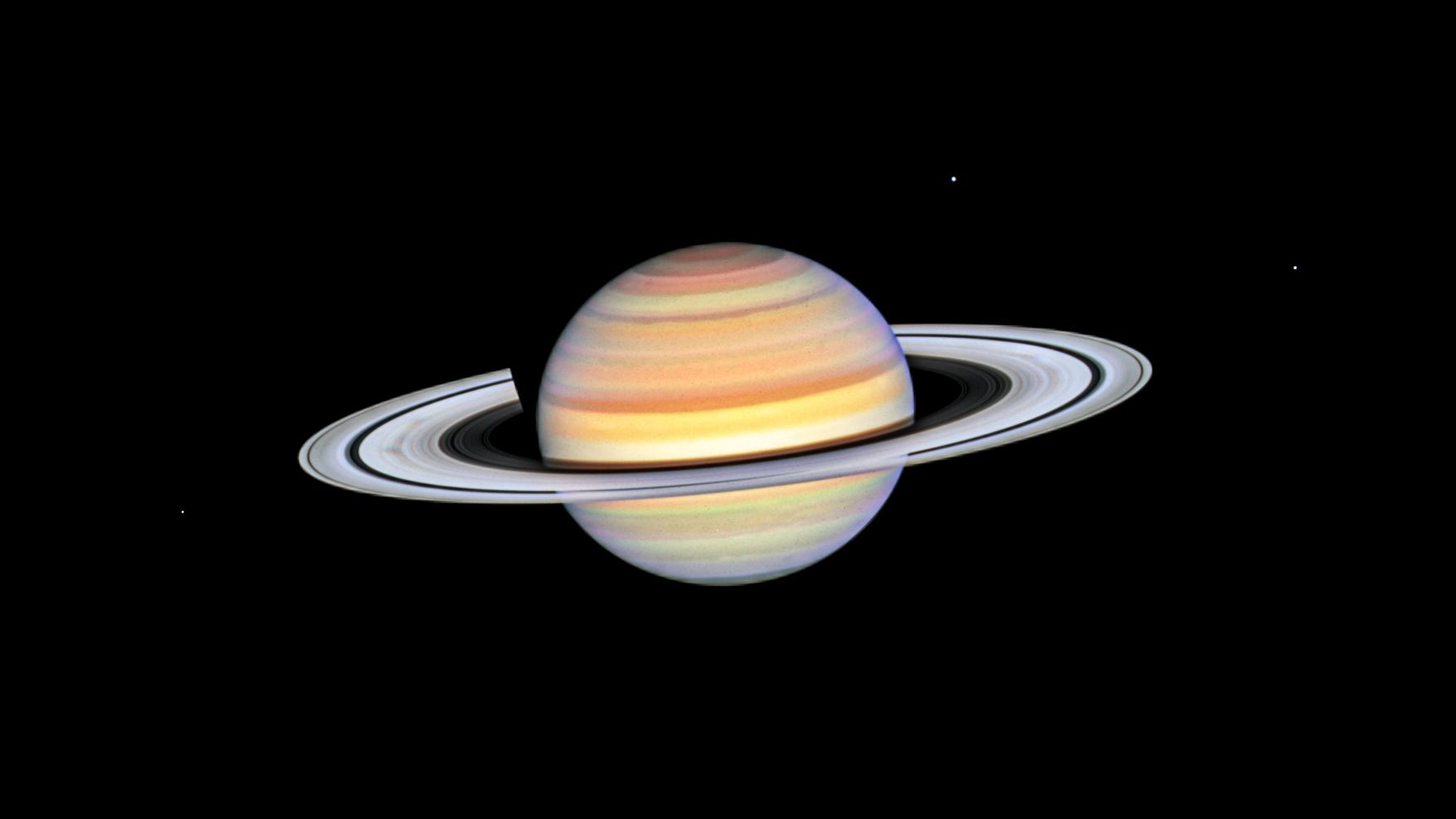
Astronomers have been observing Saturn with the Hubble Space Telescope and several other spacecraft for decades and have noticed something unusual. During seasonal changes, transient spoke-like features appear in the rings. These dark, ghostly blobs orbit around the planet 2-3 times, and then disappear.
As Saturn is approaching its equinox, this is prime spoke activity time. Once again, Hubble has been called to gaze at Saturn, tracking the behavior of the spokes and hopefully giving astronomers more clues as to why they occur.
Earlier this year in February, Hubble took an image showing the spokes only on one side of the rings. The latest image, above, taken on October 22, 2023, shows spokes structures appearing on both sides of the planet simultaneously as they spin around the giant world.
While these features might look small compared with Saturn, their length and width can stretch longer than Earth's diameter.
The spokes were first seen by the Voyager missions in the 1980s, and more recently, the Cassini spacecraft captured the phenomena up close. After the Cassini mission ended in 2017, observations of the Saturn system have largely been carried out from afar using Hubble and other Earth-based telescopes.
This latest photo by Hubble was taken when the ringed planet was approximately 850 million miles from Earth. The observations are part of Hubble's Outer Planets Atmospheres Legacy (OPAL) program that began nearly a decade ago to annually monitor weather changes on all four gas-giant outer planets.
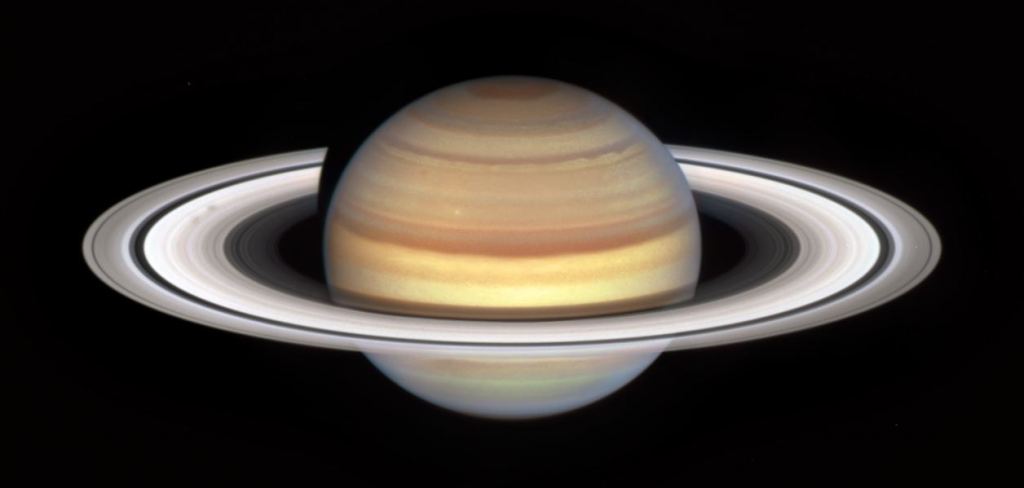
Long-term monitoring show that both the number and contrast of the spokes vary with Saturn's seasons. Saturn is tilted on its axis like Earth and has seasons lasting approximately seven years.
"We are heading towards Saturn equinox, when we'd expect maximum spoke activity, with higher frequency and darker spokes appearing over the next few years," said the OPAL program lead scientist, Amy Simon of NASA's Goddard Space Flight Center in Greenbelt, Maryland, in a Hubble observing update from NASA.
Like Earth, Saturn has a four-season year based on its tilt. However, it takes about thirty Earth years to complete one year on Saturn due its more distant orbit. The spokes tend to occur around the equinox, when the rings are edge-on to the Sun, and fade away as the summer or winter solstices draw near.
Saturn will reach its fall equinox on May 6, 2025.
Planetary scientists think the spokes are made of charged ice and/or dust particles bulging up and away from the rest of the rings, but no theory perfectly predicts the spokes.
"The leading theory is that spokes are tied to Saturn's powerful magnetic field, with some sort of solar interaction with the magnetic field that gives you the spokes," said Simon.
One way to figure out the mystery is to keep observing. Hubble, along with the James Webb Space Telescope and several ground-based observatories will continue keeping an eye on the enigmatic spokes.