Universe Today
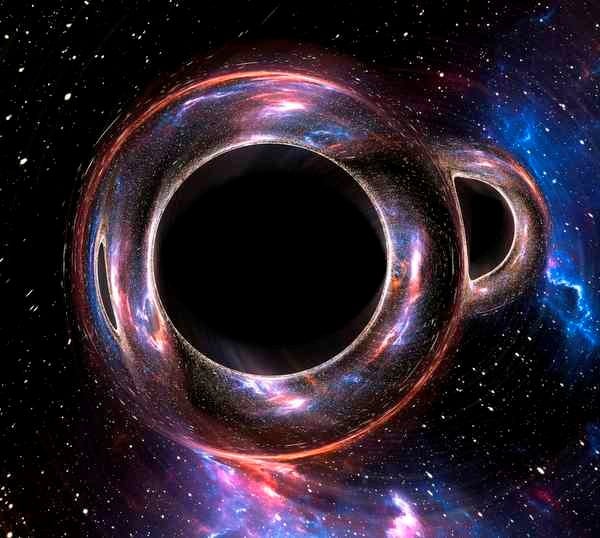
Ten years ago, humanity detected its first gravitational wave. On 14 January 2025, we detected the clearest one yet and it’s teaching us new things about the fundamental laws governing our universe.
The signal, designated GW250114, arrived at the twin Laser Interferometer Gravitational Wave Observatories in the United States carrying the unmistakable signature of two black holes colliding somewhere in deep space. What makes this detection extraordinary isn’t the event itself, but rather crystal clear quality of the signal that reached Earth.
 Part of the LIGO installation (Credit : NASA) - Cornell physicist Keefe Mitman
That enhanced clarity has opened up entirely new ways to test Albert Einstein’s general relativity; the theory that describes how gravity works by warping the fabric of space and time itself.
When two black holes merge, the collision doesn’t happen quietly. The newly formed black hole rings like a struck bell, emitting gravitational waves at specific frequencies that gradually fade away. Each of these “tones” is characterised by two numbers, how fast it oscillates and how quickly it dies down. Here’s where it gets interesting. If you measure just one tone from a collision, you can calculate the mass and spin of the resulting black hole. But measure two different tones from the same event and you’re effectively getting two independent measurements of that same black hole’s properties.
“If those two measurements agree with one another, you are effectively verifying general relativity. But if you measure two tones that don’t match up with the same mass and spin combination, you can start to probe how much you’ve deviated away from general relativity’s predictions”
For GW250114, the team measured two tones clearly and constrained a third. All three agree perfectly with Einstein’s predictions. General relativity passes yet another test. But physicists like Mitman aren’t disappointed. They suspect Einstein’s theory must be incomplete somewhere because it fails to explain dark matter, dark energy, or how gravity behaves in the quantum realm. The mathematics of general relativity simply breaks down when physicists try to reconcile it with quantum mechanics.
For now, though, GW250114 stands as both a confirmation and a promise. Einstein’s theory remains undefeated, while increasingly sensitive detectors bring physicists closer to finding the edges where it finally fails. When that day comes, the universe will have revealed something profound about its deepest workings.
Source : Gravitational wave signal tests Einstein's theory of general relativity