Universe Today
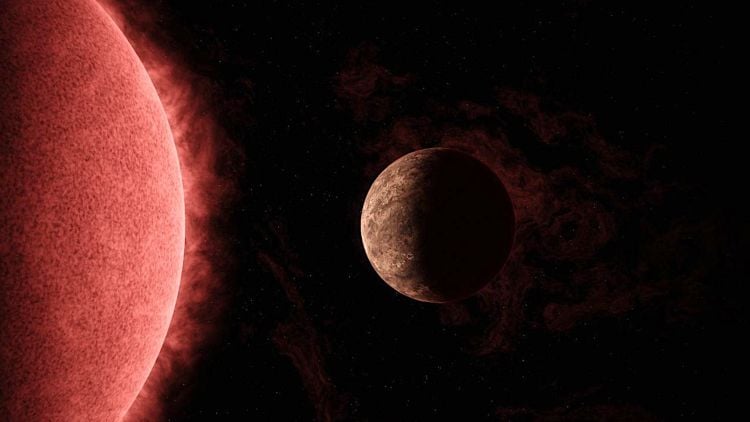
Exoplanet science and the search for life beyond Earth continue to advance at break-neck speeds, with the number of confirmed exoplanets by NASA rapidly approaching 6,300, with 223 of those exoplanets being designated as terrestrial (rocky) exoplanets. With the promise of discovering an increasing number of Earth-sized exoplanets increasing every day, new telescopes from across the world have the opportunity to contribute to this incredible field.
Now, Canada proposes a novel micro-satellite mission called POET (Photometric Observations of Exoplanet Transits), which is currently in development and will search for and identify Earth-sized and super-Earth exoplanets orbiting stars smaller and cooler than our Sun, which the researchers refer to as “ultracool dwarfs”. These consist of K-type, M-type, and brown dwarf stars, the last of which are designated as “failed stars” whose sizes range between gas giant planets and M-type stars. The study is currently available as a preprint on arXiv and was previously submitted to the Proceedings of SPIE Volume 13627, Techniques and Instrumentation for Detection of Exoplanets XII.
POET will detect the transits of exoplanets as they pass in front of their host star, which causes a small and brief dip in brightness, and is one of the most common methods for identifying and discovering exoplanets. Because POET will be searching for Earth-sized exoplanets orbiting ultracool dwarf stars, the dip in brightness is hypothesized to be much larger than Earth-sized exoplanets transiting much larger stars. This is because ultracool dwarfs are estimated to be approximately 10 percent of the Sun’s diameter, meaning the planet-to-star size ratio is much larger.
POET builds on past Canadian micro-satellite space missions, specifically the MOST (Microvariability and Oscillations of Stars) and NEOSSat (Near-Earth Object Surveillance Satellite) space missions, which were launched in 2003 and 2013, respectively. Both telescopes were 15 centimeters and only imaged in the visible wavelength with the MOST mission studying stars to determine their ages and compositions and NEOSSat searching for asteroids and space debris. MOST became famous for discovering the hot Jupiter exoplanet orbiting HD 209458 has very low albedo (reflectivity).
There are two primary differences between POET and the first two missions, including its size and imaging capabilities. POET is slated to have a 20-cm telescope, offering a wider aperture for imaging exoplanets, and it will be able to image objects in the near-ultraviolet, visible near-infrared, and short-wavelength infrared. POET is currently slated to be launched in 2029, so the purpose of this study was to discuss the proposed targets and predicted results regarding how many and what sizes of exoplanets POET could identify.
To accomplish this, the study introduces the POET Input Catalog of Ultracool Dwarfs, which is comprised of candidate ultracool dwarfs POET could target during its mission. The team narrowed this list through a few methods, including the exclusion of binary systems or extra bright stars due to the increased brightness potentially blocking out the identification of exoplanets. The team used a series of computer models to simulate how POET will identify Earth-sized exoplanets.
In the end, the researchers narrowed their catalog from more than 7,200 ultracool dwarf candidates to just over 3,000, all of which reside within 100 parsecs (326 light-years) from Earth. Additionally, it is estimated that POET could detect Earth-sized exoplanets with orbital periods between 7-50 days and between 1 to 2.5 Earth radius. Ultimately, the researchers narrowed this candidate list down to 100-300 top-priority targets for a year-ling mission.
The study concludes by stating, “Newly-discovered Earth-sized planets around the nearest ultracool dwarfs would be excellent targets for atmospheric characterization. With orbital periods <7 days, these are likely to be in the habitable zones of their ultracool host stars. They would automatically become top-priority targets for biosignature gas searches with the Webb Space Telescope, or with the Habitable World Observatory further in the future. Hence, POET could deliver some of the most promising Earth analogues for the search for extrasolar life.”
How will POET help advance exoplanet science, and specifically search for Earth-sized exoplanets, in the coming years and decades? Only time will tell, and this is why we science!
As always, keep doing science & keep looking up!