Mark Thompson
Science broadcaster and author. Mark is known for his tireless enthusiasm for making science accessible, through numerous tv, radio, podcast and theatre appearances, and books. He was a part of the award-nominated BBC Stargazing LIVE TV Show in the UK and his Spectacular Science theatre show has received 5 star reviews across UK theatres. In 2025 he is launching his new podcast Cosmic Commerce and is working on a new book 101 Facts You Didn't Know About Deep Space In 2018, Mark received an Honorary Doctorate from the University of East Anglia.
You can email Mark here
Recent Articles
-
-
Artemis III: The Mission That Has to Work Before Humans Can Return to the Moon.
May 15, 2026Artemis II has barely left the headlines. On April 1st 2026, four astronauts climbed aboard NASA's Orion spacecraft, rode the most powerful rocket ever to carry humans beyond low Earth orbit, and swung around the far side of the Moon. The world watched. Now, before the dust has settled, NASA has outlined its plans for what comes next. Artemis III won't be landing on the Moon. But what it will do is arguably just as important and if history is any guide, it's exactly the kind of mission that makes the difference between a Moon landing and a disaster.
-
It's Raining Stardust. It Has Been for Thousands of Years.
May 15, 2026Right now, as you read this, Earth is drifting through a cloud of debris from an ancient stellar explosion. Stardust, real stardust, is raining down on us so thinly scattered that we have only just found the proof. Locked inside Antarctic ice cores up to 80,000 years old, an international team led by the Helmholtz-Zentrum Dresden-Rossendorf has discovered traces of iron-60, a radioactive isotope that can only be created in the heart of an exploding star.
-
We've Been Listening for Ten Years. Here's What We Heard
May 14, 2026For ten years, astronomers at UCLA have been pointing one of the world's most powerful radio telescopes at the stars and listening. Not for pulsars or gas clouds, or the hiss of the cosmic microwave background, but for something far more extraordinary. A signal from another civilisation. The result of a decade's work, 70,000 stars, and 100 million candidate signals is now in and every single one of them was us! But far from being a disappointment, the findings are among the most rigorous and revealing in the history of the search for extraterrestrial intelligence.
-
The Universe's Biggest Black Holes Aren't Born, They're Built
May 14, 2026When a massive star dies, it can leave behind a black hole. That much has been understood for decades. But the most monstrous black holes in the universe, the heavyweights detected by the faint ripples they send through the fabric of space and time aren't born that way at all. According to a new Cardiff University study, they're built through repeated, catastrophic collisions in the most densely packed star clusters in the cosmos.
-
The Planet That Shouldn't Exist… But Does
May 14, 2026Hot Jupiters are the bullies of the planetary world. These colossal gas giants orbit impossibly close to their stars and their gravity is so overwhelming that anything nearby gets scattered, swallowed, or flung into oblivion. Finding a smaller planet surviving inside a hot Jupiter's orbit should be virtually impossible. Yet 190 light years away, that's exactly what astronomers have found.
-
We've Been Wasting 99% of Our Supernova Data
May 14, 2026Every time an astronomer points a telescope at a distant supernova, they're trying to measure how far away it is. But the light from these stellar explosions arrives tangled up with interference from dust, the age of the host galaxy and the chemical make up of the original star . Unpicking it all has always been a painstaking business. Now a team of researchers has used artificial intelligence to cut through the noise in a single step, potentially making cosmological measurements four times more precise. In a universe full of unanswered questions, that's a very significant leap forward.
-
The Night is Disappearing and We're All Paying the Price
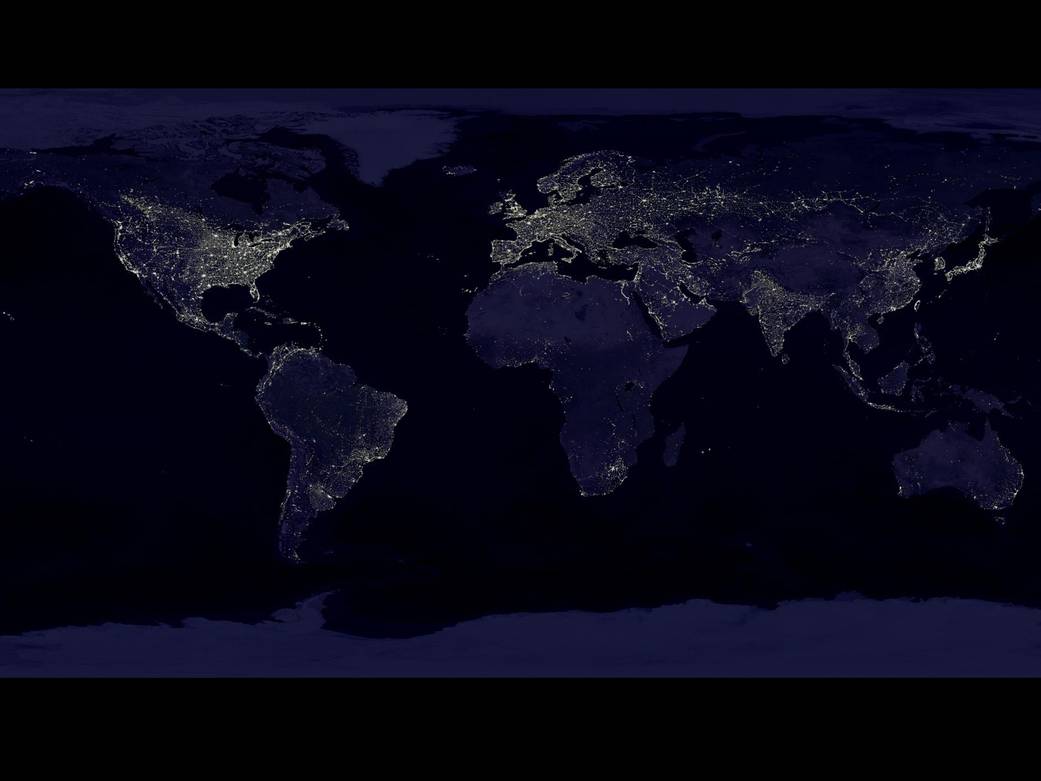
May 13, 2026Step outside on a clear night almost anywhere in Britain and look up. Chances are you won't see much. An orange coloured washed out glow hangs over every town and city, drowning the stars in a tide of misdirected light. Now the Royal Astronomical Society is demanding that tide be turned back, not just for the sake of astronomy, but because the evidence of what artificial light at night is doing to our health, our wildlife, and our ecosystems has become impossible to ignore. The night, it turns out, isn't just a backdrop. It's a habitat that’s more entwined with our very wellbeing and health than you can possibly imagine. And we're destroying it.
-
What Your Kitchen Sink Has in Common With Venus
May 13, 2026Turn on your kitchen tap and watch the water hit the sink. That split second where fast, shallow water suddenly slows and spreads is known as a hydraulic jump. Now imagine the same thing happening in the atmosphere of Venus, but stretched across 6,000 kilometres of sulphuric acid cloud. Researchers at the University of Tokyo have just revealed that this extraordinary phenomenon, the largest hydraulic jump ever identified in the Solar System, is responsible for a mysterious wave that has been sweeping around our neighbouring planet for years.
-
Four People in a Pixel
May 13, 2026When NASA's Artemis II spacecraft carried four astronauts around the Moon earlier this year, the world's largest fully steerable radio telescope was quietly watching from a quiet valley in West Virginia. The Green Bank Telescope tracked the Orion capsule across 213,000 miles of empty space with a precision that would embarrass most speedometers and what it produced isn't just an engineering triumph. It's a glimpse of how the world's most sensitive ears are becoming indispensable to the future of human spaceflight.
-
The Rock That Built Life
May 12, 2026Life didn't just happen on Earth, a new study suggests that the slow, grinding rise of our planet's continents more than 3.7 billion years ago may have done something extraordinary. Instead it carefully calibrated the chemistry of the ancient oceans to create precisely the conditions life needed to get started. The unlikely hero of the story is a semi precious gemstone.
-
The Dots That Broke the Rules
May 12, 2026Since the James Webb Space Telescope switched on, astronomers have been puzzled by hundreds of tiny, ancient, red objects lurking at the edge of the observable universe. Nobody could agree on what they were but now, a single extraordinary discovery of a lone object that behaves differently from all the others may have just solved one of the biggest mysteries of the modern telescope era. In doing so it has revealed a previously unknown chapter in the life story of the universe's most extreme objects.
-
Meerkat is Watching
May 12, 2026In February 2013, a 20 metre asteroid exploded over the Russian city of Chelyabinsk without warning, injuring more than 1,600 people and releasing energy equivalent to 33 Hiroshima bombs. Nobody saw it coming but that sobering wake up call directly motivated ESA's Meerkat Asteroid Guard, an automated system watching the skies around the clock for rocks on a collision course with Earth.
-
When Mars Bites Back
May 09, 2026More than 300 million kilometres from the nearest mechanic, NASA's Curiosity rover found itself in a situation that would make any engineer break into a cold sweat. A rock got stuck to its drill and wouldn't let go. What followed was a week long, long distance rescue operation that says as much about the ingenuity of the people behind the machine as it does about the extraordinary challenges of exploring another world.
-
The Asteroid Hunter
May 07, 2026Somewhere out there, hurtling through space in the darkness, is an asteroid with our name on it. We just don't know which one yet. NASA's answer to that uncomfortable truth is NEO Surveyor, a purpose built infrared space telescope currently taking shape in laboratories across America, and scheduled for launch in 2027. The stakes, quite literally, could not be higher.
-
What is the Most Common Type of Planet in the Galaxy?
April 30, 2026Astronomers now believe there is at least one planet for every star in the Milky Way but new research has revealed a deeply unsettling twist in that picture. The most common planets in our Galaxy, it turns out, are almost entirely absent around the most common stars. Using data from NASA's TESS satellite, researchers found that the small, faint stars that make up the vast majority of the Milky Way seem to host rocky super Earths in abundance, but virtually no sub Neptunes, the planet type previously thought to be plentiful. The finding doesn't just refine existing theories of planet formation, it rewrites them.
-
How do you study something you can never step outside of?
April 30, 2026An international team of astrophysicists has just released one of the largest cosmological datasets ever assembled. A mouthwatering 2.5 petabytes of simulated universe, freely available to researchers anywhere in the world. Built using a supercomputer and a suite of simulations called FLAMINGO, the data models how matter has evolved since the Big Bang, tracing everything from individual galaxies to the vast cosmic web that stretches across billions of light years.
-
What does it take to call home from the Moon?
April 30, 2026When NASA's Artemis II crew swung around the Moon in April, the world watched in extraordinary detail and a breakthrough laser communications system was the reason why. Bolted to the outside of the Orion capsule, a compact optical terminal beamed 484 gigabytes of data back to Earth using invisible infrared light, outpacing traditional radio systems by a factor of tens. The result was some of the most vivid imagery ever captured in deep space, and a technology demonstration that will fundamentally change how humanity communicates beyond Earth.
-
The Last Dance of a Dying Star
April 29, 2026Every star that has ever lived has been slowly spinning down, losing rotational energy across billions of years until, at the end, it collapses. But new research from Kyoto University has revealed that the story is far stranger than that. Some stars, in their final moments, don't slow down at all, they spin up and nobody predicted it.
-
The Universe Builds Stars by the Book
April 29, 2026Stars are not born by chance. New research shows that the mass of a star cluster dictates exactly what kinds of stars it will produce from cool, dim dwarfs to blazing stellar giants ten times the mass of our Sun. It is a discovery that rewrites our understanding of how galaxies grow and evolve, and raises questions that astronomers will be grappling with for years to come.
Universe Today