Mark Thompson
Science broadcaster and author. Mark is known for his tireless enthusiasm for making science accessible, through numerous tv, radio, podcast and theatre appearances, and books. He was a part of the aware-nominated BBC Stargazing LIVE TV Show in the UK and his Spectacular Science theatre show has received 5 star reviews across UK theatres. In 2025 he is launching his new pocast Cosmic Commerce and is working on a new book 101 Facts You Didn't Know About Deep Space In 2018, Mark received an Honorary Doctorate from the University of East Anglia.
You can email Mark here
Recent Articles
-
-
The Search for Life Tops NASA's Science Goals for the First Human Mars Mission
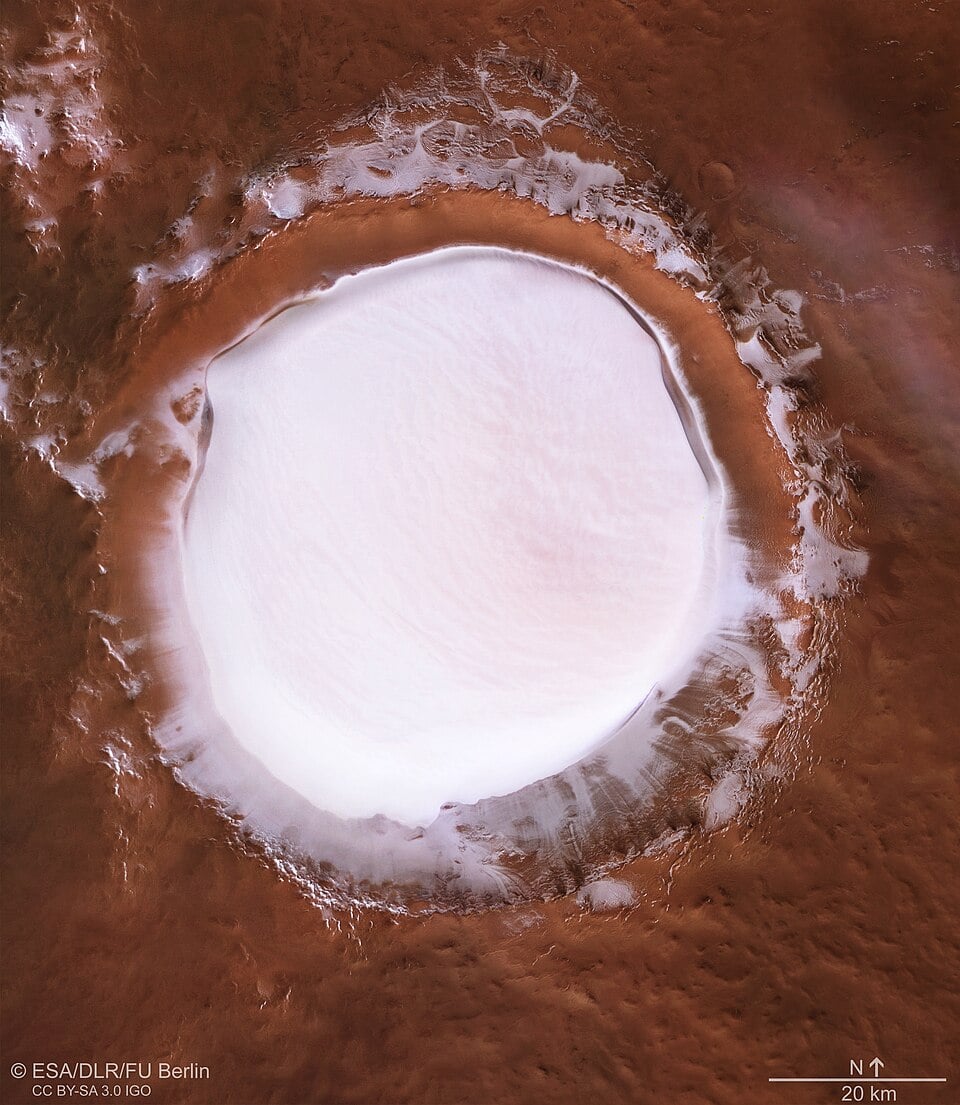
December 12, 2025A new report identifies searching for life as the top science priority for humanity's first landing on Mars, ranking it above understanding water cycles, mapping geology, or even studying how the Martian environment affects astronaut health. The report outlines four possible exploration campaigns, with the highest ranked approach calling for missions totalling 330 sols at a single scientifically rich site where crews could investigate everything from ancient lava flows to active dust storms. By placing the search for extraterrestrial life at the centre of human Mars exploration, the report reimagines the first crewed mission not just as a milestone for spaceflight but as humanity's best chance to answer whether we're alone in the universe.
-
The Telescope That Will Study Our Nearest Exoplanet
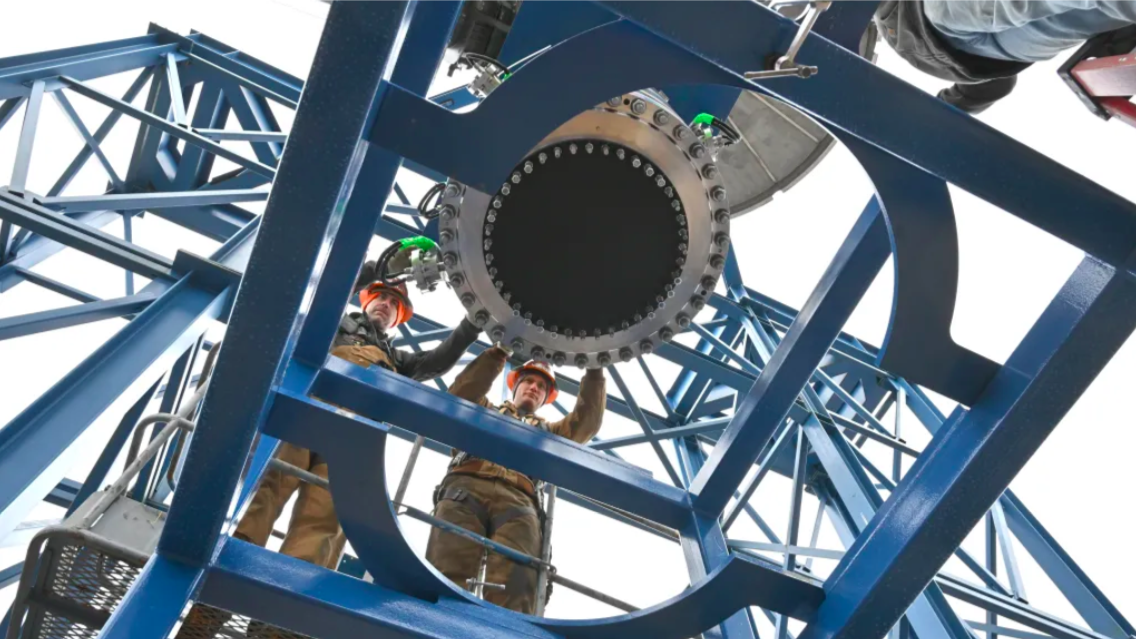
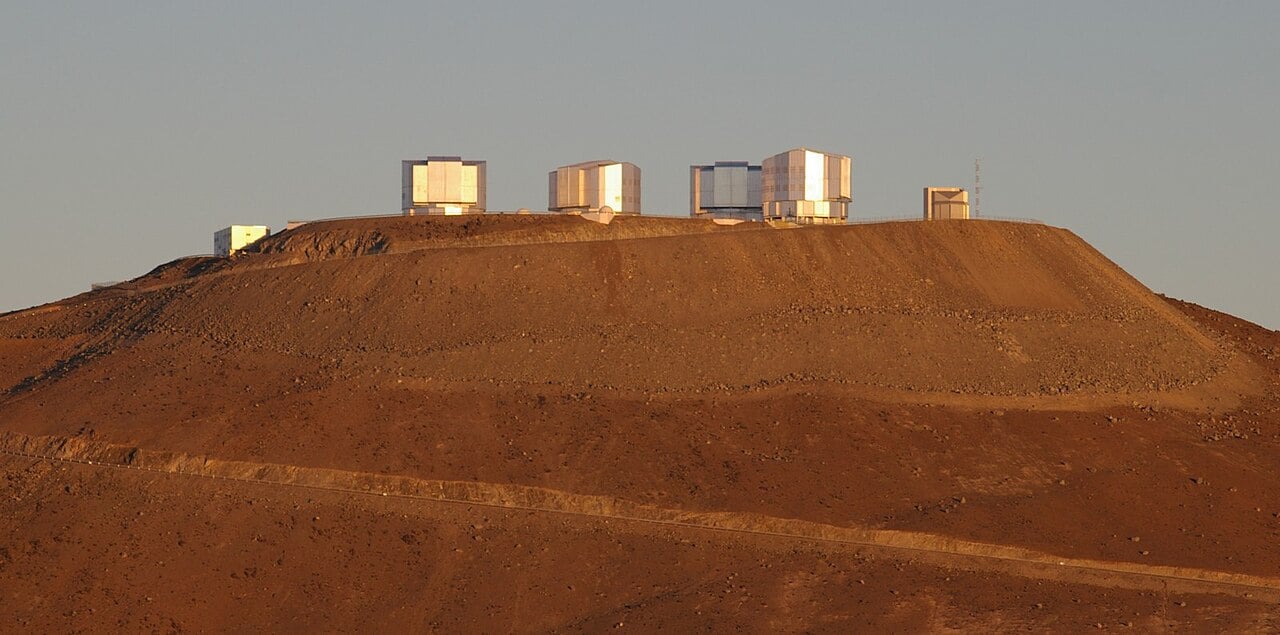
December 11, 2025Scientists at the University of Geneva have successfully tested key components of RISTRETTO, a new spectrograph designed to analyse light from Proxima b, the nearest exoplanet to Earth. The instrument uses coronagraphic techniques and extreme adaptive optics to block a star's overwhelming glare and detect planets that shine 10 million times fainter. Simulations suggest RISTRETTO could not only spot Proxima b with just 55 hours of observation time but potentially identify oxygen or water in its atmosphere, offering our first chance to study the conditions on an Earth sized world orbiting our nearest stellar neighbour.
-
A New Technique Reveals the Hidden Physics of the Universe's Giants
December 11, 2025Astronomers have developed a new technique called "X-arithmetic" that reveals the hidden physics inside galaxy clusters. By analysing Chandra X-ray Observatory data at different energy levels and painting the results in vibrant colours, researchers can now distinguish between sound waves, black hole inflated bubbles, and cooling gas, enabling them to classify structures by what they are rather than how they look. The method has already exposed striking differences between galaxy clusters and galaxy groups, showing that supermassive black holes wield dramatically different influence on their surroundings.
-
A 50 Million Light Year Structure Caught Spinning
December 10, 2025Astronomers have discovered a filament 50 million light years long containing hundreds of galaxies, all spinning together. This immense structure, located 140 million light years away, challenges current models of galaxy formation by showing that large scale rotation can persist far longer and more coherently than theories predicted. The discovery offers a rare glimpse into how galaxies acquire their spin and reveals the Cosmic Web as a more dynamically active place than previously imagined.
-
How Mars Controls Earth's Climate
December 10, 2025A new study reveals that Mars plays a surprisingly crucial role in Earth's climate cycles, with new simulations showing that the mass of our planetary neighbours directly controls the timing and intensity of Milankovitch cycles that drive ice ages. By varying Mars's mass from zero to ten times its current value in computer models, researchers discovered that a more massive Mars strengthens the ~100,000 year climate cycles and creates the 2.4 million year "grand cycle" that influences Earth's long term climate. This finding demonstrates that Earth's climate rhythms are connected to the gravitational structure of the inner Solar System, not just the Sun and Moon.
-
Euclid Reveals What Wakes Sleeping Black Holes
December 10, 2025The European Space Agency's Euclid telescope has delivered an unprecedented set of observations of one million galaxies that shows that galaxy collisions play a dominant role in awakening supermassive black holes from their sleep. Using revolutionary AI-powered analysis methods, astronomers discovered that merging galaxies contain up to six times more active black holes than isolated galaxies, with the most luminous black holes found almost exclusively in collision zones.
-
Why Scientists Are Studying Mayonnaise in Space
December 05, 2025Scientists have launched COLIS, a special laboratory aboard the International Space Station designed to study how everyday materials like sunscreens, mayonnaise, and medications behave in near zero gravity. Researchers discovered that gravity influences the long term stability of soft matter far more dramatically than previously understood, affecting how these materials age and restructure at the molecular level. This research could fundamentally improve how we design everything from controlled release drugs to self assembling materials, demonstrating that understanding materials in space offers unexpected benefits for life on Earth.
-
When Ancient Scribes Accidentally Became Scientists
December 05, 2025On a summer day in 709 BCE, scribes at the Lu Duchy Court in ancient China looked up to witness something extraordinary. The Sun vanished completely from the sky, and in its place hung a ghostly halo. They recorded the event carefully, noting that during totality the eclipsed Sun appeared "completely yellow above and below." Nearly three millennia later, that ancient observation has helped modern scientists measure how fast Earth was spinning and understand what our Sun was doing at a time when Homer was composing poetry.
-
The Case for an Antimatter Manhattan Project
November 30, 2025Chemical rockets have taken us to the Moon and back, but traveling to the stars demands something more powerful. Space X’s Starship can lift extraordinary masses to orbit and send payloads throughout the Solar System using its chemical rockets but it cannot fly to nearby stars at thirty percent of light speed and land. For missions beyond our local region of space, we need something fundamentally more energetic than chemical combustion, and physics offers or in other words, antimatter.
-
Why NASA Needs Space Gardeners
November 30, 2025Growing fresh lettuce and strawberries might sound mundane until you consider doing it on the Moon or Mars. An international team has created a roadmap for cultivating plants in space, addressing one of NASA's highest priority challenges for long duration missions. These aren't just about providing fresh food for astronauts, plants in space will recycle air and water, produce pharmaceuticals, process waste, and support mental health during years long journeys to distant worlds. With the first lunar greenhouse scheduled to operate during NASA's 2027 Artemis III mission, humanity is on the verge of becoming an agricultural species across multiple worlds.
-
Mars Has Static Electricity!
November 30, 2025A team of scientists have detected electric discharges on Mars for the first time, confirming a phenomenon that was theorised for decades but never directly observed until now. The Perseverance rover's microphone accidentally captured the electromagnetic and acoustic signatures of sparks generated inside Martian dust devils, similar to the static shocks you might experience touching a metal door handle. This discovery changes our understanding of Mars's atmospheric chemistry and could explain longstanding mysteries about the rapid disappearance of methane in the Martian atmosphere, while also raising important safety considerations for future human missions to the red planet.
-
The Ultraviolet Mystery Inside Newborn Stars
November 29, 2025Young stars buried deep in molecular clouds are bathed in ultraviolet radiation, but they shouldn't be. Protostars are too cold and dim to produce UV light themselves, yet James Webb Space Telescope observations of five stellar nurseries in Ophiuchus reveal its unmistakable signature affecting the surrounding gas. Astronomers tested the obvious explanation that nearby massive stars illuminate these birthplaces but subsequently ruled it out. The UV radiation must be coming from inside the star forming regions themselves, forcing a fundamental rethink of how stars are born.
-
The Star That Shouldn't Exist
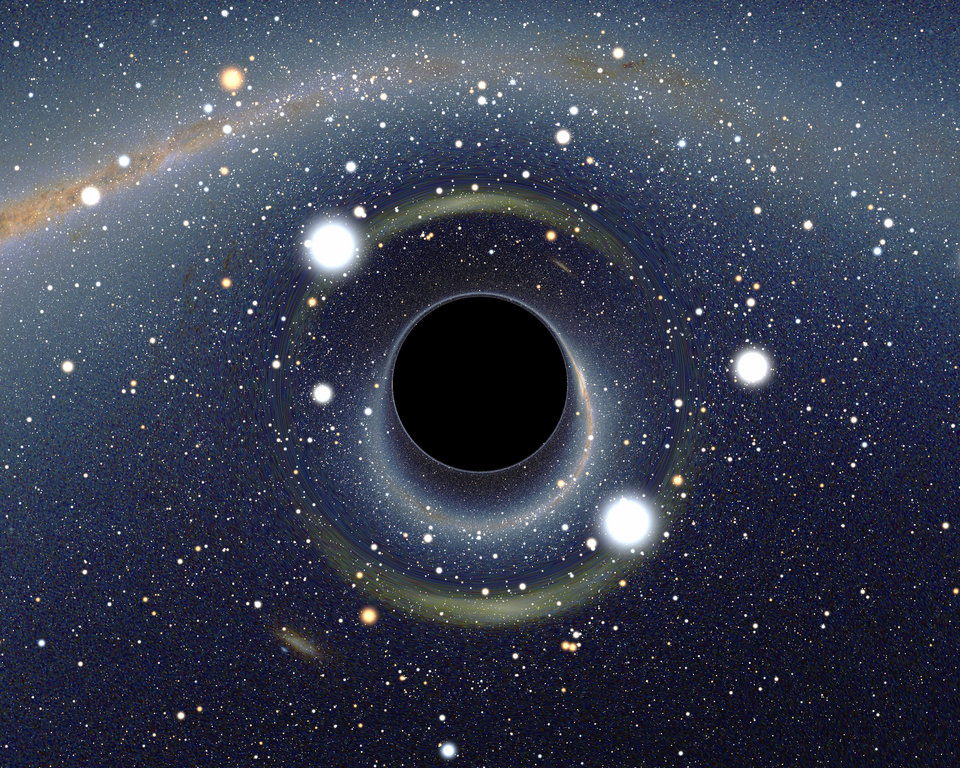
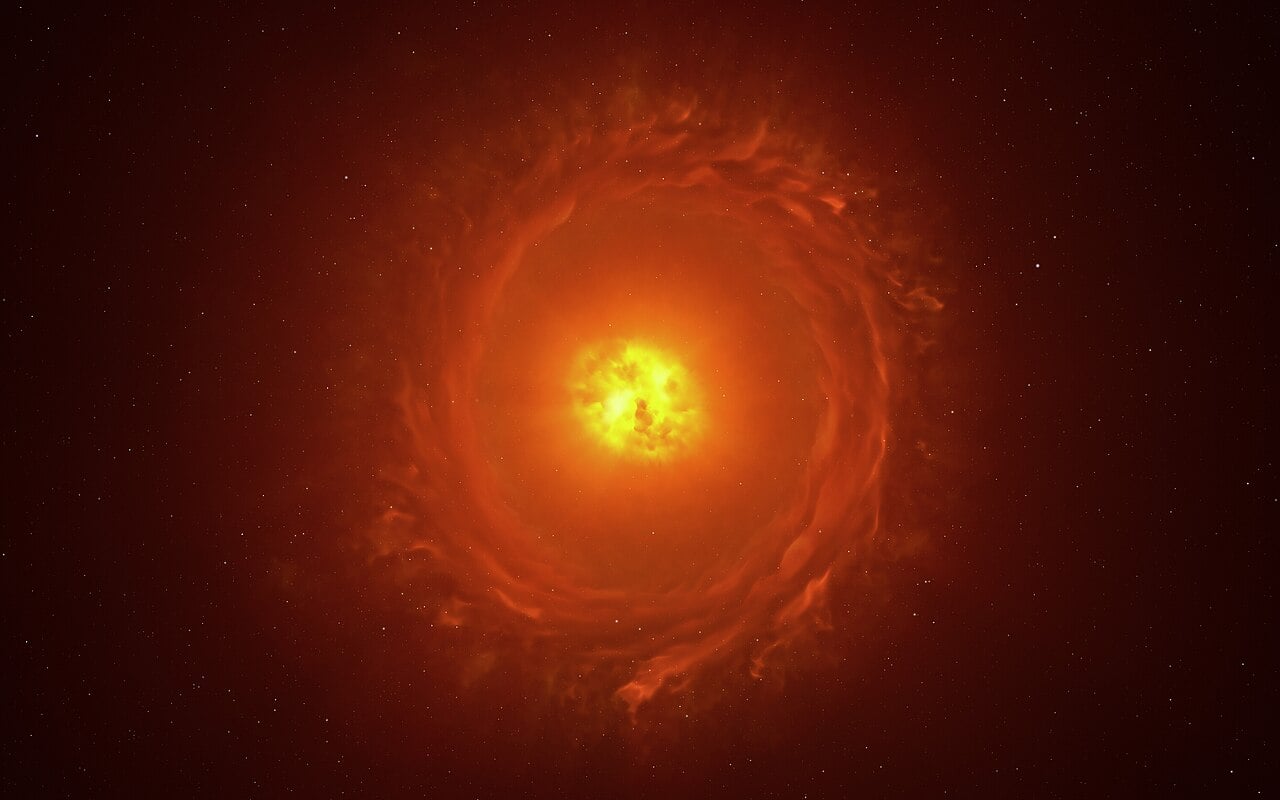
November 27, 2025A red giant orbiting a dormant black hole is spinning impossibly fast and contains chemistry that makes it look ancient when it's actually relatively young. By listening to faint vibrations rippling through the star, astronomers have decoded a violent secret, that this star likely collided with and absorbed another star billions of years ago, an explosive merger that left it chemically confused and rotating once every 398 days. The discovery reveals how even quiet black hole systems can have turbulent histories written in starlight.
-
After a Century of Searching, We May Have Finally Seen Dark Matter
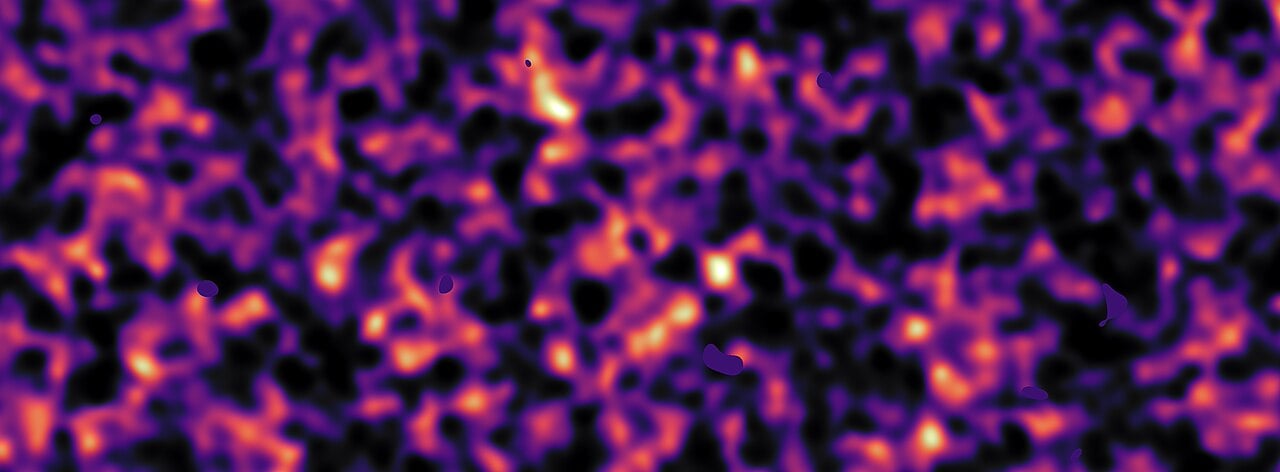
November 27, 2025Ninety five years after Swiss astronomer Fritz Zwicky inferred its existence from galaxies moving impossibly fast, researchers may have detected the first direct evidence of dark matter, the invisible scaffolding that holds the universe together. Using gamma ray data from NASA's Fermi Space Telescope, a Japanese physicist has identified a halo of extremely energetic photons around the Milky Way's center that matches predictions for annihilating dark matter particles. If confirmed, humanity has finally "seen" the unseeable.
-
Hong Kong's Mission to Watch the Moon Get Bombarded
November 26, 2025In 2028, Hong Kong will launch its first dedicated lunar orbiter not to study craters or map minerals, but to monitor something far more urgent, the constant barrage of meteoroids slamming into the Moon's surface at thousands of kilometres per hour. As China prepares to build a permanent lunar research station, understanding this relentless bombardment has become a matter of safety for future astronauts living and working on the Moon.
-
The Strange Physics Beneath Icy Moons
November 26, 2025Beneath the frozen shells of Saturn's tiny moons, hidden oceans might occasionally boil, not from heat, but from dropping pressure as ice melts from below. This strange phenomenon could explain the bizarre geology of worlds like Miranda and Mimas, and reshape our understanding of where to search for life in the outer Solar System. A new study reveals how these distant water worlds operate under physics unlike anything on Earth.
-
What Seven Decades of Hunting for Aliens Tells Us
November 26, 2025Seven billion year old meteorites carrying DNA building blocks. Frozen water on Mars. Amino acids floating in interstellar dust clouds. After seventy years of searching, we've found the ingredients for life scattered throughout the universe but have we found life itself? A new review examines every major claim of extraterrestrial life, from ancient space rocks to UFO sightings, revealing what the evidence actually supports and where wishful thinking has filled the gaps.
-
The Moss That Survived Nine Months in Space
November 25, 2025Moss spores spent nine months strapped to the outside of the International Space Station, exposed to vacuum, cosmic radiation, temperature swings from minus 196°C to 55°C, and unfiltered solar ultraviolet light. Over 80 percent survived the ordeal and returned to Earth still capable of growing into new moss plants. This remarkable resilience, demonstrated by one of Earth's earliest land plants, suggests that life's fundamental mechanisms may be far more robust in the face of space conditions than previously imagined.
-
Two Years of Listening to the Universe's Most Violent Events
November 25, 2025The world's gravitational wave detectors just wrapped up their longest and most productive observation campaign, capturing 250 new collisions over two years of continuous listening. These ripples in spacetime, created by black holes and neutron stars spiralling into each other across the universe, have given scientists their first direct evidence for Stephen Hawking's 1971 theory about black hole surface areas, revealed second generation black holes born from previous mergers, and detected the most massive black hole collision ever observed. The haul represents over two thirds of all gravitational waves ever detected.
Universe Today