Universe Today
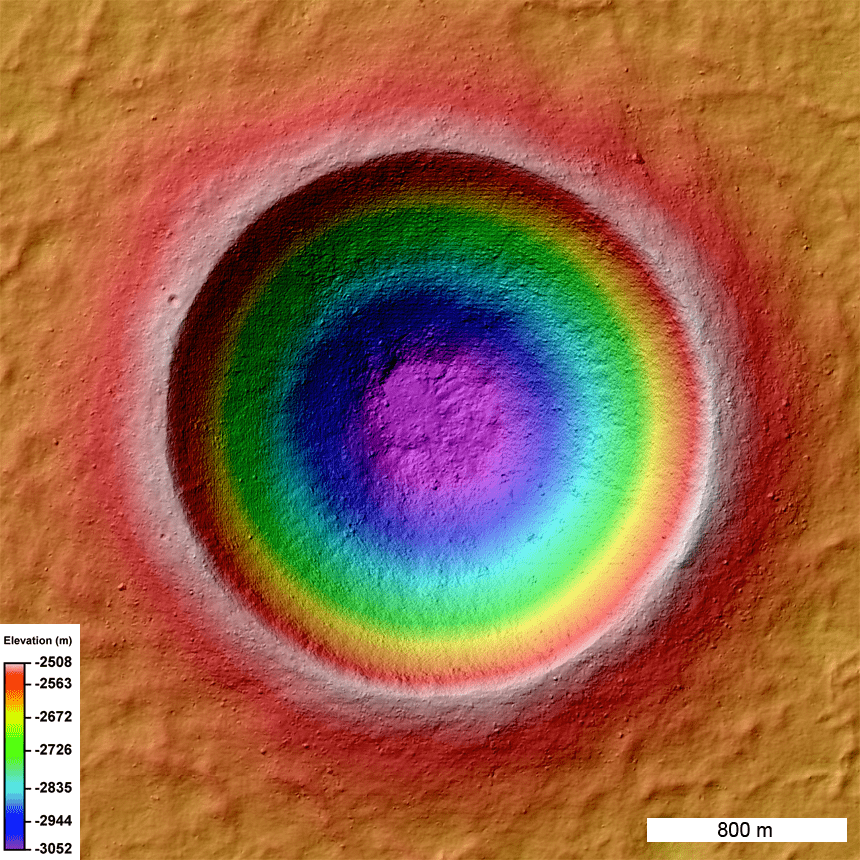
Linné crater on the Moon is one of the youngest, most well-preserved lunar impact craters. This cone-shaped crater thought to be less than 10 million years old – a mere whippersnapper when it comes to impact craters. Scientists have been studying this crater for years, using it to investigate how cratering occurs in mare basalt. This "barnstorming" flyover video was created with data from the Lunar Reconnaissance Orbiter.
LRO helped discern the actual shape of this crater, and other craters too. It was once thought that the circular Linné crater was bowl-shaped, and that set a precedent for understanding the morphology of craters on the Moon, and also on Earth. But laser-mapping observations by NASA's Lunar Reconnaissance Orbiter determined Linné is actually more of a truncated inverted cone, with a flattened interior floor surrounded by sloping walls that rise up over half a kilometer to its rim.
It's a magnificent crater, and enjoy this unique chance to see it up close.