Universe Today
[/caption]
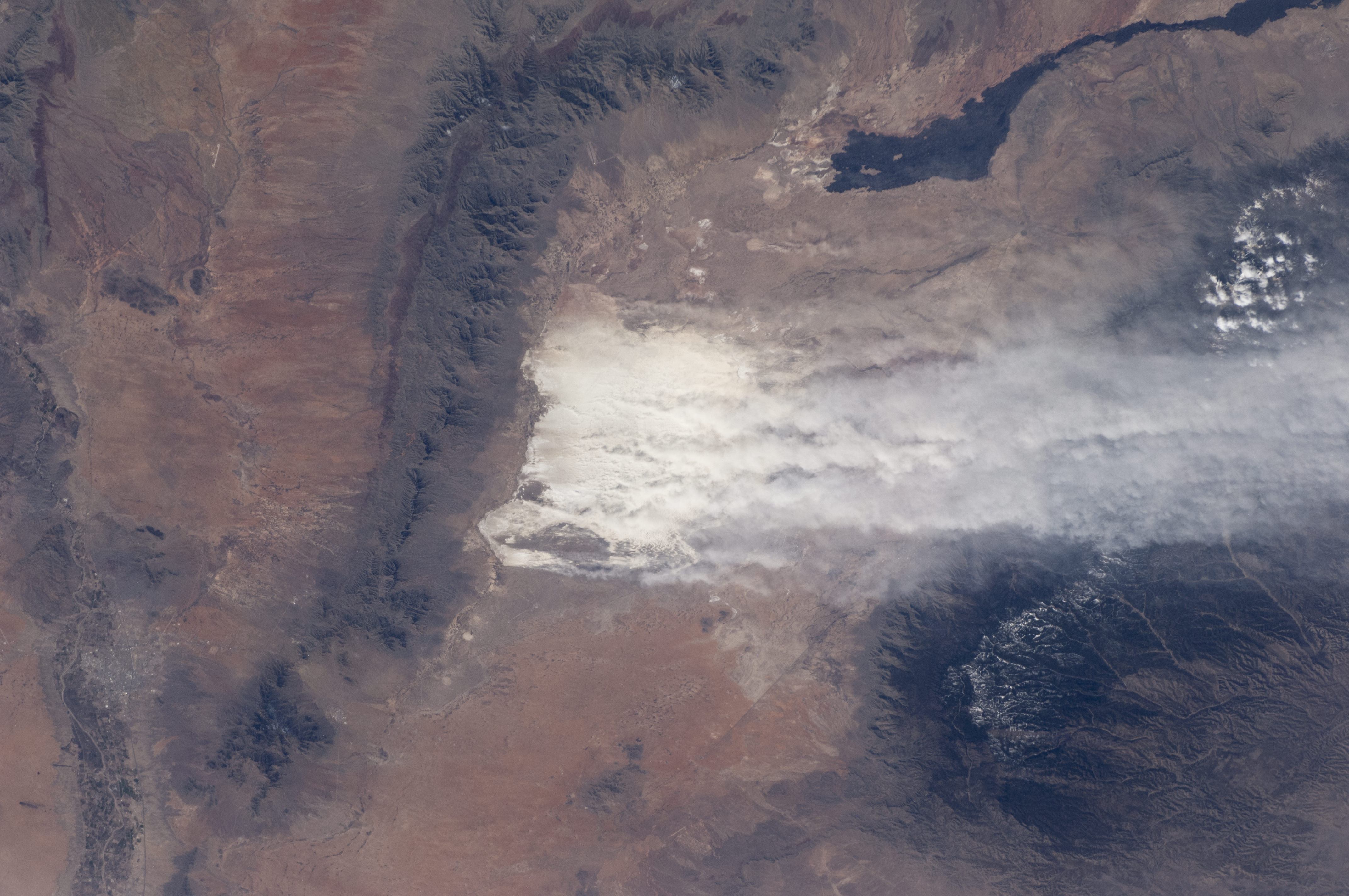
It's clear from this image of why a region in New Mexico, USA is called 'White Sands.' The dust plumes in this photograph taken by an astronaut on board the International Space Station show a dust storm in the White Sands National Monument. But this is a huge dust storm. The white dust plumes stretch across more than 120 kilometers (74 miles).
Caused by winds that channel the dust through a low point in the mountains, the vigorous winds are lifting dust particles from the valley floor to more than 1200 meters over the mountains. The Moderate Resolution Imaging Spectroradiometer (MODIS) on NASA's Aqua satellite also
captured a wider, regional view
of the same storm on the same day.
The sand dunes of this national monument are white because they are composed of gypsum, a relatively rare dune-forming mineral. The dunes' brilliance, especially contrasted against the nearby dark mountain slopes, makes them easily identifiable to orbiting astronauts. The white speck of the dunes was even visible to the Apollo astronaut crews looking back at Earth on the way to the Moon.
Source:
NASA Earth Observatory