 Universe Today
[/caption]
In the age of global light pollution, one thing both amateur and professional astronomers have in common is the need for clear, dark skies. While almost all of us are aware of the impact of light pollution when it comes to pure observing, the "light factor" plays a far more serious role when it comes to astronomical studies. But, there's far deeper reasons for observatories to become increasingly remote.
While escaping light sources such as brightly-lit cities is mandatory for amateur astronomers and astrophotographers to enjoy their hobby, professional observatories seek some of the world's most remote locations for other reasons. Both in studying and in astrophotography, splitting the light into its component colors - the spectra - of an object becomes important. For example, when studying a distant galaxy through spectroscopy, astronomers rely on the different lines in the spectral signature as a unique indicator of the presence of a certain chemical. Through the strengths of these lines, astronomers can then determine the chemical composition and temperature. What's more, by noting how far to the red side of the spectrum the lines are shifted, astronomers can also determine how fast the object is moving...
And light pollution wrecks spectrographs.
Besides light pollution, other enemies of astrophotography and spectroscopy are high-flying airplanes, clouds, inclement weather and atmospheric conditions. One of the reasons the Hubble is so successful in the lack of atmosphere, and that's the major reason why most remote observatories choose to locate on high peaks - the less atmosphere and the more stable the atmosphere, the better. In some circumstances, and for some equipment and telescopes, humidity can also be a problem. This is why remote observatories are also often located in desert regions as well. So, in a world that looks like this...
[caption id="attachment_17478" align="aligncenter" width="500" caption="Earthlights - Credit: NASA"]
[/caption]
How far would you go for dark skies?
In a report done by ABC news a study has found that more than 40 per cent of Australia remains undamaged - and unpolluted - by humans. This means the "land down under" offers exciting possibilities for astronomical studies, not only from the perspective of viewing southern hemisphere skies, but doing research from a pristine location. This is why you'll find research facilities such as the Anglo-Australian Observatory, Australia Telescope National Facility, Melbourne Observatory, Perth Observatory, Sydney Observatory, Siding Springs, Mills Cross Telescope, Paul Wild Observatory, Mount Stromlo Observatory and Southern Galactic International Telescope Facility.
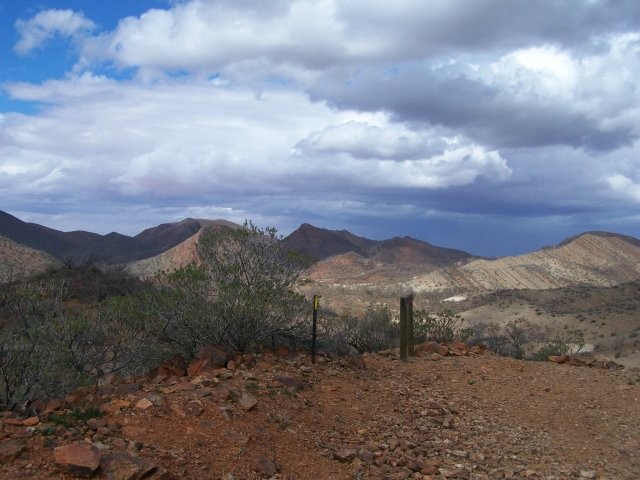
[caption id="attachment_17479" align="alignleft" width="250" caption="Flinders Range"]
[/caption]While the Cobaw Plateau region on the north face of the Great Dividing Range has proved to be an excellent site for
Southern Galactic Telescope Hosting
, the next step is to expand operations into the Arkaroola Wilderness Sanctuary. Located 600km north of Adelaide and 130km east of Leigh Creek, and in the more rugged and spectacular northern Flinders Ranges, this 610sq km multi award-winning Wilderness Sanctuary, contains some of Australia's most spectacular mountain views - and darkest, clearest skies. The Southern Galactic Observatory and International Telescope Hosting Facility, an internationally renowned astronomical observatory based in Victoria, is pleased to announce the establishment of its exclusive Site 2 location at the Arkaroola Wilderness Sanctuary in the Northern Flinders Ranges of South Australia. This new location will be run as part of the Australian operations in partnership with the Directors of the Arkaroola Wilderness Sanctuary and will enable research in the areas of optical / radio astronomy, planetary studies, and space atmospheric sciences by providing specific telescope hosting services and remote control accessability together with logistical support to private and commercial international users and research scientists.
But carving the way out of the wilderness isn't going to be easy. First a site needs to be chosen and then the logistics need to be considered. According to SG director, Dr. Bert Candusio; "The end result ultimately dictates if the effort is justified. In this case, the northern Flinders Ranges consistently proved to be the best observatory location Australia has to offer. The other factor in our site selection was availability of research support in such a remote location. Fortunately, the Arkaroola Village is fully self-contained and maintains all manner of activities from machine workshops, plant and equipment facilities all the way to visitor interpretation staff, high speed internet capabilities and support."
[caption id="attachment_17482" align="alignleft" width="166" caption="Dodwell Observatory"]
[/caption]While the thought of having a village nearby might seem like another access to light pollution, stargazers don't need to worry. The Arkaroola Wilderness Sanctuary is also home to three astronomical institutions - Dodwell, Sir Mark Oliphant and R. Sprigg Observatories - and soon to be the Southern Galactic Mt. Spriggina Observatory. Located 4km south of the AWS village and high atop it own 425 meters peak, this new facility is expected to have six positions open to researchers and private individuals in late 2008, early 2009.
"The SG Mt. Spriggina location presents a unique opportunity for advanced research and astrophotography outcomes to organizations, educators and individuals to be operational under perhaps Australia's foremost astromony location." says Dr. Candusio. "The site's uniqueness in such a remote location towards Central Australia's wilderness has never been offered to the private and corporate sector internationally before. According to a commissioned report on the seeing quality of the northern Flinders Ranges, the area receives less cloud cover than any other region of the Australian mainland and the seeing FWHM figures were considerably better when compared to the Anglo Australia Telescope at Siding Springs location."
So who will be manning the telescopes in a remote observatory? Nah. As cute and cuddly as the Euro 'roo can be, the Southern Galactic facility will offer a professionally trained support staff to oversee operations. According to Dr. Candusio, "Since Arkaroola hosts numerous visitors , there are several permanent on-site staff available to conduct tours of the existing Observatory Facilities at Arkaroola. The experience of these individuals will play a vital role in helping to keep the Mount Spriggina site functioning at all times."
Just how far would you go?