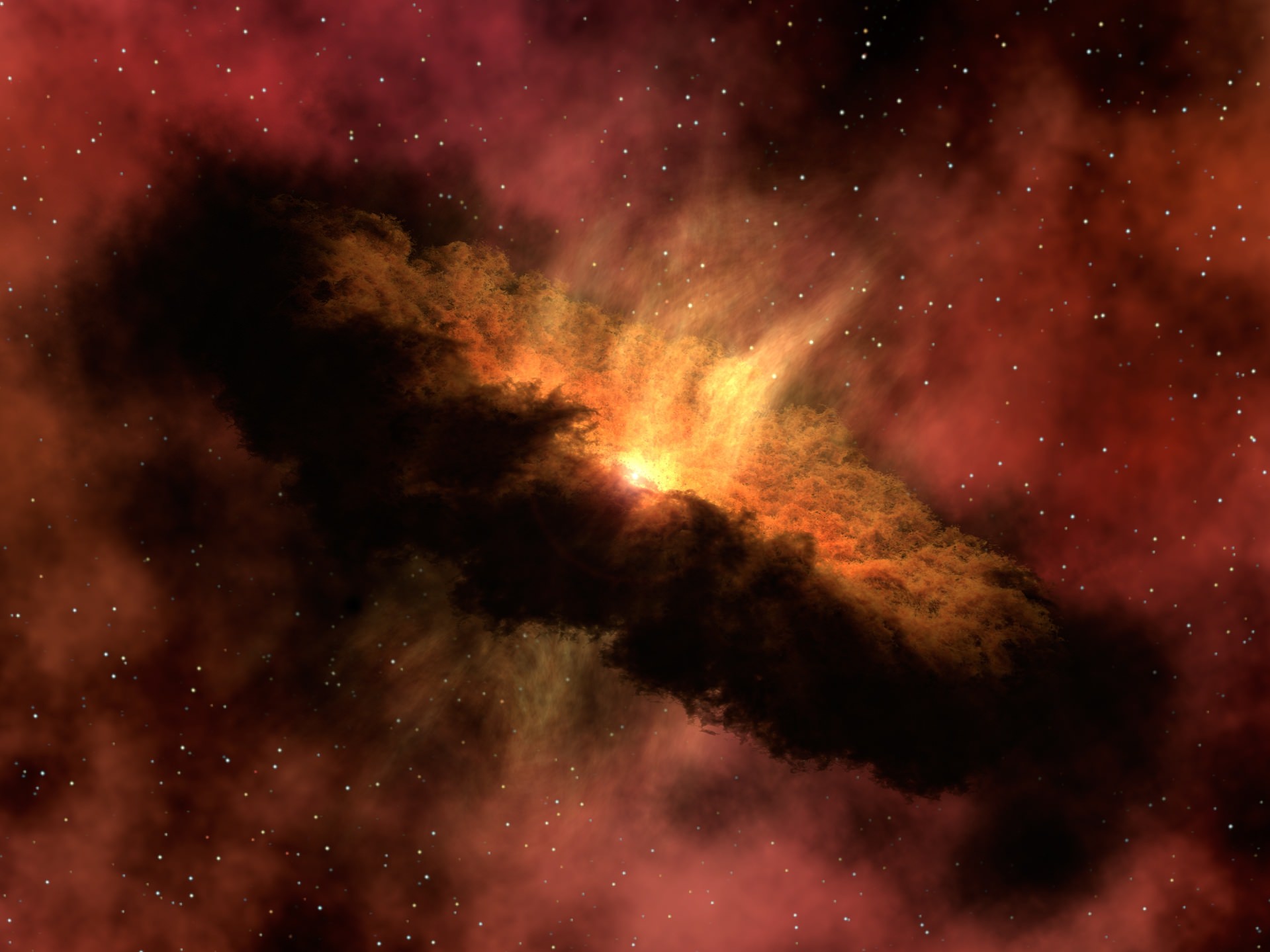
New research suggests that Earth's building blocks included water from the beginning. Credit: NASA/JPL-Caltech
According to the most widely accepted scientific theory, our Solar System formed from a nebula of dust and gas roughly 4.56 billion years ago (aka. Nebula Theory). It began when the nebula experienced gravitational collapse at the center, fusing material under tremendous pressure to create the Sun. Over time, the remaining material fell into an extended disk around the Sun, gradually accreting to form planetesimals that grew larger with time. These planetesimals eventually experienced hydrostatic equilibrium, collapsing into spherical bodies to create Earth and its companions.
Based on modern observations and simulations, researchers have been trying to understand what conditions were like when these planetesimals formed. In a new study, geologists from the California Institute of Technology (Caltech) combined meteorite data with thermodynamic modeling to better understand what went into these bodies from which Earth and the other inner planets formed. According to their results, the earliest planetesimals have formed in the presence of water, which is inconsistent with current astrophysical models of the early Solar System.
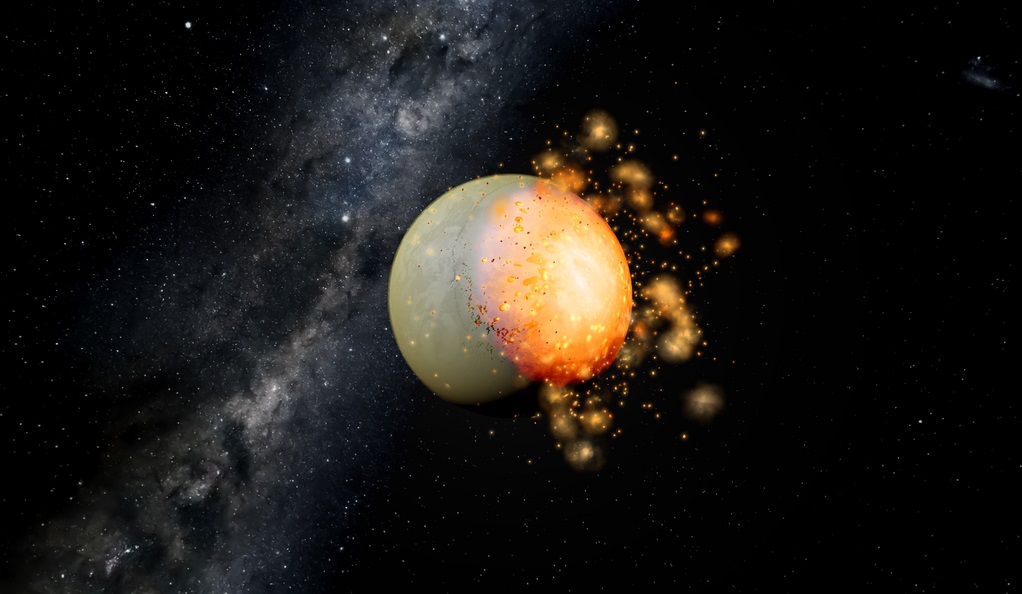
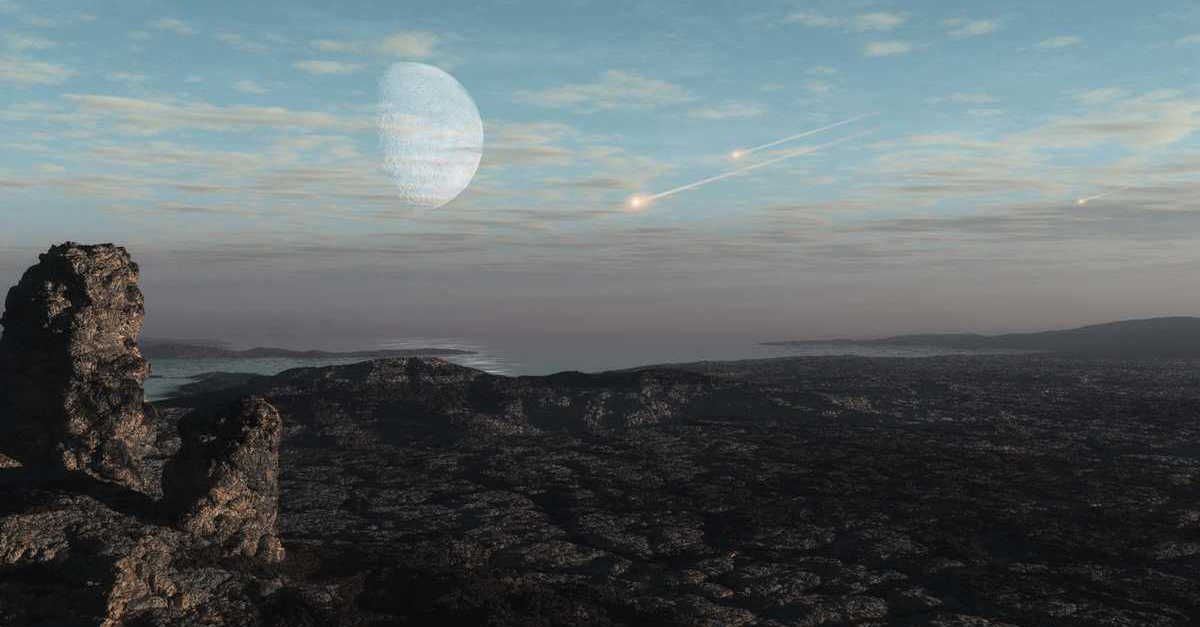
Artist's impression of a bolide impact on a young Venus. Credit: SwRI
Venus and Earth have several things in common. Both are terrestrial planets composed of silicate minerals and metals that are differentiated between a rocky mantle and crust and a metal core. Like Earth, Venus orbits within our Sun’s circumsolar habitable zone (HZ), though Venus skirts the inner edge of it. And according to a growing body of evidence, Venus has active volcanoes on its surface that contribute to atmospheric phenomena (like lightning). However, that’s where the similarities end, and some rather stark differences set in.
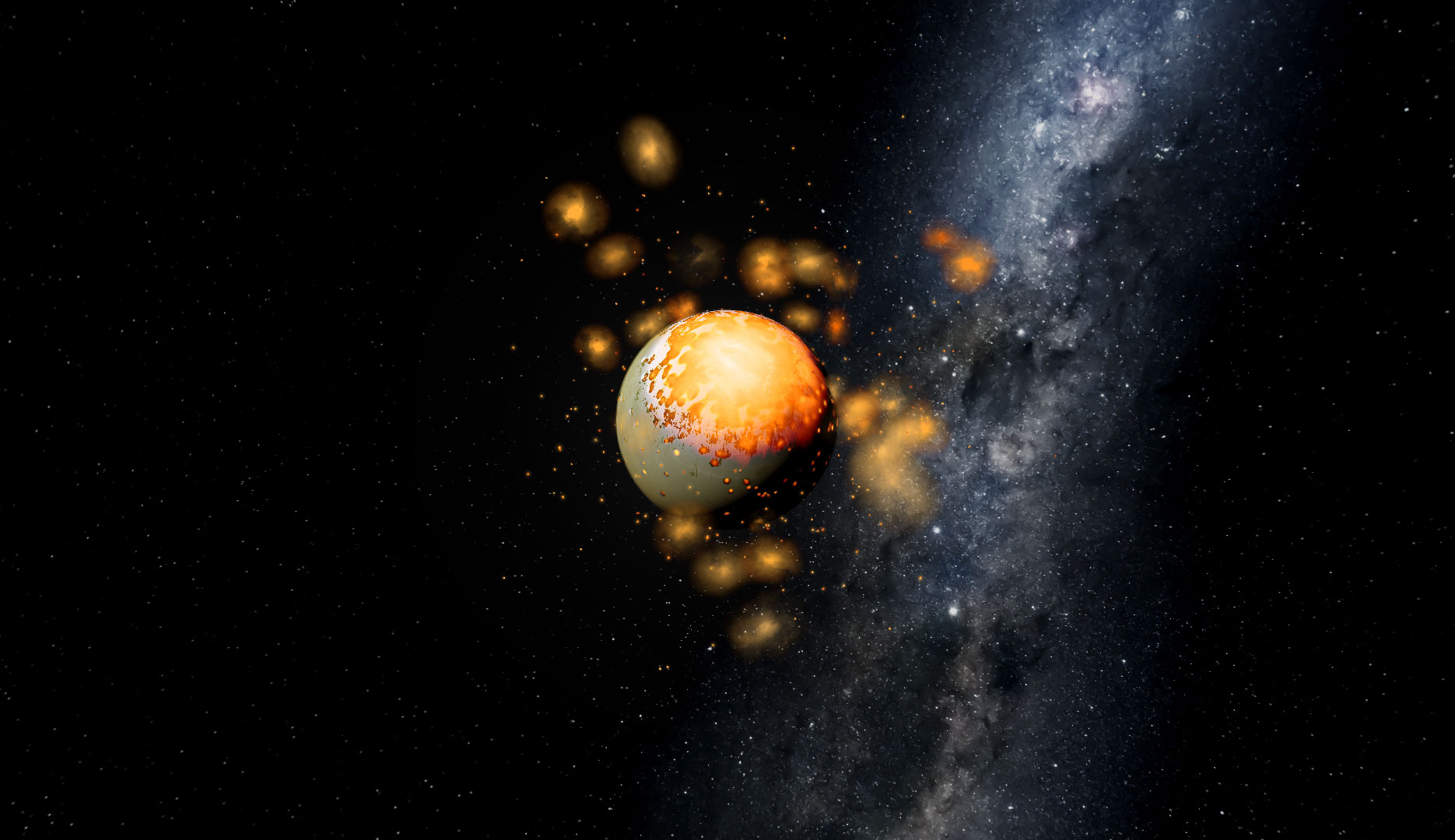
In addition to Venus’ hellish atmosphere, which is about 100 times as dense as Earth’s and hot enough to melt lead, Venus has a very “youthful” surface. Compared to other bodies in the Solar System (like Mercury, the Moon, and Mars), Venus’ surface retains little evidence of the many bolides impacts it experienced over billions of years. According to new research from the Southwest Research Institute (SwRI) and Yale University, this may result from bolide impacts that provided a high-energy, rejuvenating boost to the planet in its early years.
Illustration of early Venus after a major impact. Credit: Southwest Research Institute
With its thick, cloudy atmosphere, Venus has long held mysteries about its surface. It was only in the late 20th century that astronomers had detailed observations of the Venusian landscape, with the Russian Venera landers in the 1970s and 1980s, and later the 1990 Magellan mission, which made high-resolution radar maps of the surface. There are many things we still don’t know, but one thing we do know is that the surface of Venus is young. And a new study in Nature Astronomy may know why.
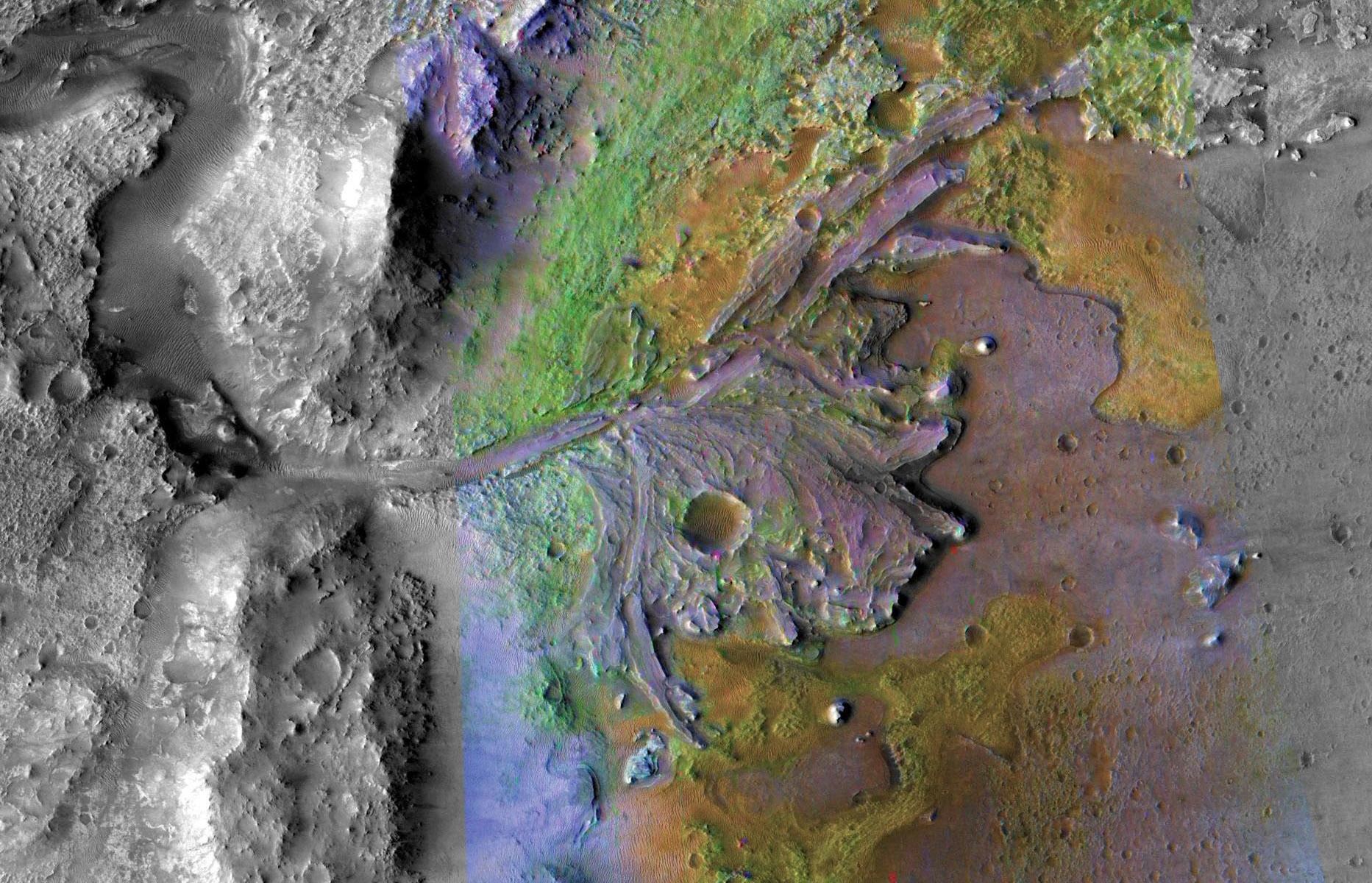
Jezero Crater on Mars is the landing site for NASA's Mars 2020 rover. Image Credit: NASA/JPL-Caltech/ASU
On Mars, NASA’s Perseverancerover is busy collecting rock samples that will be retrieved and brought back to Earth by the Mars Sample Return (MSR) mission. This will be the first sample-return mission from Mars, allowing scientists to analyze Martian rocks directly using instruments and equipment too large and cumbersome to send to Mars. To this end, scientists want to ensure that Perseverance collects samples that satisfy two major science goals – searching for signs of life (“biosignatures”) and geologic dating.
To ensure they select the right samples, scientists must understand how rock samples formed and how they might have been altered over time. According to a new NASA study, Martian rocks may have been “shocked” by meteorite impacts during its early history (the Late Heavy Bombardment period). The role these shocks played in shaping Martian rocks could provide fresh insights into the planet’s geological history, which could prove invaluable in the search for evidence of past life on Mars.
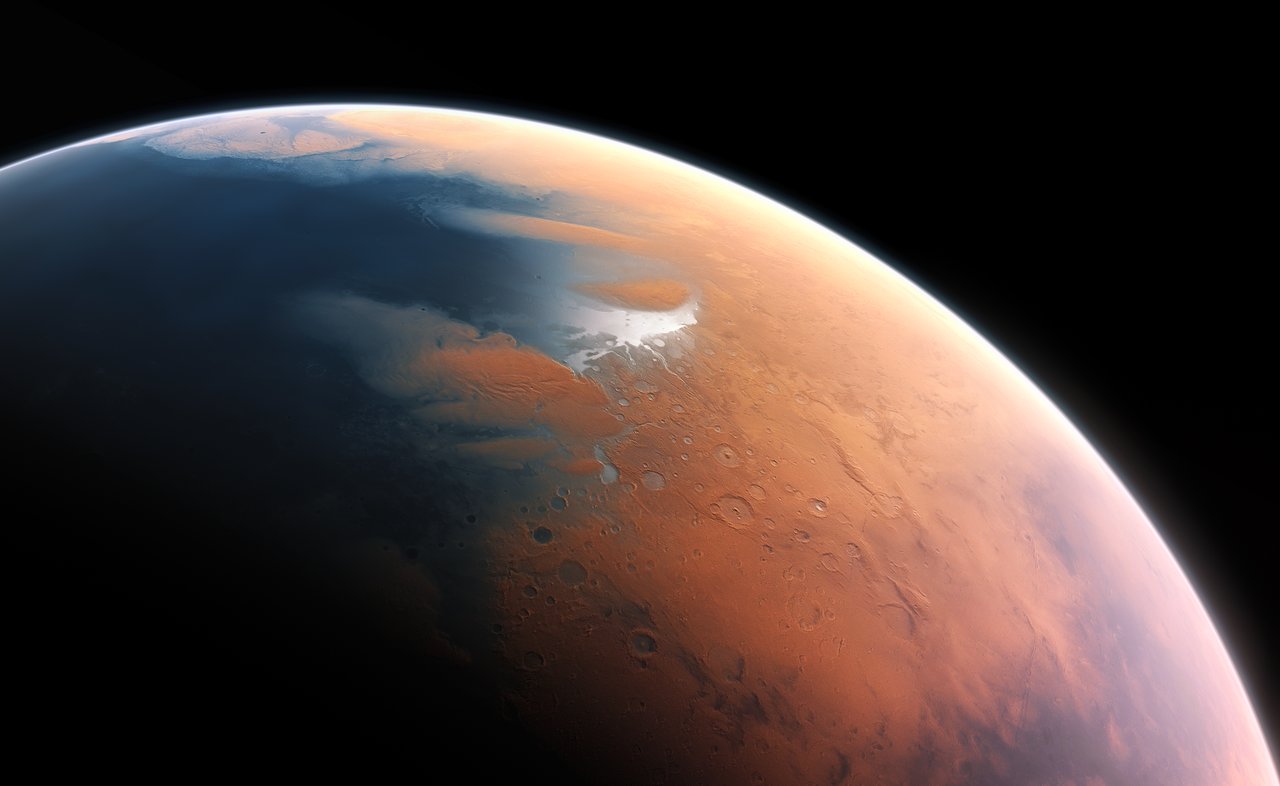
This artist’s impression shows how Mars may have looked about four billion years ago. The young planet Mars would have had enough water to cover its entire surface in a liquid layer about 140 metres deep, but it is more likely that the liquid would have pooled to form an ocean occupying almost half of Mars’s northern hemisphere, and in some regions reaching depths greater than 1.6 kilometres. Credit: ESO/M. Kornmesser
Today, Mars is colloquially known as the “Red Planet” on a count of how its dry, dusty landscape is rich in iron oxide (aka. “rust”). In addition, the atmosphere is extremely thin and cold, and no water can exist on the surface in any form other than ice. But as the Martian landscape and other lines of evidence attest, Mars was once a very different place, with a warmer, denser atmosphere and flowing water on its surface. For years, scientists have attempted to determine how long natural bodies existed on Mars and whether or not they were intermittent or persistent.
Another important question is how much water Mars once had and whether or not this was enough to support life. According to a new study by an international team of planetary scientists, Mars may have had enough water 4.5 billion years ago to cover it in a global ocean up to 300 meters (almost 1,000 feet) deep. Along with organic molecules and other elements distributed throughout the Solar System by asteroids and comets at this time, they argue, these conditions indicate that Mars may have been the first planet in the Solar System to support life.
It’s no secret that Earth was bombarded with plenty of meteors for billions of years during the solar system’s early formation. Estimates vary on how much material impacted the planet, but it had a considerable effect on the planet’s atmosphere and the evolution of life. Now, a new study from a team led by researchers at the Southwest Research Institute puts the number at almost ten times the number of previously estimated impacts. That much of a difference could dramatically change how geologists and planetary scientists view the early Earth.
This artwork shows a rocky planet being bombarded by comets. Image credit: NASA/JPL-Caltech
The early solar system was an especially violent place. The terrestrial planets (Mercury, Venus, Earth, and Mars) likely formed by suffering countless collisions between planetesimals. But the material left over from all those collisions should have remained in orbit around the sun, where it would’ve eventually found itself in the asteroid belt. But the belt contains no such record of that process.
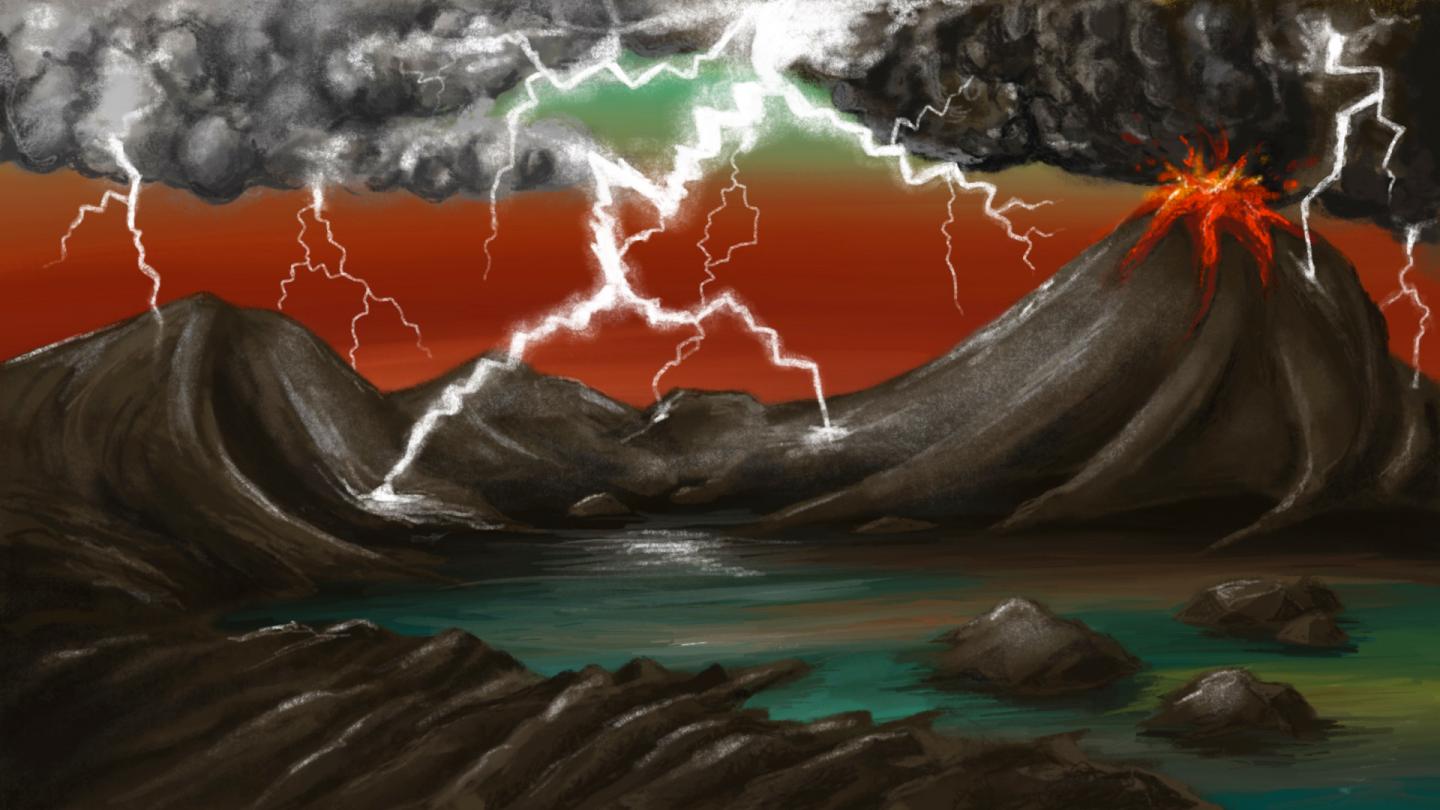
So, you want to create life? You’re going to need some ingredients first. On Earth four billion years ago, you might find some of those ingredients in the impact craters of asteroid strikes (as long as you don’t get blown up in the blast yourself). A safer place to look, according to new research from the University of Leeds, might be in the sites of lightning strikes. Lightning is less destructive, more common, and creates equally useful minerals out of which you can build your early, single cellular life forms.
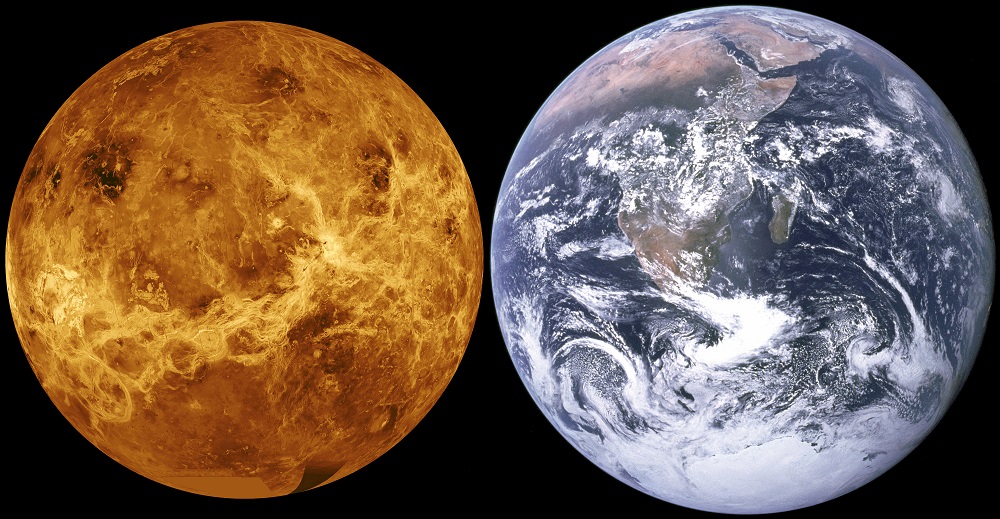
At a closest average distance of 41 million km (25,476,219 mi), Venus is the closest planet to Earth. Credit: NASA/JPL/Magellan
For many reasons, Venus is sometimes referred to as “Earth’s Twin” (or “Sister Planet”, depending on who you ask). Like Earth, it is terrestrial (i.e. rocky) in nature, composed of silicate minerals and metals that are differentiated between an iron-nickel core and silicate mantle and crust. But when it comes to their respective atmospheres and magnetic fields, our two planets could not be more different.
For some time, astronomers have struggled to answer why Earth has a magnetic field (which allows it to retain a thick atmosphere) and Venus do not. According to a new study conducted by an international team of scientists, it may have something to do with a massive impact that occurred in the past. Since Venus appears to have never suffered such an impact, its never developed the dynamo needed to generate a magnetic field.
The study, titled “Formation, stratification, and mixing of the cores of Earth and Venus“, recently appeared in the scientific journal Earth and Science Planetary Letters. The study was led by Seth A. Jacobson of Northwestern University, and included members from the Observatory de la Côte d’Azur, the University of Bayreuth, the Tokyo Institute of Technology, and the Carnegie Institution of Washington.
The Earth’s layers, showing the Inner and Outer Core, the Mantle, and Crust. Credit: discovermagazine.com
For the sake of their study, Jacobson and his colleagues began considering how terrestrial planets form in the first place. According to the most widely-accepted models of planet formation, terrestrial planets are not formed in a single stage, but from a series of accretion events characterized by collisions with planetesimals and planetary embryos – most of which have cores of their own.
Recent studies on high-pressure mineral physics and on orbital dynamics have also indicated that planetary cores develop a stratified structure as they accrete. The reason for this has to do with how a higher abundance of light elements are incorporated in with liquid metal during the process, which would then sink to form the core of the planet as temperatures and pressure increased.
Such a stratified core would be incapable of convection, which is believed to be what allows for Earth’s magnetic field. What’s more, such models are incompatible with seismological studies that indicate that Earth’s core consists mostly of iron and nickel, while approximately 10% of its weight is made up of light elements – such as silicon, oxygen, sulfur, and others. It’s outer core is similarly homogeneous, and composed of much the same elements.
As Dr. Jacobson explained to Universe Today via email:
“The terrestrial planets grew from a sequence of accretionary (impact) events, so the core also grew in a multi-stage fashion. Multi-stage core formation creates a layered stably stratified density structure in the core because light elements are increasingly incorporated in later core additions. Light elements like O, Si, and S increasingly partition into core forming liquids during core formation when pressures and temperatures are higher, so later core forming events incorporate more of these elements into the core because the Earth is bigger and pressures and temperatures are therefore higher.
“This establishes a stable stratification which prevents a long-lasting geodynamo and a planetary magnetic field. This is our hypothesis for Venus. In the case of Earth, we think the Moon-forming impact was violent enough to mechanically mix the core of the Earth and allow a long-lasting geodynamo to generate today’s planetary magnetic field.”
To add to this state of confusion, paleomagnetic studies have been conducted that indicate that Earth’s magnetic field has existed for at least 4.2 billion years (roughly 340 million years after it formed). As such, the question naturally arises as to what could account for the current state of convection and how it came about. For the sake of their study, Jacobson and his team considering the possibility that a massive impact could account for this. As Jacobson indicated:
“Energetic impacts mechanically mix the core and so can destroy stable stratification. Stable stratification prevents convection which inhibits a geodynamo. Removing the stratification allows the dynamo to operate.”
Basically, the energy of this impact would have shaken up the core, creating a single homogeneous region within which a long-lasting geodynamo could operate. Given the age of Earth’s magnetic field, this is consistent with the Theia impact theory, where a Mars-sized object is believed to have collided with Earth 4.51 billion years ago and led to the formation of the Earth-Moon system.
This impact could have caused Earth’s core to go from being stratified to homogeneous, and over the course of the next 300 million years, pressure and temperature conditions could have caused it to differentiate between a solid inner core and liquid outer core. Thanks to rotation in the outer core, the result was a dynamo effect that protected our atmosphere as it formed.
Artist’s concept of a collision between proto-Earth and Theia, believed to happened 4.5 billion years ago. Credit: NASA
The seeds of this theory were presented last year at the 47th Lunar and Planetary Science Conference in The Woodlands, Texas. During a presentation titled “Dynamical Mixing of Planetary Cores by Giant Impacts“, Dr. Miki Nakajima of Caltech – one of the co-authors on this latest study – and David J. Stevenson of the Carnegie Institution of Washington. At the time, they indicated that the stratification of Earth’s core may have been reset by the same impact that formed the Moon.
It was Nakajima and Stevenson’s study that showed how the most violent impacts could stir the core of planets late in their accretion. Building on this, Jacobson and the other co-authors applied models of how Earth and Venus accreted from a disk of solids and gas about a proto-Sun. They also applied calculations of how Earth and Venus grew, based on the chemistry of the mantle and core of each planet through each accretion event.
The significance of this study, in terms of how it relates to the evolution of Earth and the emergence of life, cannot be understated. If Earth’s magnetosphere is the result of a late energetic impact, then such impacts could very well be the difference between our planet being habitable or being either too cold and arid (like Mars) or too hot and hellish (like Venus). As Jacobson concluded:
“Planetary magnetic fields shield planets and life on the planet from harmful cosmic radiation. If a late, violent and giant impact is necessary for a planetary magnetic field then such an impact may be necessary for life.”
Looking beyond our Solar System, this paper also has implications in the study of extra-solar planets. Here too, the difference between a planet being habitable or not may come down to high-energy impacts being a part of the system’s early history. In the future, when studying extra-solar planets and looking for signs of habitability, scientists may very well be forced to ask one simple question: “Was it hit hard enough?”
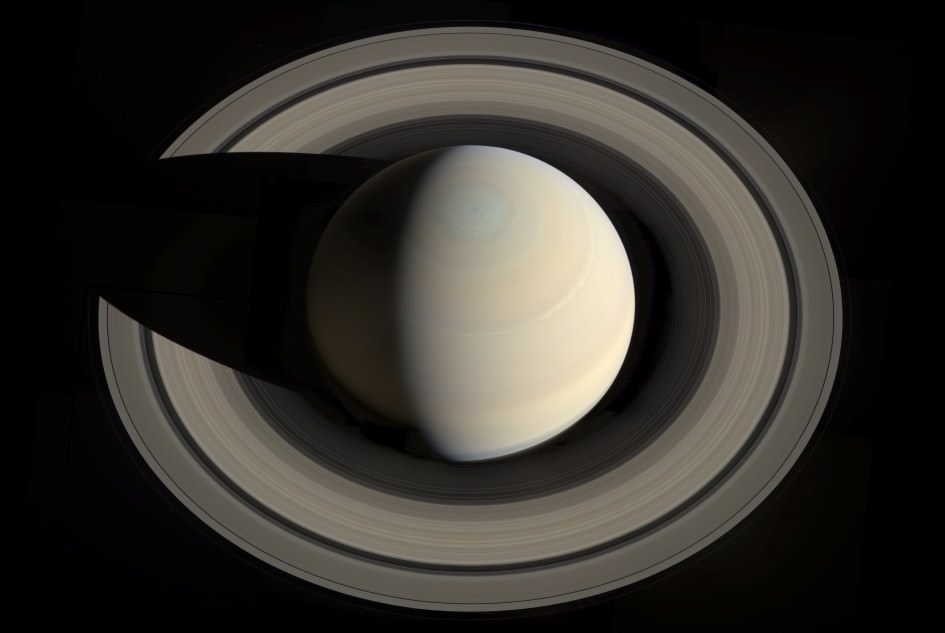
This portrait looking down on Saturn and its rings was created from images obtained by NASA's Cassini spacecraft on Oct. 10, 2013. Credit: NASA/JPL-Caltech/Space Science Institute/G. Ugarkovic
In 1655, astronomer Christiaan Huygens became the first person to observe the beautiful ring system that surrounds Saturn. And while they are certainly the most spectacular, astronomers have since discovered that all the gas and ice giants of the Solar System (i.e. Jupiter, Saturn, Uranus and Neptune) have their own system of rings.
These systems have remained a source of fascination for astronomers, largely because their origins are still something of a mystery. But thanks to a recent study by researchers from the Tokyo Institute of Technology and Kobe University, the origins of these rings may be solved. According to their study, the rings are pieces of Dwarf Planets that got torn off in passing, which were then ripped to pieces!
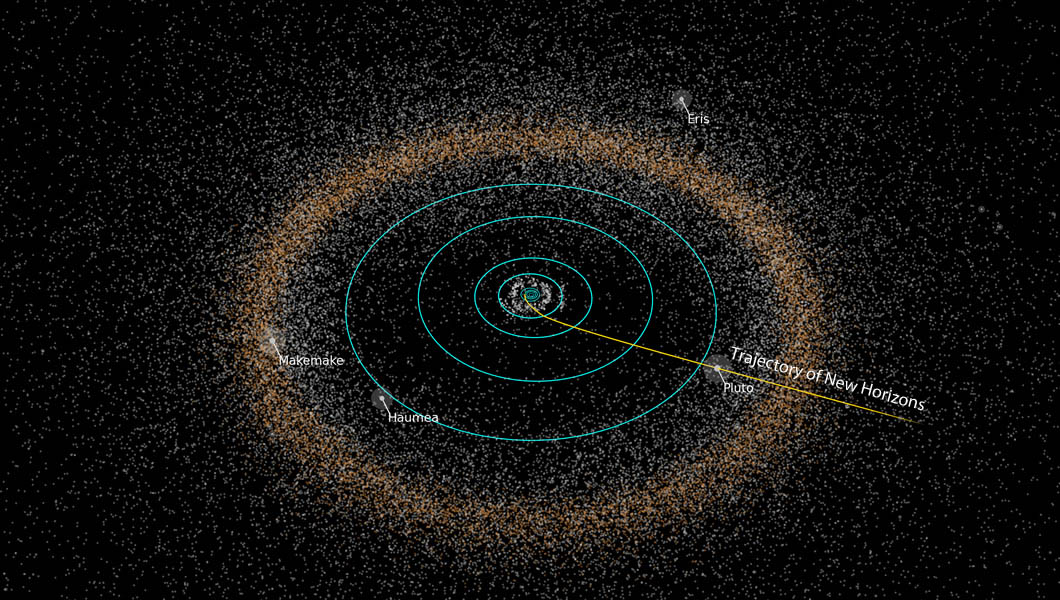
The Kuiper Belt was named in honor of Dutch-American astronomer Gerard Kuiper, who postulated a reservoir of icy bodies beyond Neptune. Credit: JHUAPL
First, they considered the diversity of the various ring systems in our Solar System. For instance, Saturn’s rings are massive (about 100,000 trillion kg!) and composed overwhelmingly (90-95%) of water ice. In contrast, the much less massive rings of Uranus and Neptune are composed of darker material, and are believed to have higher percentages of rocky material in them.
To shed some light on this, the team looked to the Nice Model – a theory of Solar System formation that states that the gas giant migrated to their present location during the Late Heavy Bombardment. This period took place between 4 and 3.8 billion years ago, and was characterized by a disproportionately high number of asteroids from Trans-Neptunian space striking planets in the Inner Solar System.
They then considered other recent models of Solar System formation which postulate that the giant planets experienced close encounters with Pluto-sized objects during this time. From this, they developed the theory that the rings could be the result of some of these objects getting trapped and ripped apart by the gas giants’ gravity. To test this theory, they performed a number of computer simulations to see what would happen in these instances.
As Ryuki Hyodo – a researcher at the Department of Planetology, Kobe University, and the lead author on the paper – told Universe Today via email:
“We performed two simulations. First, using SPH (Smoothed-particle hydrodynamics) simulations, we investigated tidal disruption of Pluto-sized objects during the close encounters with giant planets and calculated the amount of fragments that are captured around giant planets. We found enough mass/fragments to explain current rings is captured. Then, we performed the longer-term evolution of the captured mass/fragments by using N-body simulations. We found that the captured fragments can collide each other with destruction and form thin equatorial circular rings around giant planets.”
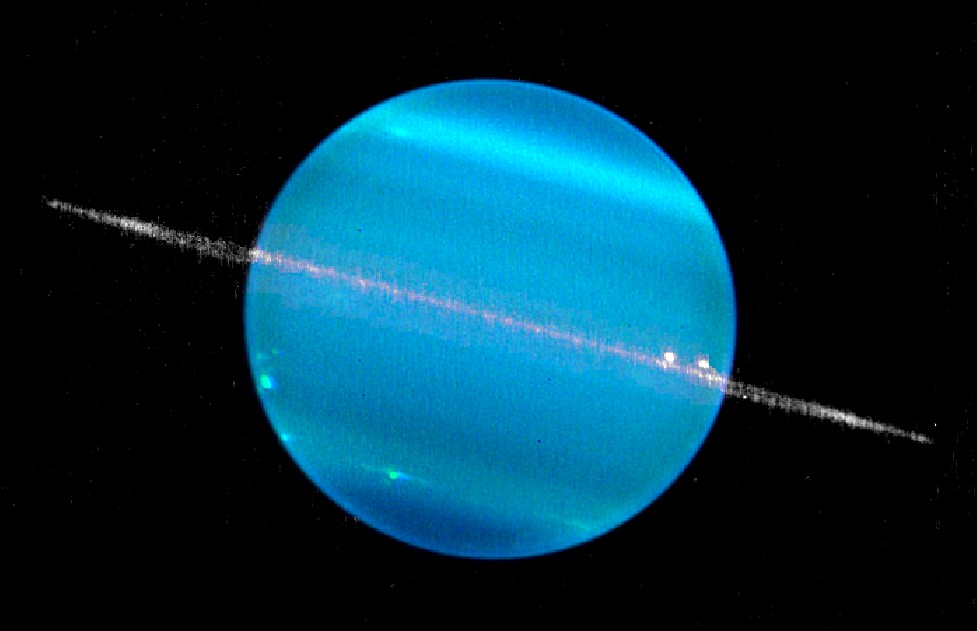
A composite image of Uranus in two infrared bands, showing the planet and its ring system. Credit: W. M. Keck Observatory (Marcos van Dam)
The results of these simulation were consistent with the mass of the ring systems observed around Saturn and Uranus. This included the inner regular satellites of both planets – which would have also been the product of the past encounters with KBOs. It also accounted for the differences in the rings’ composition, showing how the planet’s Roche limits can influence what kind of material can be effectively captured.
This study is especially significant because it offers verifiable evidence for one of the enduring mysteries of our Solar System. And as Hyodo points out, it could come in mighty handy when it comes time to examine extra-solar planetary systems as well.
“Our theory suggested that, in the past, we had two possible epochs to form rings,” he said. “One is during the planet accretion phase and the other is during the Late heavy bombardment. Also, our model is naturally applicable to other planetary systems. So, our theory predicts that exoplanets also have massive rings around them.”
In the meantime, some might find the idea that ring systems are the corpses of Dwarf Planets troublesome. But I think we can all agree, a Soylent Green allusion might be just a bit over the top!