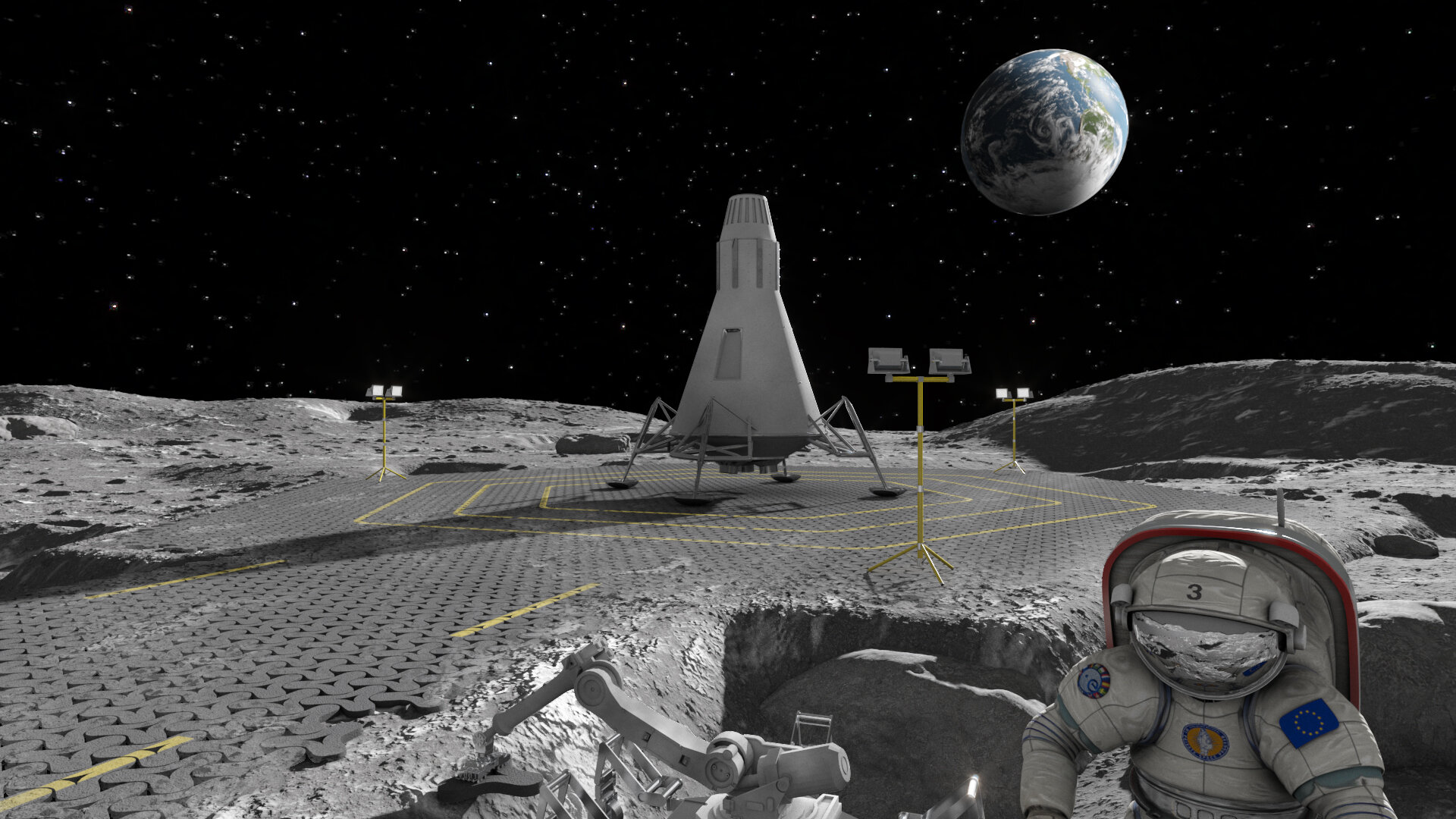
This illustration shows an interlocking paved surface around a Moon base. Image Credit: ESA
Astronauts will face a host of obstacles when they visit the Moon again. There’s powerful radiation, wild temperature swings, and challenging gravity to deal with. There’s also dust and lots of it. Moondust was a hazard for the Apollo astronauts, and future lunar astronauts will have to contend with it, too.
What if they turn some of that dust into solid surfaces to drive on?
Let’s compare and contrast. Humans, on the one hand, have made enormous advances in science and technology, built cities, cars, computers, and phones. We have split the atom for war and for energy.
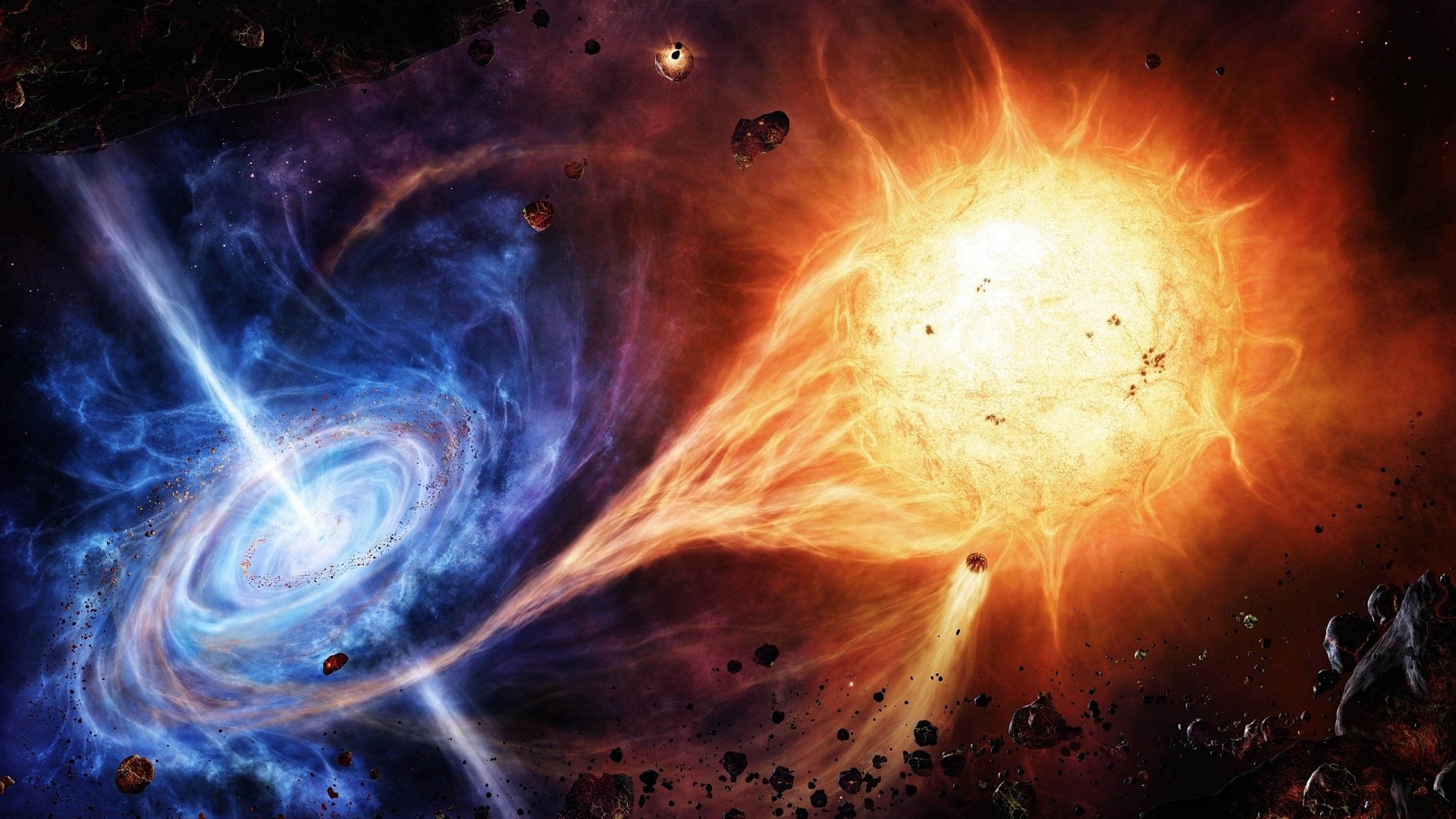
What has the Sun done? It’s a massive ball of plasma, made up of mostly hydrogen and helium. It just, kind of, sits there. Every now and then it burps up hydrogen gas into a coronal mass ejection. It’s not a stretch to say that the Sun, and all inanimate material in the Universe, isn’t the sharpest knife in the drawer.
And yet, the Sun has mastered a form of energy that we just can’t seem to wrap our minds around: fusion. It’s really infuriating, seeing the Sun, just sitting there, effortlessly doing something our finest minds have struggled with for half a century.
Why can’t we make fusion work? How long until we can finally catch up technologically with a sphere of ionized gas?
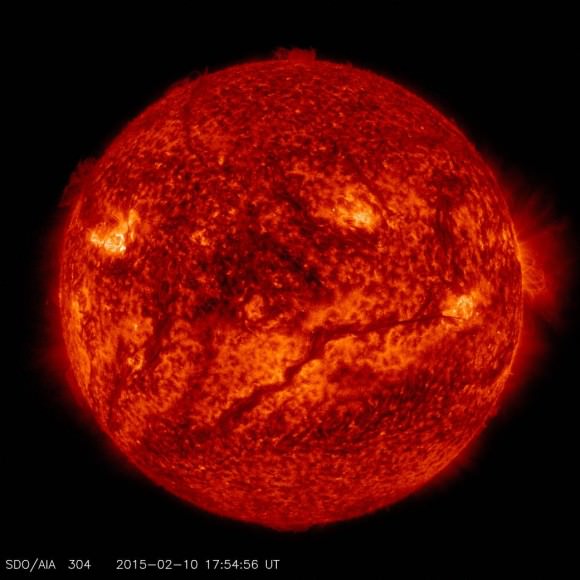
Our Sun in all its intense, energetic glory. Credit: NASA/SDO.
The trick to the Sun’s ability to generate power through nuclear fusion, of course, comes from its enormous mass. The Sun contains 1.989 x 10^30 kilograms of mostly hydrogen and helium, and this mass pushes inward, creating a core heated to 15 million degrees C, with 150 times the density of water.
It’s at this core that the Sun does its work, mashing atoms of hydrogen into helium. This process of fusion is an exothermic reaction, which means that every time a new atom of helium is created, photons in the form of gamma radiation are also released.
The only thing the Sun uses this energy for is light pressure, to counteract the gravity pulling everything inward. Its photons slowly make their way up through the Sun and then they’re released into space. So wasteful.
How can we replicate this on Earth?
Now gathering together a Sun’s mass of hydrogen here on Earth is one option, but it’s really impractical. Where would we put all that hydrogen. The better solution will be to use our technology to simulate the conditions at the core of the Sun.
If we can make a fusion reactor where the temperatures and pressures are high enough for atoms of hydrogen to merge into helium, we can harness those sweet sweet photons of gamma radiation.
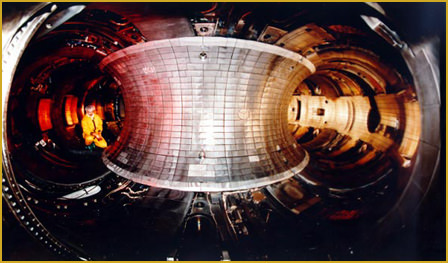
Inside a Tokamak. Credit: Princeton Plasma Physics Laboratory
The main technology developed to do this is called a tokamak reactor; it’s a based on a Russian acronym for: “toroidal chamber with magnetic coils”, and the first prototypes were created in the 1960s. There are many different reactors in development, but the method is essentially the same.
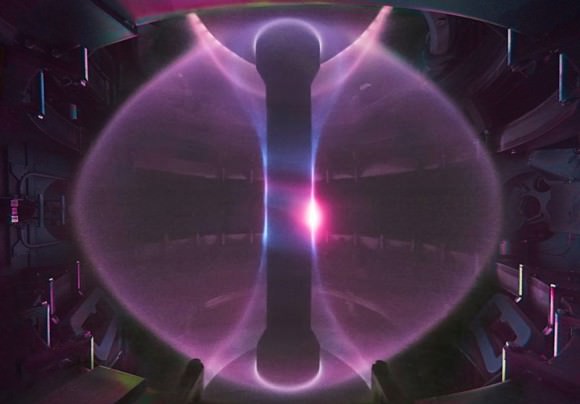
A vacuum chamber is filled with hydrogen fuel. Then an enormous amount of electricity is run through the chamber, heating up the hydrogen into a plasma state. They might also use lasers and other methods to get the plasma up to 150 to 300 million degrees Celsius (10 to 20 times hotter than the Sun’s core).
Superconducting magnets surround the fusion chamber, containing the plasma and keeping it away from the chamber walls, which would melt otherwise.
Once the temperatures and pressures are high enough, atoms of hydrogen are crushed together into helium just like in the Sun. This releases photons which heat up the plasma, keeping the reaction going without any addition energy input.
Excess heat reaches the chamber walls, and can be extracted to do work.
The spherical tokamak MAST at the Culham Centre for Fusion Energy (UK). Photo: CCFE
The challenge has always been that heating up the chamber and constraining the plasma uses up more energy than gets produced in the reactor. We can make fusion work, we just haven’t been able to extract surplus energy from the system… yet.
Compared to other forms of energy production, fusion should be clean and safe. The fuel source is water, and the byproduct is helium (which the world is actually starting to run out of). If there’s a problem with the reactor, it would cool down and the fusion reaction would stop.
The high energy photons released in the fusion reaction will be a problem, however. They’ll stream into the surrounding fusion reactor and make the whole thing radioactive. The fusion chamber will be deadly for about 50 years, but its rapid half-life will make it as radioactive as coal ash after 500 years.
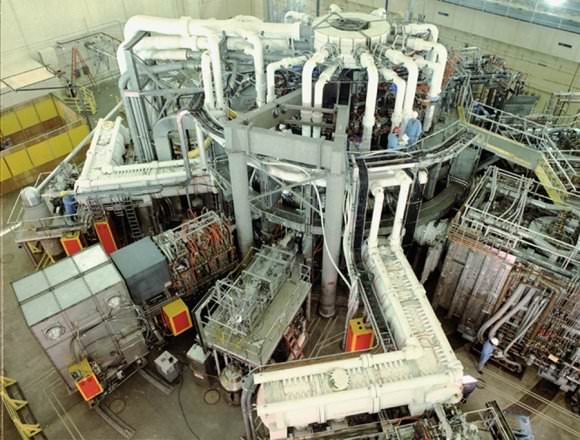
External view of Princeton’s Tokamak Fusion Test Reactor which operated from 1982 to 1997. Credit: Princeton Plasma Physics Laboratory (CC BY 3.0)
Now you know what fusion power is and how it works, what’s the current state, and how long until fusion plants give us unlimited cheap safe power, if ever?
Fusion experiments are measured by the amount of energy they produce compared to the amount of energy you put into them. For example, if a fusion plant required 100MW of electrical energy to produce 10 MW of output, it would have an energy ratio of 0.1. You want at least a ratio of 1. That means energy in equals energy out, and so far, no experiment has ever reached that ratio. But we’re close.
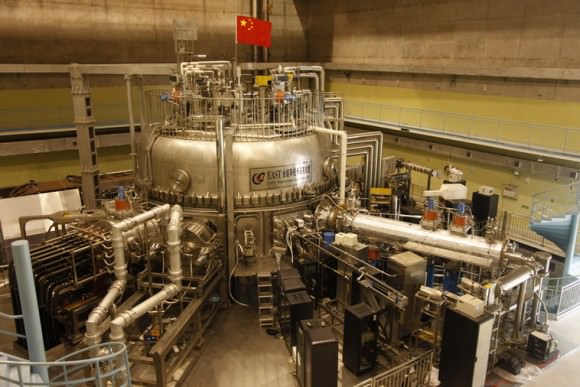
The EAST facility’s tokamak reactor, part of the Institute of Physical Science in Hefei. Credit: ipp.cas.cn
The Chinese are building the Experimental Advanced Superconducting Tokamak, or EAST. In 2016, engineers reported that they had run the facility for 102 seconds, achieving temperatures of 50 million C. If true, this is an enormous advancement, and puts China ahead in the race to create stable fusion. That said, this hasn’t been independently verified, and they only published a single scientific paper on the milestone.
Karlsruhe Institute of Technology’s Wendelstein 7-X (W7X) stellarator. Credit: Max-Planck-Institut für Plasmaphysik, Tino Schulz (CC BY-SA 3.0)
Researchers at the Karlsruhe Institute of Technology (KIT) in Germany recently announced that their Wendelstein 7-X (W7X) stellarator (I love that name), heated hydrogen gas to 80 million C for only a quarter of a second. Hot but short. A stellarator works differently than a tokamak. It uses twisted rings and external magnets to confine the plasma, so it’s good to know we have more options.
The biggest, most elaborate fusion experiment going on in the world right now is in Europe, at the French research center of Cadarache. It’s called ITER, which stands for the International Thermonuclear Experimental Reactor, and it hopes to cross that magic ratio.
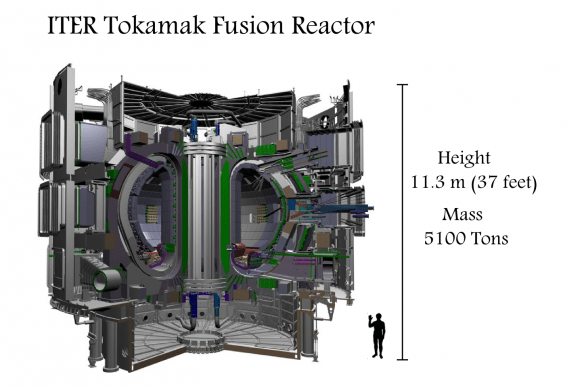
The ITER Tokamak Fusion Reactor. Credits: ITER, Illus. T.Reyes
ITER is enormous, measuring 30 meters across and high. And its fusion chamber is so large that it should be able to create a self-sustaining fusion reaction. The energy released by the fusing hydrogen keeps the fuel hot enough to keep reacting. There will still be energy required to run the electric magnets that contain the plasma, but not to keep the plasma hot.
And if all goes well, ITER will have a ratio of 10. In other words, for every 10 MW of energy pumped in, it’ll generate 100 MW of usable power.
ITER is still under construction, and as of June 2015, the total construction costs had reached $14 billion. The facility is expected to be complete by 2021, and the first fusion tests will begin in 2025.
So, if ITER works as planned, we are now about 8 years away from positive energy output from fusion. Of course, ITER will just be an experiment, not an actual powerplant, so if it even works, an actual fusion-based energy grid will be decades after that.
At this point, I’d say we’re about a decade away from someone demonstrating that a self-sustaining fusion reaction that generates more power than it consumes is feasible. And then probably another 2 decades away from them supplying electricity to the power grid. By that point, our smug Sun will need to find a new job.
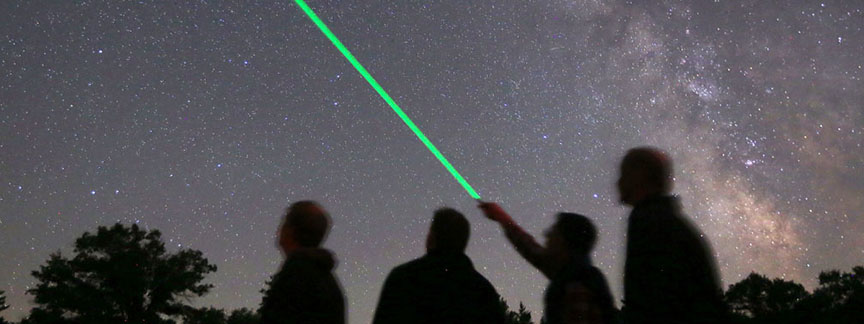
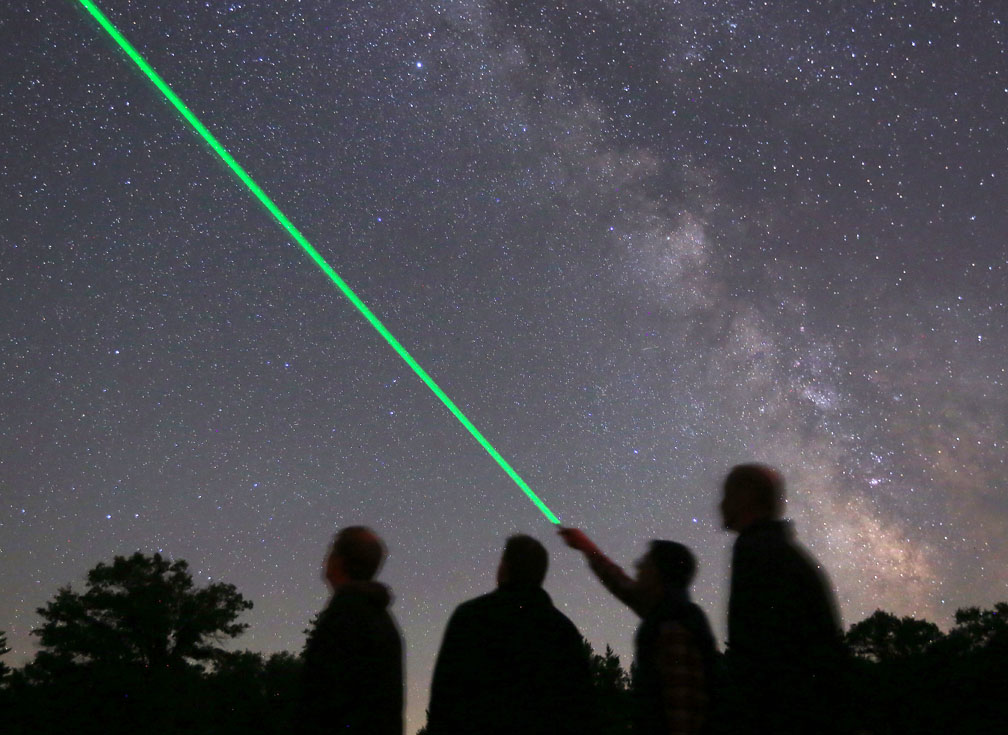
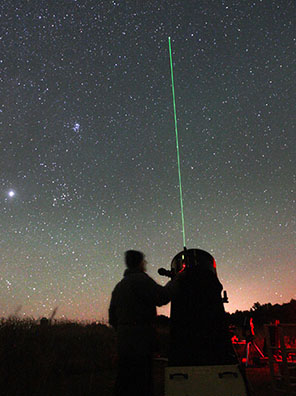
When it comes to helping others find something in the night sky, a green laser makes it a piece of cake. Credit: Bob King
Devious humans have given green lasers a bad name. Aiming a laser at an aircraft or the flight path of an aircraft is illegal according to a 2012 U.S. federal law. Jail time awaits offenders. Don’t point at a police officer either. To get a taste of the dark side of green lasers, check out these rap sheets.
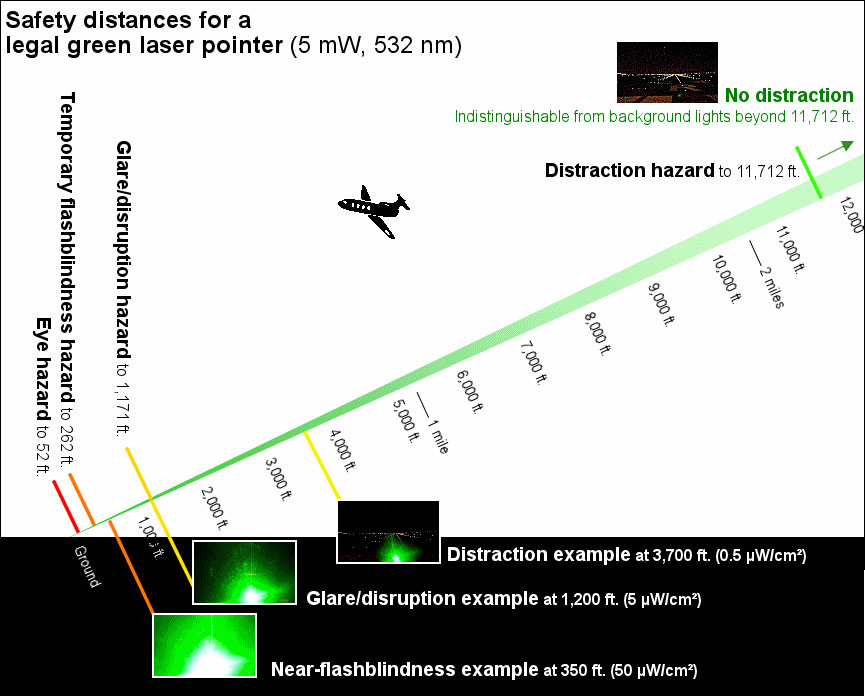
A standard 5 milliwatt (mW) laser can cause temporary flashblindness or at the very least distract a pilot up to around 11,000 feet (3,350 meters). Beyond that, it’s indistinguishable from other ground lighting. Credit: Wikipedia
But if you mind your manners, a green laser is one of the best tools available to amateur astronomers eager to share the wonders of the night sky with the public. There’s simply nothing better to point out constellations, comets, individual stars and satellites in the night sky. Amateurs love ’em! So does the public. Go to a star party and pop out the laser, and you’ll get everyone’s attention. There’s magic in being able to point out our favorite points of light with a beam of light.
Not only are lasers helpful when pointing out stars, many amateurs use them to point zero in on deep sky objects with their telescopes. Credit: Bob King
First, let’s look at laser etiquette to ensure the safety of our fellow stargazers:
*Always gather the group around you first, raise the laser above the crowd and ask everyone to look up. Then turn on the beam and aim. That way no one will accidentally face into the light. This is crucial when aiming low above the horizon, where the beam, nearly horizontal, has a better chance of striking someone in the eye. Take extra precaution to make sure the group is close. The closer the gathering, the brighter and easier the beam will be to see. Viewers too far off to one side or another will see a weaker, less intense light.
*Green lasers often use AAA batteries and draw a good amount of power especially on chilly nights. You’ll only get a few minutes of operation if you leave it out in the cold. Store your laser in an inside pocket to keep it warm until you need it. Tuck it back in between pointing sessions. Have a fresh pair of batteries around and keep those in your pocket, too!
*If you see an airplane headed in your direction, avoid using the laser light for a couple minutes just to be on the safe side.
*Never give your laser to someone in the dark to “try out.” Especially a child! They won’t be familiar with its safe use.
* Store your laser in a safe place when not in use, so kids can’t accidentally find it.
Red, green and violet lasers with a high enough output to trace a line in the night sky are all available these days for reasonable prices. These three beams come from 50 mW lasers. Multiple rays result from the subject not being able to hold the lasers steady during the time exposure! Credit: Bob King
The most common green laser available is rated at 5 milliwatts (mW), just adequate for night sky pointing. That said, be aware that brightness from one manufacturer to another can vary. Some 5mW pointers produce nearly as much light as a 30 mW model, practically a light saber! Others, like my first green laser, did the job on moonless nights, but proved too weak by first quarter phase. 30mW and 50mW are much better and significantly amp up the wow factor when you’re out with the crowd. They’re also much easier to see for larger groups and remain visible even in bright moonlight.
Back in olden days, 5 mW red and green lasers were as bright as they came, and the green ones were pricey. But nowadays, you can get powerful pointers in green, red, blue and violet. All will trace a visible beam across the night sky with green the brightest by far because our eyes are most sensitive to green light.
Green, violet and red lasers. Lasers emit very specific colors of light. Green appears brightest and sharpest; red and blue beams look fuzzier to our eyes. Credit: Netweb01 / CC BY-SA 3 / Wikimedia
I should add that yellow lasers have also recently become available. Like green, they’re superb for long-distance applications, but prices — oh, my — will burn a hole in your wallet. How about 300 bucks! You can get a 5 mW green laser for $5-10 that’s similarly bright. No matter what kind of laser pen you buy, they all operate on the same principle: a laser diode, related to an LED (light-emitting diode), powered by AA batteries emits a narrow, coherent beam of light when switched on.
Coherent light is light of a single wavelength where all the crests and troughs (remember, light is a wave) are in lockstep with one another. Each crest precisely overlaps the next; each trough snugly fits within the other. Regular light contains a garden salad mix of every wavelength each vibrating out of stop, to its own drummer as it were. Because laser light is coherent, it stays focused over great distances, forming a narrow beam ideal for pointing.
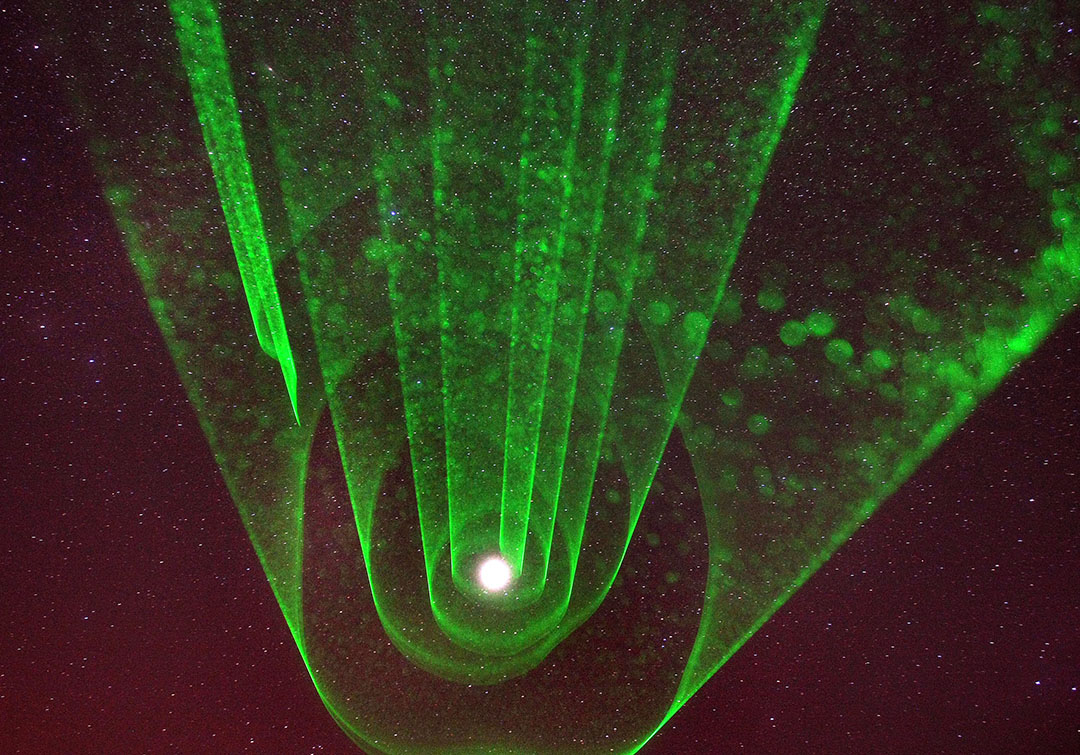
Laser light literally illuminates the air and anything in it. The intense beam scatters off air molecules, water vapor and dust in the air. In this photo, I spun the beam around the planet Jupiter on a humid, slightly foggy night. Dust and water vapor illuminated by the beam creates a mesmerizing sparkle effect you have to see to believe. Credit: Bob King
Lasers are not only rated by power (milliwatts) but also the specific wavelength they emit. Green lasers beam light at 532 nanometers (nm), blue at 445 nm, violet at 405 nm, red at 650 nm and yellow at 589 nm. Green laser pointers generate their light from an infrared laser beam within the pen’s housing. Normally, any infrared light should be filtered from the final beam but in the majority of inexpensive laser pointers, it beams out right along with the green. We can’t see it, but concentrated infrared laser light poses an additional hazard when directed into the eyes. When you hear of lasers being used to pop balloons or light a match, it’s the leaky infrared that’s doing the popping. Yet another reason to use your laser with care!
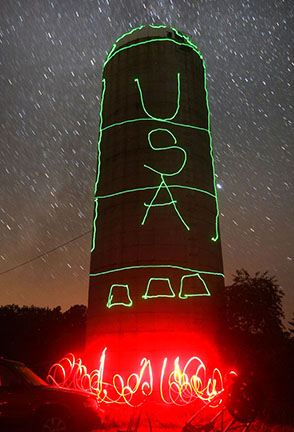
Lasers can be artistic tools, too. Every year, a friend holds a star party near a towering grain silo. Late at night, we take a break, open the camera shutter and paint the silo with laser light. In this case — a rocket. Credit: Bob King
Lower-powered laser pointers use AAA batteries. For instance, both my 5 mW and 55 mW green lasers use AAA batteries. Higher-powered pointers in the 5-watt range use a single #18650 (or 16340) 3.7 volt lithium ion rechargeable battery. You can either purchase these online (Orbitronics makes an excellent one for $12.99) or at your local Batteries Plus store. You’ll need a charger, too, which runs anywhere from about $8 for a single battery model to around $30 for a multiple battery version with different charging speeds. Be sure you get one with an LED light that will alert you when the batteries are done charging.
Whether sold in the U.S. or elsewhere, nearly every laser comes from China. We’ll talk about that in a minute, but if you purchase a laser that uses rechargeable batteries, beware of no-name chargers and off-brand batteries that lack safeguards. Some of these inexpensive batteries have been known to explode!
What to buy? I can’t speak to every firm that offers laser pointers, and there are many, but some of the more popular ones include:
I’ve bought from Optotronics, based in Colorado and the LED Shoppe, out of Hong Kong. I took a chance on the LED Shoppe’s lasers and have been pleasantly surprised at the low cost, free shipping and good customer service. While power ratings can vary from what the label reads, I’ve been especially pleased with both the 55 mW from Optotronics and the 5-watt (yes, FIVE WATTS) green and red pointers from the LED Shoppe. Their 50 mW green version does a great job, too. Just a disclaimer — I don’t work for and am not associated with either company.
Bottom line: If you’re looking for a effective pointer for public star parties, I recommend a 50 mW or higher green pointer. Anything in that range will provide a lovely bright beam you can use to literally dazzle your audience when sharing the beauty of the night. Before you make your decision, check your country or state’s laser use laws where for the U.S.orworldwide. If buying in the U.S., speak to the business owner if you have any questions.
Have a Merry Green, Red, Blue and Violet Christmas!
Accroding to new research, the Milky Way may still bear the marks of "ancient impacts". Credit: NASA/Serge Brunier
Finding examples of intelligent life other than our own in the Universe is hard work. Between spending decades listening to space for signs of radio traffic – which is what the good people at the SETI Institute have been doing – and waiting for the day when it is possible to send spacecraft to neighboring star systems, there simply haven’t been a lot of options for finding extra-terrestrials.
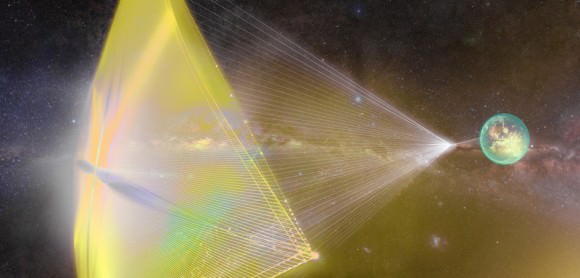
But in recent years, efforts have begun to simplify the search for intelligent life. Thanks to the efforts of groups like the Breakthrough Foundation, it may be possible in the coming years to send “nanoscraft” on interstellar voyages using laser-driven propulsion. But just as significant is the fact that developments like these may also make it easier for us to detect extra-terrestrials that are trying to find us.
Not long ago, Breakthrough Initiatives made headlines when they announced that luminaries like Stephen Hawking and Mark Zuckerberg were backing their plan to send a tiny spacecraft to Alpha Centauri. Known as Breakthrough Starshot, this plan involved a refrigerator-sized magnet being towed by a laser sail, which would be pushed by a ground-based laser array to speeds fast enough to reach Alpha Centauri in about 20 years.
In addition to offering a possible interstellar space mission that could reach another star in our lifetime, projects like this have the added benefit of letting us broadcast our presence to the rest of the Universe. Such is the argument put forward by Philip Lubin, a professor at the University of California, Santa Barbara, and the brains behind Starshot.
In a paper titled “The Search for Directed Intelligence” – which appeared recently in arXiv and will be published soon in REACH – Reviews in Human Space Exploration – Lubin explains how systems that are becoming technologically feasible on Earth could allow us to search for similar technology being used elsewhere. In this case, by alien civilizations. As Lubin shared with Universe Today via email:
“In our SETI paper we examine the implications of a civilization having directed energy systems like we are proposing for both our NASA and Starshot programs. In this sense the NASA (DE-STAR) and Starshot arrays represent what other civilizations may possess. In another way, the receive mode (Phased Array Telescope) may be useful to search and study nearby exoplanets.”
DE-STAR, or the Directed Energy System for Targeting of Asteroids and exploRation, is another project being developed by scientists at UCSB. This proposed system will use lasers to target and deflect asteroids, comets, and other Near-Earth Objects (NEOs). Along with the Directed Energy Propulsion for Interstellar Exploration (DEEP-IN), a NASA-backed UCSB project that is based on Lubin’s directed-energy concept, they represent some of the most ambitious directed-energy concepts currently being pursued.
Project Starshot, an initiative sponsored by the Breakthrough Foundation, is intended to be humanity’s first interstellar voyage. Credit: breakthroughinitiatives.org
Using these as a template, Lubin believes that other species in the Universe could be using this same kind of directed energy (DE) systems for the same purposes – i.e. propulsion, planetary defense, scanning, power beaming, and communications. And by using a rather modest search strategy, he and colleagues propose observing nearby star and planetary systems to see if there are any signs of civilizations that possess this technology.
This could take the form of “spill-over”, where surveys are able to detect errant flashes of energy. Or they could be from an actual beacon, assuming the extra-terrestrials us DE to communicate. As is stated in the paper authored by Lubin and his colleagues:
“There are a number of reasons a civilization would use directed energy systems of the type discussed here. If other civilizations have an environment like we do they might use DE system for applications such as propulsion, planetary defense against “debris” such as asteroids and comets, illumination or scanning systems to survey their local environment, power beaming across large distances among many others. Surveys that are sensitive to these “utilitarian” applications are a natural byproduct of the “spill over” of these uses, though a systematic beacon would be much easier to detect.”
According to Lubin, this represents a major departure from what projects like SETI have been doing during the last few decades. These efforts, which can be classified as “passive” were understandable in the past, owing to our limited means and the challenges in sending out messages ourselves. For one, the distances involved in interstellar communication are incredibly vast.
Directed-energy technology, such as the kind behind the Very Large Telescoping Interferometer, could be used by ET for communications. Credit: ESO/G. Hüdepohl
Even using DE, which moves at the speed of light, it would still take a message over 4 years to reach the nearest star, 1000 years to reach the Kepler planets, and 2 million years to the nearest galaxy (Andromeda). So aside from the nearest stars, these time scales are far beyond a human lifetime; and by the time the message arrived, far better means of communication would have evolved.
Second, there is also the issue of the targets being in motion over the vast timescales involved. All stars have a transverse velocity relative to our line of sight, which means that any star system or planet targeted with a burst of laser communication would have moved by the time the beam arrived. So by adopting a pro-active approach, which involves looking for specific kinds of behavior, we could bolster our efforts to find intelligent life on distant exoplanets.
But of course, there are still many challenges that need to be overcome, not the least of which are technical. But more than that, there is also the fact that what we are looking for may not exist. As Lubin and his colleagues state in one section of the paper: “What is an assumption, of course, is that electromagnetic communications has any relevance on times scales that are millions of years and in particular that electromagnetic communications (which includes beacons) should have anything to do with wavelengths near human vision.”
In other words, assuming that aliens are using technology similar to our own is potentially anthropocentric. However, when it comes to space exploration and finding other intelligent species, we have to work with what we have and what we know. And as it stands, humanity is the only example of a space-faring civilization known to us. As such, we can hardly be faulted for projecting ourselves out there.
Here’s hoping ET is out there, and relies on energy beaming to get things done. And, fingers crossed, here’s hoping they aren’t too shy about being noticed!
In honor of Dr. Stephen Hawking, the COSMOS center will be creating the most detailed 3D mapping effort of the Universe to date. Credit: BBC, Illus.: T.Reyes
Dr. Stephen Hawking delivered a disturbing theory in 1974 that claimed black holes evaporate. He said black holes are not absolutely black and cold but rather radiate energy and do not last forever. So-called “Hawking radiation” became one of the physicist’s most famous theoretical predictions. Now, 40 years later, a researcher has announced the creation of a simulation of Hawking radiation in a laboratory setting.
The possibility of a black hole came from Einstein’s theory of General Relativity. Karl Schwarzchild in 1916 was the first to realize the possibility of a gravitational singularity with a boundary surrounding it at which light or matter entering cannot escape.
This month, Jeff Steinhauer from the Technion – Israel Institute of Technology, describes in his paper, “Observation of self-amplifying Hawking radiation in an analogue black-hole laser” in the journal Nature, how he created an analogue event horizon using a substance cooled to near absolute zero and using lasers was able to detect the emission of Hawking radiation. Could this be the first valid evidence of the existence of Hawking radiation and consequently seal the fate of all black holes?
This is not the first attempt at creating a Hawking radiation analogue in a laboratory. In 2010, an analogue was created from a block of glass, a laser, mirrors and a chilled detector (Phys. Rev. Letter, Sept 2010); no smoke accompanied the mirrors. The ultra-short pulse of intense laser light passing through the glass induced a refractive index perturbation (RIP) which functioned as an event horizon. Light was seen emitting from the RIP. Nevertheless, the results by F. Belgiorno et al. remain controversial. More experiments were still warranted.
The latest attempt at replicating Hawking radiation by Steinhauer takes a more high tech approach. He creates a Bose-Einstein condensate, an exotic state of matter at very near absolute zero temperature. Boundaries created within the condensate functioned as an event horizon. However, before going into further details, let us take a step back and consider what Steinhauer and others are trying to replicate.
Artists illustrations of black holes are guided by descriptions given to them by theorists. There are many illustrations. A black hole has never been seen up close. However, to have Hawking radiation, all the theatrics of accretion disks and matter being funneled off a companion star are unnecessary. Just a black hole in the darkness of space will do. (Illustration: public domain)
The recipe for the making Hawking radiation begins with a black hole. Any size black hole will do. Hawking’s theory states that smaller black holes will more rapidly radiate than larger ones and in the absence of matter falling into them – accretion, will “evaporate” much faster. Giant black holes can take longer than a million times the present age of the Universe to evaporate by way of Hawking radiation. Like a tire with a slow leak, most black holes would get you to the nearest repair station.
So you have a black hole. It has an event horizon. This horizon is also known as the Schwarzchild radius; light or matter checking into the event horizon can never check out. Or so this was the accepted understanding until Dr. Hawking’s theory upended it. And outside the event horizon is ordinary space with some caveats; consider it with some spices added. At the event horizon the force of gravity from the black hole is so extreme that it induces and magnifies quantum effects.
All of space – within us and surrounding us to the ends of the Universe includes a quantum vacuum. Everywhere in space’s quantum vacuum, virtual particle pairs are appearing and disappearing; immediately annihilating each other on extremely short time scales. With the extreme conditions at the event horizon, virtual particle and anti-particles pairs, such as, an electron and positron, are materializing. The ones that appear close enough to an event horizon can have one or the other virtual particle zapped up by the black holes gravity leaving only one particle which consequently is now free to add to the radiation emanating from around the black hole; the radiation that as a whole is what astronomers can use to detect the presence of a black hole but not directly observe it. It is the unpairing of virtual particles by the black hole at its event horizon that causes the Hawking radiation which by itself represents a net loss of mass from the black hole.
So why don’t astronomers just search in space for Hawking radiation? The problem is that the radiation is very weak and is overwhelmed by radiation produced by many other physical processes surrounding the black hole with an accretion disk. The radiation is drowned out by the chorus of energetic processes. So the most immediate possibility is to replicate Hawking radiation by using an analogue. While Hawking radiation is weak in comparison to the mass and energy of a black hole, the radiation has essentially all the time in the Universe to chip away at its parent body.
This is where the convergence of the growing understanding of black holes led to Dr. Hawking’s seminal work. Theorists including Hawking realized that despite the Quantum and Gravitational theory that is necessary to describe a black hole, black holes also behave like black bodies. They are governed by thermodynamics and are slaves to entropy. The production of Hawking radiation can be characterized as a thermodynamic process and this is what leads us back to the experimentalists. Other thermodynamic processes could be used to replicate the emission of this type of radiation.
Using the Bose-Einstein condensate in a vessel, Steinhauer directed laser beams into the delicate condensate to create an event horizon. Furthermore, his experiment creates sound waves that become trapped between two boundaries that define the event horizon. Steinhauer found that the sound waves at his analogue event horizon were amplified as happens to light in a common laser cavity but also as predicted by Dr. Hawking’s theory of black holes. Light escapes from the laser present at the analogue event horizon. Steinhauer explains that this escaping light represents the long sought Hawking radiation.
Publication of this work in Nature underwent considerable peer review to be accepted but that alone does not validate his findings. Steinhauer’s work will now withstand even greater scrutiny. Others will attempt to duplicate his work. His lab setup is an analogue and it remains to be verified that what he is observing truly represents Hawking radiation.
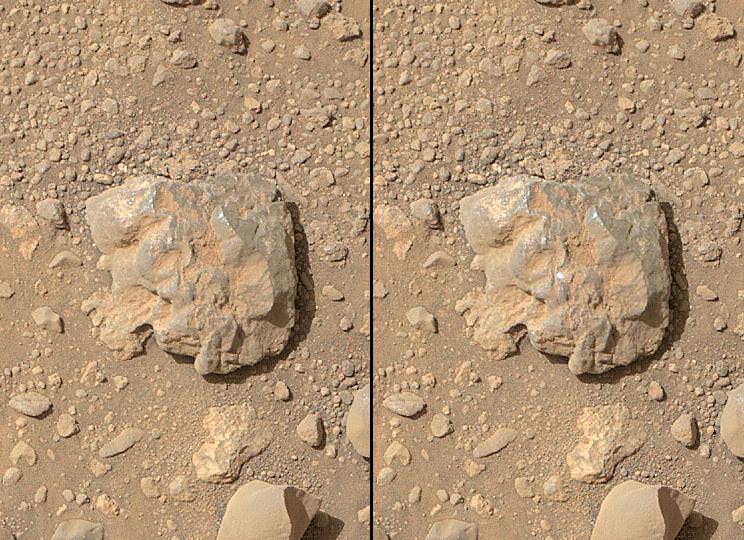
NASA's Curiosity Mars rover used the Mars Hand Lens Imager (MAHLI) camera on its arm to catch the first images of sparks produced by the rover's laser being shot at a rock on Mars. Credit: NASA/JPL-Caltech/MSSS
Curiosity has zapped hundreds of Red Planet rocks with her powerful laser blaster during her lifetime and has now caught the sparks flying for the first time as they happened – as seen in new photos and video above and below released this week by NASA.
As the NASA rover’s million watt Chemistry and Camera (ChemCam) instrument fired multiple laser shots at a rock fortuitously named “Nova” the team commanded her arm-mounted Mars Hand Lens Imager (MAHLI) high resolution imaging camera to try and capture the action as it occurred, for the first time. And they succeeded.
Curiosity blasted the baseball sized “Nova” rock target over 100 times on July 12, 2014, or Sol 687.
Since the nail biting touchdown nearly two years ago on Aug. 5, 2012 inside Gale Crater, ChemCam has aimed the laser instrument at more than 600 rock or soil targets and fired more than 150,000 laser shots.
Here’s a NASA/JPL video showing the laser flash:
Video Caption: The sparks that appear on the baseball-sized rock (starting at :17) result from the laser of the ChemCam instrument on NASA’s Curiosity Mars rover hitting the rock. Credit: NASA/JPL-Caltech/MSSS
ChemCam is used to determine the composition of Martian rocks and soils at a distance of up to 25 feet (8 meters) yielding preliminary data for the scientists and engineers to decide if a target warrants up close investigation and in rare cases sampling and drilling activities.
ChemCam works through a process called laser-induced breakdown spectroscopy. The laser hits a target with pulses to generate sparks, whose spectra provide information about which chemical elements are in the target.
Successive laser shots are fired in sequence to gradually blast away thin layers of material. Each shot exposes a slightly deeper layer for examination by the ChemCam spectrometer.
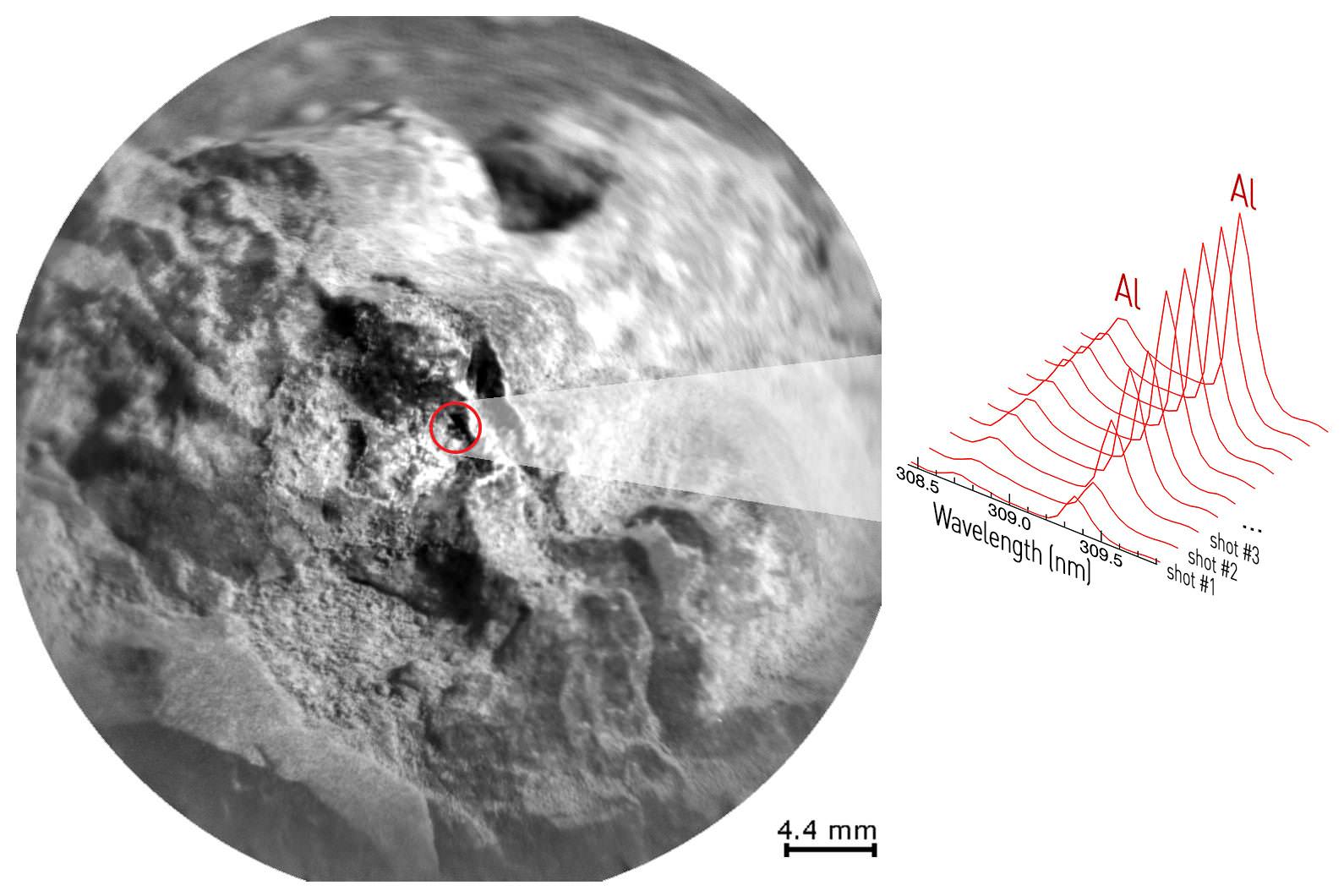
As Curiosity fired deeper into “Nova” it showed an increasing concentration of aluminum as the sequential laser blasts penetrated through the uninteresting dust on the rock’s surface. Silicon and sodium were also detected.
“This is so exciting! The ChemCam laser has fired more than 150,000 times on Mars, but this is the first time we see the plasma plume that is created,” said ChemCam Deputy Principal Investigator Sylvestre Maurice, at the Research Institute in Astrophysics and Planetology, of France’s National Center for Scientific Research and the University of Toulouse, France, in a statement.
“Each time the laser hits a target, the plasma light is caught and analyzed by ChemCam’s spectrometers. What the new images add is confirmation that the size and shape of the spark are what we anticipated under Martian conditions.”
A Martian target rock called “Nova,” shown here, displayed an increasing concentration of aluminum as a series of laser shots from NASA’s Curiosity Mars rover penetrated through dust on the rock’s surface. This pattern is typical of many rocks examined with the rover’s laser-firing ChemCam. Credit: NASA/JPL-Caltech/LANL/CNES/IRAP/LPGNantes/CNRS/IAS
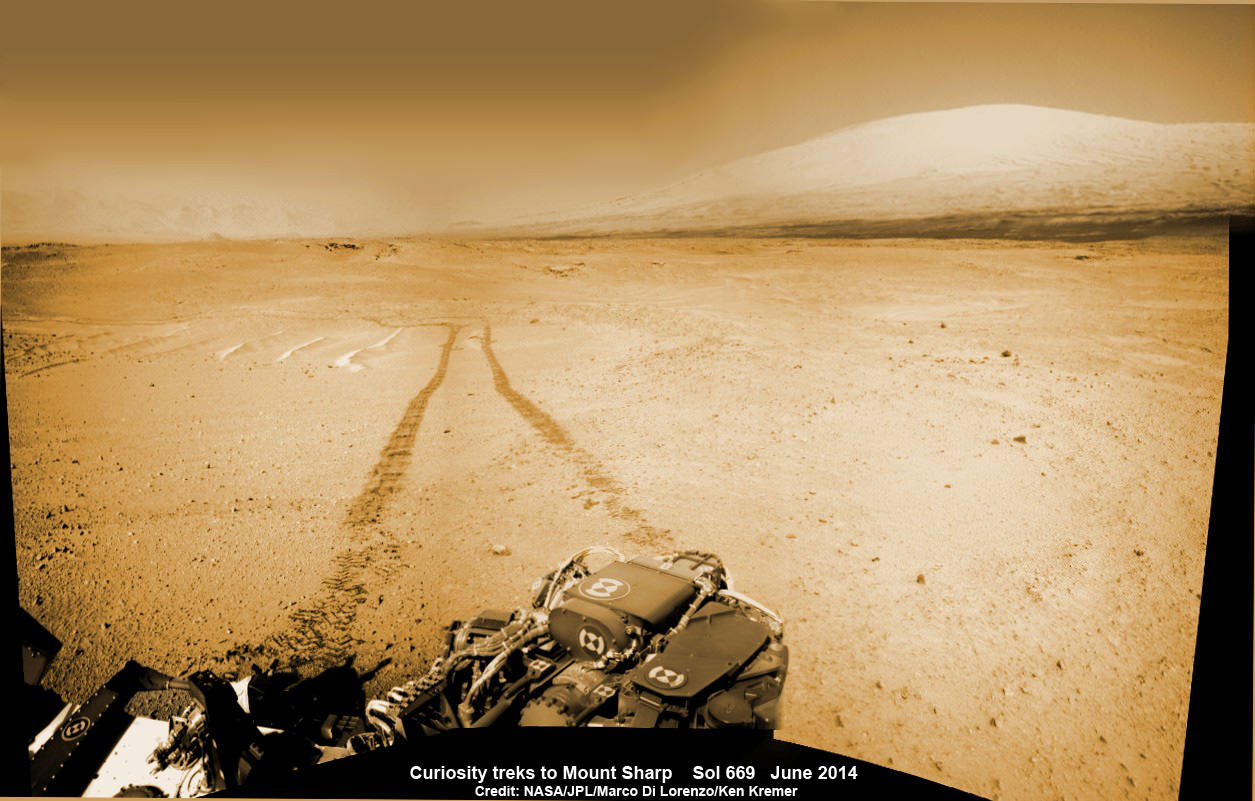
The SUZ sized rover is driving as swiftly as possible to the base of Mount Sharp which dominates the center of Gale Crater and reaches 3.4 miles (5.5 km) into the Martian sky – taller than Mount Rainier.
During Year 1 on Mars, Earth’s emissary has already accomplished her primary objective of discovering a habitable zone on the Red Planet that contains the minerals necessary to support microbial life in the ancient past when Mars was far wetter and warmer billions of years ago.
To date, Curiosity’s odometer totals over 5.1 miles (8.4 kilometers) since landing inside Gale Crater on Mars in August 2012. She has taken over 166,000 images.
1 Martian Year on Mars! Curiosity treks to Mount Sharp in this photo mosaic view captured on Sol 669, June 24, 2014. Navcam camera raw images stitched and colorized. Credit: NASA/JPL-Caltech/Marco Di Lorenzo/Ken Kremer – kenkremer.com
Curiosity still has about another 2.4 miles (3.9 kilometers) to go to reach the entry way at a gap in the treacherous sand dunes at the foothills of Mount Sharp sometime later this year.
Stay tuned here for Ken’s continuing Curiosity, Opportunity, Orion, SpaceX, Boeing, Orbital Sciences, commercial space, MAVEN, MOM, Mars and more planetary and human spaceflight news.
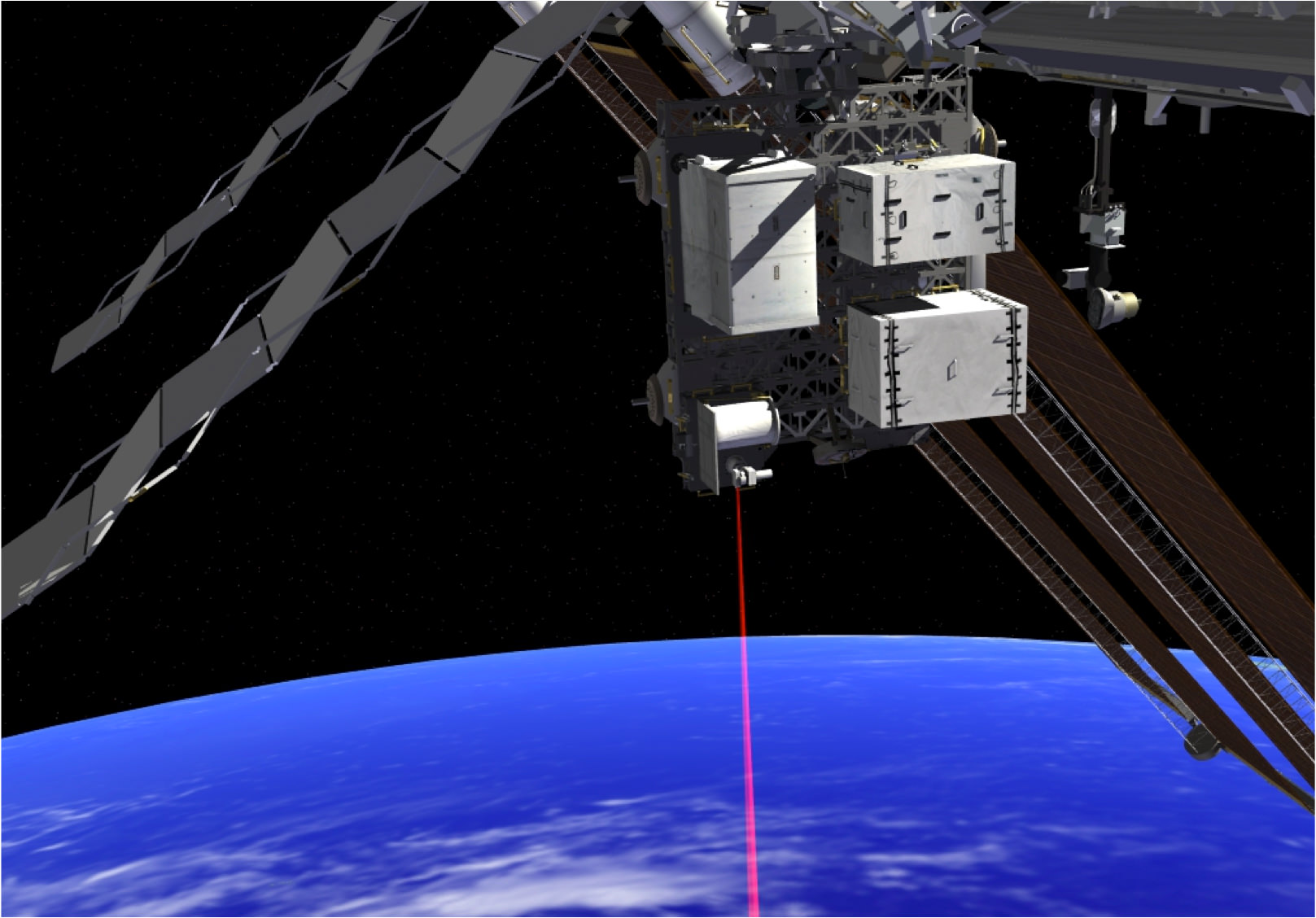
Artist's conception of how the Optical Payload for Lasercomm Science (OPALS) beams information from the International Space Station. Credit: NASA
What’s the first thing you would say to Earth if you were sending a message from space? Well, the old computer expression “Hello, World!” seems apt. That in fact was the content of the video message sent by laser from an experiment on the International Space Station that aims to speed up communications in space.
Laser could change communications with spacecraft forever. For half a century we’ve been used to puttering around with radio waves, receiving a few bits of information at a time, which makes transmitting images and videos from distant planets an exercise of patience.
Enter the OPALS (Optical Payload for Lasercomm Science) payload, which transmitted the video (which you can watch above) at a maximum of 50 megabits per second — the standard speed for many home Internet connections. The testbed technology could speed up comms about 10 to 1,000 times faster than traditional radio, which would definitely get science information to the ground faster. The tradeoff is you have to be extremely precise.
“Because the space station orbits Earth at 17,500 mph [28,200 km/h], transmitting data from the space station to Earth requires extremely precise targeting,” NASA stated. “The process can be equated to a person aiming a laser pointer at the end of a human hair 30 feet away and keeping it there while walking.”
OPALS did this by communicating with a laser beacon at the Table Mountain Observatory in Wrightwood, California. The transmission took 148 seconds, and the video message itself only took 3.5 seconds for each copy to come to Earth — compared with 10 minutes under traditional methods!
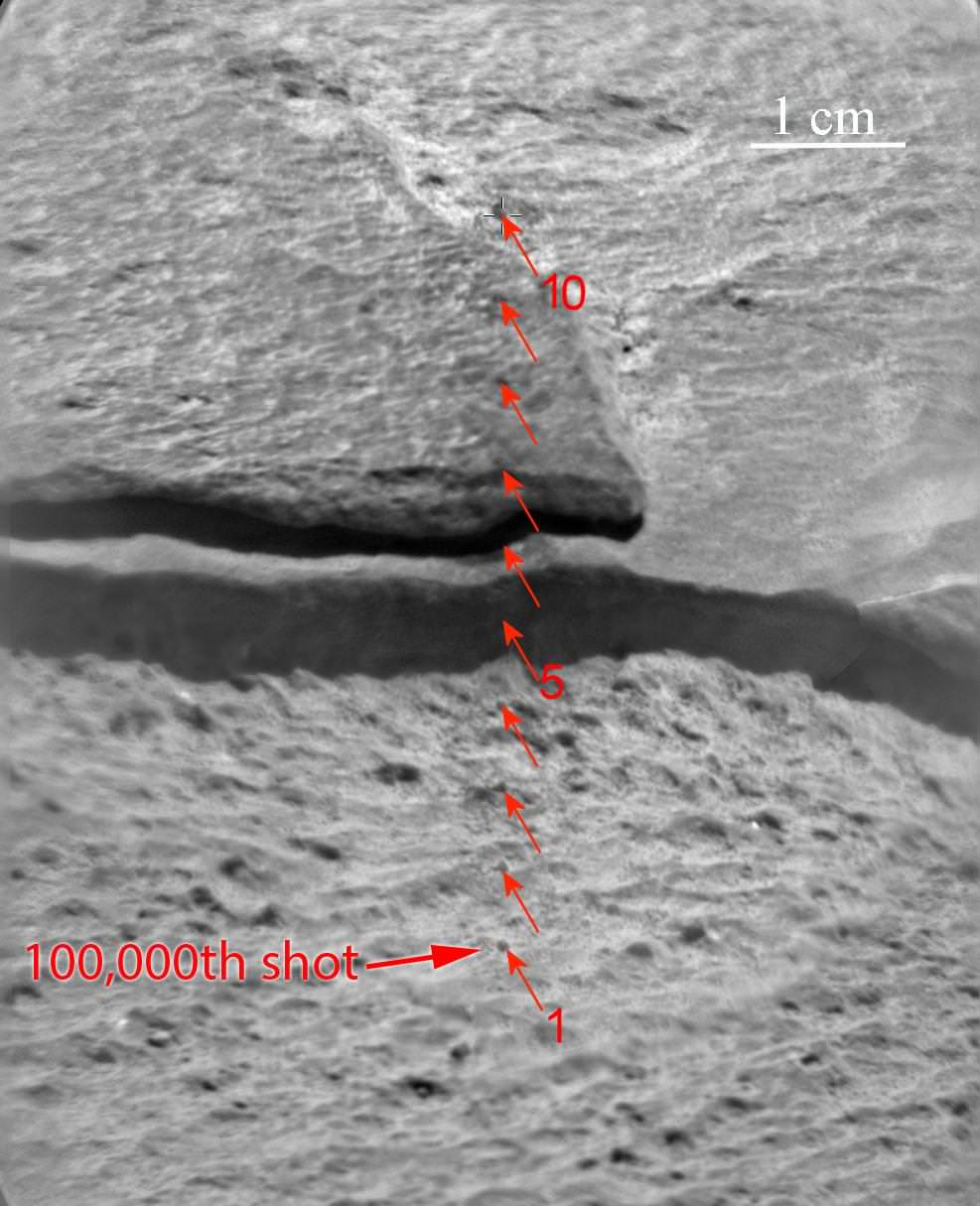
This mosaic shows a rock, nicknamed "Ithaca" examined by the NASA Curiosity rover's Chemistry and Camera (ChemCam) laser. The 100,000th laser shot of Curiosity's mission is marked in the image. The shot took place on Oct. 30, 2013 and was announced in early December. Credit: NASA/JPL-Caltech/LANL/CNES/IRAP/UNM
The reports are in: it appears that Earth has the upper hand in firing laser shots on Mars. More seriously, however, the Curiosity rover has surpassed the uber-cool milestone of shooting 100,000 holes in the Red Planet’s surface to learn more about its chemical composition.
As you can see in the picture, the 100,000th shot took place on a rock nicknamed “Ithaca” on Oct. 30 from a distance of 13 feet, 3 inches (4.04 meters) away. (The news was just announced recently; as of early December, the laser had fired more than 102,000 times).
“The Chemistry and Camera instrument (ChemCam) uses the infrared laser to excite material in a pinhead-size spot on the target into a glowing, ionized gas, called plasma. ChemCam observes that spark with the telescope and analyzes the spectrum of light to identify elements in the target,” NASA stated.
In the ultimate example of science imitating art, engineers working with NASA’s Lunar Reconnaissance Orbiter recently beamed an image of the Mona Lisa to the LRO and back via laser beam in order to measure the rate of transmission between the spacecraft and Earth. This allowed them to then calibrate their software to correct for any discrepancies between the image sent and the one received, resulting in a picture-perfect result.
Leonardo would definitely have approved.
From NASA’s Goddard Space Flight Center:
As part of the first demonstration of laser communication with a satellite at the moon, scientists with NASA’s Lunar Reconnaissance Orbiter (LRO) beamed an image of the Mona Lisa to the spacecraft from Earth.
The iconic image traveled nearly 240,000 miles in digital form from the Next Generation Satellite Laser Ranging (NGSLR) Station at NASA’s Goddard Space Flight Center in Greenbelt, MD, to the Lunar Orbiter Laser Altimeter (LOLA) instrument on the spacecraft. By transmitting the image piggyback on laser pulses that are routinely sent to track LOLA’s position, the team achieved simultaneous laser communication and tracking.
“This test, and the data obtained from it, sets the stage for future high data-rate laser communications demonstrations that will be an essential feature of NASA’s next Moon mission: the Lunar Atmosphere and Dust Environment Explorer.“