HiRISE

Soviet Lander Spotted by Mars Orbiter

April 11, 2013

Want to stay on top of all the space news? Follow @universetoday on Twitter On May 28, 1971, the Soviet Union launched the Mars 3 mission which, like its previously-launched and ill-fated sibling Mars 2, consisted of an orbiter and lander destined for the Red Planet. Just over six months later on December 2, 1971, [...]

Read the full article →

Curiosity’s Landing Leftovers

March 2, 2013

During its “seven minutes of terror” landing on August 6, 2012, NASA’s Mars Science Laboratory dropped quite a few things down onto the Martian surface: pieces from the cruise stage, a heat shield, a parachute, the entry capsule’s backshell, a sky crane, one carefully-placed rover (obviously) and also eight tungsten masses — weights used for [...]

Read the full article →

Hieroglyphic-like Features Point to Past Subsurface Water on Mars

February 22, 2013

Although these strange features on Mars look a bit like hieroglyphics or geoglyphs such as the mysterious Nazca lines on Earth, they are completely natural features, ones that are found on Earth too. This is one of the latest images from the HiRISE camera on the Mars Reconnaissance Orbiter. Called ‘rootless cones,’ they form on [...]

Read the full article →

First Color Image of Curiosity’s Tracks from Orbit

January 31, 2013

HiRISE image of Curiosity’s tracks, landing zone and the MSL rover at John Klein outcrop (NASA/JPL/University of Arizona) As Curiosity prepares for the historic first drilling operation on Mars, the HiRISE camera aboard the Mars Reconnaissance Orbiter captured an image of it from 271 km (169 miles) up, along with twin lines of tracks and [...]

Read the full article →

Dry Ice Drives Dramatic Changes on Mars

January 25, 2013

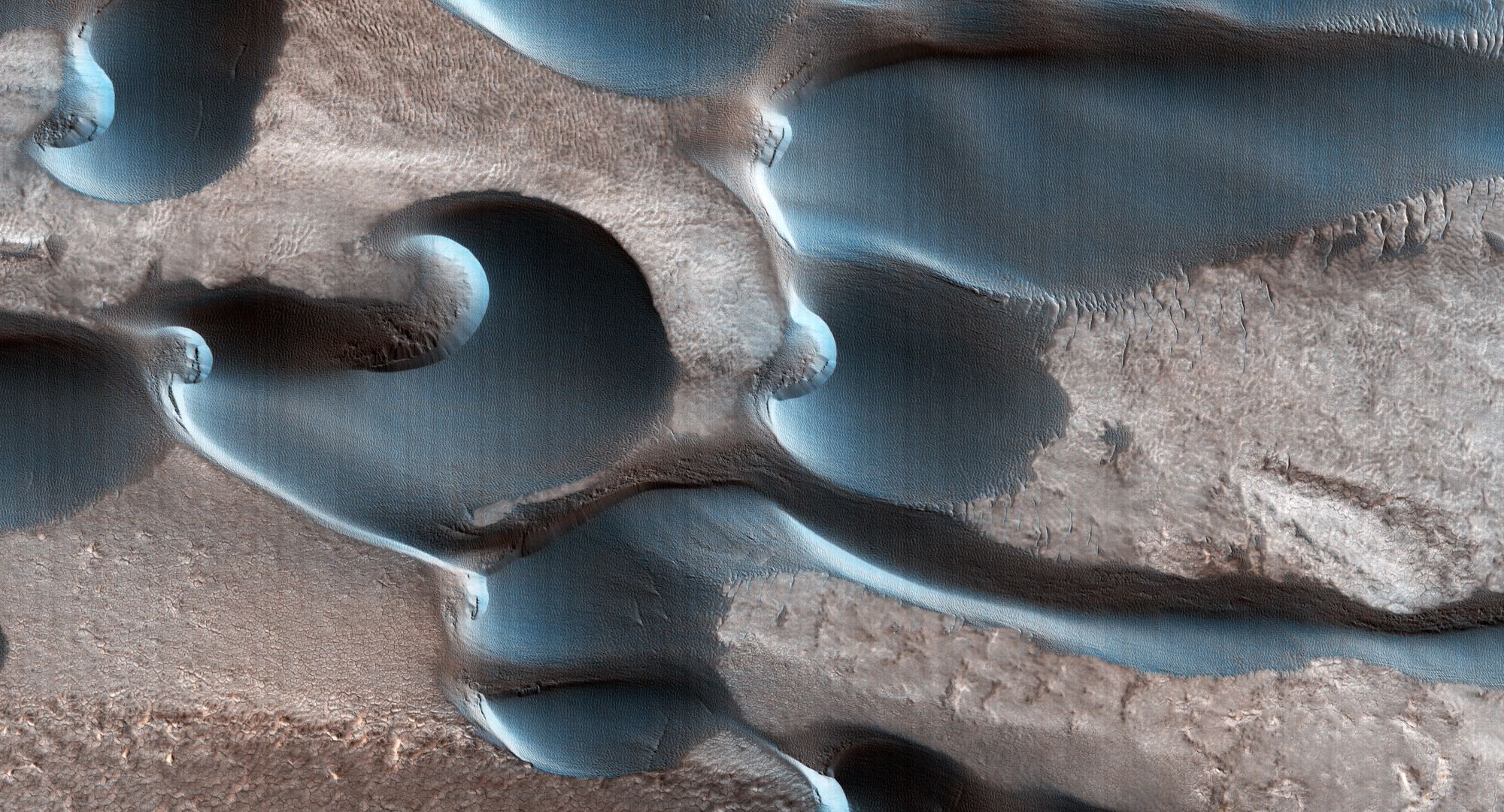
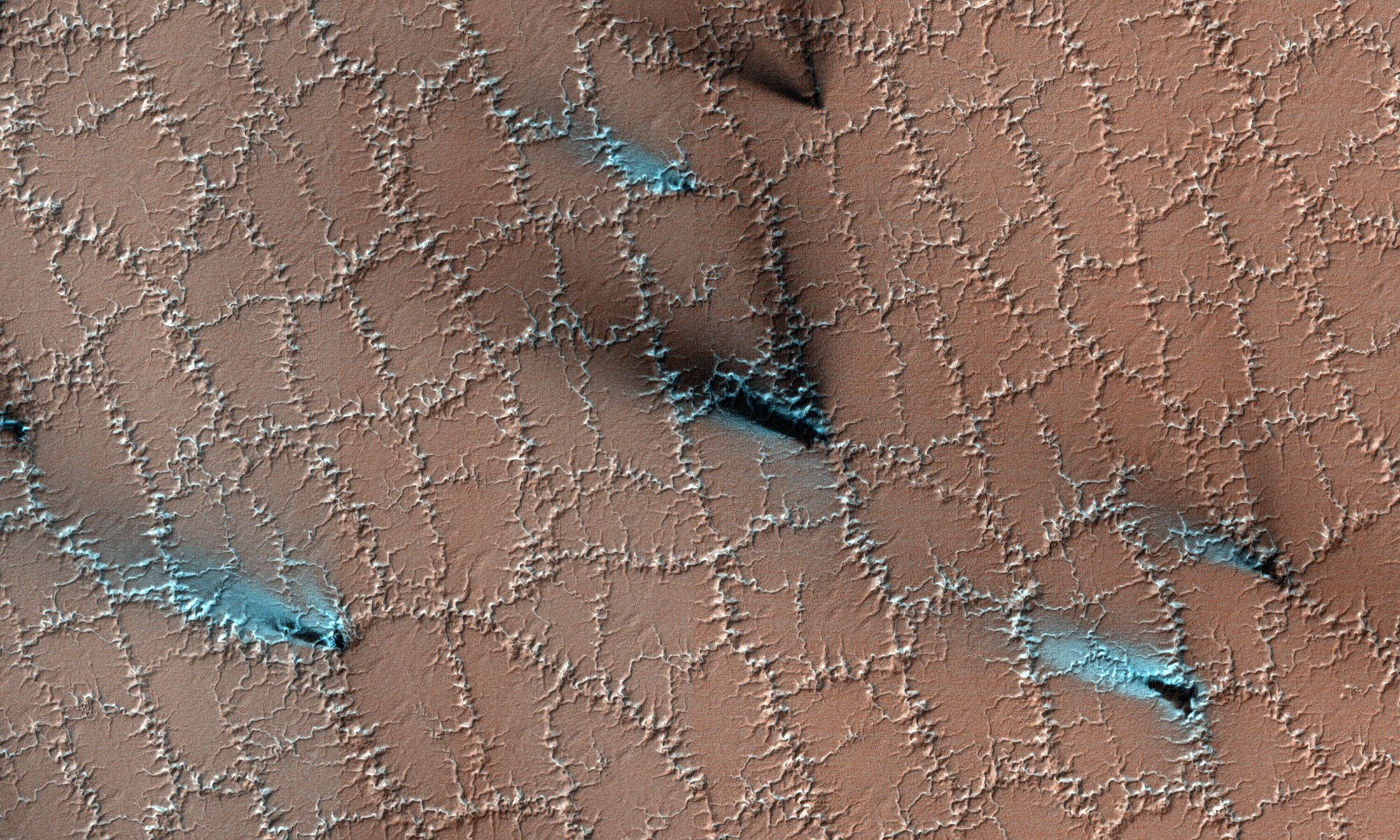
Mars may not be tectonically active but that doesn’t mean there’s nothing happening on the Red Planet’s surface. This video from NASA’s Jet Propulsion Laboratory shows the dramatic seasonal changes that take place in Mars’ polar regions when the frozen carbon dioxide — called “dry ice”  – coating the basalt sand dunes begins to thaw [...]

Read the full article →