
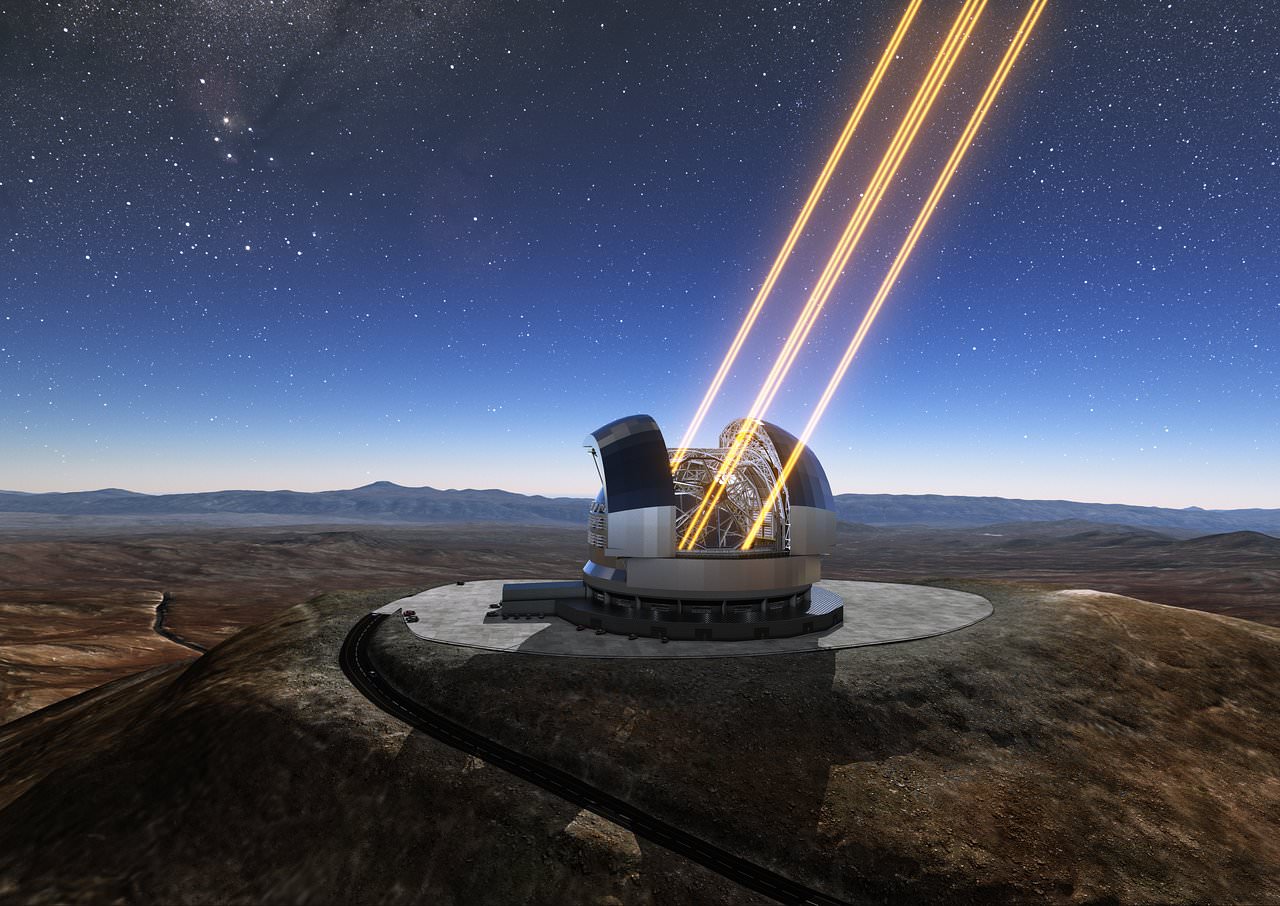
Early theories of the Universe were limited by the lack of telescopes. Many of modern astronomy’s findings would never have been made if it weren’t for Galileo Galilei’s discovery. Pirates and sea captains carried some of the first telescopes: they were simple spyglasses that only magnified your vision about four times and had a very narrow field of view. Today’s telescopes are huge arrays that can view entire quadrants of space. Galileo could never have imagined what he had set into motion.
Here are a few facts about telescopes and below that is a set of links to a plethora of information about them here on Universe Today.
Galileo’s first telescopes were simple arrangements of glass lenses that only magnified to a power of eight, but in less than two years he had improved his invention to 30 power telescope that allowed him to view Jupiter. His discovery is the basis for the modern refractor telescope.
There are two basic types of optical telescopes; reflector and refractor. Both magnify distant light, but in different ways. There is a link below that describes exactly how they differ.
Modern astronomer’s have a wide array of telescopes to make use of. There are optical observation decks all around the world. In addition to those there are radio telescopes, space telescopes, and on and on. Each has a specific purpose within astronomy. Everything you need to know about telescopes is contained in the links below, including how to build your own simple telescope.
- Where did the Modern Telescope come from?
- Schmidt-Cassegrain
- The Difference Between Refractor and Reflector Telescopes
- Galileo’s Telescope
- Reflector Telescope
- Refractor Telescope
- Dobsonian Telescope
- Bushnell Telescope
- Radio Telescope
- Tasco Telescope
- Telescope Mount
- Telescope Mirror
- Newtonian Telescope
- Telescope Camera
- First Telescope
- Telescope Eyepiece
- Telescope Accessories
- Telescope Lens
- Telescope Tripod
- Build A Telescope
- Optical Telescope
- Telescope Parts
- Largest Telescope
- Telescope Tube
- Binocular Telescope
- Digital Telescope
- GoTo Telescope
- Solar Telescope
- Kid’s Telescope
- Telescope History
- Telescope Software
- Vixen Telescope
- Mercury In A Telescope
- Venus In A Telescope
- Moon In A Telescope
- Mars In A Telescope
- Jupiter In A Telescope
- Saturn In A Telescope
- Telescope Magnification
- How To Use A Telescope
- Questar Telescope
- Telescope Resolution
- Buying A Telescope
- Telescope Filters
- Telescopes for Beginners
- Children’s Telescope
- Cassegrain Telescope
- Buy a Telescope
- The Best Telescope
- Brass Telescope
- Antique Telescopes
- Build Your Own Telescope
- Barlow Lens
- Altazimuth
- Achromatic Lens
- Astronomical Telescope
- Who Invented the Telescope?
- Adaptive Optics
- Allen Telescope Array
- Astronomy Telescope
- Barlow
- Cheap Telescopes
- Computerized Telescopes
- Maksutov Cassegrain
- Parabolic Mirror
- Convex Mirror
- Orion Telescopes
- How do Telescopes Work?
- Cassegrain
- Refractor
- Dobsonian Reflector
- Arecibo Radio Telescope
- How to Make a Telescope?
- Online Telescope
- Reflecting Telescopes
- Telescope Optics
- Telescope Focuser
- Keck Telescope
- Intelliscope
- Telescope Pictures
- Space Telescope Pictures
- Optical Aberration
- Guide to Celestron Telescopes
- Guide to Meade Telescopes
- Collimation
- Parts of a Telescope
- German Equatorial Mount
Hey nice collection of resources. I found many of them quite helpful!