
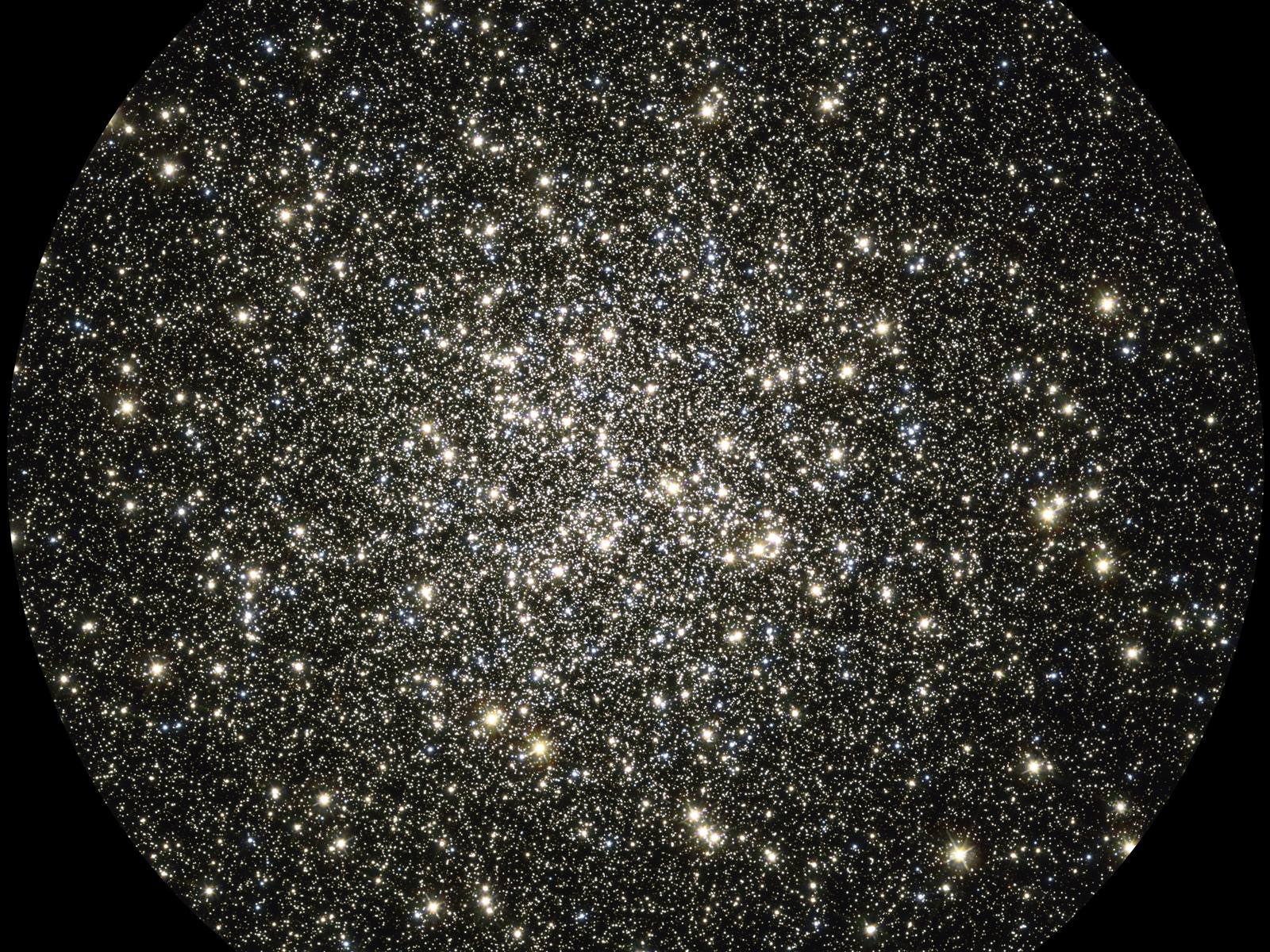
Stars…you see thousands of them every time you look into the night sky. Well, that is if you bother to even notice the. They are sort of like trees, or houses; they are there every time you look, so most people take their presence for granted and never give them a second thought. To help you understand what you are looking at in the sky, here are a few fun facts about stars followed by a long list of links to articles about them.
When you look into the night sky, all of the stars appear to be white, but they are not. Stars come in many colors: blue, brown, yellow, red, and orange to name a few. Within each of those colors there are several subcategories like giant and dwarf and a few ways to classify the age of a star.
Stars create energy in one of two ways. The first is converting hydrogen to helium in a proton-proton chain reaction basis(P-P) or the CNO cycle where they convert carbon to nitrogen to oxygen to convert hydrogen to helium(CNO cycle).
Our Sun is a single star. It stands alone near the barycenter of our Solar System. That gives some people the impression that this is how things are every where in the universe, but many stars occur in groups. There are many binary(two) star systems and some known to have as many as 6 in a system.
In the links below you will find thousands of facts about stars. Mixed in with the facts are images and a few other things. Enjoy your reading.
- What is the Brightest Star in the Universe?
- How Long Would it Take to Travel to the Nearest Star?
- How Does A Star Die?
- How Does a Star Form?
- What is a Binary Star?
- How Many Stars Can You See?
- How Many Stars?
- Brightest Stars
- Massive Stars
- Stars and Planets
- What is a Star?
- What is the Hottest Star?
- Life Cycle of Stars
- Core of a Star
- Color of Stars
- Star Main Sequence
- Wolf-Rayet Stars
- What Were the First Stars?
- Temperature of Stars
- Star Luminosity
- Star Distance
- What Are Stars Made Of?
- Birth of Stars
- Star Evolution
- Age of Stars
- Carbon Stars
- Star Charts
- Falling Stars
- Interesting Facts About Stars
- Glow in the Dark Stars
- Are there Green Stars?
- History of Stars
- How Long Do Stars Last?
- What is the Light From Stars?
- Nearest Stars
- Nuclear Fusion in Stars
- Young Stars
- Variable Stars
- Mass of Stars
- Size of Stars
- Why Do Stars Shine?
- Why Do Stars Die?
- Why Do Stars Twinkle?
- What is the Smallest Star?
- Pulsars
- Hertzsprung-Russell Diagram
- Chandrasekhar Limit
- How Far is the Nearest Star?
- Stellar Evolution
- Famous Stars
- Life of a Star
- Stellar Parallax
- Distance to Nearest Star
- Magnetar
- Accretion Disk
- Where are Stars Born?
- Why are Stars Different Colors?
- Star Cluster
- Examples of Stars
- Supernova
- The Different Types of Stars
- Do Stars Move
- Orion’s Belt Stars