
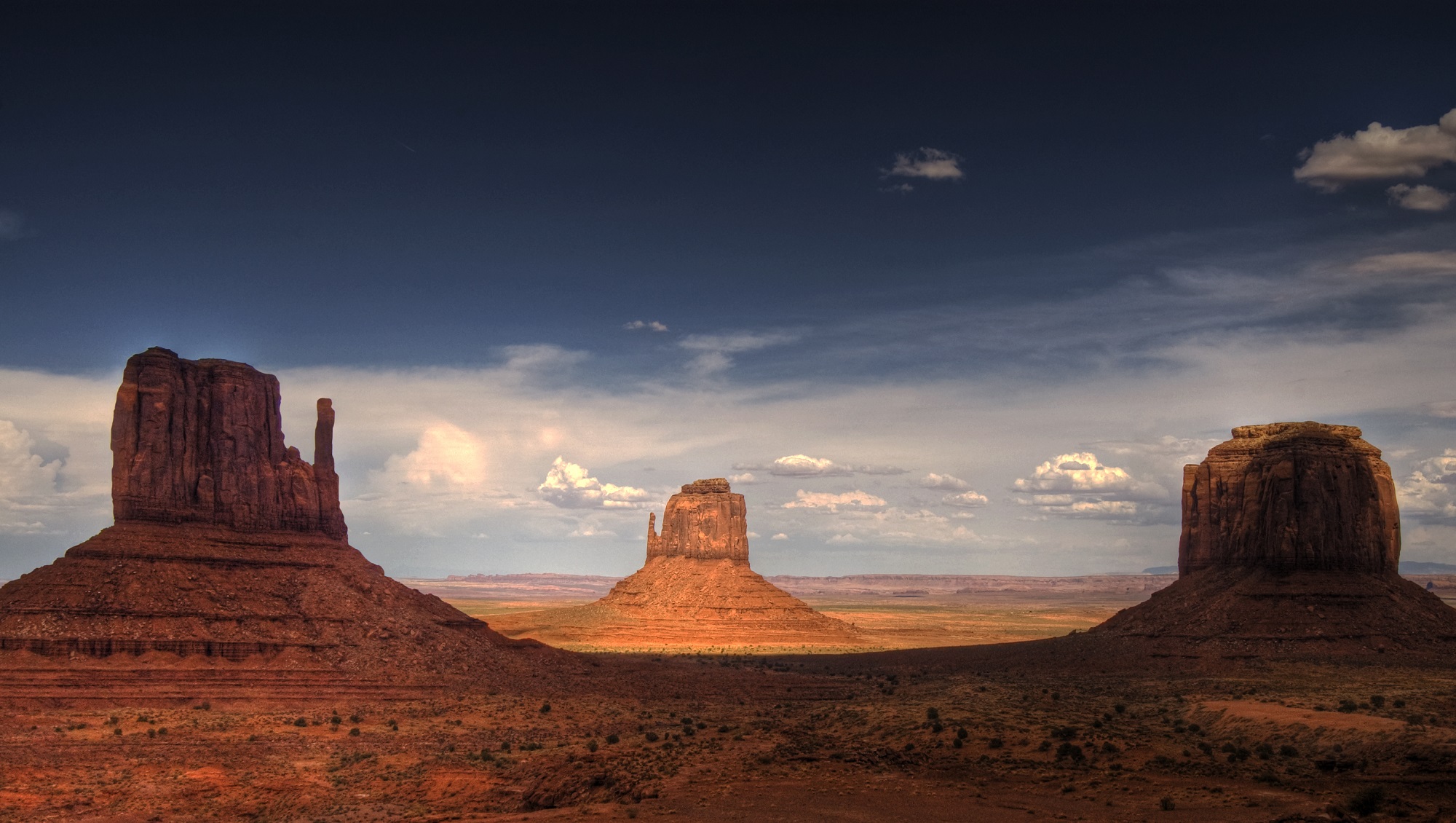
During the 16h century, Spanish explorers ventured north from Mexico looking for gold and the legendary “Seven cities of Cibola”. What they found instead were some of the most amazing natural formations in the world, which are today known as “buttes”. To the local Hopi, Navajo, and other indigenous nations, these features – which resemble tall, isolated plateaus – have been regarded as sacred sites since time immemorial.
By the beginning of the 19th century, the term “butte” entered common parlance and quickly became adopted by the geological community. And while their existence was something of a mystery for thousands of years, spawning mythological connections and folk tales, improvements in the fields of Earth sciences and geology have led scientists to understand what these features are and how they are formed.
Definition:
By definition, a Butte is a conspicuous isolated hill with steep, often vertical sides and a small, relatively flat top. The word “butte” comes from a French word meaning “small hill”. They are not to be confused with Mesas or Plateaus, which are typically differentiated based on the fact that their top surfaces are larger than their vertical faces, while a butte is taller than it is wide. However, definitions of the surface areas of mesas and buttes vary.
One source states that a mesa has a surface area of less than 10 square kilometers, while a butte has a surface area less than 1,000 square meters. Another source states that the surface area of a mesa is larger than 2.59 square kilometers. However, all sides are in agreement that is the difference between their vertical and horizontal measurements that are key.
Formation:
Both buttes and mesas are formed by the same geological process, which involves the physical weathering of rock formations. Essentially, this involves the surface material of a hill or mountain (the cap rock) resists wind and water erosion, but the underlying materials do not. Over time, the underlying material is stripping away, leaving an isolated, standing feature with a flat top.
The top layer of a butte is a hardened layer of rock that is resistant to erosion. This top layer, called the cap rock, is usually composed of sedimentary rock, but sometimes is the remains of cooled and hardened lava that had spread out across the landscape in repeated flows from fissures or cracks in the ground.
Beneath this flat, protective cap of rock, horizontal layers of softer sedimentary rock are found. To varying degrees, these layers are not as resistant to wind and water erosion. As a result, when the softer rock is stripped away, a standing, isolated rock is left behind. Typically, buttes are found in arid and semiarid regions.

Because water evaporates quickly in these normally dry environments, plants and other ground cover are scarce. Left exposed to the action of running water, the bare sides of the softer rock layers of buttes are eroded away over time. The base of these landforms is often gently sloped, contrasting with the almost-vertical sides leading down from the top. Rock material that has been eroded from the sides is carried downward, forming this sloping base.
Notable Buttes:
Because of their isolated and imposing nature, many buttes have become geographical land markers and major tourist destinations. They also figured prominently in the spiritual beliefs and creation myths of the indigenous peoples across North America. Buttes can be found all over North America, though they are most commonly found in the arid regions of the American Southwest.
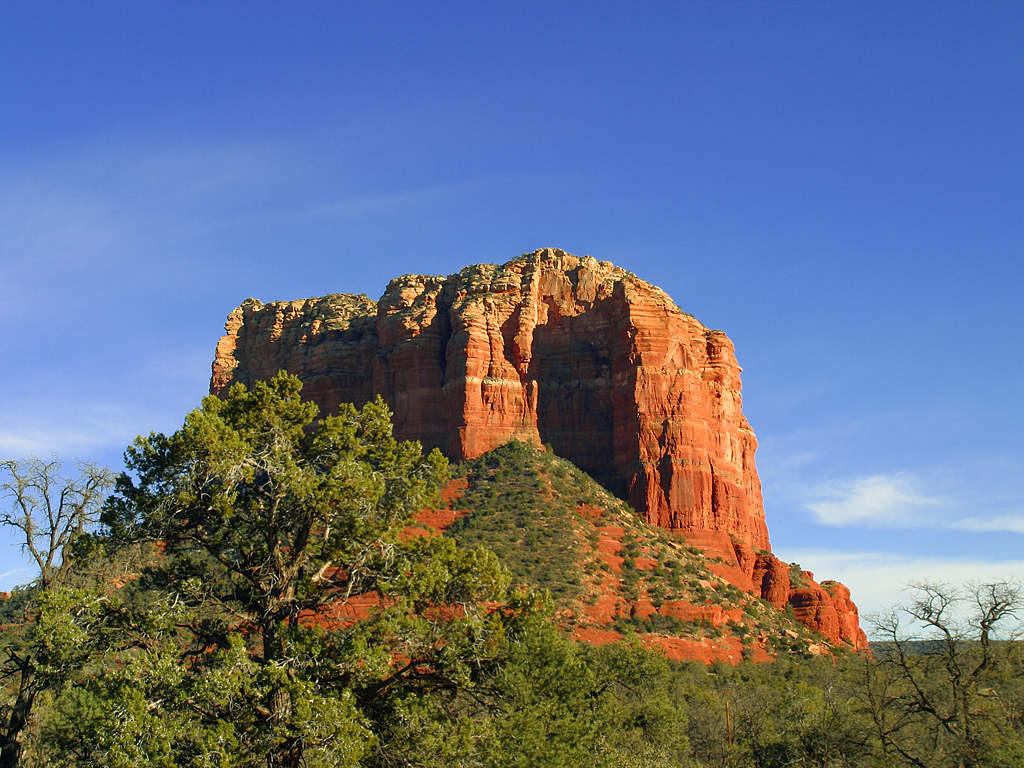
For example, there is the Courthouse Butte, a prominent feature located just north of the Village of Oak Creek, and south of the town of Sedona in Yavapai County. Then there’s the Elephant Butte, which is located in the Elephant Butte Lake State Park in Sierra Country, New Mexico,. This geographical feature is so-named because of the combination of a vertical side and a sloping side, which resemble the shape of an elephant.
Bear Butte in South Dakota also has a long history of being a geological and cultural significant feature. Long before the arrival of European settlers, Bear Butte featured prominently in the religious and mythological traditions of the Lakota, Sioux and Cheyenne nations. To the Lakota and Sioux, the feature was known as “Matho Paha” (literally, Bear Mountain), while the Cheyenne referred to it as Nahkohe-vose (“bear hill”).
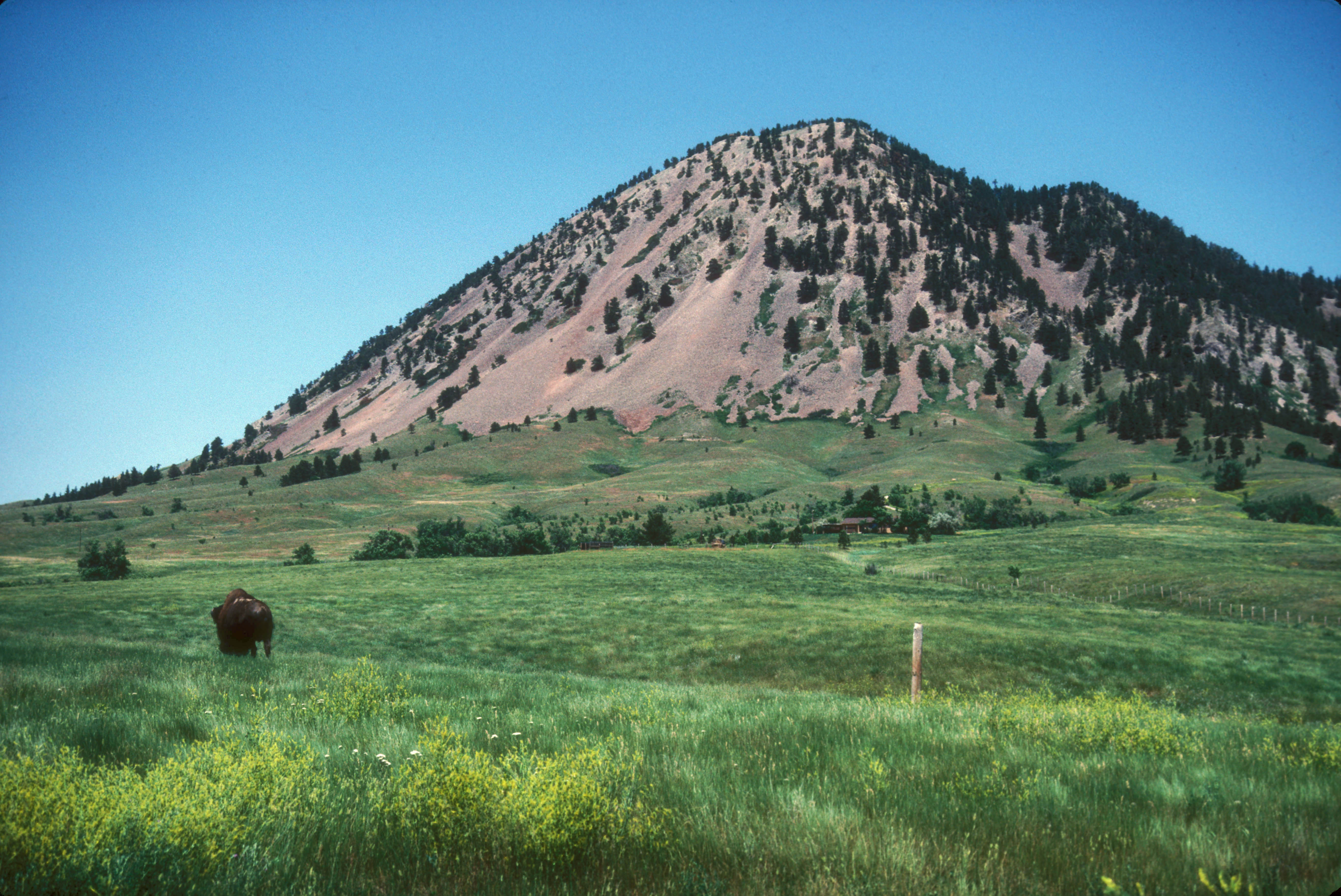
According to Cheyenne mythology, it was here that Ma’heo’o (God, or the Great Spirit) imparted the knowledge from which the Cheyenne base their religion, political, social and economic customs to the prophet Sweet Medicine. Today, the location remains a sacred site for many indigenous peoples, who make pilgrimages to leave prayer cloths and tobacco bundles tied to branches taken from the trees that surround the butte.
To the north, buttes can be found in the Canadian provinces of Saskatchewan, Alberta and British Columbia, in regions that are arid and semi-arid. For example, there is the Pilot Butte, which is located in southern Saskatchewan, near the town of the same name. This feature’s name is derived from the fact that the flat-topped butte served as a lookout for hunting buffalo and as a landmark for planes approaching the provincial capitol of Regina.
And there’s Lone Butte, a prehistoric basalt feature located in the southern Cariboo Plateau in central British Columbia. A part of the geological formation known as the Chilcotin Group, this feature was formed roughly six million years ago as a result of the extensive volcanic activity in the region.
Buttes on Other Planets:
Buttes have also been spotted on other planets in the Solar System, where they are also linked to geological activity and erosion. For example, NASA’s Curiosity rover mission has taken extensive images of the area currently known as the “Murray Buttes” region on Mars, which is located in the lower region of Mount Sharp (in the Gale Crater). In addition, Curiosity has taken drill samples from the surface rock in the region.
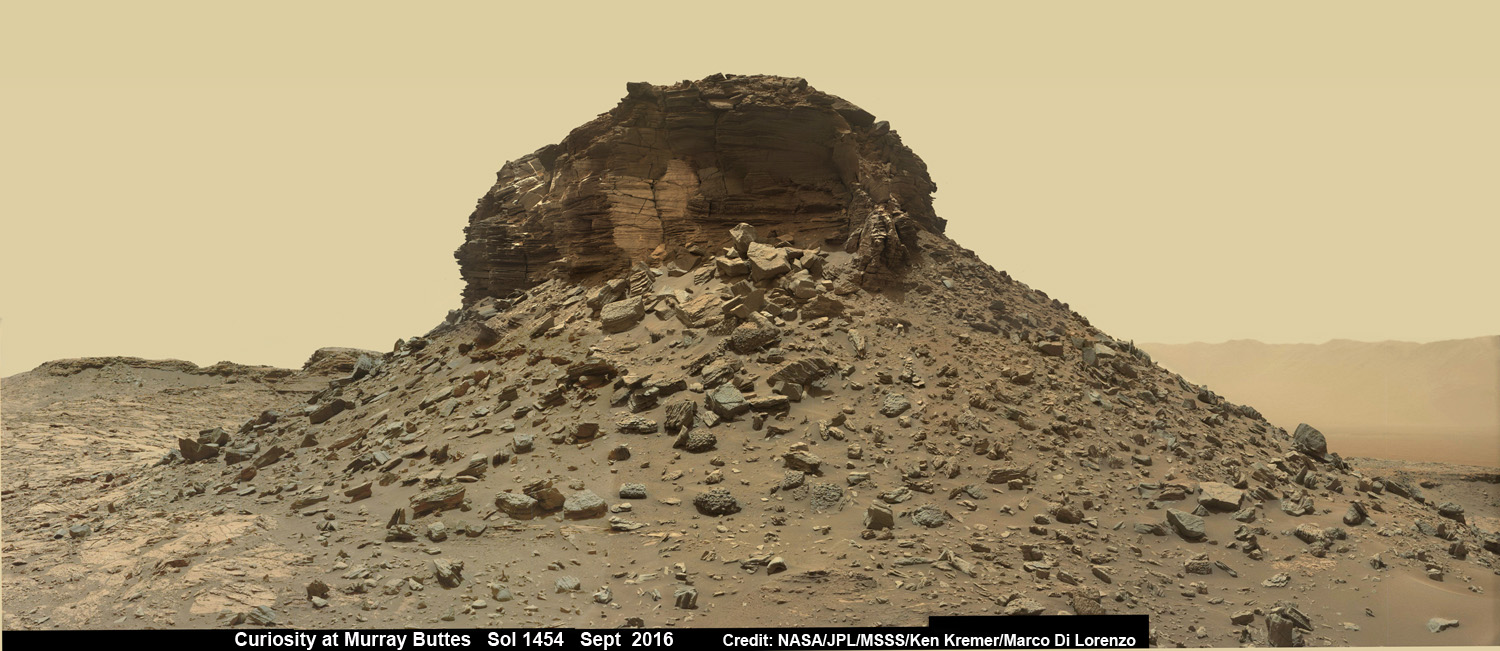
At one time, this crater was believed to be a standing body of water, which was largely responsible for the creation of these features. As Ashwin Vasavada, the Curiosity Project Scientist of NASA’s Jet Propulsion Laboratory, described the area as being “reminiscent of parts of the American southwest because of its butte and mesa landscape. In both areas, thick layers of sediment were deposited by wind and water, eventually resulting in a “layer cake” of bedrock that then began to erode away as conditions changed. In both places, more resistant sandstone layers cap the mesas and buttes because they protect the more easily eroded, fine-grained rock underneath. ”
Buttes have also been photographed by the Mars Reconnaissance Orbiter’s (MRO) HiRISE instrument. These include the many buttes spotted in the Candor Chasma region – part of the Valles Marineris canyon system – back in 2007. The Viking 1 orbiter also noted the presence of many buttes in the Cydonia region during its flyby in 1976 – the occasion when it took pictures of the “Face of Mars” (later revealed to be a mesa).
Much like polygonal ridges that have been observed in the Medusae Fossae region and other locations across Mars (and Earth), these features are believed to be the remains of volcanic rock that remained in place after the surrounding rock was stripped away by erosion.
Ongoing studies into the various forces that shape our planet has allowed us to understand just how dynamic and changing it is. In addition, developments in space exploration and the planetary sciences have helped us to realize that Earth has a lot in common with other planets in our Solar System.
We have written many articles about geological formations for Universe Today. Here’s What is the Bakken Formation?, What is a Volcanic Neck?, What is the Earth’s Mantle Made Of?, What are Volcanoes?, What is the Difference Between Active and Dormant Volcanoes? and Stunning New Images of Mars from Curiosity Rover.
If you’d like more info on the Butte, check out the U.S. Geological Survey Website. And here’s a link to NASA’s Earth Observatory.
We’ve also recorded an episode of Astronomy Cast all about Plate Tectonics. Listen here, Episode 142: Plate Tectonics.
Sources:
I’m definitely not a geologist, so take my following opion with a grain, i mean chunk ehr, make that something big of salt (dutch: zoutsteen)
the layer in Monument Valley, Arizona (wiki) was layed down between 300-250my ago. Looking at maps from that period (Permian) I would say, those buttes, were part of former North American continetal Fjords. …
Made out of a layer of Marine Transgression, a Layer of Sand dunes … etc.
Bear Butte in South Dakota, is pushed up by Magma, and looks similar to that one mountain on Ceres. Only there its probably the salty water getting pressed up after the impact crater “next” to it pushed down on a sealing plate.
(Early stratification layer, the sealing layer, is clearly visible on Ganymede, Jupiter moon, trapping water from later stratification. Europa probably was crushed enough and Callisto is still intact)