
The Japanese lunar mission SELENE (Selenological and Engineering Explorer), also known as “Kaguya” has imaged the “halo” left behind in the lunar surface from Apollo 15’s lunar module engine exhaust plume. This is the first time a mission after the Apollo Program has detected such a feature. Apollo 15 landed on the Moon in 1971 in a region called Mare Imbrium, and SELENE’s Terrain Camera (TC) is continuing to reconstruct a 3D view of the region in unprecedented high-resolution.
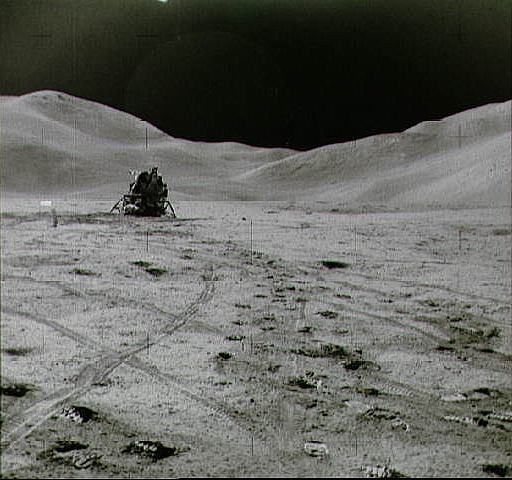
Apollo 15 touched down on the lunar surface on July 31st, 1971 with David Scott and James Irwin, to carry out 18.5 hours of lunar extra-vehicular activity. This was the first “J mission” where a greater emphasis was placed on scientific studies. After the lunar module blasted off from the Moon, the lunar astronauts looked back on the launch site to see a fresh “halo” had formed after the surface was exposed to the module’s engine exhaust plume. The NASA astronauts took before and after shots of the landing zone where a lightening of the surface is evident. This halo had not been observed since Apollo 15, until the high resolution Terrain Camera on board SELENE imaged the region.

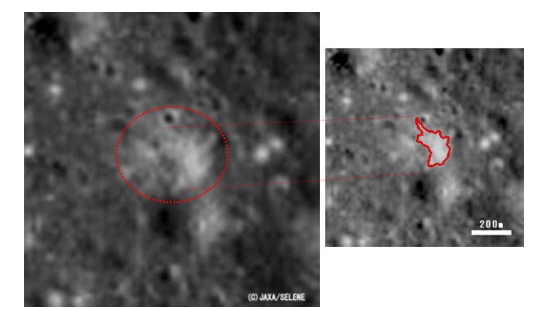
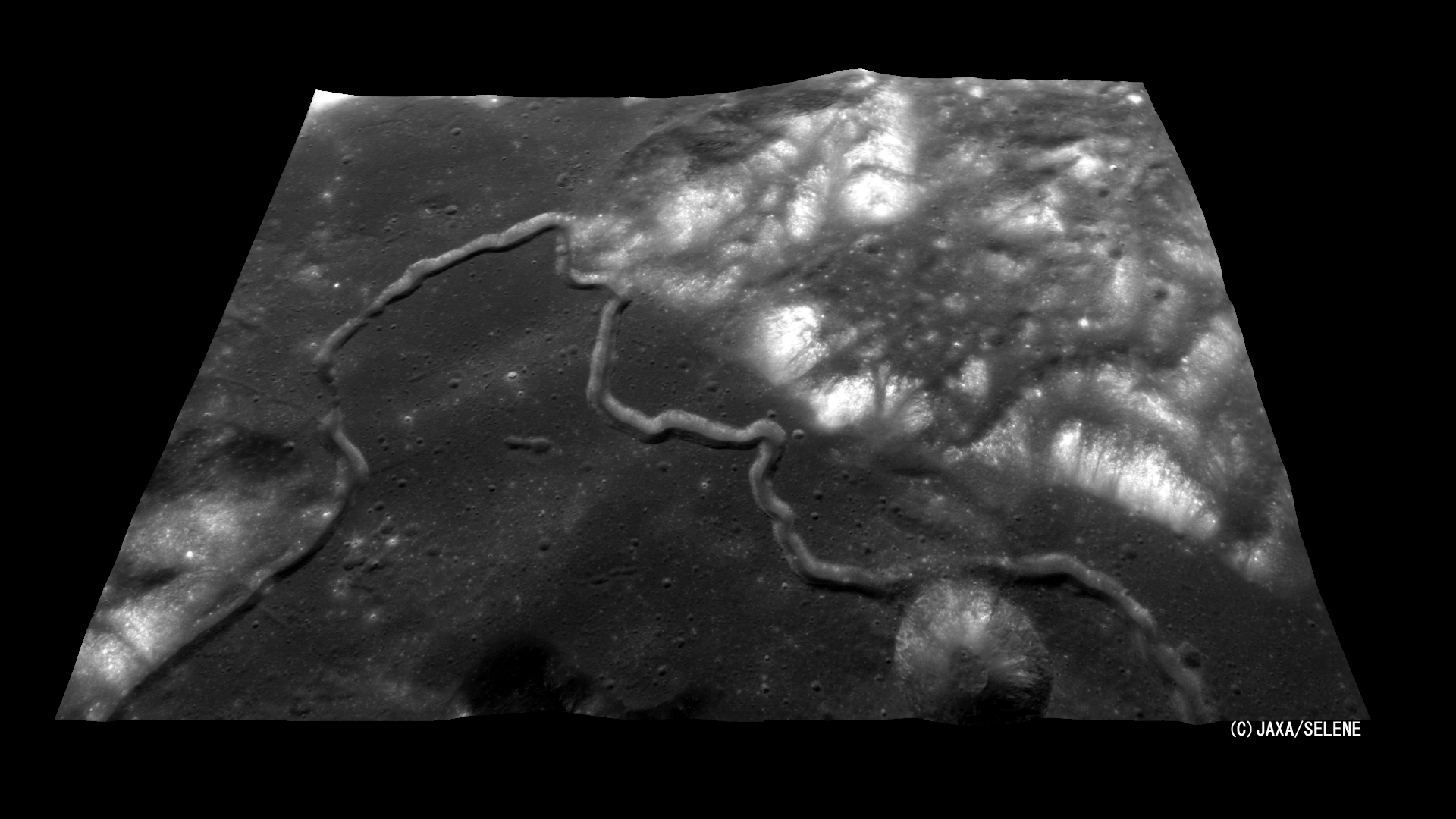
The image (pictured left) processed by the SELENE mission instrument team appears to show a bright patch in the exact location of the Apollo 15 lunar module landing zone at the foot of the Apennine Mountains around the Mare Imbrium close to “Hadley Rille.” The Hadley Rille is a sinuous rille with a length of 80km and depth of 300m. A “sinuous rille” is a long, narrow, meandering depression in the lunar surface (much like a river basin, minus water). One of the primary mission objectives of Apollo 15 was to understand the origin of this rille. The most likely cause of Hadley Rille is lava flow during early development of the Moon. For the Apollo 15 astronauts, this region will have been an awesome sight, especially being at the base of the towering Apennine Mountains.
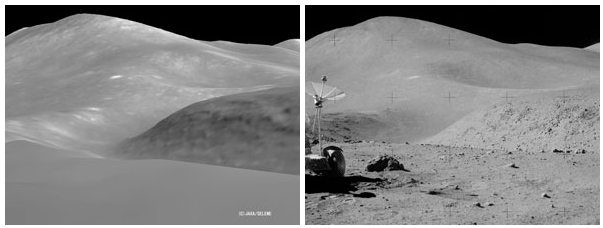
The TC instrument has been instrumental in creating 3D visualizations of the lunar surface. In the example left, a comparison of the TC reconstruction and an actual Apollo 15 photograph are compared. Although some of the detail is missing (as the individual rocks are below the 10 meter resolving power of the orbiting camera), the scenes are identical. The SELENE mission (launched in 2007) continues to generate a huge amount of 3D data, contributing to some of the most detailed maps of the lunar surface ever created.
Source: JAXA