Parts Of A Comet

by Jerry Coffey on September 20, 2009

Want to stay on top of all the space news? Follow @universetoday on Twitter

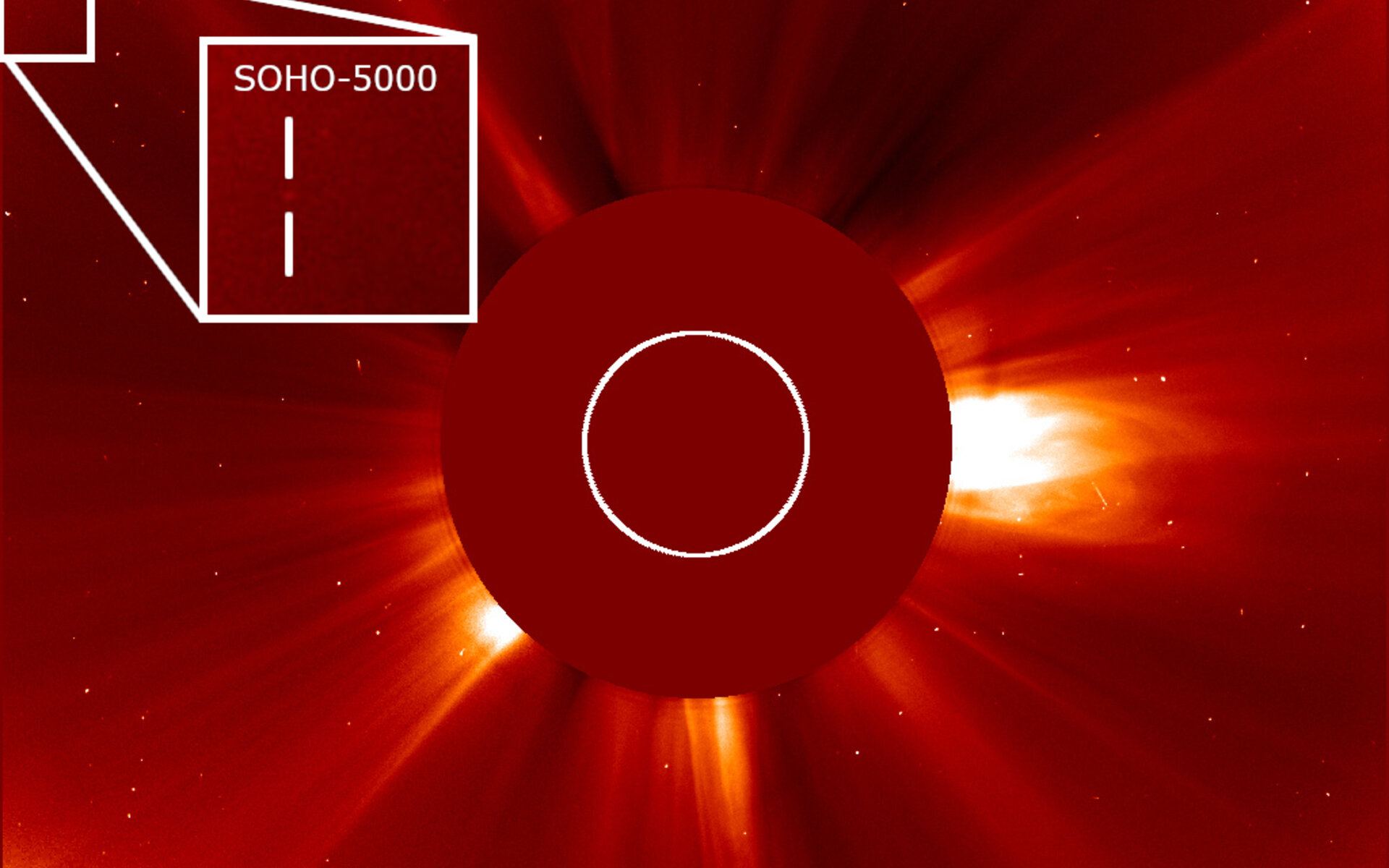
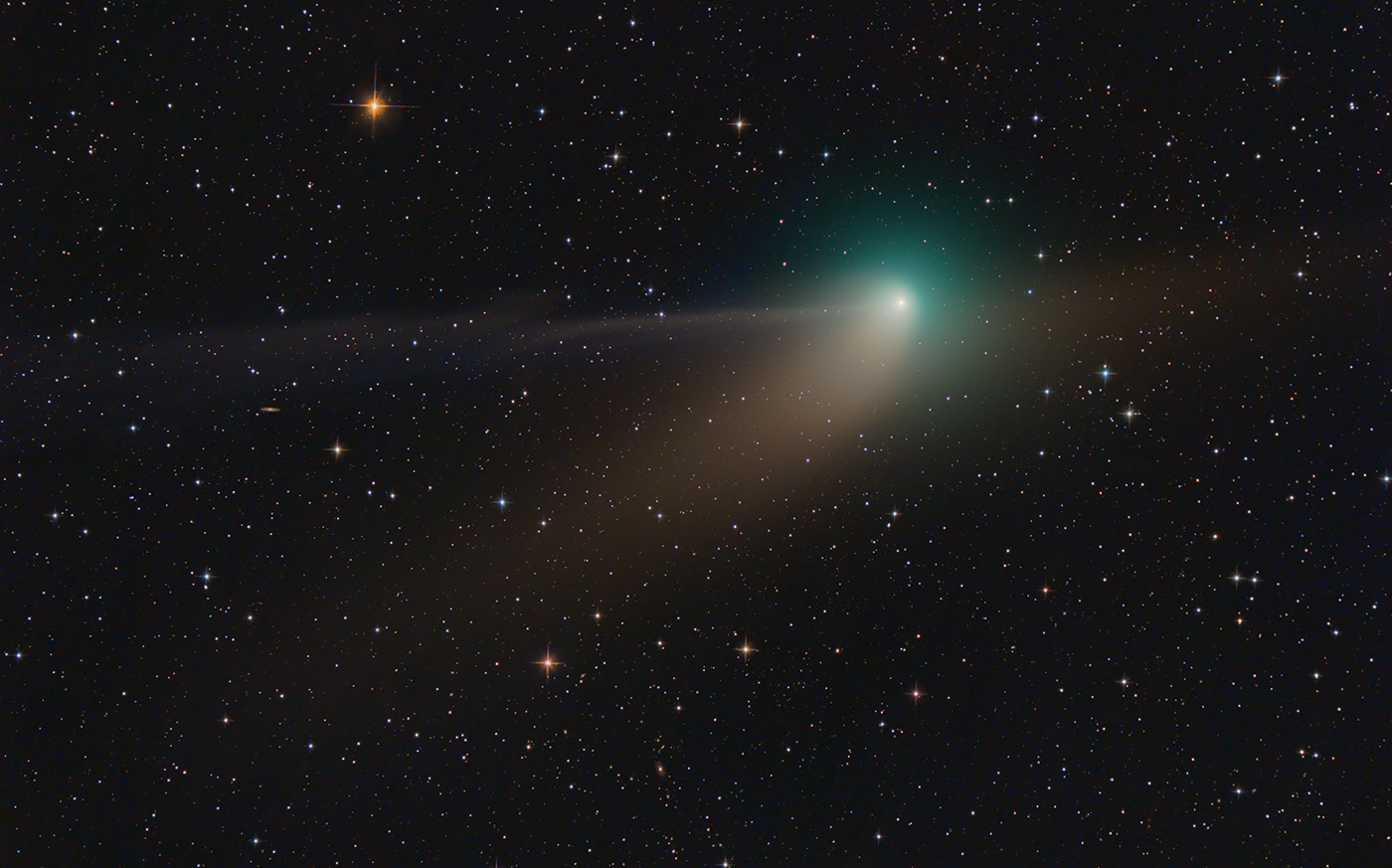
A long-period comet called 2001 RX14 (Linear) turned up in images captured in 2002 by the Sloan Digital Sky Survey telescope in New Mexico.There are three main parts of a comet: the nucleus, the coma, and the tail. Some experts would argue that the antitail should be included, also. In this article I will describe all four in short detail. I am sure that I will leave out some details that the amateur astronomer would find quite interesting. That is why I encourage everyone to do some more research on every topic that I write about. Solid research skills are a must for every student of astronomy at any level.

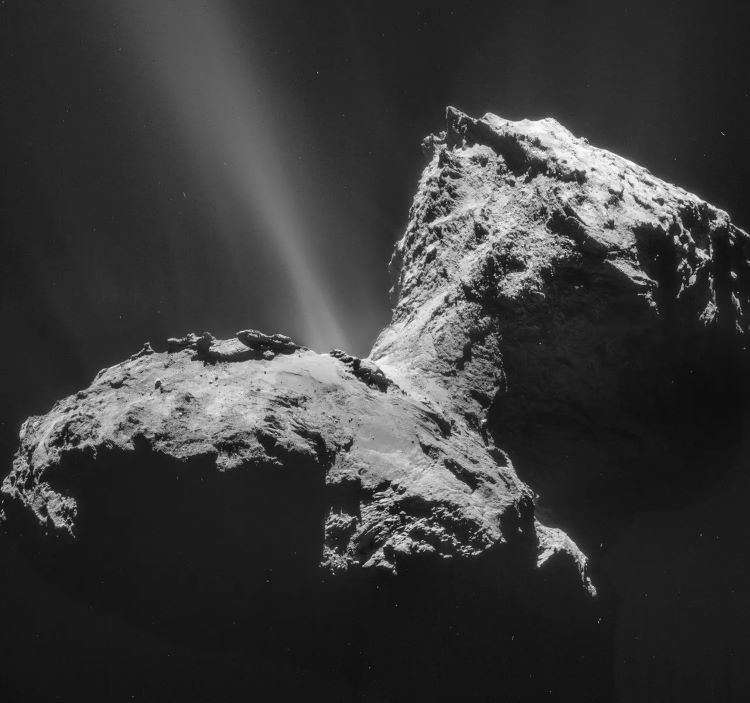
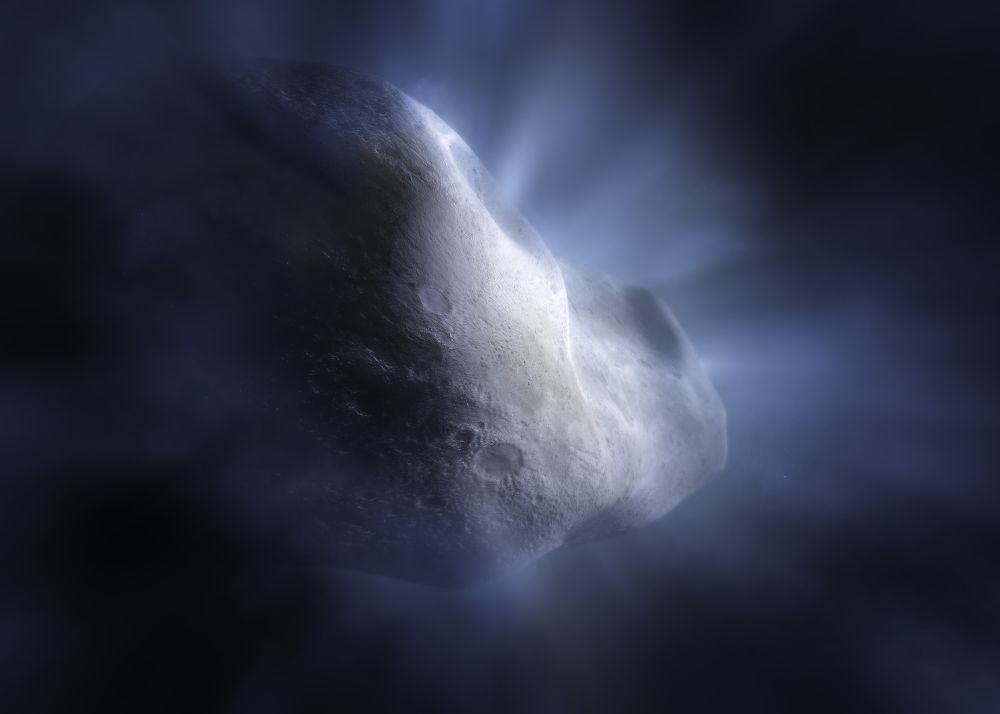
Comet nuclei are known to range from about 100 meters to more than 40 kilometers across. They are composed of rock, dust, ice, and frozen gases such as Carbon monoxide, carbon dioxide, methane, and ammonia. They are often popularly described as “dirty snowballs”, though recent observations have revealed dry dusty or rocky surfaces, suggesting that the ices are hidden beneath a crust. Comet nuclei also contain a variety of organic compounds in addition to the gases already mentioned, these may include methanol, hydrogen, hydrogen cyanide, formaldehyde, ethanol, and ethane. Perhaps they may contain more complex molecules such as long-chain hydrocarbons and amino acids. Because of their low mass, comets cannot become round under their own gravity and will have irregular shapes. Surprisingly, cometary nuclei are among the darkest objects known to exist in the solar system. The Giotto space probe found that Halley’s comet nucleus reflects approximately 4% of the light that falls on it . In comparison, asphalt reflects 7% of the light that falls on it. It is thought that complex organic compounds are the dark surface material. The very darkness of cometary surfaces allows them to absorb the heat necessary to drive their outgassing.

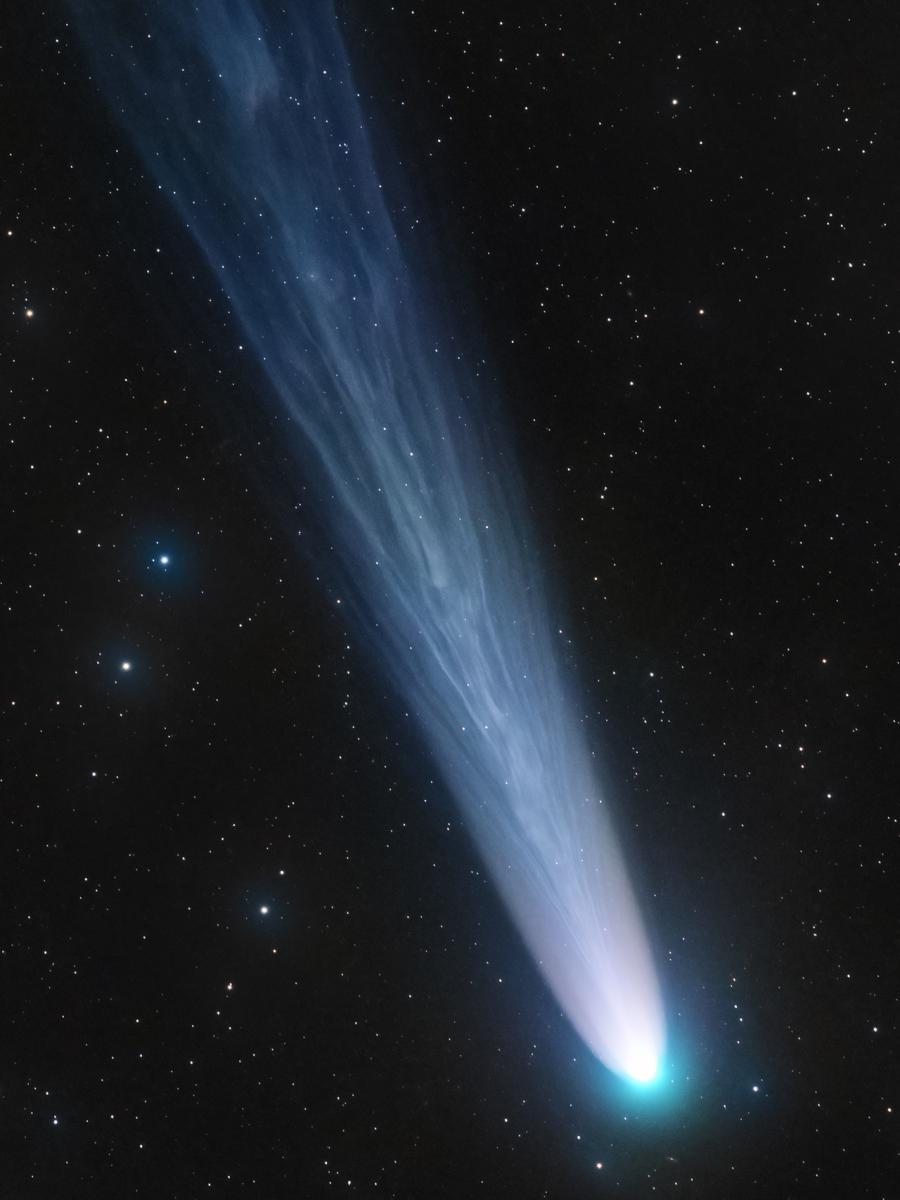
The most visible part of a comet is the coma. As a comet approaches the inner solar system, radiation causes the volatile materials within the comet to vaporize and stream out of the nucleus, carrying dust away with them. The streams of dust and gas form a huge, extremely tenuous atmosphere around the comet called the coma, and the force exerted on the coma by the Sun’s radiation pressure and solar wind cause an enormous tail to form, which points away from the sun.

Both the coma and tail are illuminated by the Sun and may become visible from Earth when a comet passes through the inner solar system, the dust reflecting sunlight directly and the gases glowing from ionization. The streams of dust and gas each form their own distinct tail, pointing in slightly different directions. The tail of dust is left behind in the comet’s orbit in such a manner that it often forms a curved tail called the anti-tail. At the same time, the ion tail, made of gases, always points directly away from the Sun, as this gas is more strongly affected by the solar wind than is dust, following magnetic field lines rather than an orbital trajectory. While the solid nucleus of comets is generally less than 50 km across, the coma may be larger than the Sun, and ion tails have been observed to extend 1 AU or more.

This is just an introduction to the parts of a comet. A good place to start some more research is here. Here on Universe Today there is a great article about the differences between comets and asteroids and Astronomy Cast has an excellent episode about the smallest of particles in space. Happy researching!

Source: NASA

Comments on this entry are closed.

Previous post:

Next post: