
Consider this. The Universe is enormous.
There are as many as four-hundred billion stars in our galaxy: the Milky Way. And there are more than one-hundred-and-seventy billion galaxies in the observable Universe. Most of those stars have planets, and many of those planets have got to contain useful minerals and fall within their star’s habitable zone where liquid water is present.
The conditions for life are probably everywhere.
But where are all the aliens?
And think about this.
The Universe has been around for 13.8 billion years. Human beings originated 200,000 years ago, so we’ve only been around for 0.01% of the age of the Universe. An intelligent species could arise on any one of those countless worlds, and broadcast their existence to the entire galaxy.
Once a species developed interstellar travel, they could completely colonize our galaxy within a few tens of millions of years; just a heartbeat in the age of the Universe.
So where are they?
As far as we know, Earth is the only place in the Universe where life has arisen, let alone developed an intelligent civilization.
This baffling contradiction is known as the Fermi Paradox, first described in 1950 by the physicist Enrico Fermi.
Scientists have been trying to resolve this mystery for decades, listening for radio signals from other worlds. We’ve only sampled a fraction of the radio spectrum, and so far, we haven’t detected anything that could be a signal from an intelligent species.
How can we explain this?
Maybe we really are the only planet in the entire Universe to develop life. Maybe we’re the first civilization to reach this level of advancement in the entire galaxy. But with so many worlds out there, that really seems unlikely.

Maybe they’re just too far away, and our signals can’t reach each other. But then, self-replicating probes could traverse those distances and leave a local artifact in every single star system.
Maybe we can’t understand their signals or recognize their artifacts. Maybe, but if aliens constructed a series of artifacts on Earth, I think we’d notice them. The aliens would have experience creating obvious structures.
Maybe they’re just too alien and we just can’t understand them. Maybe we’re too insignificant, and they don’t think we’re even worth talking to. We don’t need to talk to them to know they exist. If they flew through our Solar System, ignoring us, we’d still know they’re around.
Maybe they’re not talking to us on purpose, and we’re really in some kind of galactic zoo. Or aliens have a Prime Directive, and they’re not allowed to talk to us. Again, all the aliens? Not a single one has gotten through and snuck us some evidence?
There are many other potential solutions to the Fermi Paradox, but I personally find them all insufficient. The Universe is big, and old, and if extraterrestrial life is anything like us, it wants to multiply and spread out.
Perhaps the most unsettling thought is that something happens to 100% of intelligent civilizations that prevents them from exploring and settling the galaxy. Maybe something good, like the discovery of a transportation system to another Universe. Or maybe something bad, like a destructive technology that has destroyed every single civilization before us.
How do you feel about the Fermi Paradox? How do you resolve the contradictions? Whatever the solution, it’s really fun to think about.
We’ve recorded a couple of episodes of Astronomy Cast about the Drake Equation and the Fermi Paradox, and we did a sequel episode called, Solutions to the Fermi Paradox.
Fermi Complex
My gut feeling is that life is ubiquitous, but technological civilizations are comparatively rare.
Well said. Any civilization sufficiently technologically advanced to conduct interstellar travel would likely require several hundreds of millions of years of evolution. The odds of finding intelligent ET life in my lifetime are unfortunately extremely long.
There are words in the English language that I find totally misused and that need clarification.
1; ‘Intelligence’ :
The I.Q. or ‘Intelligence Quotient’ is a measure of the ability to learn relative to time.
Having a high I.Q. doesn’t make you smart.
I have met many ‘intelligent’ idiots in my 69 years.
How you use it determines that.
2; ‘Believe’
A much maligned term that we as fallible humans should not use with such abandon.
If you are a sincere person. You cannot say ” I believe this” , Then the next day when more information changes your opinion say ” I believe that ”
The term ‘believe ‘ is an absolute term.’
We must by default maintain the freedom to change our minds and therefore not use the term “Believe”
Rather; ” It seem most reasonable to assume.”
This may sound clumsy , But it is accurate and sincere!!!
How did I misuse intelligent? Should I have said technologically advanced?
I’m pretty sure we’ll find that life is ubiquitous – or at least very common within my lifetime. Technological species are unlikely enough that they should be rare. The universe is vast, so there are likely many technological species even with tiny odds of them overlapping with our ability to detect them, but we’ve just barely started looking and listening for them. The idea that a species like ours is destined to expand through the galaxy is naive and laughably premature.
Humans are a colonistic species. Never ending expansion if history thought us anything about our own kind. We are at the birth of colonizing the moon and mars, making our first baby steps out of our own planet and its gravitational pull. Its stubborn to assume we will end there. The moment we figure out to get to alpha centauri we will go there, even if we cant figure out to go faster than the speed of light.
and if earths most intelligent and advanced species has are like that, its quite safe to assume this can be the case for other planets with life forms.doesn’t mean we shouldn’t look for anything else, but we should focus on research with what we know first.
To see us as at the “birth” of colonizing the Moon and Mars is quite optimistic. And what could possibly motivate civilizations to make more than a tiny human presence on worlds so hostile, difficult and expensive to inhabit? Destroying the very “spaceship” that this species evolved on? I suppose that if this species can’t adapt its behaviors then it will have to spread out to consume new resources – if that’s technologically possible before ecosystems and civilizations collapse.
It is optimistic. The plans and technology to do it is available. Its just a matter of money. And I meant it more of that we have starting to go into space, have a manned space station. The next steps will of course be the moon and mars 🙂
If it was known that Earth would collapse in a few years. We’d by on the moon by monday.(figuratively speaking)
Perhaps intelligent alien life is here on Earth at this very moment. Perhaps the aliens are here recording our daily lives, the highlights of which they then beam back to their home planet for showing on their weekly “The Universe’s Most Stupid Animals” show 🙂
I agree – bacterial life certainly must be very common. But complex cells that can congregate into multi cellular animals must be very uncommon, since it took nearly 3 billion years on our planet of just plain bacterial to finally make a multicellular package!
I’ll stick with intelligent and planned design of all creation. (For the record, i dont believe the earth is 6000 yrs old)
I grant that it can’t be ruled out as silly superstition just because of the lack of proof. I wonder if “God” is life’s own creation – the way my individual brain cells don’t realize they are making up a living person, but do anyway. Each consciousness on earth making up a small neuron of the whole.
The difference between us and chimps is less that 1% and that 1% is
enough to see massive differences. If the aliens are 1% more than us
could we even understand what they are? Would they see us as chimps… or chumps?
This sounds like something Neil DeGrasse Tyson said. Oh wait, he did. That being said, it’s an interesting perspective to ponder.
He did and that’s where I snagged it from.
Great video. Thanks! Guess they are all just too shy – like teenage girls, giggling around us without us noticing. Happens to me all the time… 🙂
Only God Knows!!
It could just be that the laws of physics will never let us, or any intelligent species, leave their solar system and do any practical exploration. Perhaps we should just get used to the fact that for all intents and purposes, we are alone in the Universe.
We are still able to cruise hundreds of light years. Giant spaceships are very possible in the future. And so is bringing that spaceship towards the speed of light will some day be a possibility(how close is still a ? Though)and we are able to keep humans alive in an isolated environment.
if there is life with a few 100light years it will be reachable. Wether this will be very useful is also a question 😛
and i cant imagine we are even close to figuring out everything there is in the universe while this is already based on current technologies.
Just a brainstorm: Imagine all these different parameters intelligent life consists of that we know, and multiply that with whatever. Feelings like aggression, love, curiosity, boredom. Lifeforms relative size to surroundings and the possibility to sensor different things. I guess you need certain light sensors in order to become aware of the sky/universe. You need some bodyparts that can handle things, doing experiments and so on. You need to be social. Many, many more parameters. If lifeforms miss some of those, or if earthlike life has some kind of abnormal extreme in some of those parameters, which made us more intelligent/aware – then that could be a coincidence only happening to 1/100, 1/1000, or maybe even 1/100000 lifeforms. How many nearby signaling aliens are then realistic?
Other reasons could of course be, that when first a lifeform is able to star travel or signalling long-distance, very harmful technology is so easy to make because of 3D-printers^10 that suicidal, depressed, angry, whatever creatures having a bad day could end a civilization.
And what about physical laws we don’t know yet, because they doesn’t exist until you do something specifically – and then – crashed civilization.
Even though there are so many potenitally habited planets – compare that to the extreme uniqueness of thoughts. Would alien creatues ever come up with what we did, if they didn’t lived the lives of Einstein, Brahe, Newton and so on? How many combinations of words put together into sentences could you generate from all the languages on earth? Way more than habitable planets in the universe, i think. And what is the point? Randomness might play such a big role, that it is very likely that nothing like us happened nearby.
If you try to map som kind of butterfly effect from now and back to the very first life on eart, what a mindblowing huge amount of butterflye effects could have happened, if you consider every photon, meteors or other stuff hitting earth, changing the path of development?
Would it make sense to reverse the Fermi Paradox to “We have not seen any proof of life elsewhere than Earth. How weird is it, that we are here? WHY WHY WHY? And BTW, does our solar system run out of energy ressources before we learn to startravel?”
I.. have.. to.. sleep.
Damn well said. There’s way more to it than what you typed. I liked it ;-).
And Sensors? Oh yes, and then some with special optics are needed. We cannot see, nor are we aware of the many, many, many possibilities of there being real dimensions. Space-time is freaky! REAL FREAKY! It is uncomprehensible to the human mind and eyes. There must be dimensions but proving it is the hardest thing to do. Some scientists are so closed minded its so pathetic. They say there is NO this and no that. It just cannot be. Their ‘egos’ are disrespectful to science!
Remember all scientists saying the sun was the ONLY source to maintain life as we knew it. Gee, that theory was completely blown right out of the water -(no-pun-intended)-. The future of mankind must have OPEN MINDS. The key to the many vast possibilities to check out no matter what common sense says.D
Also different sensors are needed along with special optics are so extremely key and needed. They must be used in combo. We must find out what dark matter and energy is. To actually take a pics and vids of the two must be tried. Experimenting io matter how crazy it looks, seems or is must be tried.
For ‘i am and your are’ so we exist? Does that work for the statistical possibilities?..lol. Proving it is the key. We must pear into the unfathomable ! TRY!
I..have..to..get..lunch. Belly is guggling…lol.
I enjoyed what you typed.
Or. . . . .maybe they really “are” more advanced than us and developed an infinite and renewable energy source, decided it was better to love and care about each other, rather than hate and kill each other and developed a culture not dependent on “money.” This being said, maybe they just want to leave all the other warlike, ignorant planets (like us) alone, and they are content with their own culture and identities.
Or. . . . .maybe they really “are” more advanced than us and developed an infinite and renewable energy source, decided it was better to love and care about each other, rather than hate and kill each other and developed a culture not dependent on “money.” This being said, maybe they just want to leave all the other warlike, ignorant planets (like us) alone, and they are content with their own culture and identities.
Or. . . . .maybe they really “are” more advanced than us and developed an infinite and renewable energy source, decided it was better to love and care about each other, rather than hate and kill each other and developed a culture not dependent on “money.” This being said, maybe they just want to leave all the other warlike, ignorant planets (like us) alone, and they are content with their own culture and identities.
I just think technological life is probably rare enough to be at least 1000 light years apart from each other. I mean, we haven’t been listening to radio waves for THAT long. Our transmissions would need to get to other civilizations before they would hear us and reply. Really advanced civilizations are even rarer and therefore are probably much farther away. We seem to be in a void right now where the signs of civilization haven’t reached us, but we have transmitted outward for 150 (light) years so far. My gut feeling is there are many wave fronts of transmissions from various civilizations racing towards us. The first one could arrive tomorrow, or in 10,000 years from now. It shows that the speed of light can work together to help technological civilizations grow undies turned for enough time to handle first contact.
lol. I meant “undisturbed” not “undies turned”. Gotta love autocorrect….
There are a number of statistical analysis that estimate that there are + – 10 K space fairing civilizations out there in our galaxy alone
The answer may be simpler than you would think; we have not been around long enough for any other civilization to intercept our signals, so they are not even aware that we exist. I’d bet that that goes for a lot of the civilizations out there. I have no doubt that there are some out there, but the vast distances prevent interception of many signals that are probably going out now. If a way could be found to break the distance barrier, we would see signals all over I would bet . . . . but that is not likely to happen anytime soon, if at all.
Fun to speculate. I personally suspect our own solar system is contaminated by wherever it’s life began, rather than life springing up independently, anywhere conditions allow for survival.
Not so fun is realization our faith in odds-based expectations say more about us, not the universe. They could easily be meaningless. When we realize we don’t even have sight of life’s origin nor do we understand what it is, that’s not so fun either. Is it any more or less realistic to say there has gotta be more Fraser Cains out there because there are so many stars and galaxies. Seems there must be many Fraser Cains out there that look exactly the same, identical genetics, identical fingerprints, each friends with Dr Gay, each running his Universe Today website. There must be, right? (;
I personally find the Panspermia theory pretty compelling. In fact, there could be a trail of biological material streaming behind the Solar System, so maybe star systems pollute each other with life.
Right. If you consider the charge density on Earthly spores, they are almost certainly conveyed along lines of mag force at the poles up into space. this would be easily tested by simple culture experiments by ISS. Very low risk, very high potential return experiment.
I personally find the Pamspermia theory pretty irritating. It begs the question: if life didn’t start here, where did it start? And how? Why put it off to some nebulous somewhere else?
Because it gives you more time. Although the evolution of life on this planet from simple to complex forms is pretty well understood, how the simple versions originated in the first place is a harder problem. Perhaps key parts of the process need much larger timeframes than are available if you try to limit the whole process to one planetary lifetime.
I think the number of technologically advanced intelligent life forms is small, or they have a low density = # ETI per galaxy as measured either on the Hubble frame or the past light cone of any observer.
I also suspect that intelligent life runs into a problem of fabricating a synthetic world that is too complex for their mental abilities or social structures to manage. I suspect we humans are running into this sort of problem now. Global warming is mentioned as a possible extinction route, and with our world we are still besotted with retro-minds that deny science from evolution to climate. Of course the US of A is unique in its cultural trend for amplifying stupidity, but it does indicate a problem. A putative interstellar capable ETI would have to manage a world thousands or millions of times more complex than ours today. A daily check on what is happening in either the business world or Congress today should give some skepticism on whether we can really manage that sort of thing.
LC
That makes me think of that syngularity theory. Maybe it’s true. Maybe it’s good. It may be bad also…
I think it is possible the brain may become the primary mode on the internet. Computer and communications technology I think is already becoming more integrated into us. It is noteworthy how much time people spend on smart phones and i-gadgets these days. The Google glasses and other devices are integrating this closer to our senses. Already experiments with ECG and direct neural interfacing have been performed.
This will push humanity into the direction of virtual reality instead of some future reality in space. We may also become somewhat BORG-like in time. This direction is inward in a sense, rather than outwards such as with becoming a space faring species.
LC
I find both directions (inward and outward) to be appealing.
Humans are dual as universe is. We may explore both directions.
I hope so. This may be the key to progress, graviting around an equilibrium in order to avoid imploding inward or exploding outward…
Assume that Earth is about an average age planet and that the rate of evolution on Earth is about average. Exclude those planets were life is less evolved than on Earth. Of those that are at least as evolved, about 99.98% would be at least 1 million years more evolved than humans. We would be apes by comparison. Worse yet, nearly 90% would be at least 1 billion years more evolved than humans. We would be little more than bacteria by comparison!
There are no super advanced civilizations in this universe. Firstly because – intelligent life always looks to get ahead by any means possible, this means life always searches for life, there cannot be any other way. This also means there are no hostile aliens as well, because if a civilization has existed for millions of years it would know the value of life. And lastly, there are no bug eyed creepy aliens- intelligence cannot make you look ugly.
What about this argument? It would suggest that that life has taken most of the age of the Universe to develop to its current state of complexity; hence that advanced civilisations are only now emerging … http://phys.org/news/2013-04-law-life-began-earth.html …
I think that’s a totally legit answer to the problem, but it seems unlikely. Are we really first? Or, firstish?
The argument does not states that we are first. But that we are all (earthling and others) first.
It’s close to my previsous comment. It may happen that T=”time from ARN to technological beings” has a very small mean deviance.
Or not. You cannot guess when your sample size is one.
I agree – the theory still allows plenty of room for much older civilisations than ours to exist out there, hence many of the issues you raise are still there.
I suppose this theory would also tend to constrain the maximum age of any existing civilisation – although by how much? But you wouldn’t have to cope with the idea of civilisations that are billions of years old, for example.
As it appears that we and our Universe are ‘ average ‘.
Definitely firstish
A number of things occur to me. One is that the lack of communication may be a deliberate policy (as others have observed, cf the Prime Directive). It would seem sensible in the light of our own history here on Earth (the decimation and even destruction of more primitive peoples).
Another is that since dark matter and dark energy (assuming they do exist) constitute the greater part of the Universe, maybe there’s more fruitful ground to explore there (for dark aliens? :))
Yet another is that apparently superluminal communication and even travel may be possible using technologies we have yet to develop (by exploiting as yet undiscovered dimensions outside space-time). Under that circumstance we’d be so off the beaten track that no-one would even know we are here. Listening for radio signals when radio isn’t used for communication by aliens might not ever yield any kind of contact.
As to whether we can propagate outside this planet, I suspect that may have been happening already. If panspermia is correct (and I believe that it is), then the reverse process might be feasible. I don’t have the reference to hand, but I once read that an analysis of a handful of soil from virtually anywhere on Earth yields samples of DNA from between 100 and 150 species of animals (only about 100 of which are currently recognised). If that holds true, then large enough impacts caused by incoming meteorites could conceivably eject material with sufficient energy to be propelled off the Earth and into space. The survivability of DNA is such that some could eventually arrive at a suitable home and be available to trigger abiogenesis somewhere else in the Universe. It’s a long shot, but then so many things are.
The final thought is the we’re-a-giant-experiment one: if our Universe is purely virtual, then there really may be no-one else to contact (but apparently there’s an experiment we can perform to see if that’s true – amazingly).
c, Baby! The wow signal was just a tug on the line. We’ll hear someone one of these days. Maybe we should build a bigger telescope than Aricebo.
We will find nothing…for we, simply, are the consciousness of this universe…there is nothing more….
Nice though provoking article. Thanks Fraser. After watching some youtube videos about supposed alien interviews (which I do not accept at face value) it got me thinking about aspects of the assumptions of the Fermi Paradox and Drake equation.
Assuming it is quite plausible that the reason we have not detected signals is over vast distances is that the signals may be hard to detect (radio waves do weaken/dissipate over distance) and we have only recently begun looking and with only certain resources allocated (and maybe even looking in the wrong spectrum, who knows?), we can discount to a certain extent the detection assumption aspects of Drake and Fermi.
The next implicit question of the paradox and equation, why has no alien race made contact? Perhaps if they did governments here would not wish this to be publicly known.
And I don’t mean in any conspiracy theory sense. I mean what government would consider it repsonsible to allow worldwide access to advanced knowledge/technologies of another race? Wouldn’t they wish to control access to any potential advanced knowledge/tech? Kind of like our own internal ‘Prime Directives’ of major governments.
So perhaps ‘they’ did make contact but certain governments said ‘hello’ but please only deal with us.. Our species is warlike and not ready yet.. We will break it to them eventually… To that I would maybe say ‘fair enough’… But of course I would love to have a read of any ‘X files’ sometime 😉
Just some thoughts (not any kind of consipiracy theory)..
Thanks
We are an early stage in the evolution of intelligence. Our quest is to create the next higher stage and then disappear in extinction.
Probably that’s the way of all other civilizations. That would explain a lot. Civilizations at our stage of evolvement are not really able to carry out any meaningful interstellar exploration. We can only dream about it.
The higher Minds don’t need to communicate with us. We are insignificant, until we produce ourselves our own unique Mind. It is possible that it will happen quite soon during the upcoming Singularity event.
The second possibility is that we are living in virtual reality inside the Mind we already have created.
Correct !
We are adolescent at best.
Until we mature and accept responsibility for our own individual thoughts , feelings and actions.
We won’t be illegible to join the Federation of Planets.
Personally, I think the Fermi Paradox is bobbins. The answer to “where are all the aliens” is simple – and you answered it in your first and second paragraphs. The aliens are there, trillions of species, – but they are all a very very very very very long way away.
What could they possibly want with our measly ball of dirt .
People always say that discoveries such as finding ET life will not happen in their lifetime…
I am confident enough that, providing I don’t get nailed by a passing drunk bus-driver or equivalent, I will live long enough to discover, and hopefully, communicate with them.
I’ve run through the “Drake Equation” several times myself just for fun, and the value I always seem to end up with is either one or ten. Either way, I find it likely that for the present time, we’re “it” in the Milky Way. And who cares about the other galaxies? I can’t see us traveling to/communicating with them under even the most wildly optimistic scenarios. They might as well not even be there.
This is something really delightfull thiking of. With emotions. But, put sumply – emotions apart – statistically when you have only 1 element of a sample you have to admin this element is average. So my emotionless guess is: we are not alone. There are 10th to 100th civilizations in our galaxy chating about the no alien paradox… Right now.
Two main things may happen from now: convenient space travel is achieveable and you have a kind of strar trek future. Otherwise, if you don”t expand, well…
There is the possibility that we have been contacted by—and some among us (so its been claimed), past to present, have been in contact with (in a sense)—an Extra-Terrestrial Intelligence, an “alien life” from beyond the stars. Dare one ask, is it possible that, rather than beings spreading “artifacts” (by activity or intent) over a galaxy’s planet-systems, on epic light-journeys, for later intelligent discovery, the entire Universe itself IS a mighty “Artifact”?—“a object produced or shaped by [non-human] conception or agency rather than an inherent element [ like ordered creation by natural processes ]”: an art-factum—“something made”.
The “virtual universe” idea, without the virtual. In other words, a Creation-projection, or generated-Construction, from vastly higher Life-form, of immensely superior plane of Existence to familiar Spacetime. An Extra-Solar Intelligence so immeasurably greater, that the limited human mind cannot grasp the infinite magnitude of it, and generally rejects the implications of the eternity in its concept. A far superior, “ancient” Intelligence. Yet, not so dissimilar from Family-Man, the creator-builder:
A mirror reflection-“image”, a virtual-“likeness” of something higher—and more real?
Perhaps somewhat like the planet-bound aliens discussed, entities of another, or alternate celestial “world”. A form of life that could approach, stand right in front of an “earthling”, and whose invisible presence would not even be perceived—by a time-confined, 3-dimension-enclosed “conceptual construction”—or animated being of matter-creation, bound in time’s-energy-space, with beginnings subject to “decay”, and fated to end of life.
Could it be the “Fermi Paradox” is no contradiction at all, because the premise upon which it rests is wrong?
Pardon my “retro-mind”-thinking. But sometimes, the past can reveal key to open understanding of the future, and resolve intriguing old mysteries. Not all answers lie underneath the microscope lens, or in light of a telescope’s eyepiece (the real Science that turns the World, and unfolds the Universe).
(Compliments on well made, narrated videos, with ever changing—and most enviable backdrops!)
“The aliens would have experience creating obvious structures.”
…and build enormous stone-monuments on a planet with a more or less frozen environment like Mars where it most likely endures the test of time for eons with only minor degradation and is even visible from orbit to any intelligent civilization observing? 😉
Wishful thinking aside, the pareidolia represented by your chosen avatar speaks volumes and rather automatically removes consideration of your comments. I suggest you leave your Hoagland addled assumptions behind if you want to be taken seriously in this or any other scientifically oriented blog.
Get a clue, there are far too many hoaxters out there making a buck off the gullible and unfortunately many of them are in congress….
Just take it easy please – one doesn’t need to be affiliated with persons like Hoagland to entertain the idea of “The aliens would have experience creating obvious structures.” What would such “obvious structures” look like? If the infamous face on Mars feature would turn out to be purposely placed/constructed (maybe after the first Martian colonists really explore Cydonia in the far future) we certainly would think of it as a genius construction which endured for eons – far longer than eg the Pyramids or even monument valley on Earth ever will. I mean our first puny attempts (baby steps) in space led directly to the “discovery” of that feature on Mars (wow!).
Besides, the idea of constructing large monuments which are visible from orbit has been entertained by humans long before Viking too… 😉
Besides(2), pareidolia effects are routinely used for art on Earth. I would even go so far to state that without pareidolia major kinds of art wouldn’t be possible at all.
Images assembled with the high resolution HiRise camera aboard the Mars Science Laboratory’s orbiter and cameras aboard the Mars Express have definitively shown that the so called ‘face on Mars’ IS in fact and can only be pareidolia. Have you looked at those close up images?
http://www.universetoday.com/69766/extreme-close-up-of-the-face-on-mars/
http://science1.nasa.gov/science-news/science-at-nasa/2001/ast24may_1/
How about this one:
http://farm2.staticflickr.com/1103/1129763597_ebfe9b837a_z.jpg
No kids, this aint no boobs – our local robot geologist by the name of Nerdity thoroughly analyzed this by taking samples and conducting experiments with the result of this being just a big pile of sand (mostly SiO2) and it tells us a big, highly interesting story of (-ancient-) H2O activity. And now back to the basketball court doing some slam dunks….
Errr….but it looks like boobs? Pareidolia kids, pareidolia… .. its just another geologic peculiarity at the beach so move along – nothing to see here!
🙂
I think that if aliens have visited earth and checked in with the government, the “conspiracy” isn’t as exciting as we think. They probably checked in, said “Hi, we’re out here. There’s no big galactic empire or anything. You can take your time telling the masses – our prior experience with this is a bunch of nutjobs start thinking we’re gods, and we aren’t. Nice meeting you, humans!”
sure but what you think is obviously not informed on the available information. Why even have an opinion about something you know very little about? Go educate yourself. 🙂
There is an enormous amount of anecdotal evidence around the world to point to our species as having been altered and that extraterrestrials have been visiting this ‘lonely planet’ in the past.
Our isolation gives any experiments here, a good safety factor.
The shear quantity of the anecdotal evidence is such that to ignore it is ridiculous.
One of the best places to store information would be in our DNA.
We are just beginning to unravel the mysteries encoded in DNA
Exactly.
In my view, civilization is self limiting. Eventually, we will burn (figuratively and literally) all the useful resources on our planet and go through another dark age (best scenario), such as the medival age or the dark age back in ancient Greece, or the destruction of our planet we are causing will create such a massive extinction, that we will not survive (obviously the worst scenario). Every great civilization in the past has fallen into disrepair and disaster, after which there are an endless stream of wars, mass starvation and significant loss of technology. Why do we think our civilization will fare any better? During these dark ages, the loss of technology is so substantial that even basic building skills can be lost almost overnight (i.e. when Romans left the UK, stonemasonry left with it and it was hundreds of years before the skill returned to its former glory and they basically had to reinvent the trade from scratch).
In our civilization’s case, our technology is even more vulnerable than ever in the past. All of our learning, information is stored in a format that will last maybe 10 years, at best 20 – digital information breaks down quickly (even the songs stored on my 5 year old iPod are breaking down quickly). This, compared to ancient data formats that could last hundreds or thousands of years (i.e. paintings on caves, papyrus, even paper books). Furthermore, a very complex infrastructure has to exist in order to access modern information. This has never been the case in the past, where all you needed was some sort of translation and, presto, you’ve got the information (i.e. Rosetta Stone). How are the world’s future barbarians going to restore the complex infrastructure necessary to get back onto Google/Youtube/Facebook? I know this is a dim view of the future, but any catastrophe could wipe out our civilization quite easily, as we are so dependent on one source of energy which is, ironically, destroying the planet (i.e. fossil fuels) and our world population is growing so quickly.
In short, I don’t think we’ll be around long enough to communicate with any aliens because our civilization will collapse at some point and we will lose much of the technology we take for granted today.
Unless we manage to create some higher being via the Singularity event, we will most probably destroy ourselves.
I believe that there are 3 very likely possibilities:
1. Interstellar travel is just so darned hard (and warp drives can’t really be made) they simply can’t come here.
2. They are so more advanced that us that their cloaking technology makes them literally invisible to us, and we just have nothing to offer them.
3. They have a beacon buried on the Moon waiting for us to become advanced enough to find it.
Considering the Copernican Principal. ‘We are average’.
Therefore what we perceive and do is also average and not special in this Universe.
We have a base desire to procreate and to spread our species.
A good way to do this would be by using DNA encoding in adapted species on other planets.
Another idea: What if all civilizations are roughly as old as us? http://io9.com/moores-law-predicts-life-originated-billions-of-years-476129496
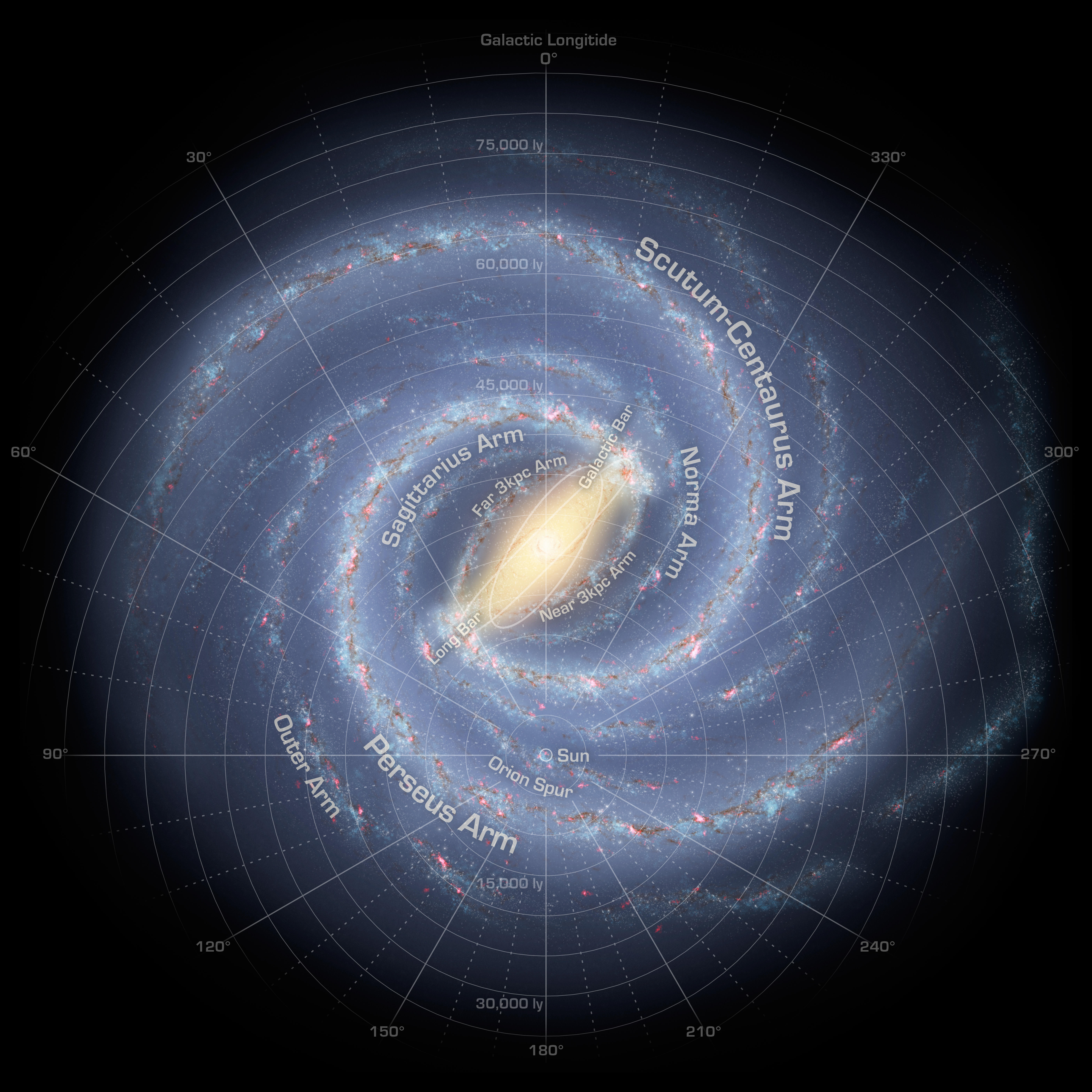
I’ve been running across information showing just how unlikely the life-friendly environment on earth is. Life needs a wide variety of elements and compounds to exist, be it life-as-we-know-it, or otherwise. One example I recently learned about is elemental fluorine, which is very rare in the universe, only being produced in a few locations, such as white dwarfs with companion stars, and yet is very common on earth’s crust. Suppicient radioactive material in the core is necesarry, as well. These and other needs are less likely to be covered further in, or further out in the galactic structure. It needs to be on the trailing edge of an arm, about halfway out from the core. There may only be a few locations in each galaxy that CAN support life at all, and taking into account the other reasons intelligent life might not exist, or be visible to us, sentience may be far more rare that we think. The ONLY intelligent life? That doesn’t seem likely, but we really can’t tell. Our only experimental evidence may be our thought experiments, i.e. Science Fiction. In David Brin’s Short, “The Crystal Spheres” there is other intelligent life in the universe, 6 races total, I believe. None are currently alive at the time that humans discover them, but we get to use their planetary engineering projects, and there is a hope we will eventually all meet somewhere in the future. I don’t see Star Trek/Wars universes with intelligent life on every street corner as likely, but the empty universe of Spinrad’s “Riding The Torch” seems equally unlikely. Perhaps the light speed barrier is the universes way to keep the kids separated, at least until they grow up a bit.
Probably intelligent life is rare and the overlap of different intelligent life forms is even rarer.
However, even if intelligent life is common, maybe the trend is for them to “move” to another plane of existence that is more inward than outward. By “move”, I mean that the majority remove themselves from this harsh and unforgiving universe with its restrictive (at least from our point of view) laws, to a universe that is “kinder/more useful/more conducive”. Basically, to move to a self constructed universe (that may or may not be in this universe) and (completely/largely) under their control.
In the here ad now, we can see the signs of the move inward now. We are so self obsessed and becoming more so, we need constant stimulation/entertainment, so why not have these things endlessly? The growth of the internet as a medium for every aspect of life, short of propagation (presently, but already envisaged in various SF novels) , can be seen as a natural progression along a path that will lead to an existence within chosen/built universe.
What is easier the illusion of adventure than the actuality?
Biological systems, like ours, are based on risk and reward. Why risk? Make the “Matrix” and evolve in “safety”…
Come on, astronomy geeks!! I enjoy this blog, but wake up, the aliens are clearly here and have been for a long time…. millions have seen the craft, hundreds of thousands have been abducted and the aliens clearly feed off our negative energy which is why we are manipulated into living in the self destrutive way that we all do…
You need to research Dr Karla Turner, Dr David Jacobs and many others who have effectively spoken out and written coherently on this issue..
Wait, you -nor any author you may have read- can testify to the intentions of a broad group of different ET species. ‘Feeding off negative energy’ is a theory that is most often put forth by religious fundamentalists who are looking at the issue through the bias of their reality tunnel.
Sure perhaps some have malintent but not all.
An truly intelligent species would never develop reality TV. 😉
I do not think we can estimate the technological level of anyone out there. Our “signals” are not even farther than 60 ly and getting weaker not stronger.
We are just beginning to develop our technology in terms of our own history on Earth. We assume the “others” out there should behave like us, but again, not evidence of that either. Do they need to develop radio because we did? is Radio a measurement of “evolution” of advancement? are Dyson’ sphere a mere frail thought?
I think life is pervasive, but we lack facts to know what else is out there exactly. We need more exploration. We are still not able to leave our world and visit other planets in our own solar system, except for our probes of course. Our example on earth is not good enough!
Fraser there’re still tribes round the world whose only clue they’re not alone in this world’re the strange objects they glimpse whizzing by overhead through holes in the jungle canopy.
Who knows how their reports’re received but some scientists’ve become so fascinated by what these tribes’ isolation and primitiveness might tell us about our own origins they’ve resisted all warnings and set out to make contact only to disappear from history.
If this’s been true of us mightn’t it be true of ‘them out there’?
If so it’s our good fortune they must be more civilised than us because so far they’ve resisted the temptation to do what we’ve always done use our technological superiority to acquire control of other tribes’ valuable resources.
Unless they’re doing that other thing we’ve also always done divert attention and covertly steal them.
And maybe they’re just studying us. And when you study something you don’t mess with it!
Perhaps we’re crappy at noticing anything that doesn’t look like us. Perhaps they’re all around us all the time, shouting in our faces.
The way I look at it, by any unambiguous definition of consciousness, start are conscious… so how come we can’t look at them that way? Why do we assume that plants aren’t aware?
Anthropocentrism.
And I just don’t see the logic in thinking that the ultimate goal if a civilization is to colonize everything that can be colonized!
(Crap… critical typo)
Perhaps we’re crappy at noticing anything that doesn’t look like us. Perhaps they’re all around us all the time, shouting in our faces.
The way I look at it, by any unambiguous definition of consciousness, stars are conscious… so how come we can’t look at them that way? Why do we assume that plants aren’t aware?
Anthropocentrism.
There are constantly UFO sightings and MANY pilots, radar technicians, military and intelligence insiders who have come forward to testify to the reality of UFOs, the fact that they are piloted by a non-human intelligence and that the Military bends over backwards and kills people to keep it secret.
Crazy conspiracy theory? Apollo NASA astronaut Gordon Cooper and Buzz Aldrin have Both testified to this in public and on video. look it up. Two former ministers of Defence have done the same, one of them Admiral Lord Hill Norton is a 5 star general as well.
So “They” are everywhere and yet “where are they?” is still a good question because they obviously havn’t landed on the whitehouse lawn (though an entire fleet of objects flew over the white house in 1952).
It does seem that there is some sort of prime directive. Testimonies from civilizans and military personnelle suggest they are indeed very strange and encountering them is extremely terrifying and difficult for humans.
Another large part is that the issue is deliberatly hidden by powers that be and by a “laugh screen” in which we have been indocrinated. This bias that has been “bred” into our culture is probably the greatest though most subtle thing that prevents us from knowning ‘where’ they are.
In this way you could say They are right in front of us but we refuse to open our eyes.
The universe is a simulation. And as a simulation, its complexity has been reduced by restricting the number of intelligences to one. It is also a possibility that this simulation was not suppose to produce any intelligences at all.
We have already, in the past evolved to the point that we have managed to create higher intelligence being. Now we are living in the VR that was created for us by this Mind.
I personally think ET exists and has been engaging with humanity for a long time, although today Earth appears to be protected like a national park, where external influence on our evolution is strictly hidden, or perhaps even completely prohibited.
There’s an enormous amount of global historical evidence suggesting that at some point in the past, ET was very open about their existence, the nature of what they were and where they came from.
The problem was that we were too primitive to comprehend what this actually meant, and filled in the blanks with what we did understand (ie: powerful Gods, flying chariots, sorcery, etc etc).
I often wonder what caused this change in policy at a certain point in time, where they decided to leave us alone (or at least stop revealing themselves to the general public).
Did they give us some kind of technology that we used to make war with? I can see ourselves learning this lesson the hard way, should we happen upon a more primitive species on another planet that we didn’t fully understand, the first thing we would try to do is “help”. The results can be demonstrated by the many failed attempts of ‘nation building’ throughout our own history.
In summery, I believe we are shielded from the true nature of the universe and that every civilization is required to go out and learn their lessons the hard way before being worthy of recognition at this level.
I’m guessing at a minimum we’d need to have:
1. The ability to (peacefully) resolve differences and solve problems at a global scale.
2. Be able to support our own civilization sustainably.
3. Develop the technology to explore the universe.
4. Go out and discover the first alien lifeform by ourselves.
If this reality is something like The Matrix, and we are akin to icons in someone’s computer game, we may not have encountered aliens because this game simply does not allow for that.
The biggest Problem we humans face in comprehending the forces of nature is in trying to realize the scale of it all.
It goes from infinitely small to infinitely large.
We are not very good when it comes to infinities
Have you met your so called God and asked for an opinion ?
Everyday..
Oh! My god !
You said it brother..
This or any other comment about the possibility for communication with ETI made at UT ALWAYS raises or peaks comment levels to astronomical numbers! So, if you are looking to raise the number of ‘hits’ you get, you certainly hit the nail right dead center! LOL!
My two cents as follows: We ARE the evidence for ETI and will eventually decode/decipher that long awaited confirmation/communication in the under used parts of our DNA. It could even be that there is a ‘tripping point’ we will reach in our evolution that will set off further communications. I believe that ‘tripping point’ has already been reached in breakdown of the bicameral mind. That is to say – every day more and more of us are born with the ability to use both sides of our brains simultaneously. Of course since I am ambidextrous, I would promote that idea! ~@; )
You make two claims which seems OT. However, they are easily seen to be erroneous.
First, we can make large phylogenies of all life as we observe it, without exception and stretching back ~ 4 Ga (from molecular clock data and fossils). No “communication”, no sequence of DNA, have survived that long in “under used parts”.
Second, AFAIK research shows that all people from all cultures react more or less the same as regards moral situations. So no group stands out as having a trait that others don’t have.
As for your own behavior, it is anecdote.
Ah… the well known perverse contrariant speaks. Your reputation proceeds you.
It is my understanding that the vast quantity of DNA is what is known as Junk DNA and has existed for a very long time.
Some geneticists consider that it is a very good way to encode information to last and last.
It appears that the double helix doesn’t throw anything away. It just inactivates it.
It just grows and grows
Consider this:
The “Wow! signal” of the terrestrial genetic code
http://gencodesignal.org/
Thanks for the link. I was unaware of these publications.
There’s another angle on this. It is anthropological, not astronomical.
Refer to Jared Diamond’s book “Guns, Germs and Steel” for the precursors to human civilization and why certain parts of the world were favored with the “civilization suite” of domesticatable plants and animals.
Tellingly, one factor was the arrangement of the continents, from Eurasia overwhelmingly favored to massively Australia disadvantaged. Both are suitable for human habitation, but Australia only becomes viable for civilization once the suite of domestic plants and animals is imported from elsewhere.
It is possible to imagine a rerun of Earth’s geological history where the “civilization suite” appears nowhere, or not coincident with a suitably clever species to exploit them.
There very well may be other intelligent species in the galaxy. Given our past, it’s most likely they are hunter-gatherers, less likely they are in the Bronze Age,
and least likely in the pre-electric Industrial Age, and plateaued
there, simply because of geographic and environmental factors beyond their control.
Basically, I’m arguing technological civilization is not necessarily a given on a planet identical to Earth in every respect except where and when the necessary civilization precursors arise. This is before you even begin to factor in planetary “goldilocks zones” and every other variable.
Diamond is a geographer. I don’t think his work has been well received by anthropologists, nor should it: how do we test his hypothesis?
I think the knowledge that massive sequencing of populations will give us can inform us how they migrated, developed and interacted. Until then it will be almost impossible to test any theories as we only have superficial understanding of it from historical accounts.
You are correct Jared Diamond is currently a Professor of Geography at UCLA. However, his work is multi-disciplinary, including Anthropology. Guns, Germs and Steel is a popular textbook in US high school social studies classrooms, this indicates a noteable degree of acceptance. Prof. Diamond tests his own hypothesis by comparing and contrasting the development and fate of various human populations over time. I cannot make his point better than he can.
As to, “Where are all the aliens?” the question is presented as though technological civilization is a given, provided with a suitable planet and sufficient time. However, technological civilization may be dependent on a narrow number of coincidental factors – as argued by Prof. Diamond; even when you are considering a 99.9% Earth-analog planet.
The coincidental factor issue is relevant because it creates a nested probability problem. Let’s say there are 10 to the 12th stars in the galaxy. It takes just six nested probabilities of 10-to-1 to account for all of them … and the apparent lack of galactic radio civilizations.
A simple analysis shows that there is no contradiction, no paradox or nothing baffling in this. A negative result will never strain observations. This is why Fermi originally put it as a question. Which is a better name, “the Fermi Question”, despite Fermi having the habit to ask his “Fermi questions” on what one can know about systems.
For example biologists claims intelligence is a rare trait, akin to the Elephantidae trunk: has happened once in a blue moon. Or migration can easily be both radio and “planet” silent. (Eg it is much easier and cheaper to colonize Oort clouds.)
That said, a positive result would be informative, so while the question of similar intelligent life elsewhere isn’t testable under all conditions it should still be pursued.
But at the current time and for the foreseeable future it is one of the least interesting fields of astrobiology. AFAIK in some 50 years radio SETI will have emptied the true positive phase space.
And then the question is moot, unless we choose to migrate ourselves and in a non-silent way. Then maybe our descendants one day will start to constrain the true negative phase space.
Not so much of a paradox. Given our irrational penchant for religion – nearly all of the humans of Earth have a blind belief in a being called GOD that controls their lives utterly and there is no physical evidence of this BEING except for the writings set down by other humans, mostly long dead and for which no testable obective proof of existence can be manifested for this GOD – it is all based on Faith. If it were not called Religion, this manifestation is a classic description of psychosis. Not only that, these beings on Earth are technologically advanced with nuclear weapons and other weapons of mass destruction. They routinely practice war, primarily over these psychotic beliefs in a variety of Gods.
If I were an alien species, I would give this planet a wide berth until humans “got over” their mental illness. Any leakage of technology to humans could unleash a galaxy wide psychosis upon all the advanced races of the galaxy.
In fact, I were an alien species, I would quarantine the Earth agains any possible contact.
Quarantine ! What a good idea.
Our position in the galaxy looks just like a good quarantine .
Good for using for experiments in genetics too.
Hmmm !
It would appear that we are in the boonies of the milkyway so there may be something to that.
It’s an interesting question. We’re looking at it through primitive human eyes though. Like, when we ask, why isn’t alien technology, like probes, everywhere? Maybe “technology” itself is primitive. We’re all about technology now, but could there be a “post-technological” era in our more advanced future? Can intelligent live evolve beyond, or merge with technology into something entirely different?
Also, this idea that life needs to spread out everywhere it can and conquer new lands and new worlds is also kind of primitive. It’s what humans do, but humans are very primitive. Maybe intelligent life throughout the universe advances to a point where physical expansion becomes pointless? Maybe they don’t need resources per se, so they don’t need to go around colonizing and mining planets.
To me, the pinnacle of advanced intelligence is to evolve past the need for physical bodies and maybe this is what intelligent life eventually does, and why we don’t see it everywhere. Maybe the majority of the life in the universe is unintelligent, unable to even get off its home world. Life that is intelligent enough to “conquer” the universe is also intelligent enough to realize that it doesn’t have to.
An interesting post which offers much food for thought. Perhaps there are “alien life forces” all around us which we simply can’t observe or perceive. So many questions, so few answers. {Alert: this is NOT an assumption of a “higher being”}
Our quest is to create another, higher level of intelligence. If we can. If not, we will just disappear like many other countless civilization before us.
We will soon reach the technological level sufficient enough to enable us to create something higher or destroy ourselves.
Maybe there is no technological way to bridge the vast distances of space.
There is no doubt in my mind that there is alot of life out there to be found. The fact that we exist is more than enough proof of that, i think its more unlikley that nature did something once.
That goes for intelligence aswell and whatever follows.
On a second thought i think people are to quick to jump in the “self-anniahlation” wagon.
Sure, there is probably a good precentage of likleyhood for that. But ultimatley i think natural catastrophees are the bigger threat.
As far as the fermi paradox goes, its a tough call, as it makes sense. However i feel it makes more sense for a civilization as we know it in this point in time. A spacefaring civilization could be so vastly diffrent, everything from selfmodification to behaviour.
And unknown factors like these could give light to why its not as crowded.
I hope that i will live to see atleast a tiny bit of progress in this, bacteria would be a good start =).
xxxxxx
I too think that life is ubiquitous, even “intelligent” life. However, if Einstein is correct and nothing can travel faster than the speed of light, and; if wherever we look, we are seeing into the past, I would think that interstellar communication in any real sense of the term is highly improbable. Any alien signals within our own galaxy would take perhaps hundreds of light years to reach us.
Yes ! we are too primitive to be acceptable into the Federation of Planets.
Better to keep us isolated
One of the characteristics of abductions is their ability to remotely incapacitate us with a beam of something we perceive as a light.
They are very familiar with our physiology !!
Our problem is that all we do is search for our own limitations in outer space. We need to overcome our anthropomorphised perspective on the universe.
Patience.On the timescale of the Universe we’ve only been looking for milliseconds.
You may have hit the nail on the head there. Most of our problems are related to energy. If there is a species that develops a technology where energy is no longer an issue?
Based off of humanity they’d either make leaps and bounds in art & science, or use it to kill each other. That would also explain why we haven’t found any ET’s yet, the ones that do make it would go to lengths to conceal themselves till we are past the tipping point.
“Life needs a wide variety of elements and compounds to exist, be it life-as-we-know-it, OR OTHERWISE.”
Wow you really snuck that “or otherwise” in there. Since we have exactly 0 samples of non “life-as-we-know-it”, I don’t think you or I could speculate on what the requirements for life are.
I would have to disagree with the implication that there’s no evidence for ET’s. In fact there is lot’s of types of evidence for the existence of ET’s both past and present.
In the present there are groups like:
– ‘The Disclosure Project’, formed by Dr Steven Greer.
“We have over 500 government, military, and intelligence community witnesses testifying to their direct, personal, first hand experience with UFOs, ETs, ET technology, and the cover-up that keeps this information secret.”
This includes Edgar Mitchell, 6th man on the moon.
– ‘The Citizens Hearing on Disclosure’
“From April 29, 2013 to May 3, 2013 researchers, activists, political leaders, and military/agency witnesses representing ten countries gave testimony in Washington, DC to six former members of the United States Congress on the evidence for an extraterrestrial presence engaging the human race. ”
Plus many other isolated cases of ET contact, and countless UFO sightings around the world.
In our recorded history there are cultures, many that developed completely independently of one another saying similar kinds of things.
– How many of the pyramids around the world were built is still a great mystery. The egyptians, who were very keen on documenting themselves, don’t once mention how they built them, but speak about the ‘Sun Gods’ coming down from to sky, showing them how to build them. The Mayans also mention beings that helped them construct their pyramids.
– The Hopi indians said that their ancestors were brought there by ‘giant flying tortoise shells’, which sounds similar to many of the ‘disk’ shaped UFO’s that are being sighted.
– Hinduism tells us of their deities and half deities, who came in their ‘Vimana’, meaning ‘flying machines’, (which have been depicted with drawings), passing down their advanced knowledge and advising humanity. In the scriptures they describe the Earth as a sphere, where the sun never sets. They make references to gravity, atoms, and much more. These writings are over 5,000 years old!
– The bible speaks of the ‘nephilim’, the giant gods that mated with our women and bore half-gods. Sounds pretty flesh and blood to me!
Another small thing to note are the meteors that we discover containing fossilised bacteria. If we have evidence of life, quite literally ‘falling out of the sky’, I think it’s safe to assume that we live in a universe abundant with life, where life is the rule not the exception.
There’s a lot more I could go into, it’s a fascinating subject and well worth investigation!
I would have to disagree with the idea that there’s no evidence for ET’s. In fact there is lot’s of types of evidence for the existence of ET’s both past and present.
In the present there are groups like:
– ‘The Disclosure Project’, formed by Dr Steven Greer.
“We have over 500 government, military, and intelligence community witnesses testifying to their direct, personal, first hand experience with UFOs, ETs, ET technology, and the cover-up that keeps this information secret.”
This includes Edgar Mitchell, 6th man on the moon.
– ‘The Citizens Hearing on Disclosure’
“From April 29, 2013 to May 3, 2013 researchers, activists, political leaders, and military/agency witnesses representing ten countries gave testimony in Washington, DC to six former members of the United States Congress on the evidence for an extraterrestrial presence engaging the human race. ”
Plus many other isolated cases of ET contact, and countless UFO sightings around the world.
In our recorded history there are cultures, many that developed completely independently of one another saying similar kinds of things.
– How many of the pyramids around the world were built is still a great mystery. The egyptians, who were very keen on documenting themselves, don’t once mention how they built them, but speak about the ‘Sun Gods’ coming down from to sky, showing them how to build them. The Mayans also mention beings that helped them construct their pyramids.
– The Hopi indians said that their ancestors were brought there by ‘giant flying tortoise shells’, which sounds similar to many of the ‘disk’ shaped UFO’s that are being sighted nowadays.
– Hinduism tells us of their deities and half deities, who came in their ‘Vimana’, meaning ‘flying machines’, (which have been depicted with drawings), passing down their advanced knowledge and advising humanity. In the scriptures they describe the Earth as a sphere, where the sun never sets. They make references to gravity, atoms, and much more. These writings are over 5,000 years old!
– The bible speaks of the ‘nephilim’, the giant gods that mated with our women and bore their children; half-gods. Sounds pretty flesh and blood to me!
Another small thing to note are the meteors that we discover containing fossilised bacteria. If we have evidence of life, quite literally ‘falling out of the sky’, I think it’s safe to assume that we live in a universe abundant with life, where life is the rule, not the exception.
There’s a lot more I could go into, it’s a fascinating subject and well worth investigation!
I would have to disagree with the idea that there’s no evidence for ET’s. In fact there is lot’s of types of evidence for the existence of ET’s both past and present.
In the present there are groups like:
– ‘The Disclosure Project’, formed by Dr Steven Greer.
“We have over 500 government, military, and intelligence community witnesses testifying to their direct, personal, first hand experience with UFOs, ETs, ET technology, and the cover-up that keeps this information secret.”
This includes Edgar Mitchell, 6th man on the moon.
– ‘The Citizens Hearing on Disclosure’
“From April 29, 2013 to May 3, 2013 researchers, activists, political leaders, and military/agency witnesses representing ten countries gave testimony in Washington, DC to six former members of the United States Congress on the evidence for an extraterrestrial presence engaging the human race. ”
Plus many other isolated cases of ET contact, and countless UFO sightings around the world.
In our recorded history there are cultures, many that developed completely independently of one another saying similar kinds of things.
– How many of the pyramids around the world were built is still a great mystery. The egyptians, who were very keen on documenting themselves, don’t once mention how they built them, but speak about the ‘Sun Gods’ coming down from to sky, showing them how to build them. The Mayans also mention beings that helped them construct their pyramids.
– The Hopi indians said that their ancestors were brought there by ‘giant flying tortoise shells’, which sounds similar to many of the ‘disk’ shaped UFO’s that are being sighted.
– Hinduism tells us of their deities and half deities, who came in their ‘Vimana’, meaning ‘flying machines’, (which have been depicted with drawings), passing down their advanced knowledge and advising humanity. In the scriptures they describe the Earth as a sphere, where the sun never sets. They make references to gravity, atoms, and much more. These writings are over 5,000 years old!
– The bible speaks of the ‘nephilim’, the giant gods that mated with our women and bore half-gods. Sounds pretty flesh and blood to me!
Another small thing to note are the meteors that we discover containing fossilised bacteria. If we have evidence of life, quite literally ‘falling out of the sky’, I think it’s safe to assume that we live in a universe abundant with life, where life is the rule, not the exception.
There’s a lot more I could go into, it’s a fascinating subject and well worth investigation!
The Fermi Paradox is total non-sense, Man as we currently are now has not been around 200000 years, I believe a whole lot less. Yes the solar system is old, our planet is old, but we were designed by a intelligent being that I refer to as God. Is God an alien from another world, he vary well may be, but he created us in his own image, keep that in mind. As for finding intelligent life out there with our current technology, I’m not holding out to much hope on that. If a species can skip over the Universe, worm holes, bend time & space than there technology is far far beyond ours. God said he was going to return, hopefully it will not be a end of days situation, but I do believe he or they will return.
In my view, advanced extraterrestrials ARE gods. So yes, God knows.
I like what you wrote and add that I feel we have been summarily dismissed as irrelevant due to our seeming inability to appreciate life in general. It may be that the true test of time for an evolving race is to transcend species related survival imperatives. Would that we were able to sacrifice our species dominant indulgences then we might be considered highly enough evolved to be contacted… but not beforehand. Am I overstating the obvious?
They are here already, but they are not interested in us.
They are looking for some guy they call “Kal-El.”
I am sure that the universe is teeming with life. However, I believe that there are problems in making contact with aliens, such as:
1. Distances too far, and we as humans have only really started to explore space in the last 50 years or so. This means that it will take MANY MANY years for a signal to reach another planet.
2. Life forms could be very diverse, and thus communicating with them would be impossible.
3. Our technology is simply not advanced enough.
4. As suggested by the author, aliens may be trying to avoid us. This would not be surprising, given our destructive nature.
All these comments are very good is many of them could be merged for example:
Sure there life in the universe, some more overdue, others to our level and more advanced technologically and culturally. The ones we are interested in right now are those who are more advanced by muñtiples reasons, although I recognize that people fear if they are hostile.
But if it is the case and are there in space or on Earth would you think if you have an interest in exchanging information, in short in helping us advance scientifically and technologically, is so crucial help in fields like medicine given the many diseases that plague humanity such as cancer, AIDS etc etc.
Well the big question is if they do they want to contact us?, Or how can we send them a signal that they recognize as intelligent and contact is made? ……. having made this question is one that concerns me, if as many say “they are here among us”, and know of our problems and therefore I wonder ….. why not help us? Do not you care if we kill in stupid and endless wars?, What we die of diseases that we are not yet able to cure?, In order that this final question concerns me very strange if not …….
(excuse the bad English translation, Please thank you)