
[/caption]
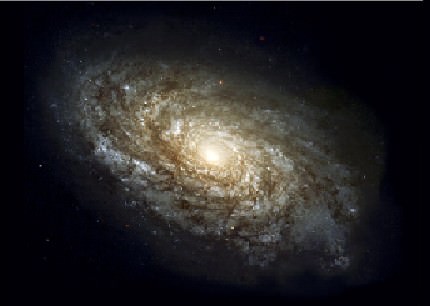
If you’re certain the Universe revolves around you, I have some bad news for you. Researchers from the University of British Columbia say Earth’s location in the Universe is utterly unremarkable, despite recent theories that propose Earth is at the center of a giant void in space. A decade ago, it was discovered the Universe’s expansion was accelerating. This continually expanding Universe was attributed to dark energy, the highly repulsive and mysterious stuff that has yet to be detected. But some scientists came up with an alternate theory where Earth was near the centre of a giant void or bubble, mostly empty of matter. But new calculations solidify the case that dark energy permeates the cosmos.
While dark energy sometimes seems pretty far-fetched – with its mysterious and so far undetectable properties – the alternate “void” theory of why the Universe is ever-expanding contains a problem, in that it violates the long held Copernican Principle.
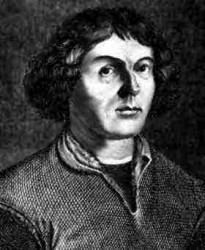
Polish astronomer Nicolaus Copernicus’s 1543 book, On the Revolutions of the Heavenly Spheres, moved Earth from being the center of the Universe to just another planet orbiting the Sun. Since then, astronomers have extended the idea and formed the Copernican Principle, which says that our place in the Universe as a whole is completely ordinary. Although the Copernican Principle has become a pillar of modern cosmology, finding conclusive evidence that our neighborhood of the Universe really isn’t special has proven difficult.
In 1998, studies of distant explosions called “type Ia supernovae” indicated that the expansion of the Universe is accelerating, an observation attributed to the repulsive force of a mysterious “dark energy.” But some cosmologist proposed that Earth was at the center of a void, and that gravity would create the illusion of acceleration, mimicking the effect of dark energy on the supernova observations.
Now some advanced analysis and modeling performed by UBC post-doctoral fellows Jim Zibin and Adam Moss and Astronomy Prof. Douglas Scott is showing that this alternate “void theory” just doesn’t add up.
The researchers used data from the Wilkinson Microwave Anisotropy Probe satellite, which includes members from UBC on its international team, as well as data from various ground-based instruments and surveys.
“We tested void models against the latest data, including subtle features in the cosmic microwave background radiation – the afterglow of the Big Bang – and ripples in the large-scale distribution of matter,” says Zibin. “We found that void models do a very poor job of explaining the combination of these data.”
The team’s calculations instead solidify the conventional view that an enigmatic dark energy fills the cosmos and is responsible for the acceleration of the Universe. “Recent advances in data collection have brought us to the era of precision cosmology,” says Zibin. “Void models are terrible at explaining the new data, but the standard dark energy model works very well.
“Since we can only observe the Universe from Earth, it’s really hard to determine if we’re in a ‘special place,'” says Zibin. “But we’ve now learned that our location is much more ordinary than the strange dark energy that fills the Universe.”
The team’s research is available at Physical Review Letters
Source: EurekAlert
I just cant understand one thing, i know that our earth is not in the center of the universe, but if the big bang created expansion is true, then surely, there must be a center point, have the scientists been able to determine that?
I’va also seen some incredible evidence the Earth is not flat. Who could have foreseen such shocker news… 🙂
“. . . . if the big bang created expansion is true, then surely, there must be a center point . . . .”
If I understand the exlpanation to that question correctly then there is no one single point because all points in the universe coincided at the moment of the big bang. All of space was at a singular point.
Now, what existed in the vicinity of the big bang prior to the event – there’s a head-scratcher.
My understanding of the Big Bang is that it was a creation event in every sense of the word. Space and time did not exist before the Big Bang happened and have no meaning outside of our universe. So there is no central point other than the Big Bang itself which marks the beginning of time and space. And there was nothing in the vecinity of the Big Bang just like there is nothing outside our universe (even if there are an infinite number of parallel universes as some theories suggest, there would be nothing in the “space” between them).
…..Now, what existed in the vicinity of the big bang prior to the event – there’s a head-scratcher……
Good point Ayti
Just to start the new year off right, consider the point of the Big Bang as being at the edge of our light horizon, we will never see further because not enough time has passed.
THEN the light horizon for someone at the edge of our light horizon seeing 13.73 billion light years still further away ……
Their light horizon (in theory) would equal 27.46 billion LYs in distance and so on……….
Does the Universe END at 13.73 billion ????
How could it?
Ouch, my brain hurts….
HAPPY NEW YEAR KIDS!!!!
Venkatesh, imagine our Universe as a two-dimensional universe on the surface of a balloon, and the Milky Way galaxy is a dot drawn on that surface. Where is the center of the Universe?
There isn’t one. It’s not the center of the balloon since that’s outside our universe (which is just the 2d surface of the balloon).
All points on the balloon’s surface are the same as each other — there is no direction you can go that will get you closer to the center of the Universe.
Now imagine the balloon compressed down to an infinitely small size (i.e. as it was before the Big Bang — or Big Puff in the this case :-). There is still no center since the the surface is still a 2d sphere, even though it is infinitely small, but you can see that the location of our galaxy on that tiny sphere right at the location of the Big Puff, but so are all the other points on the balloon’s surface. So, in reality, the Big Puff happened at all parts of this 2d-version of the universe.
Thus, if you extrapolate from 2d to a 3d universe, you will see that all parts of our Universe were at the location of the Big Bang in the beginning, so no part of the Universe is “at the center” — there is no unique central place in the universe — all points are all essentially the same.
Human beings stand at the midpoint sizewise between the very large and the very small. So in a sense, we are the center of the universe.
Always like to start the new year with funny papers! Gotta love the “new calculations solidify the case ” and “”some advanced analysis and modeling performed by UBC post-doctoral fellows” and “calculations instead solidify the conventional view that an enigmatic dark energy fills the cosmos and is responsible for the acceleration of the Universe “; oops, some of us like to think of that as “alleged acceleration of the universe.”
Hey Nancy, thanks for all the junk science, at least it keeps you guys employed!
Wouldn’t the center of the universe not be a static place? I thought that the universe was expanding at different rates so then the “center” of the universe is always in a new place.
Well scientists in the beginning of 1900 tried to find the (0,0,0) reference location and discovered that everywhere they did the light experiments they discovered that they were at the exact center of the universe.
Either you could say there is nowhere a center of the universe you could alos say that everywhere is the center of the universe.
Wouldn’t the center of the universe not be a static place? I thought that the universe was expanding at different rates so then the “center” of the universe is always in a new place.
No. There is no center, period. Look at a ball, and imagine the universe is the surface of that ball (just the surface, not the inside too). Where is the center of the ball’s surface? There isn’t one. All points on the ball are the same.
it’s the same way with the real 3d Universe, it’s just that it’s much harder to visualize.
@ tacitus:
Your analogy isn’t the best, since by that logic- if we were to travel in any radically outward direction in our 3D space we would inadvertently end up back where we started.
@ Olaf:
That was the founding of the relative light postulate thing, so either 2 things could be stated by that discovery, the center of the earth = the center of the universe, or light is measured the same regardless
But tacitus made me wonder about the acceleration of space. Though mind me this is probably already been thought of and my word is not credited, but could it be- the constant expansion of space creates an illusion of acceleration when coupled with a constant speed of light that’s not only independent of relative velocity but also independent of space expansion as well? (such that light needs to travel increasing distances, but a meter for us is now more like 1.2 meters for light)- But this requires someone to remeasure the speed of light in a vacuum and very accurately
When I mean “not credited” I meant: I don’t have much support for my argument besides for my creativity. So I call dips on intellectual property rights, lol.
“dips” >>> “dibs”, now I just gotta work out the math
Actually, through no fault of it’s own, Earth is remarkable. It has liquid water on it’s surface,check.
It’s a planet, check. It is in a solar system with a large planet in such an orbit that it sweeps helps protect it from large impactors, yet doesn’t spiral inward and disrupt it’s orbit, check and check. It has plate tectonics, check. It has a moon with of a similar mass, check. it has life,check. It isn’t dark matter, check.
Unique? Only one way to find out, but special? Hells yeah.
It may not be much, but it’s ours.
The Universe actually is shrinking
I think people want earth to be the center of the universe for religious reasons. If we were it would support religious claims in just about all the religions.
If we aren’t at the center of the universe people would feel their god didn’t really care about them as much as they thought he did.
The ‘conventional’ inclusion of Dark Energy is just a less-than-candid admission we either don’t know what 90+% of the universe is; or we have made some very bad fundamental parametric assumptions in the last century. This bus is going nowhere until we fix it.
I have a question regarding the Big Bang theory. Since space and time started from single point and its still expanding, how far away from the edge of Space and time do stars exist in our universe?
Thanks,
Joe
Nice point Jerry.
This Dark Matter is being used to explain alot. A nice gig for something thats never been observed or quantified, especially for something thats apparenty not so rare.
Do we even need more evidence in this regard? Enough said.
Joe wonders:
“how far away from the edge of Space and time do stars exist in our universe?”
to our knowledge, as of May 2007: 500 million years – short-lived stars, with a live expectancy of “only” a few hundred million years, perhaps up to a billion, containing no metals other than lithium….
Is dark matter everywhere????????? We need proof because if it is out in space then it is around us too…….. Is our solar system being pushed around by dark matter? Are our planets moving about because of dark matter? Is our sun in its position because of dark matter? Did not scientist have proved that the sun, the planets, the solar system, the Milky Way are are moving relative to something within them that has triggered the movement? Was it dark matter that started the whole thing? I am confused.
This evidence they have just uncovered was there for billions of years. The fact that humans think that they are the centre of the universe is laughable. Humans have been trained from the dawn of time to think we are the only intelligent life anywhere. The big bang was only one of many that happened trillions of years ago. Don’t forget time was creatd by humans as a unit of measurement.
WE ARE NOT THE CENTRE OF THE UNIVERSE. too much needs to be understood prior to any sumations. The very fact that dark matter was just discovered with a host of other. KEEP AN OPEN MIND